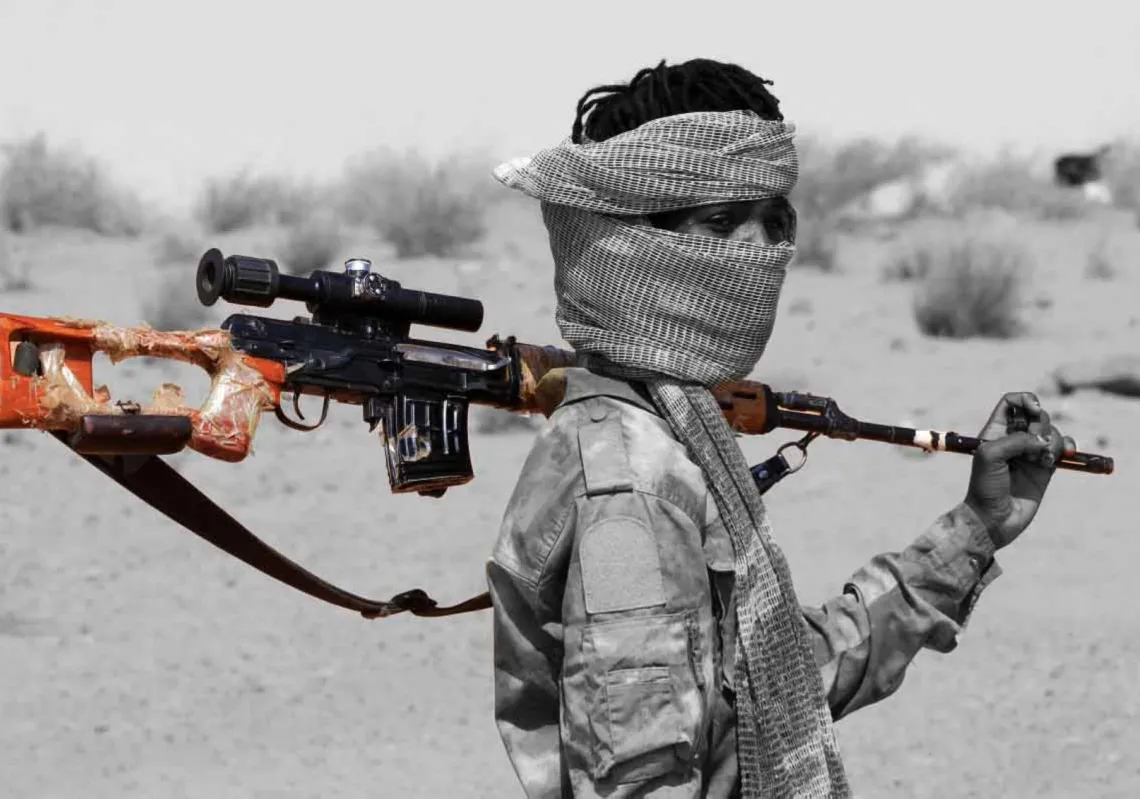
Washington seems to have changed its tone after the RSF committed atrocities in October, putting increasing pressure on the foreign backers of a paramilitary that now controls Darfur. What next?
When there were allegations of ethnic cleansing in Darfur in 2003, celebrities and others were up in arms. Today, with 60,000 reportedly killed in three weeks, protests are few. Why the change?
Sudan's army needs a Russian lifeline to avoid collapse in the ongoing civil war. The price is a naval facility in Port Sudan, giving Moscow access to the Red Sea.
Created by then-Sudanese President Omar al-Bashir, the Rapid Support Forces have ripped the country in two. This is what happens when a state gives up its monopoly on the legitimate use of force.
The RSF's complete control of Darfur could facilitate smuggling, terrorism, and mass displacement, potentially giving Egypt a big problem on its southern border
After over 500 days of a crippling blockade, the city finally fell to the RSF, cementing their control of the giant Darfur state in western Sudan and giving them full access to key supply routes
The army and the RSF rely on the assets at their disposal to sustain governance and fund their war efforts, while trying to win over the international community by seizing larger swathes of Sudan
Addis Ababa has finally inaugurated the long-awaited and much-touted GERD—Africa's biggest dam—leaving Egypt and Sudan worried about the impact on their water supply downstream
The country has all the ingredients that enflame tensions: acute social inequality, an unformed national identity and myriad ethnic groups, all of which were exacerbated by colonial rule
The US is poised to use Israeli gas as a lever to keep Iran on the backfoot following its regional setback, and it could even use it to undercut Russia's economy
Washington seems to have changed its tone after the RSF committed atrocities in October, putting increasing pressure on the foreign backers of a paramilitary that now controls Darfur. What next?