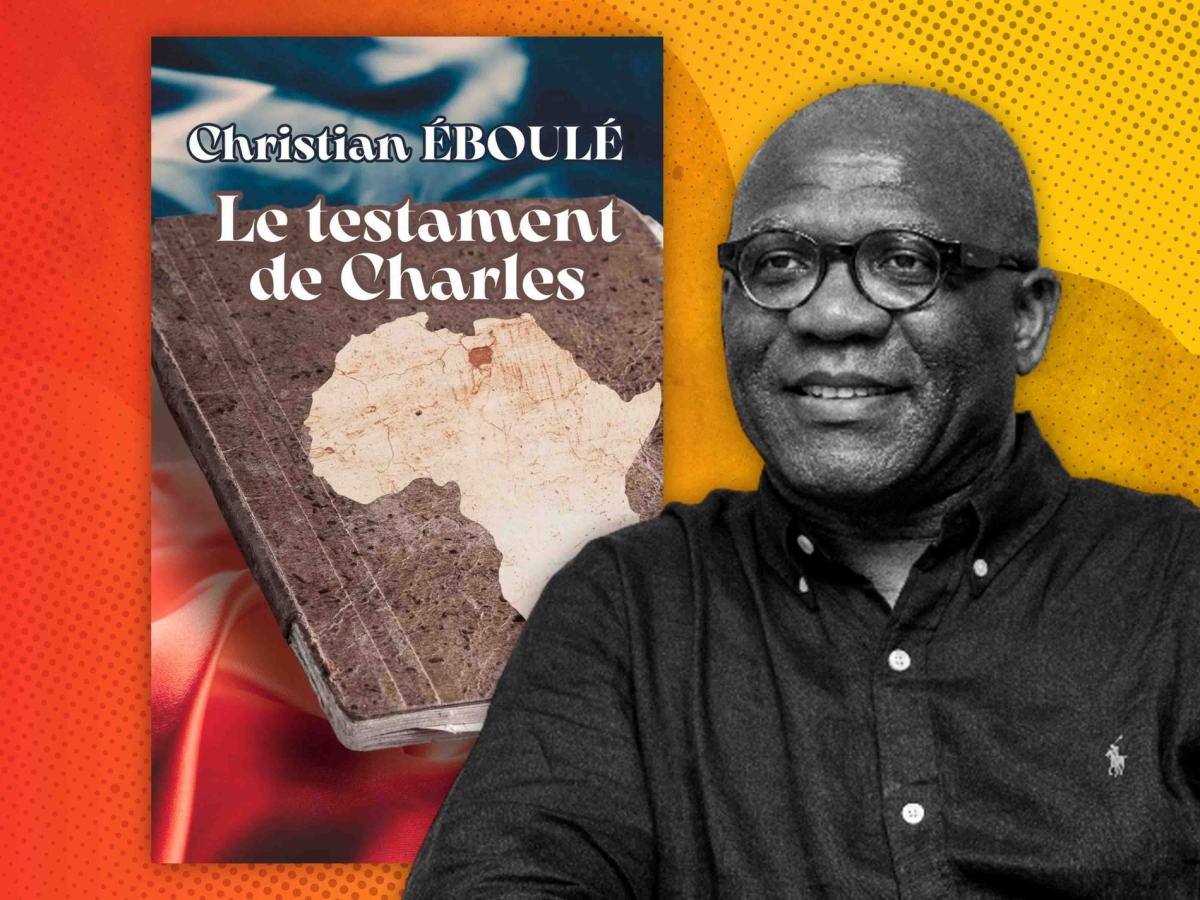
Christian Éboulé on decolonising the mind

The Gabonese journalist discusses his debut novel, 'Le Testament de Charles', and how post-independence generations still bear the scars of colonialism

Al Majalla

Christian Éboulé on decolonising the mind

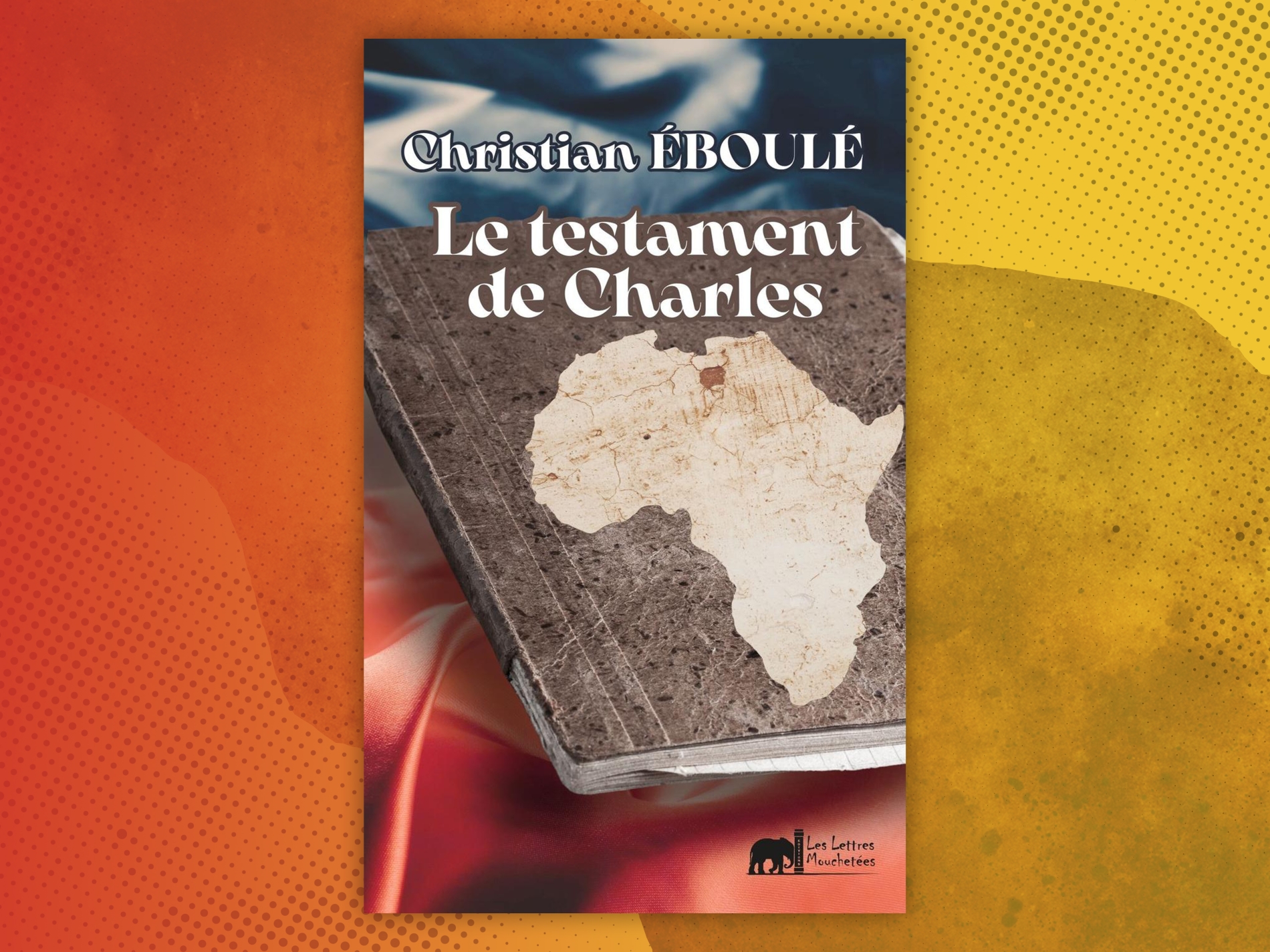
Gabonese journalist Christian Éboulé incorporates the tragic true story of Captain Charles N’Tchoréré—a black Gabonese officer executed by the Nazis in 1940 alongside his Senegalese tirailleur troops—for his debut novel.

Le Testament de Charles, published by Les Lettres Mouchetées, draws on years of archival research across Gabon, France, and West-Central Africa, with Éboulé crafting a narrative that blends unflinching historical fidelity with existential lucidity. Al Majalla spoke to him about his novel and the legacy of colonial violence.


Several critics have described Le Testament de Charles as an act of resurrection, restoring forgotten historical figures, particularly African soldiers in the First and Second World Wars. What drew you to this neglected chapter of history?

At the end of 2009, I was deeply struck by the story of Captain Charles N’Tchoréré. His existence was revealed to me by a Gabonese friend who asked me to help him write a book about his life. This project took me to Libreville, Gabon, in 2010, where Marcel Robert Tchoreret, the captain’s nephew and president of the Captain Charles N’Tchoréré Foundation, asked me to assume sole responsibility for keeping his uncle’s memory alive. Along the way, I discovered the history of the African riflemen who fought during the world wars and the man who gave them a voice during the interwar period.

Beyond the captain’s story resonating deeply with me, the encouragement of my wife and many friends led me to help make this often-forgotten chapter of our collective memory better known.
The novel opens with Charles's death. Why did you choose this as your narrative starting point?

The novel opens with the inevitability of Charles’s death, his final moments before being murdered—in violation of the laws of war—by the Nazis who had just taken him prisoner, along with the men who remained under his command. Carried by a sudden awakening of consciousness, Charles does not merely relive his life; he also illuminates it with a harsh light, that of this new awareness, which grants him a kind of heightened lucidity, right up to the moment of his death.

Why does the colonial past remain such an open and sensitive wound across so much of Africa today?

Across the continent, many chapters of colonial history still need to be written, popularised, and democratically disseminated through almost all forms of art, so that the majority of people can truly take ownership of them. To this must be added the necessary decolonisation of minds—an essential prerequisite for overcoming alienation and healing wounds that are sometimes still wide open in our societies.
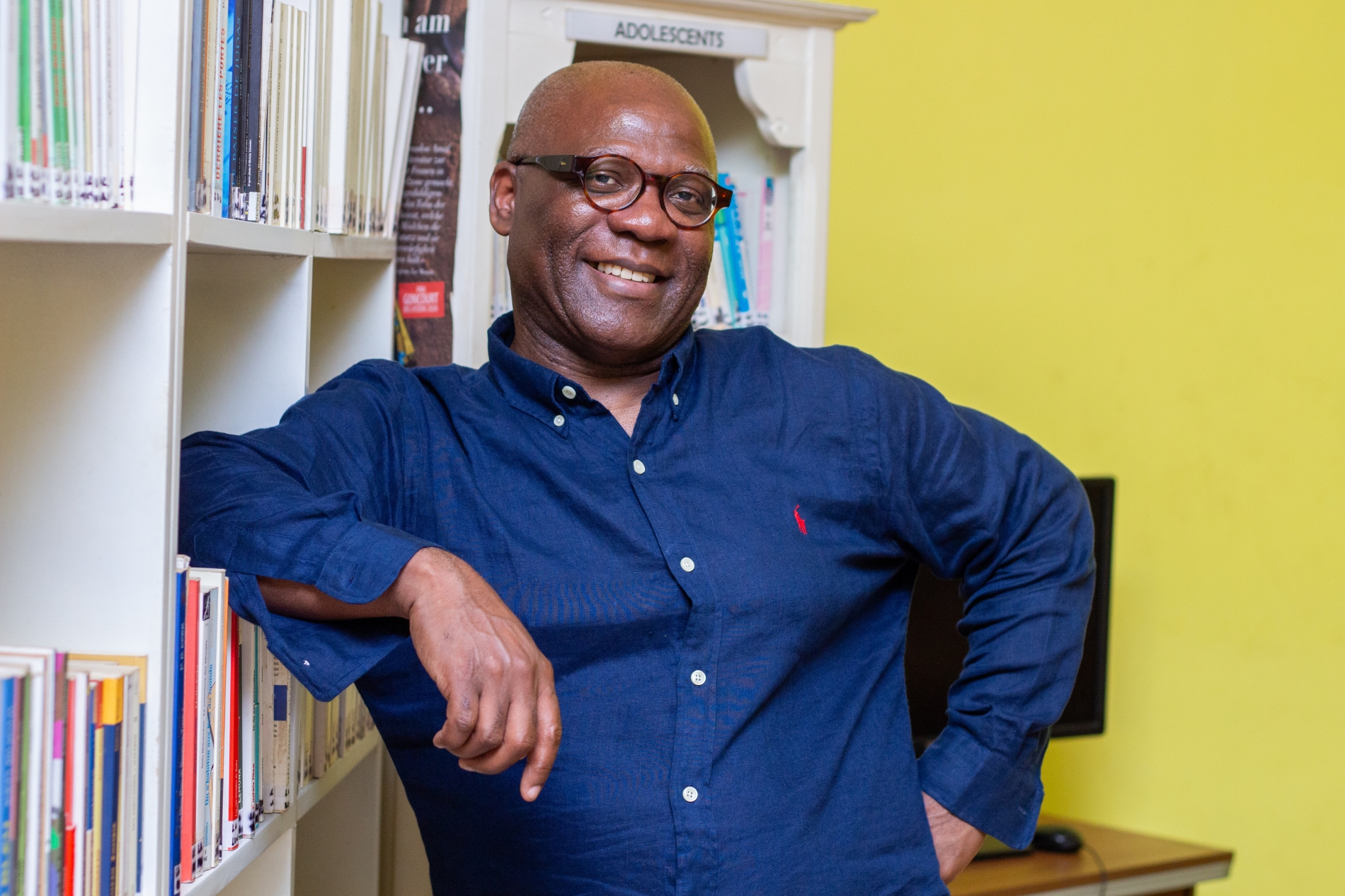
Many chapters of colonial history still need to be written, popularised, and disseminated through all forms of art

Gabonese novelist Christian Éboulé

In this respect, I can only pay tribute to one of our most illustrious elders, the psychiatrist and political philosopher Frantz Fanon, whose entire body of work remains a crucial reference point. Today, much is being said about the restitution of cultural property looted from the continent, particularly during the colonial period. Egypt has been a pioneer in this field, notably thanks to the work of your distinguished compatriot, the great Egyptologist and former minister of tourism and antiquities, Zahi Hawass.

Do you believe literature can contribute, even symbolically, to forms of historical or moral justice?

Literature can indeed contribute, both directly and indirectly, to the pursuit of justice, on both historical and moral levels. In my novel, I deliberately chose to evoke little-known pages of history, such as the scandal of the Camp du Courneau in western France. During the First World War, this camp hosted around 27,000 Senegalese riflemen between 1916 and 1917. Nearly 1,000 of them died there, victims of brutal experiments conducted by the Pasteur Institute.

I also think of the work of Egyptian writer and playwright Laila Soliman, whose play Zig Zig was presented at the Festival d'Automne in Paris in 2017. The play unearthed a forgotten episode of Egyptian colonial history, during which British soldiers raped and abused poor peasant women in the village of Nazlet al-Shobak in Giza, under British occupation in the years surrounding the 1919 revolution led by Saad Zaghloul Pasha.

The post-independence generations have no real sense of what life under colonial rule was like. But we bear its scars, consciously and unconsciously.

Gabonese novelist Christian Éboulé

Does literature have a moral responsibility to revisit and repair what official historical narratives have overlooked or erased?

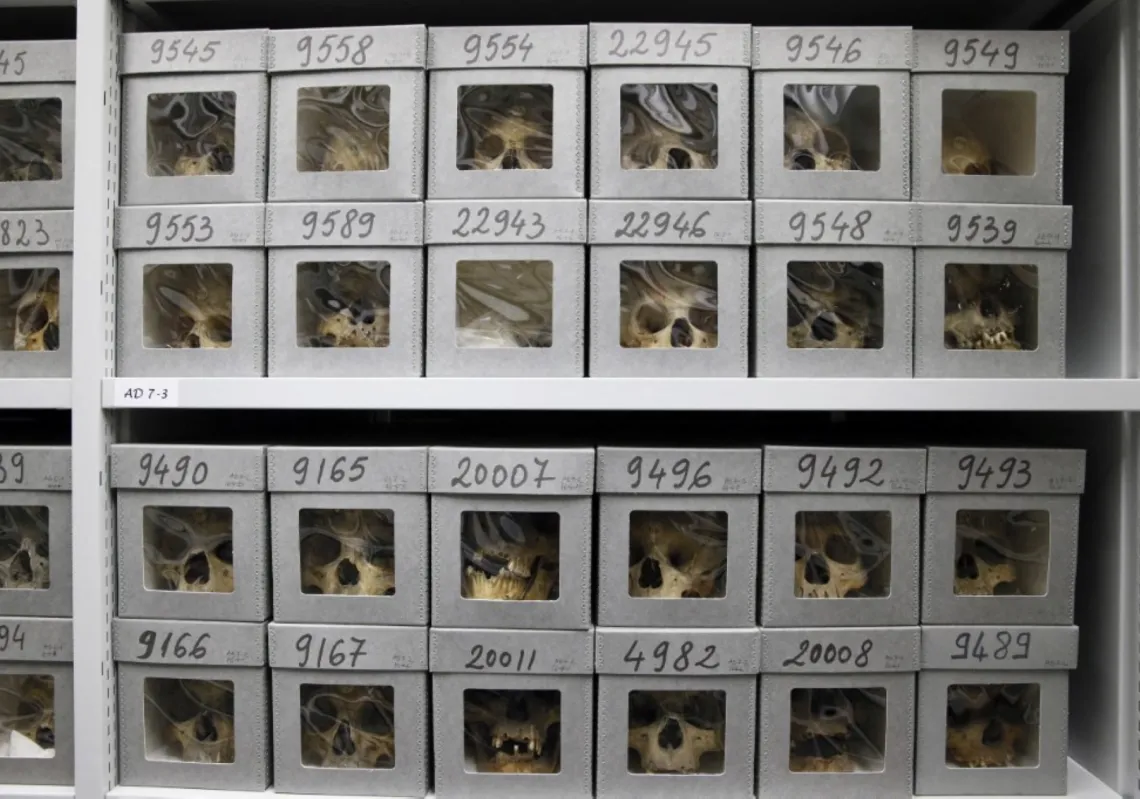
Literature can serve as a means of compensating for the shortcomings of official historical narratives. In such cases, it carries an even greater moral responsibility. The French colonial conquest and the Algerian War, for example, remain highly sensitive subjects for both countries. Yet, a writer such as my Franco-Algerian friend Xavier Le Clerc (born Hamid Aït-Taïeb), in his latest novel The Bread of the French, succeeds in addressing little-known and still-painful aspects of this history while advocating reconciliation and appeasement. The skull of the novel's heroine, the young girl Zahra—taken as a war trophy during the Algerian War and preserved for pseudoscientific study—still resides today in the basement of the Musée de l'Homme in Paris, and may soon be returned to Algeria. The Algerian Minister of Culture, Malika Bendouda, may submit a formal request for its restitution in the coming months. 

To what extent did you adhere to documented historical facts, and at what points did you allow imaginative reconstruction to take over?

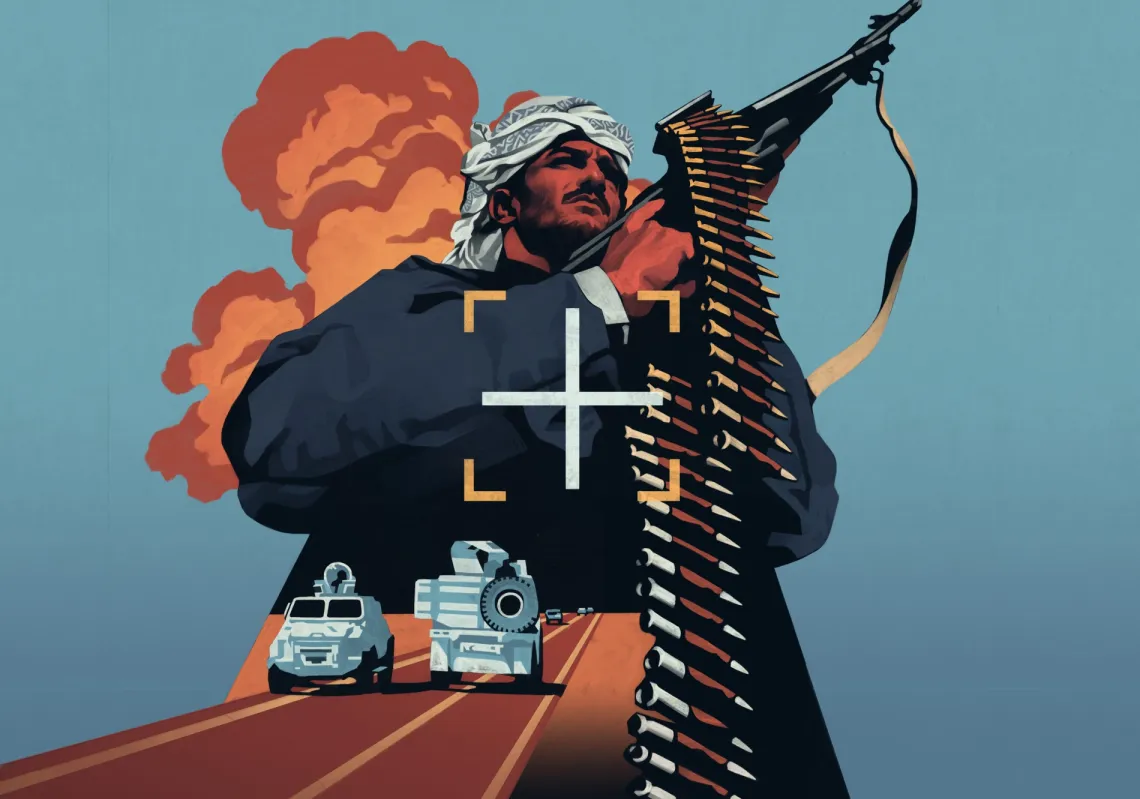
Before beginning the writing process, I gathered extensive documentation, primarily in Gabon and France, as well as during my travels in Senegal, Mali, Côte d'Ivoire, Congo-Brazzaville, and Cameroon. This included records on N'Tchoréré and the Senegalese riflemen. I took great care to ensure factual accuracy, resisting the demands of fiction. Like my protagonist, N'Tchoréré participated in what French colonial authorities termed 'pacification' in Morocco as early as 1921, then served in France and Syria during the Druze revolt—now known as the Syrian Revolution. These historical facts are verifiable in the French military archives to which I had access. The opening of the novel, with this sudden awakening of Charles's consciousness, is entirely the product of my imagination, while the wartime events remain faithful to history.

Did your investigative experience play a central role in shaping the novel's realism and narrative authority?

In my view, the most important element in constructing realism and narrative strength lies in my ability to maintain critical distance from the text as a whole. Only this kind of 'maturity' allows me to master the text, structure it as I see fit, give it the appropriate rhythm, and above all, endow it with a soul.

Supplied
Gabonese novelist Christian Éboulé

Much has been written about your protagonist's inner conflict—his African identity versus forced assimilation into European culture. Do you consider this a purely historical conflict, or does it still resonate in today's societies?

There is no doubt that across the continent—and particularly among a part of the younger generation—the return to African identity, or the need to reclaim it, is a tangible reality. At the same time, on both collective and individual levels, the work of de-alienation and mental decolonisation remains unfinished. This is a prerequisite for ending the tension between assimilation and African identity.

Again, I refer to Fanon, particularly his psychiatric work at the Blida hospital in Algeria, which he later drew on to produce writings now recognised worldwide. On a personal level, reading Lebanese author Amin Maalouf's remarkable essay In the Name of Identity: Violence and the Need to Belong was foundational in shaping my own identity.

Is Charles intended as a portrait of one man's experience, or does he symbolise a generation marked by colonial rupture?

Charles's trajectory, as the hero of my novel, reflects both an individual and a collective experience. He represents his generation and those that followed it, at least up until the dawn of independence. The post-independence generations, to which I belong, have no real sense of what life under colonial rule was like. Nevertheless, we bear its scars, consciously and unconsciously.

Lebanese author Amin Maalouf's essay In the Name of Identity: Violence and the Need to Belong was foundational in shaping my own identity

Gabonese novelist Christian Éboulé

Is the central defeat in the novel primarily military, or is it fundamentally psychological and existential?

The military dimension of the novel, with its wars—particularly the two world wars—serves merely as a framework in which human beings are confronted with the fragility of existence, as well as with its beauty and complexity. This is why the novel opens with Charles's sudden conscious awakening. Now lucid—indeed, almost hyper-lucid—he becomes aware, for example, of the emptiness of his race for rank and decorations. I would not speak of defeat, but rather of awareness.

Was your intention in writing the novel to confront or settle an unresolved score with colonial history?

From the outset, this novel struck me as a means of seeking justice for the Senegalese riflemen—and for the man who was their voice: Captain Charles N'Tchoréré. Moreover, since the captain has no grave—his body was likely crushed by a tank before being thrown into a mass grave—I sometimes imagine the novel serves as his symbolic burial.

font change

Related Articles