Why a Russian base on Sudan’s coast spells trouble for Egypt

Sudan’s army needs a Russian lifeline to avoid collapse in the ongoing civil war. The price is a naval facility in Port Sudan, giving Moscow access to the Red Sea.

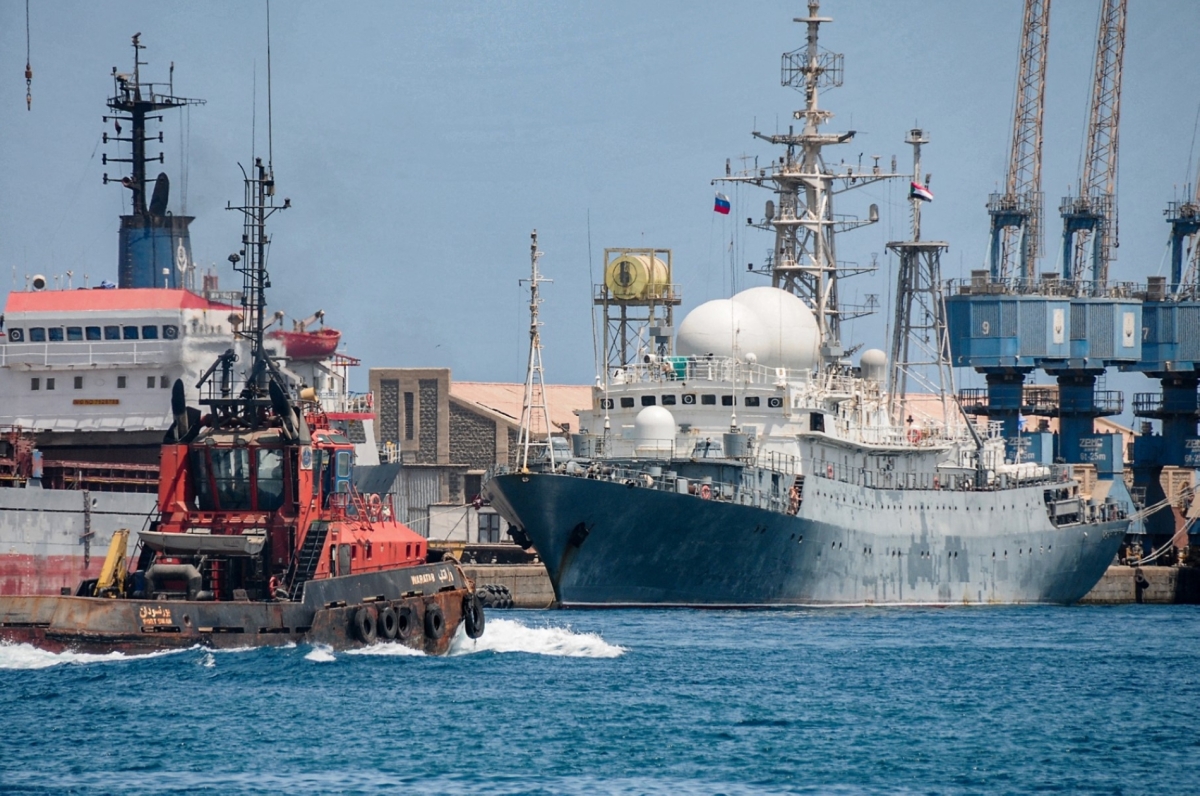
A Russian navy ship docked at the port of the Sudanese city of Port Sudan on 27 April 2021.
Ibrahim Ishaq / AFP
A Russian navy ship docked at the port of the Sudanese city of Port Sudan on 27 April 2021.

Why a Russian base on Sudan’s coast spells trouble for Egypt

Cairo is watching in fury as Sudanese army authorities in Khartoum and their peers in Moscow dust off a 2020 agreement to turn Port Sudan into Russia’s newest naval outpost on the Red Sea, right on Egypt’s southern doorstep.

For Sudan’s embattled army, the rush to animate the deal is understandable; it is losing territory to the Rapid Support Forces (RSF) militia, whilst running out of both ammunition and time in a civil war that is fragmenting Sudan. A Russian base in Port Sudan will be the price of weapons, training, and protection. There are strong motivating factors for Moscow, too. Its base in Tartus, Syria, has been in jeopardy since former Russian ally Bashar al-Assad fled Damascus in December 2024, and the Kremlin needs a warm-water port.

For Egypt, the timing could not be worse, with transit fees through the Suez Canal just starting to recover after two years of Houthi-inflicted chaos on commercial shipping in the Red Sea, and with tensions over Ethiopia’s damming of the River Nile at boiling point. In this context, a Russian enclave just a few kilometres away risks turning Egypt’s most vital waterway—the Red Sea—into a great-power chessboard.

Needed for survival

At its heart, the revival of the 2020 agreement for establishing a Russian naval base in Port Sudan is less about grand strategies, and more about survival. The Sudanese army is fighting for its life in a civil war that began in April 2023 and has already driven millions from their homes. The RSF appears to be flush with cash, drones, and weapons from foreign backers, while the army is running out of bullets, planes, and options.
AFP
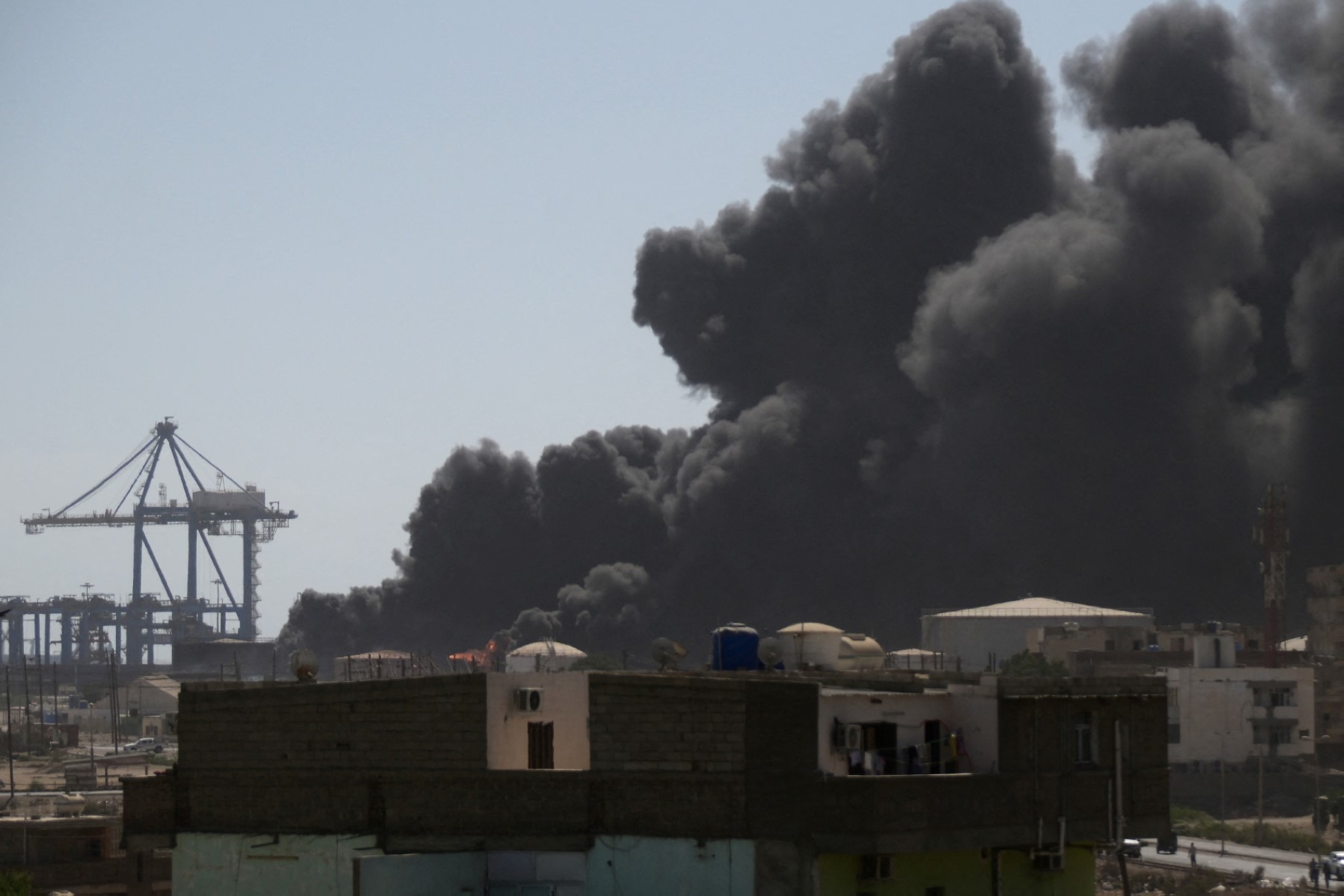
Smoke billows after a drone strike on the port of Port Sudan on 6 May 2025.

In effect since 1994, Western sanctions on Sudan have closed most modern arms markets, leaving the Sudanese army dangerously outgunned. Russia is Sudan’s oldest and most dependable weapons supplier. Most of the Sudanese army’s current arsenal is already Russian made. In exchange for a 25-year lease on a naval base at Port Sudan, Moscow will offer the Sudanese army advanced air-defence systems, fighter jets, ammunition, and training.

The base will both pay for the weapons and give Russian forces a Red Sea base in the Sudanese army’s wartime capital and its last functioning economic lifeline. The RSF, which now controls western Sudan and is pushing east. The army’s calculus is less about great-power alliances, more about battlefield mathematics. Without a massive injection of firepower, its units will collapse within months, if not weeks.

Mutual benefits

Sudanese army generals probably see Russian help as the fastest, cheapest, and most reliable lifeline available, even if the price is a Russian military presence on Sudan’s coast for a quarter of a century or longer. If the deal is ratified, Russia will bring in around 300 military personnel and four warships, including some that are nuclear-powered, to be stationed at Port Sudan for the lease period.
Ibrahim Ishaq / AFP
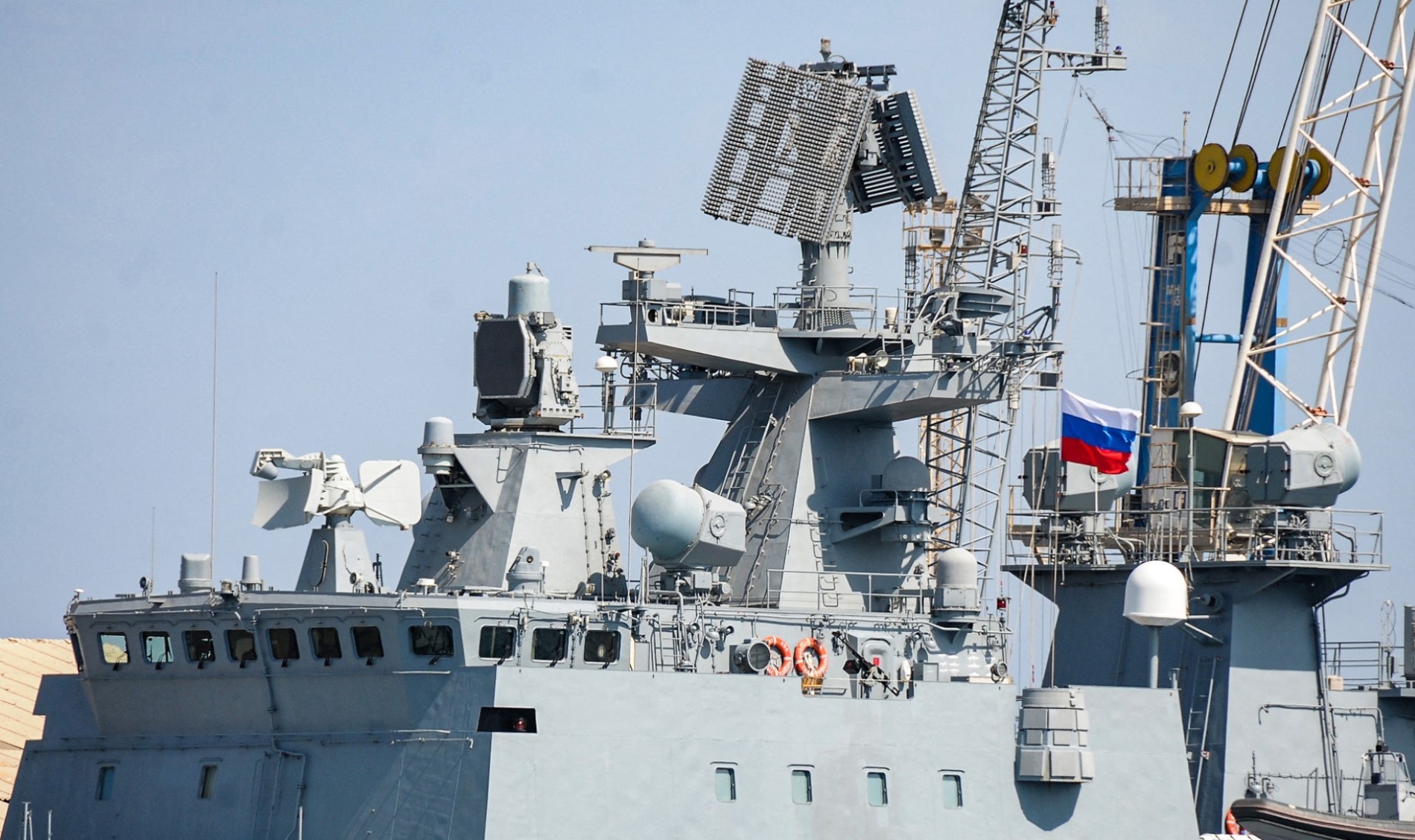
Russian Navy frigate RFS Admiral Grigorovich (494) anchored in Port Sudan on 28 February 2021.

For Moscow, the timing is important, given the precarious nature of its Tartus presence. Almost two years earlier, Türkiye slammed the door on the Bosporus and the Dardanelles, the gateway Russia’s Black Sea Fleet needs to pass through. Ukrainian attacks have damaged Russia’s navy and blocked its usual routes, forcing its ships to take slow, risky detours. A Russian base at Port Sudan could change the game in a stroke.
For Moscow, the timing is important, given the precarious nature of its naval base in Tartus, Syria

Such a base would be far more than a space to park Russian ships. It would be Moscow's first proper naval foothold on the African continent, and could act as a repair yard, fuel depot, and station for intercepting electronic communications. It would be safely out of the Mediterranean's narrow and easily blocked straits, and far from NATO's main patrol zones.

Yet there are some realities to face. War in Ukraine has drained Russian stocks of ammunition, missiles, and money. Its factories and shipyards are struggling. After three years of brutal war, some ask whether Russia can still afford to build, supply, and protect a brand-new base 7,500km from home.

Egyptian dread

For Egypt, Sudan is a neighbour, a southern shield, an upstream guardian of the Nile, and a final buffer before against problems in the Horn of Africa. Any foreign military footprint on Sudanese soil, especially along the Red Sea coast, is treated as an encroachment on Egypt's vital security perimeter.

Egypt has a long-standing, almost doctrinal aversion to foreign bases near its borders, and while it warmly embraces Russian arms deals and joint exercises with Russia, it draws a red line around permanent foreign military installations, whoever they belong to.

Maxim Shemetov / AFP
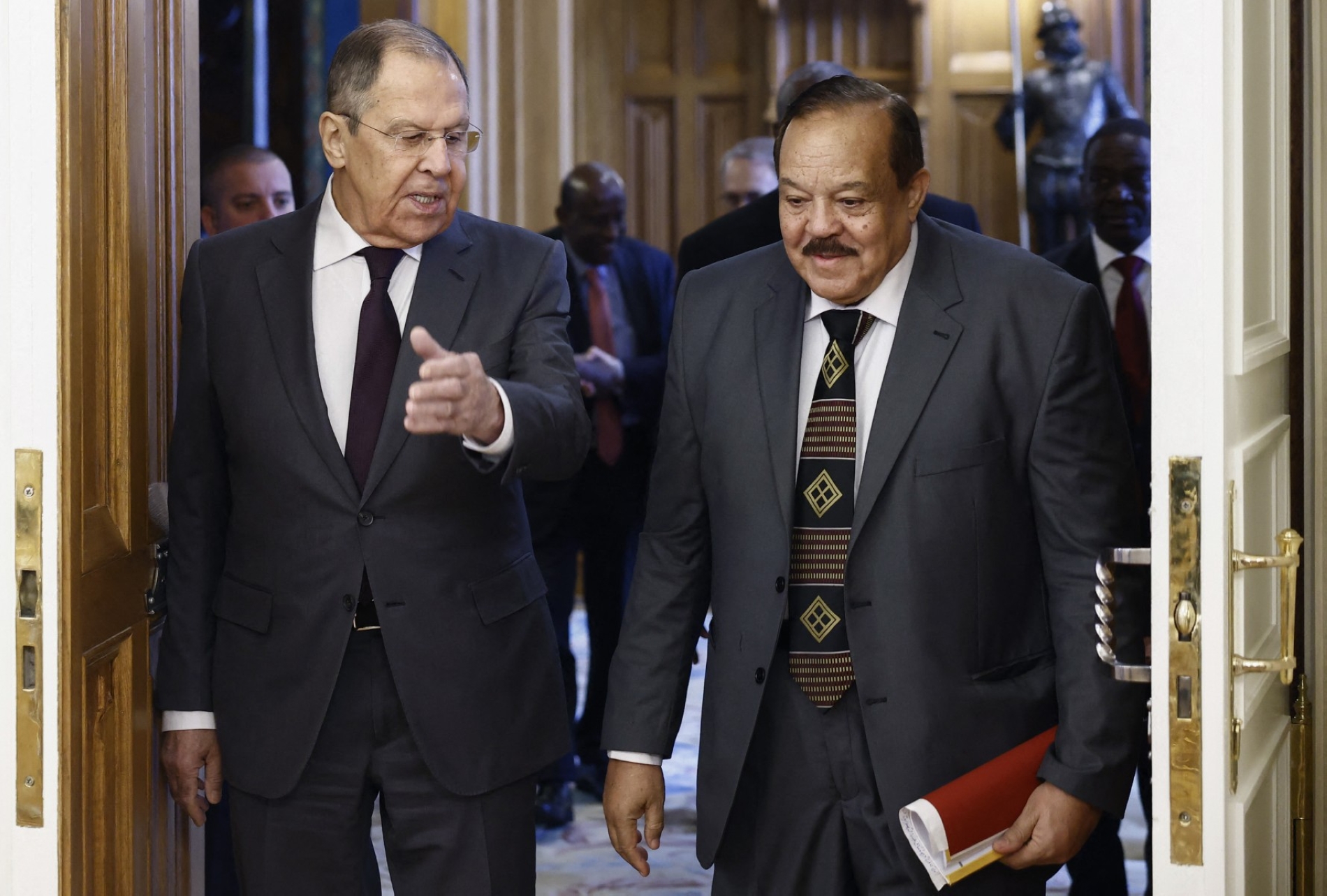
Russian Foreign Minister Sergei Lavrov (L) with his Sudanese counterpart Ali Yousuf Al-Sharif in Moscow on 12 February 2025.

History shows how seriously Cairo takes this. In 2017, when then-Sudanese president Omar al-Bashir signed an agreement that gave Türkiye a naval foothold on the Red Sea island of Suakin, Egypt was apoplectic. The idea of Turkish troops on the Red Sea repulsed Egyptians on a level far deeper than the well-known ideological enmity between Cairo and Ankara.

Likewise in 2020, when serious talk of a Russian base at Port Sudan first surfaced, Egyptian intelligence chiefs reportedly flew to Khartoum to convey the sense of betrayal felt in Cairo. There was a feeling of rules having been broken. Today is no different.

Assessing the risks

Sudan's civil war has already pushed hundreds of thousands of refugees into Egypt, increasing its economic problems and destabilising its southern border. A Russian enclave on the Red Sea coast may let Russia protect the Sudanese army, undercutting Egypt's traditional role as Sudan's main patron, but the timing is problematic.

AFP
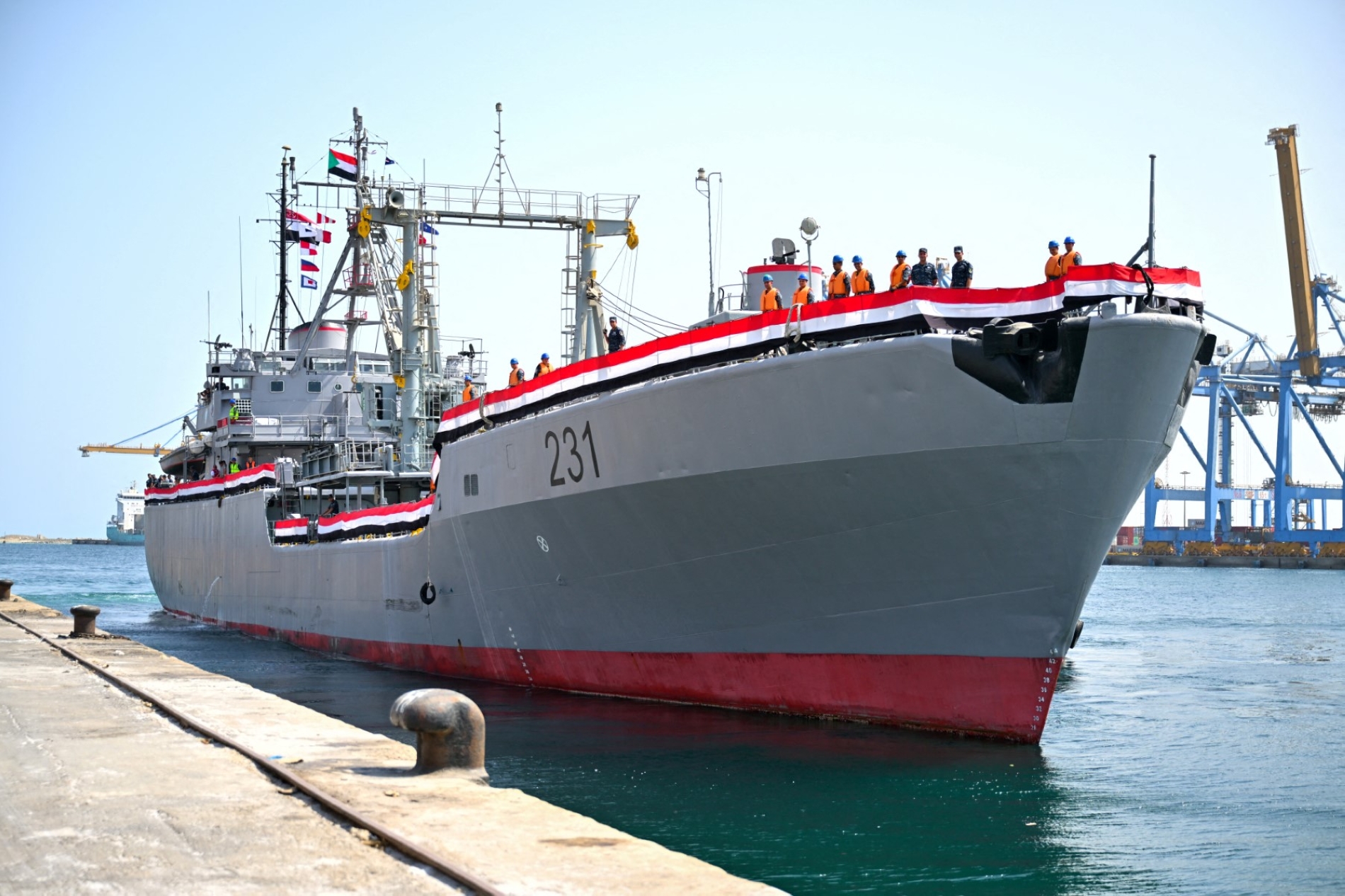
The Egyptian Navy supply ship Halayib (231), carrying humanitarian aid for war-torn Sudan, docks at Port Sudan's northern harbour on 14 September 2024.

Apart from carrying 12% of global trade, the Red Sea remains Egypt's 'golden goose' given the billions of dollars in Suez Canal transit fees that can usually be expected. Today, traffic is only just beginning to recover. Inserting a Russian naval facility into this fragile equation lets Moscow monitor and potentially disrupt the shipping lanes Egypt regards as its sovereign lifeline.

Not far from Sudan, Djibouti already hosts US, French and Chinese bases. Adding a Russian base along the same stretch will turn the Red Sea into a great-power free-for-all. Another state seeking Red Sea access is landlocked Ethiopia, with whom Egypt is at loggerheads over the damming of the Nile. A precedent that legitimises foreign bases on Sudan's coast will weaken Cairo's diplomatic leverage against Addis Ababa.

Bilateral concerns aside, a security spiral becomes likely. If the US tightens sanctions or sends more military forces to push back against Russia, the Red Sea could quickly go from trade route to battleground—exactly what Egypt has spent decades trying to prevent. The agreement that Sudan's army celebrates as a lifeline is a loaded gun pressed to Egypt's head.  

font change