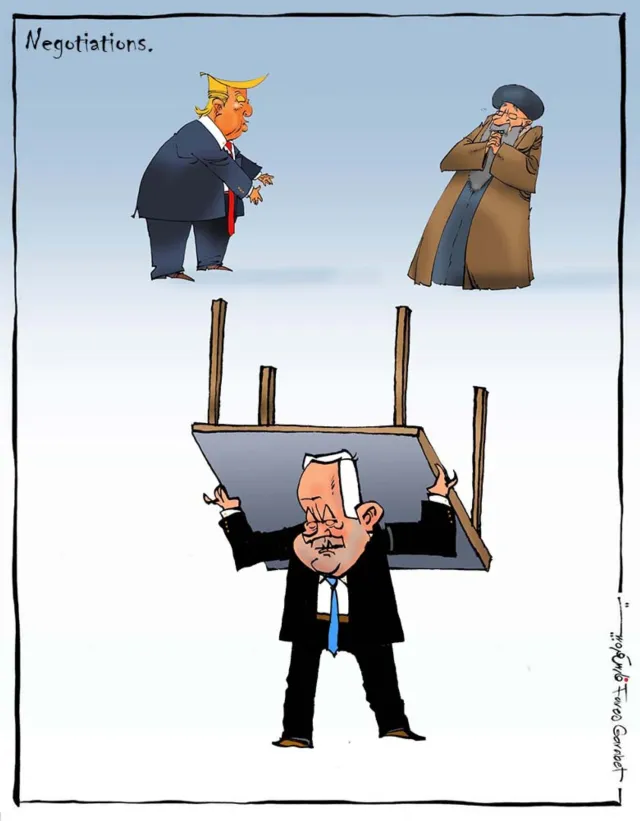
As the US-Iran war intensifies, it has drawn in non-state actors across the region. While Baghdad says it is not a party to the conflict, militias have stepped in on Tehran's side.
Powerful militias have usurped the state's authority by opening a war front to support Iran. At this critical juncture, Iraq needs statesmen willing to put the state first.
The US-Israeli war against Iran aims to draw in Gulf states, but history has shown that entering wars is far easier than exiting them. Prudence is needed now more than ever.
Tehran says any negotiated settlement to the US-Iran war must include its Hezbollah allies, but this could take a long time—a luxury Lebanon may not have.
Amid mounting international, regional and domestic pressure, the group's fate hangs in the balance. A defeat of the Islamic Republic, therefore, could spell the end of Hezbollah.
From military spending to energy markets, the US-Israeli war on Iran is driving rising costs, with the Strait of Hormuz emerging as a central pressure point
Any disruption in the Hormuz has cascading knock-on effects that extend far beyond energy markets, impacting international trade. Al Majalla explores all this and more.
The US-Israeli war against Iran aims to draw in Gulf states, but history has shown that entering wars is far easier than exiting them. Prudence is needed now more than ever.
PA Foreign Minister Varsen Aghabekian Shahin tells Al Majalla that Israel is taking advantage of the fact that the world is distracted by the US-Iran war to create irreversible facts on the ground
Given the effective closure of the Hormuz Strait and Houthi threats to close off the Red Sea, Syria may emerge as a corridor and conduit to bypass these embattled maritime chokepoints
A former army forensics employee who later became known as Caesar tells Al Majalla how he risked his life to expose the torture and killing of countless Syrians in regime prisons