Russia’s timely reminder of its vast nuclear arsenal

Military exercises in Belarus at an unusual time of year seem designed in part to make Moscow’s adversaries think twice

In this image, taken from a video provided by the Russian Defence Ministry Press Service on 21 May 2026, a Russian navy seaman takes part in drills of Russia's nuclear forces.
Russian Defence Ministry Press Service/AP
In this image, taken from a video provided by the Russian Defence Ministry Press Service on 21 May 2026, a Russian navy seaman takes part in drills of Russia's nuclear forces.

Russia’s timely reminder of its vast nuclear arsenal

On 19 May, Russia began a large-scale military exercise that lasted three days, during which nuclear weapons were transferred to field storage facilities in Belarus, capping a series of joint drills. Russia’s President Vladimir Putin used the opportunity to stress that the country’s nuclear triad (launched from land, sea, and air) through strategic bombers, ballistic missiles, and submarine-launched missiles “is the guarantee of sovereignty”. Interestingly, the exercise coincided with his visit to China, another nuclear power.

The wider backdrop to the exercise is the ongoing wrangling in Pakistan over Iran’s nuclear programme, the grinding stalemate of conventional war in Ukraine, and rising tensions in the Baltic region, fuelled by repeated drone incidents. Yet Russia’s nuclear posturing is hardly new. Threats to resort to tactical nuclear weapons have been made since Moscow first invaded Ukraine in February 2022. Former Russian president Dmitry Medvedev, now deputy chairman of the Security Council, has issued especially bellicose statements on the potential use of nuclear weapons.

Against this tense backdrop, the exercise in Belarus last month seemed intended to send a clear message to Europe and the US. There is anxiety in Brussels about Europe's security and its place in the global geopolitical order, the Russian invasion being the continent’s first major land war in 80 years.

This has made non-nuclear states increasingly interested in obtaining a nuclear weapon. In the 1990s, it was India and Pakistan that crossed the threshold to join the nuclear club, which had previously been limited to the five major victors of the Second World War, plus Israel (which maintains a policy of ambiguity). North Korea joined relatively recently when it conducted its first nuclear test in 2006.

The rush to get a bomb was restrained through both the Treaty on the Non-Proliferation of Nuclear Weapons (NPT), which entered into force in 1970, and the voluntary renunciation of nuclear ambitions by countries such as South Africa, Argentina, Brazil, and former Soviet states, including Ukraine. But a flurry of 21st-century conflicts and a new sense of geopolitical ‘disorder’ as China grows in strength and the United States withdraws from multilateralism have prompted a rethink.

Iran currently commands the world’s attention owing to the recent six-week war and the continuing economic fallout, but nuclear concerns are far more widespread, reinforced by the failure of UN-hosted negotiations in May to reaffirm the objectives of the NPT. There are now mounting fears of a new nuclear arms race, whether this involves Iran or not. This was the third consecutive NPT review failure, with unsuccessful conferences held in 2015 and 2022. It reflects a growing divide among the major nuclear powers over disarmament and nuclear proliferation.
Reuters
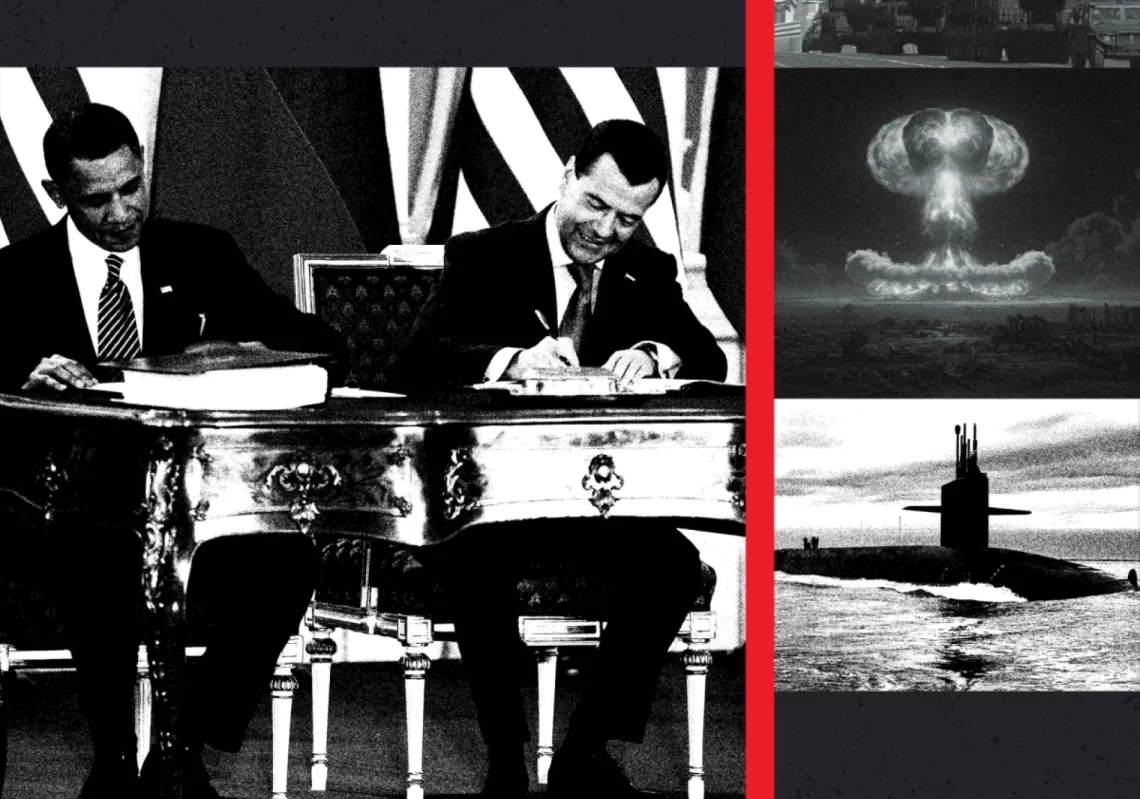
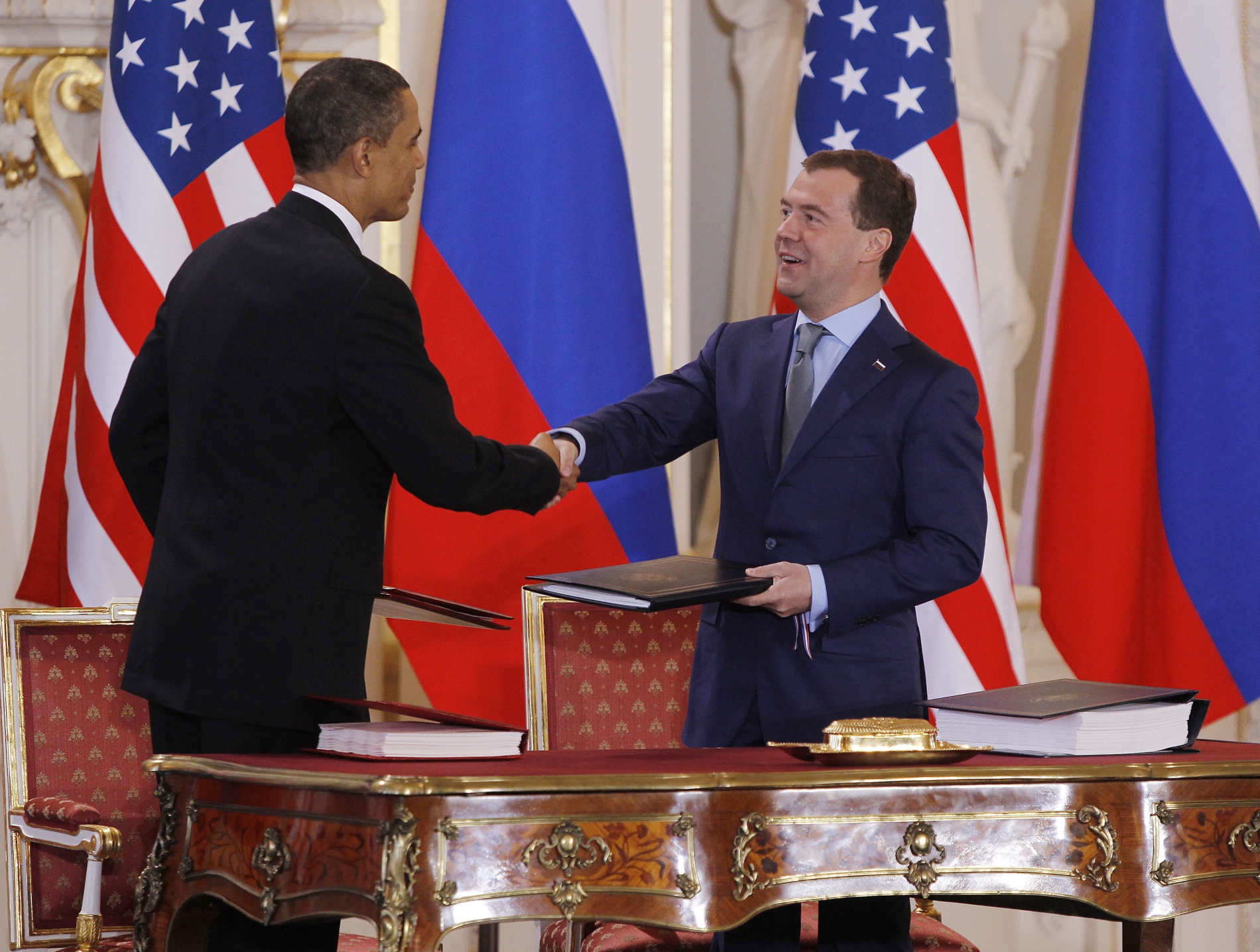
US President Barack Obama and Russian President Dmitry Medvedev shake hands after signing the new Strategic Arms Reduction Treaty (START II) at Prague Castle, Prague, on 8 April 2010.

Arms control vacuum

As a result, there is now a vacuum in global arms control, following the expiry last February of the last remaining treaty limiting the size of Russian and American strategic nuclear arsenals. Moscow formally suspended its participation in February 2023, a year after its invasion of Ukraine, citing the impossibility of inspections and the broader geopolitical environment. Washington has said it wants a “more suitable” agreement that includes China, and has not sought to extend the treaty in its current form.
Russia put on an unusually expansive show of nuclear bravado in recent exercises, with tens of thousands of troops and a wide array of strategic assets

Russia put on an unusually expansive show of nuclear bravado during recent exercises involving tens of thousands of troops from several branches of the armed forces. A wide array of strategic assets included more than 200 missile launchers, 140 aircraft, 73 ships, and 13 submarines, eight of which were nuclear submarines. The Russian Ministry of Defence described the drills as "preparation for the use of nuclear force in the event of a security escalation".

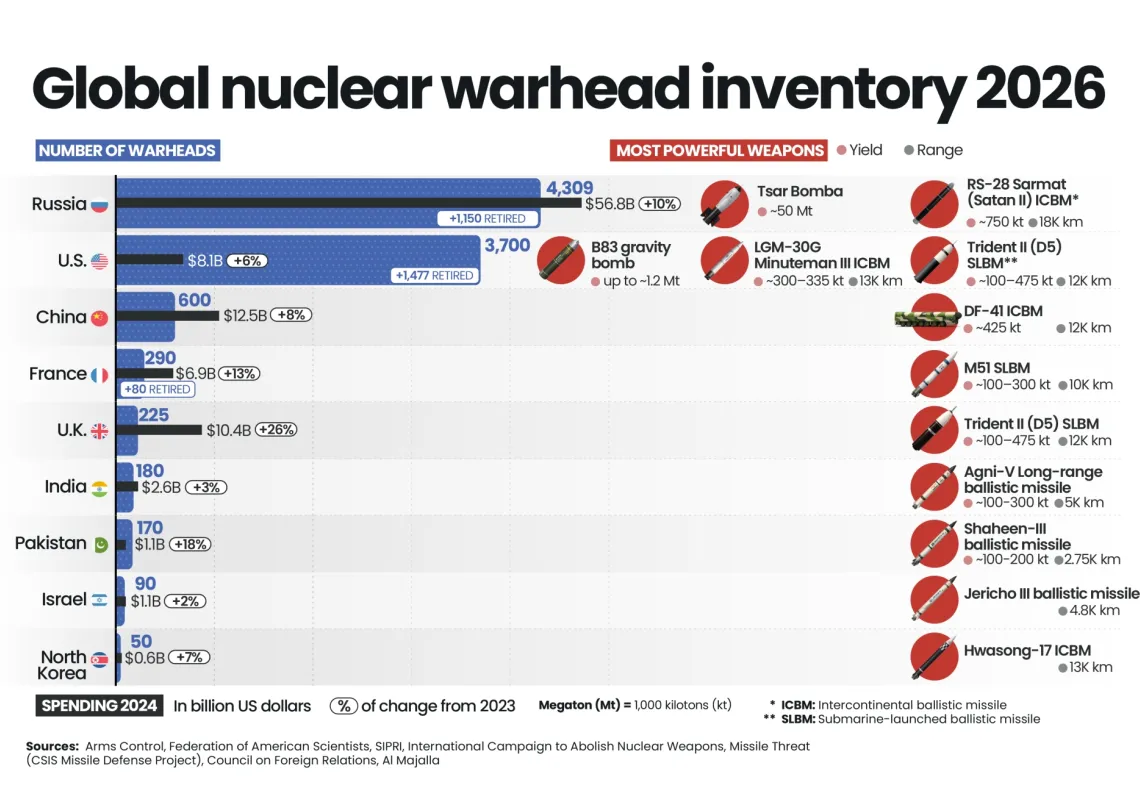
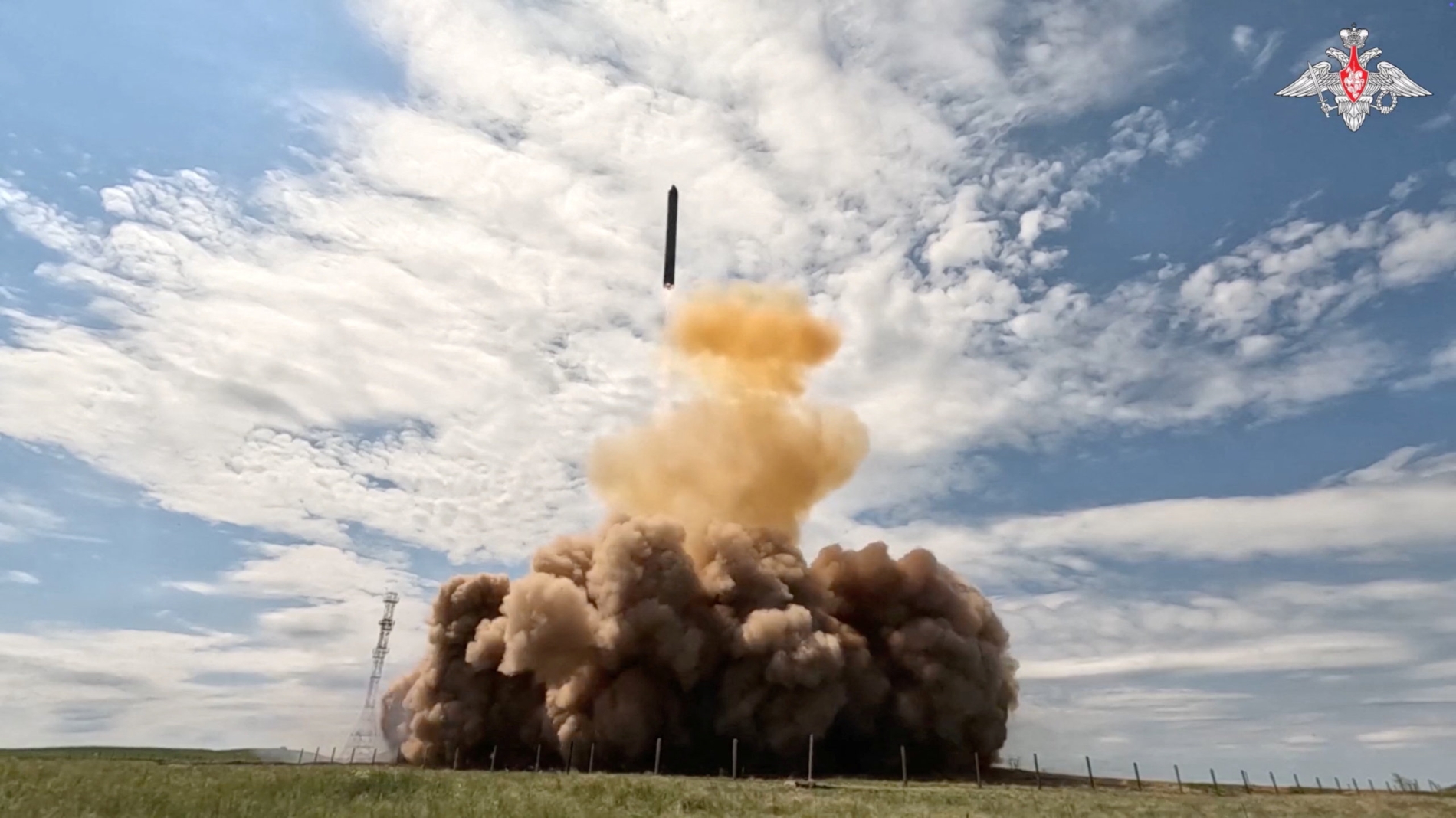
For observers, the manoeuvre in May was hardly surprising, but the timing was unusual, given that Russia usually conducts its nuclear exercises in October. It remains the world's foremost nuclear power, with 5,459 warheads, almost 45% of the world's total. Its nuclear arsenal is also highly diverse. The recent show of strength, including the annual Victory Day Parade held on 9 May, continued with the successful test launch of its new Sarmat intercontinental ballistic missile.

Russian Defence Ministry/REUTERS
A test launch of Russia's Sarmat intercontinental ballistic missile at an unidentified location, in this still image taken from a video released on 12 May 2026.

Coinciding displays

The timing of the nuclear manoeuvre also coincided with large-scale Ukrainian attacks, including strikes near the Russian capital. On 16 May, Russia was attacked by around 600 Ukrainian drones, killing four people. Putin has sought to reassure Russian citizens of their country's strength and is reluctant to acknowledge that a lesser military power, such as Ukraine, is having success.

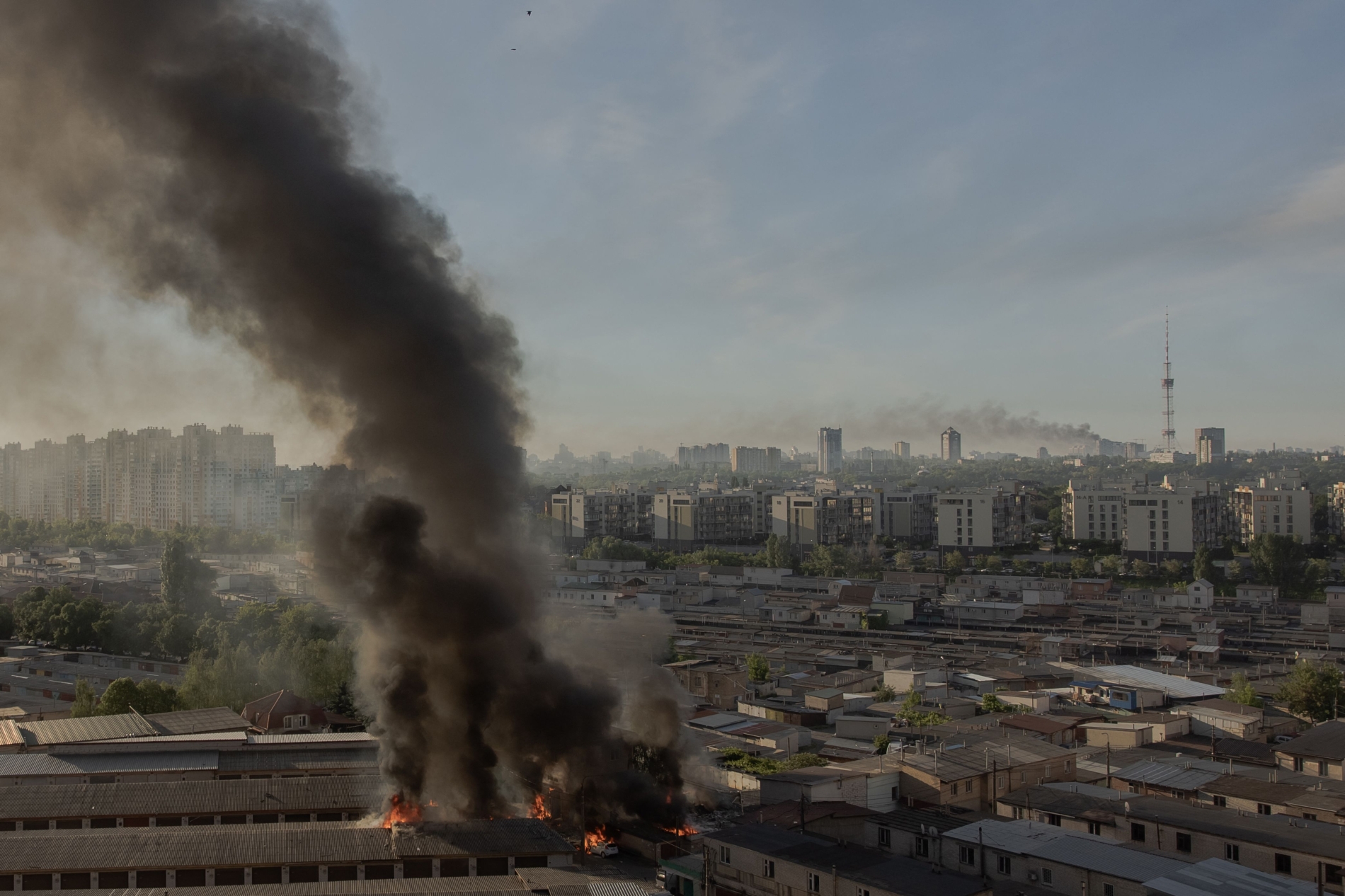
Moscow responded to the bombardment with the launch of its hypersonic Oreshnik missile, which can carry a nuclear warhead. This struck civilian sites in Kyiv on 25 May and falls within a policy of "terrorising Ukraine," according to Kaja Kallas, the European Union's foreign policy chief. Putin knows that US President Donald Trump's mind is on the Middle East, so analysts think there is an element of opportunism to Putin's choices.

But not all has gone to plan in Ukraine. Kyiv's forces recently regained 480 square kilometres of territory occupied by Russia in an area at the junction of three strategic provinces: Dnipropetrovsk, Zaporizhzhia and Donetsk. Although this represents just 0.5% of the occupied Ukrainian territories, it was a symbolic step towards reversing Russia's advance. Therefore, the Kyiv strikes could also be seen as an attempt to curb further Ukrainian advances. Another reason could be a Russian attempt to remind the world of its nuclear strength at a time it is experiencing military and political setbacks in Venezuela, Mali, and Syria.

Roman PILIPEY / AFP
Smoke rises from different places damaged during Russian missile and drone strikes, in Kyiv on 2 June 2026.

Nuclear umbrella extension?

But in Europe, there has been talk of extending America's nuclear umbrella to include NATO countries. More European countries—particularly Poland and the Baltic states—are interested in hosting so-called US dual-capable aircraft (DCA), which can deliver nuclear strikes. NATO's current nuclear-sharing programme currently involves Belgium, Italy, Germany, the UK, the Netherlands, and Türkiye. These six states are approved to host American DCA and 'forward deployed' nuclear weapons.

Earlier in March, French President Emmanuel Macron announced plans to expand his country's nuclear arsenal, adding that Paris may allow its European partners to host French nuclear-capable aircraft in temporary deployments. Russia quickly warned that any state doing so would make itself a target in the event of conflict. Alexander Grushko, Russia's deputy foreign minister, criticised the "uncontrolled expansion" of NATO's nuclear capabilities as a threat to Russia.

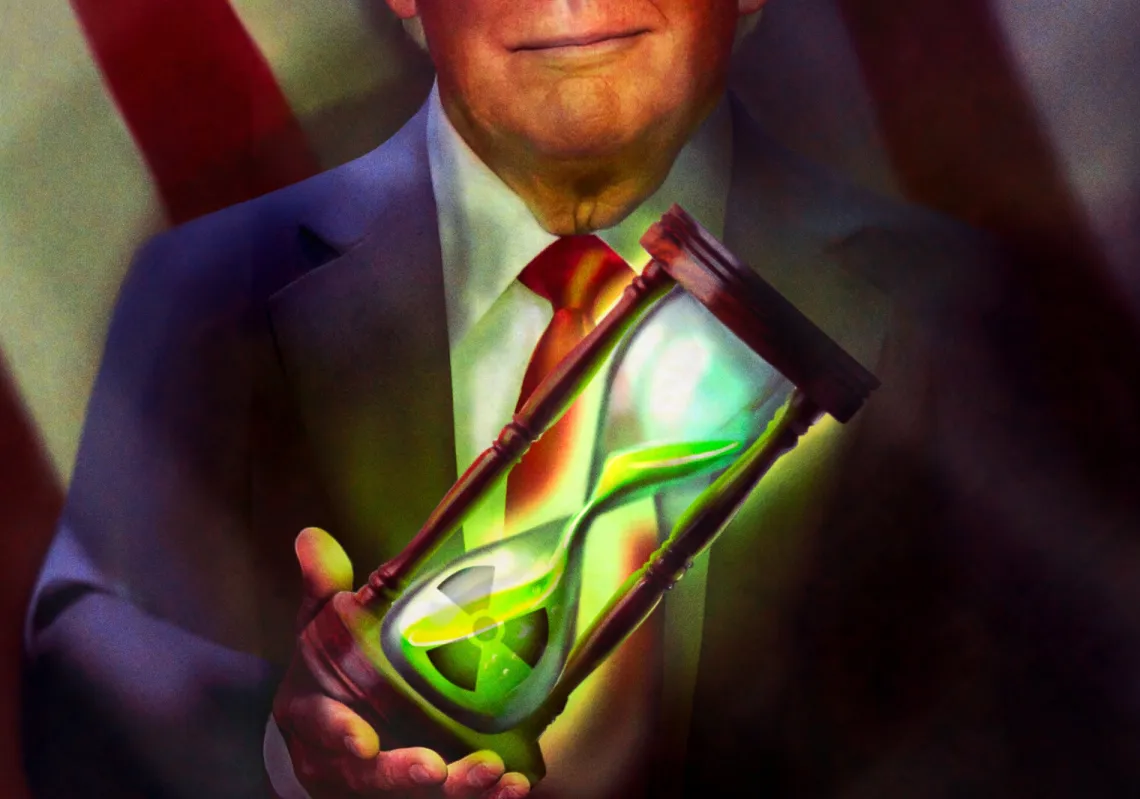
Whether Trump finally gets his Iranian climbdown or not, the interest of other non-nuclear states in 'joining the club' is unlikely to diminish in the coming years, as tensions mount on the Korean peninsula and the Taiwan Strait. And with China racing towards 1,000 nuclear warheads and Russia continuing to flex its nuclear muscles, the protection of a nuclear umbrella is becoming increasingly attractive to non-nuclear-armed states.

font change