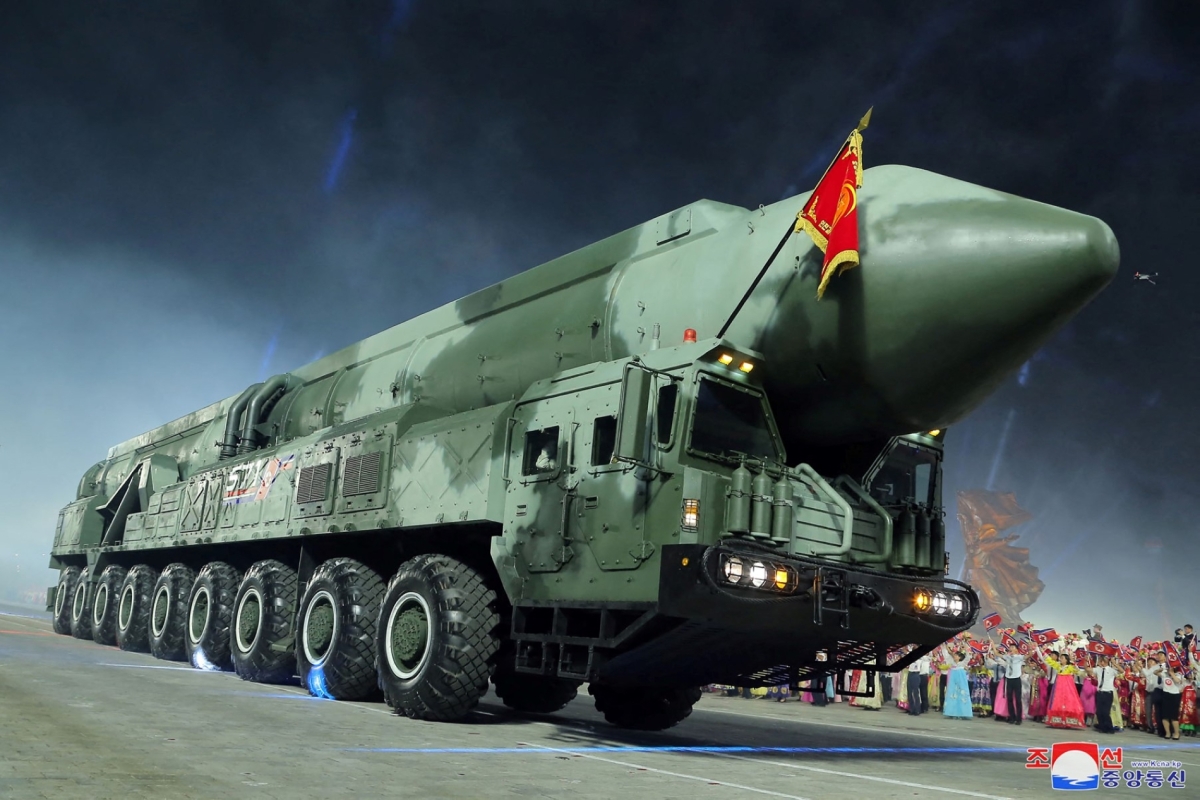

With US-Israeli strikes against Iran earlier this year aimed in part at curtailing Iran’s nuclear ambitions, the subject of atomic weapons has once again risen to the fore in global policy discussions, not least because North Korea is now a nuclear-armed state.
In Europe, states that once counted America as an ally now wonder whether Washington would be there if needed. Few think it would, so there is growing talk of an independent European Union nuclear deterrent, building on the weapons that Britain and France already possess. Likewise, across the Korean peninsula, the South Korean public now supports Seoul having its own arsenal, given Pyongyang’s new capabilities and temperament. Even in Japan, some mainstream politicians have begun to raise a subject long considered taboo in a country where the scars of Hiroshima and Nagasaki are still raw.
Much of this movement stems from doubts over the credibility of the American nuclear umbrella, which for decades meant that states chose not to pursue nuclear weapons of their own. The anxiety comes from the strategic direction of the Trump administration, which has withheld support for Ukraine against Russia, and which has cast public doubt over its commitments to NATO, a transatlantic alliance bound by a mutual defence pact. As a result, states are now examining the development of national nuclear programmes or seeking alternative deterrence guarantees.
In early March, Polish Prime Minister Donald Tusk told the country’s parliament that Poland “must reach for the most modern capabilities, including nuclear weapons”. Similar debates have intensified among current and former officials in East Asia. In Japan, which pledged in 1967 to neither produce, possess, nor allow nuclear weapons on its territory, talk of acquiring such weapons is moving from the margins to the centre of national political debate.
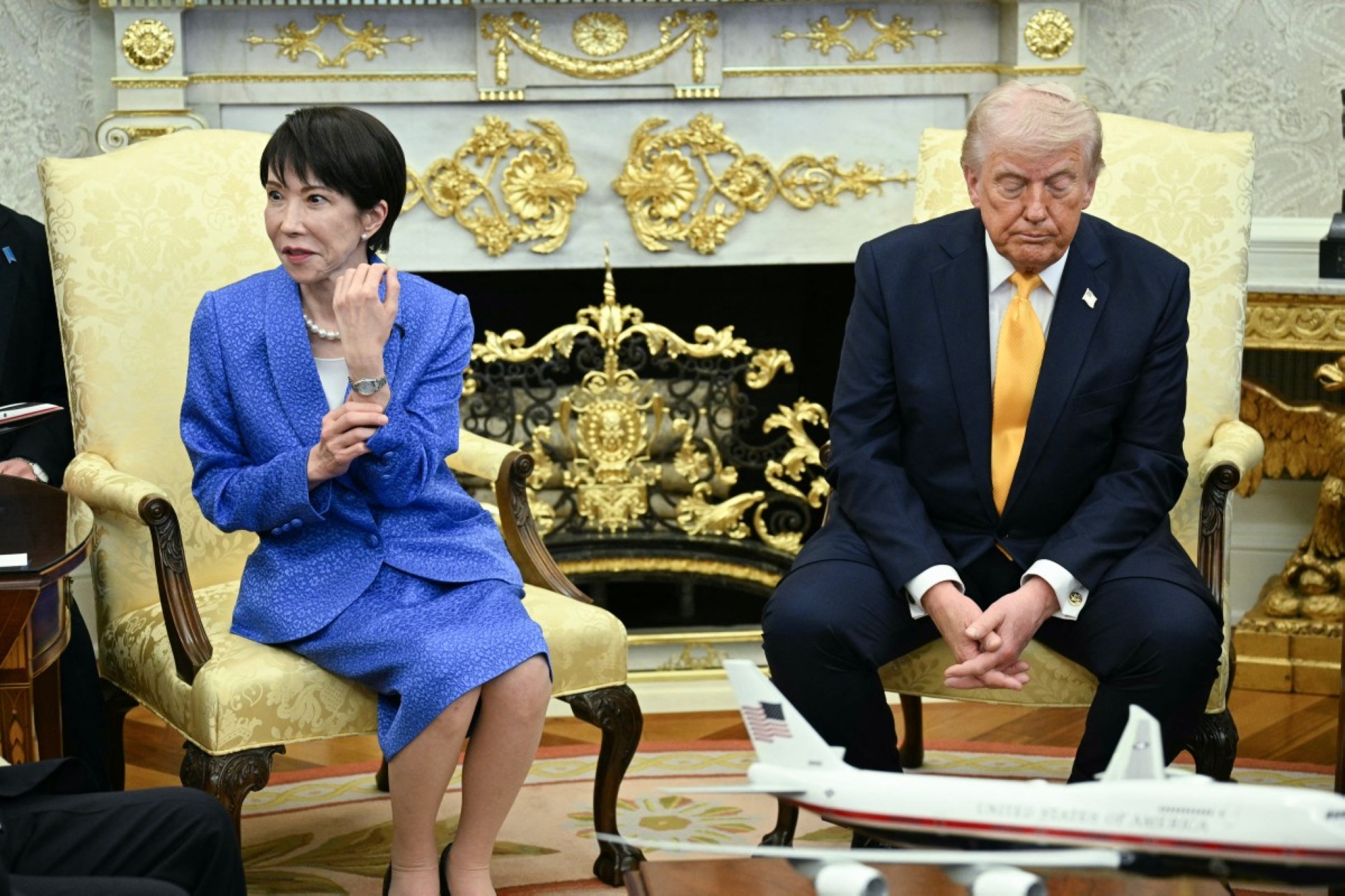
It is no longer a forbidden topic in Tokyo’s corridors of power, and in December 2025, Japanese media reported that a senior government official close to Prime Minister Sanae Takaichi had told journalists that Tokyo should have nuclear weapons. Given Japan is the only country ever to have suffered nuclear attacks in wartime, the statement shocked Japanese society.
Two years earlier, in 2023, South Korea’s then President Yoon Suk Yeol said Seoul might need to “deploy tactical nuclear weapons or develop them” through its own capabilities. His successor, Lee Jae Myung, adopted a more cautious tone, but South Korean society supports such a course—a poll conducted by the Asan Institute in April 2025 showed that 76.2% of South Koreans want homegrown nuclear weapons.
Growing insecurity
Bilateral alliances with the United States have long formed the cornerstone of security for both Japan and South Korea, but the American security guarantee no longer commands the confidence it once did. US military power in the region has declined relative to China’s, and Trump’s disdain for alliances—evident in his recent threats to withdraw from NATO—raise fears that the US might abandon its Asian allies, too.
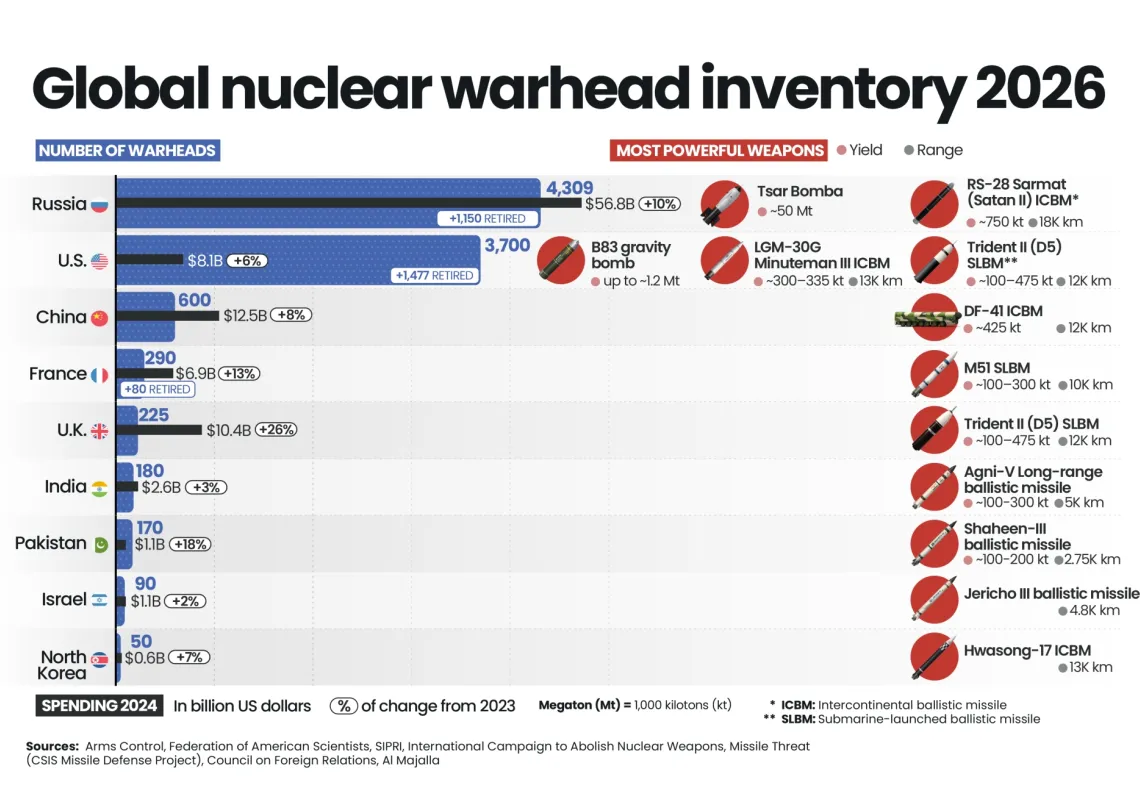
China has deepened this sense of insecurity by expanding its military capabilities, including its nuclear forces. The US Department of Defence estimates that China has more than 600 operational nuclear warheads and could exceed 1,000 by 2030. After Prime Minister Takaichi said in November that a crisis over Taiwan might require the deployment of Japan’s Self-Defence Forces, Chinese officials responded with hostile rhetoric, export restrictions, and a reduction in Chinese tourism.
Russia has helped to undermine regional security. Its full-scale war on Ukraine in 2022 showed that nuclear-armed states can attack non-nuclear neighbours and use the threat of nuclear escalation to deter third-party intervention. The consolidation of ties between Russia and North Korea, embodied in the 2024 Comprehensive Strategic Partnership Treaty, led Tokyo and Seoul to assume that Russia is providing technical assistance to Pyongyang. In April, the International Atomic Energy Agency (IAEA) noted a “very serious increase in North Korea’s nuclear weapons production capabilities”.
Despite having all the technology needed to produce them, Japan is unlikely to seek nuclear weapons soon, given the sensitivity of the past. South Korea presents a different case, however. Its earlier nuclear legacy, together with strong public support, creates a real possibility that it may acquire nuclear weapons in the future, despite the current centre-left government’s adherence to a policy of nuclear abstention.
Despite decades of warnings from nuclear non-proliferation experts, the entry of new members into the nuclear club now looks plausible. With an alignment emerging between Russia, China, and North Korea, and with American security commitments receding, Japan and South Korea may seek admittance, especially since last month’s media reports that North Korea had amended its constitution to require a retaliatory nuclear strike if its leader, Kim Jong Un, is killed. The Telegraph reported that the amendment came against the backdrop of the killing of Iran’s Ali Khamenei.
According to South Korea’s National Intelligence Service, the updated North Korean clause states that “if the command-and-control system of the state’s nuclear forces is endangered by attacks from hostile forces... a nuclear strike shall be launched automatically and immediately”. This replaces the nuclear doctrine adopted in 2013, which stipulated that North Korea’s nuclear weapons “may only be used by a final order from the Supreme Commander of the Korean People’s Army (Kim) to repel an invasion or attack by a hostile nuclear-armed state and to carry out retaliatory strikes”.
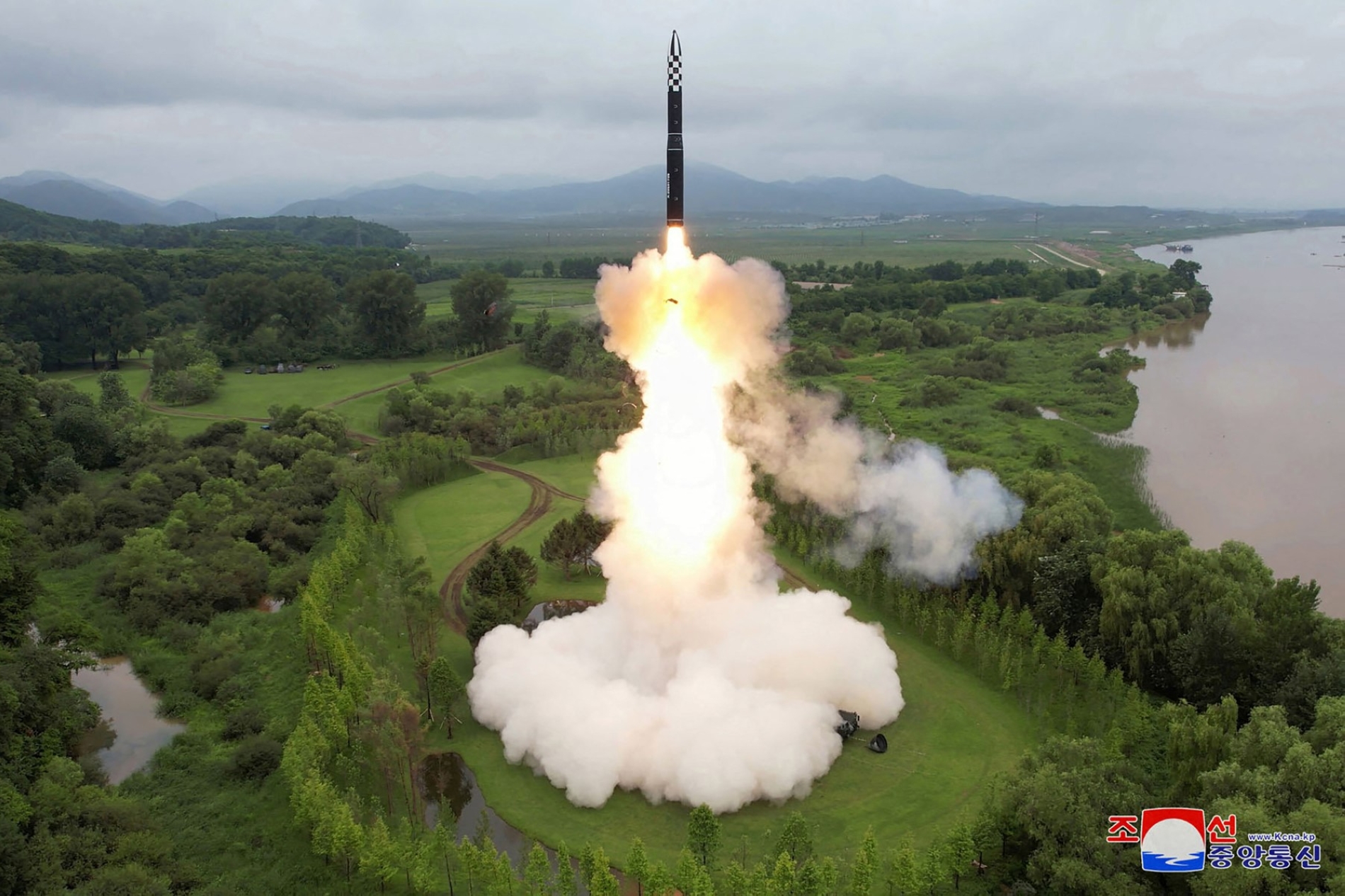
Last month, Kim pledged to further strengthen his country’s nuclear capabilities while maintaining a hardline posture towards South Korea, which he described as “the most hostile state”. Pyongyang withdrew from the Nuclear Non-Proliferation Treaty in 2003 and conducted its first nuclear test in 2006. Ever since, it has sought to develop advanced nuclear weapons and ballistic missiles and describes its nuclear-armed status as “irreversible”.
According to the US intelligence community's 2026 Annual Threat Assessment, North Korea has around 50 nuclear warheads and long-range missiles like the Hwasong-18, with a 15,000km range. In April 2026, a US defence official told a hearing that North Korea's nuclear forces are "increasingly capable of targeting the US homeland", and that its missile forces are "capable of striking South Korea and Japan with nuclear or conventional warheads".