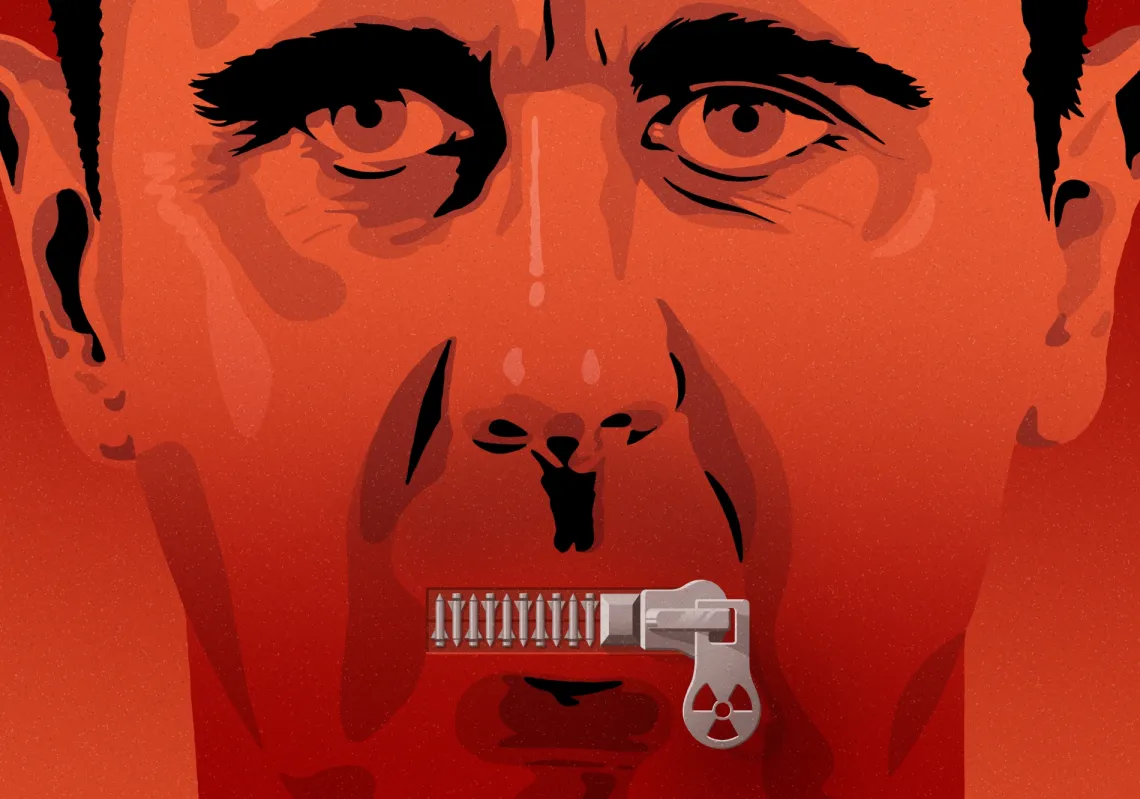
Hiroshima and Nagasaki revealed the kind of destruction possible with nuclear warfare. While notable disarmament efforts had been made in the years thereafter, that no longer seems to be the priority.
Moscow has interpreted recent US policy decisions to mean that it cares little about its Syria policy and that the time is ripe to push American forces out. Here is what Washington can do about it.
The threat to invade Poland may be a way to divert attention from Putin's mass purge of Russian figures and mask internal divisions with a bit of bravado.
The united response to Russia might have been the exception rather than the rule. It has long proved difficult for the EU to agree on foreign policy positions.
The Wagner mutiny might elicit caution over empowering mercenaries too much, but it is unlikely to stop countries from employing them as the benefits seem to outweigh the risks
The position of Wagner and Prigozhin within the balance of power in Russia has moved from an academic debate to an existential challenge. The magnitude of challenges Putin faces has grown.
From Hitler and Mussolini to South American dictators, world leaders have long seen in football's biggest tournament an opportunity to further an agenda
From 3D players to data-transmitting balls, the sport's biggest tournament is awash with technology to help with everything from offside decisions to viewer angles, but does this come at a cost?
Netanyahu continues to defy calls from Washington to pump the brakes on Israel's offensive in Lebanon, something Iran has linked to a future peace deal
While it could be tied to military calculations related to the current US-Iran war, it also reflects a deeper struggle between two opposing regional visions