The murky origins of al-Qaeda explained

Thousands of Muslim volunteers flocked to Afghanistan in 1979 to fight the Soviets in response to a rallying cry, aided by the largest covert operation in CIA history

Al Majalla/Reuters

The murky origins of al-Qaeda explained

Not all anniversaries receive equal attention, even when they are related. As the 25th anniversary of the attacks of September 11 arrives, another significant date recently went largely unnoticed. August 23 represented the 30th anniversary of a publication in Al-Quds Al-Arabi, an Arabic-language newspaper based in London. Titled "Declaration of War Against the Americans Occupying the Land of the Two Holy Places," the 12-page piece audaciously warned Americans in Saudi Arabia at the time to leave or face the consequences. The warning came from Osama bin Laden, leader of a then little-known group called al-Qaeda.

Less than two years later, bin Laden and other Islamist leaders from Egypt, Pakistan, and Bangladesh, united as the “World Islamic Front for Jihad Against Jews and Crusaders,” issued a declaration of war against the United States. Their announcement stated boldly that it was the duty of Muslims anywhere in the world to kill Americans. Al-Qaeda was signalling its global ambitions and a desire to engage directly with the most powerful nation in the world, the United States.

Actions followed the words. Two trucks driven by suicide bombers struck American embassies in Kenya and Tanzania simultaneously in August 1998. In October 2000, two suicide attackers in a boat nearly sank a US warship anchored in Aden, Yemen, killing 17 sailors in the process. And, of course, 9/11, the biggest non-state terrorist attack in history, would follow less than a year later with nearly 3,000 deaths and a global impact still being felt a quarter of a century later.

But what was al-Qaeda and where did it come from? The answer is complicated, reflecting the interconnection of global events, ideology, and the role of personalities, particularly bin Laden.

Al-Qaeda emerged directly out of the invasion of Afghanistan by the Soviet Union on 24 December 1979. A rallying cry went out to the Muslim world, and volunteers came in the thousands to join Afghans in fighting against the Soviet invaders.

Largest covert CIA operation

Aided by the largest covert operation in the history of the American Central Intelligence Agency and through support from the Inter-Services Intelligence agency of Pakistan, the mujahideen eventually compelled the Soviet military to withdraw in 1989. A few months earlier, bin Laden and some of the other “Afghan Arabs,” the nickname given to the volunteers from abroad, emboldened by the Soviet defeat, formed a small organisation to continue the fight.
AFP
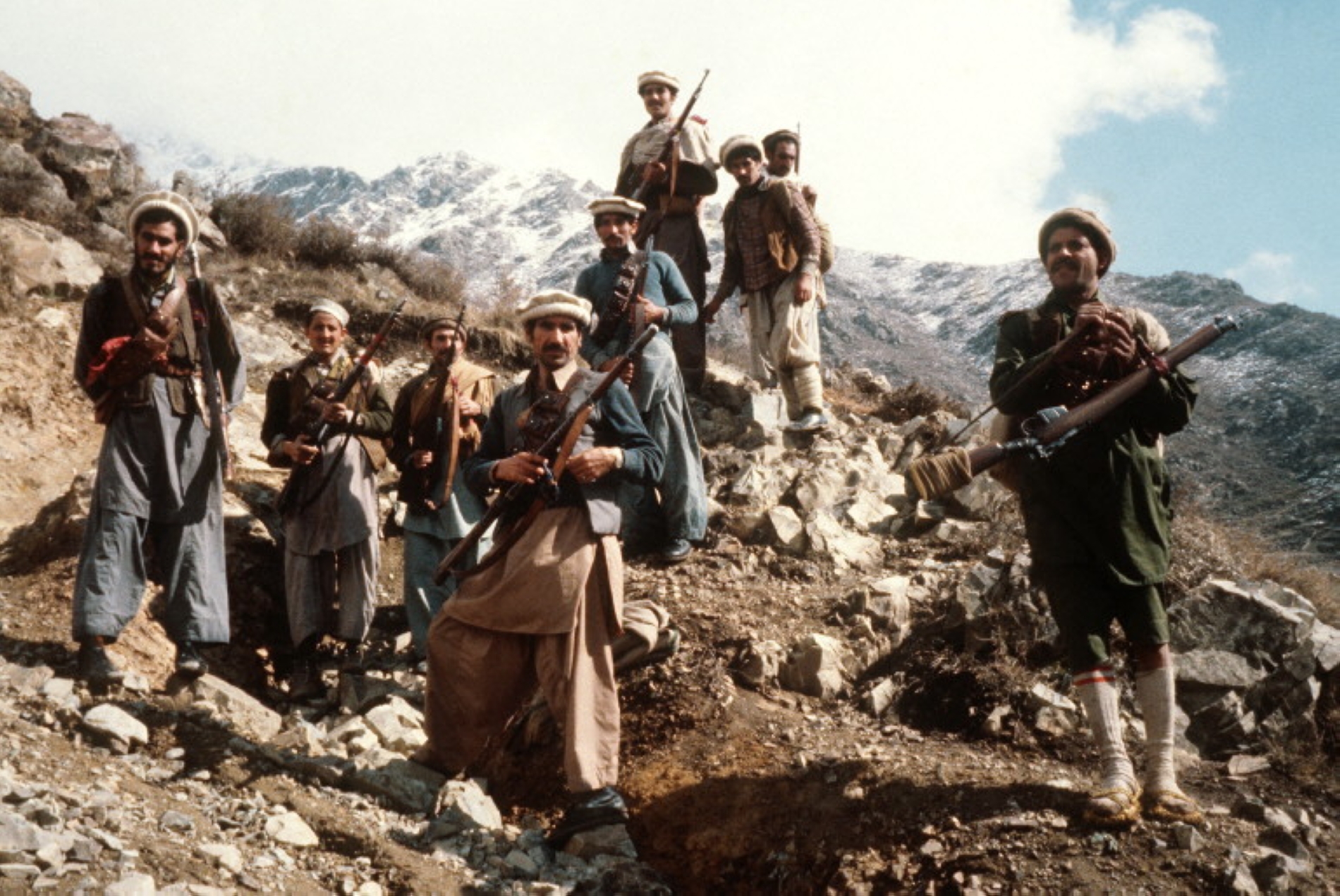
This picture taken in the early 80s shows the premier groups of the Afghan anti-Soviet resistance fighters.

Pivotal events across the 20th century meant there was much for al-Qaeda to target by violence. The collapse of the Ottoman Empire at the end of World War One and the restructuring of the Middle East by France and Great Britain afterwards fostered widespread resentment and disunity. The rise of Israel after World War II through Western support and its major victory over multiple Arab nations in the 1967 war, which included the seizure of East Jerusalem and the West Bank from Jordan, created a sense of despair and growing anger toward the secular leadership of Arab states such as Egypt.

US regional involvement

Then there was the United States. Involved in the Middle East since the 1940s because of its need for oil and support for Israel, the US became more enmeshed in the region as decades went on. It militarily intervened in Lebanon, for instance, in 1958 and then from 1982 to 1984; it sent emergency aid to Israel during the 1973 War; it brokered a peace agreement between Israel and Egypt in 1978; it bombed Libya in 1986; it helped expel Iraq from Kuwait in 1991.

American Middle Eastern activities served as a major impediment to the goals of Islamist groups which had targeted the Egyptian and Saudi governments for destruction. Both were allied with and supported by Washington, including financially in Egypt's case. Eventually, al-Qaeda calculated that if it could strike a major blow against the United States, Washington might retreat from the region, leaving local states vulnerable to being overthrown by Islamists.
Bin Laden was expelled from Saudi Arabia in 1991 after he failed to dissuade the government from hosting US troops

Underlying ideology

Why had al-Qaeda developed such a transnational approach to jihad, especially in comparison to other Islamist groups that were more nationally focused? A clue came from its name: al-Qaeda meaning "the base." That self-declared label hinted at its underlying ideology.

In secular terms, it reflected a Leninist-like approach to religious revolution through terrorism. In 1902, Russian revolutionary Vladimir Lenin argued in his contribution to Marxist theory that a working-class uprising would require the leadership of a dedicated elite, or vanguard, to bring it about. Of course, al-Qaeda was focused not on leading a working-class revolution but on liberating Muslims from the shackles of secular states and colonial constructs.

A key intellectual figure for Islamism or jihadism in general and al-Qaeda in particular was Sayyid Qutb, an Egyptian civil servant. Although not a religious scholar, Qutb, through a range of writings, including the book Milestones, argued that secular governments in Muslim countries were illegitimate.

AFP
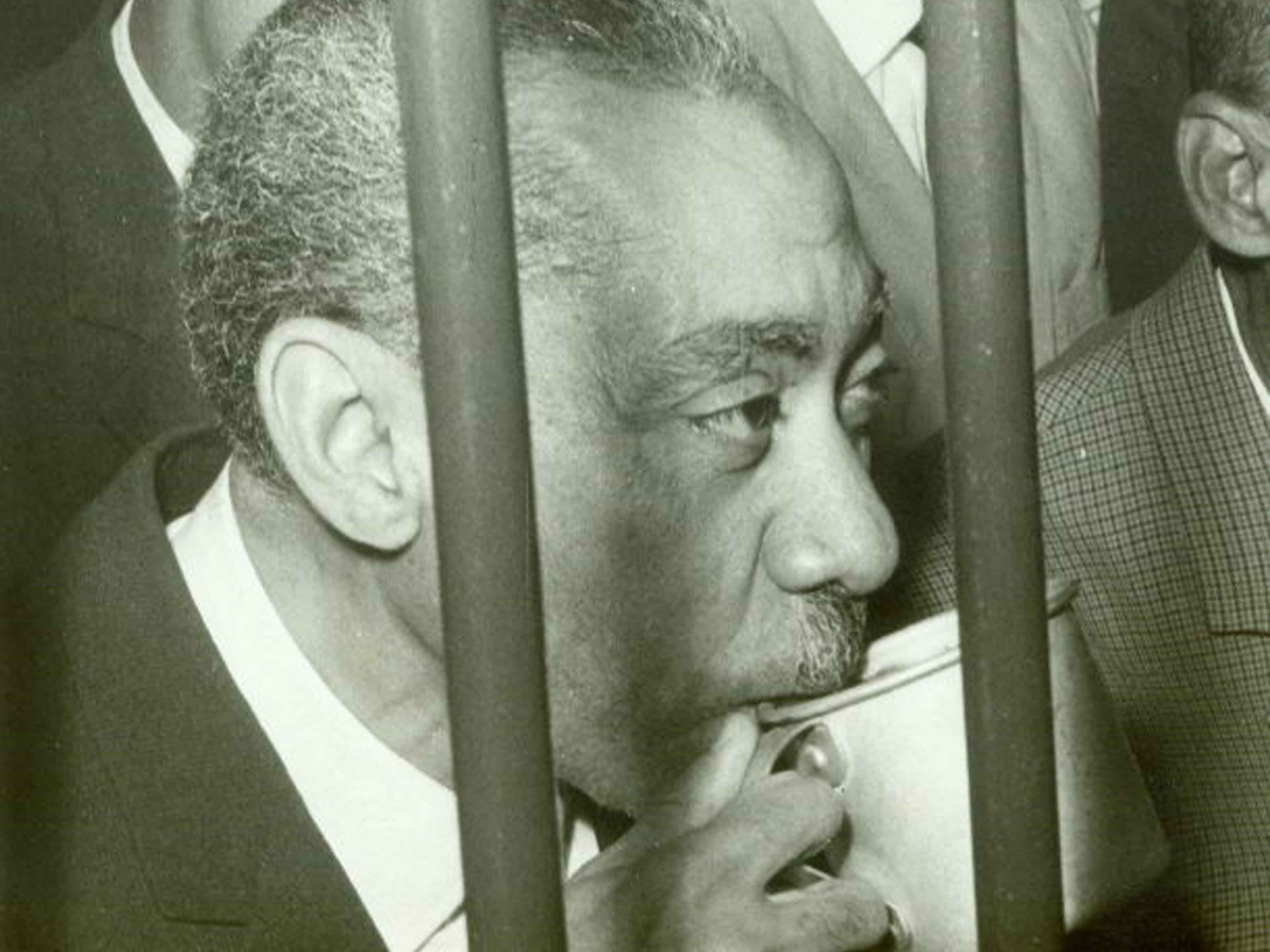
Sayyid Qutb is seen behind bars in Cairo in 1966.

His dominant ideas called for the weaponisation of jihad as an offensive tool and for a revolutionary vanguard to lead it and push aside what the ideologue viewed as apostate regimes across the Middle East. He further warned against the influence of Western culture fuelled by materialism and greed and bereft of spirituality. He had come to this view of the West after first-hand experience of American life while in the United States from 1948 to 1950 as part of a fellowship.

By the mid-1950s, Qutb and other Islamists had become a target of the Egyptian state under President Gamal Abdel Nasser. Imprisonment and torture followed for him over several years before his release in 1964. That respite was short, and the following year Qutb was rearrested and charged with being part of a plot to overthrow the government of Egypt. Found guilty, he was executed in 1966. His ideas, however, circulated and influenced young Egyptians such as future Islamist leader Ayman al-Zawahiri, as well as others outside Egypt. That list included Osama bin Laden, who was taught by Qutb's brother Muhammad in Saudi Arabia.

Bin Laden's towering role

And it was bin Laden, by all accounts, who served as the key driver of the birth and ambition of al-Qaeda. This was not a widespread perception through much of the 1990s, as the Saudi son of a billionaire was seen as a key financial figure in al-Qaeda, not necessarily a major figure in developing its strategy.  

Instead, the narrative ran that bin Laden was a rich Saudi playboy who lacked the gravitas of a leader and was being manipulated by others, such as al-Zawahiri. That interpretation ignored the fact that the leader of al-Qaeda had turned his back on a life of comfort to fight against the Soviets in the 1980s. That sacrifice of privilege earned him genuine admiration and dedicated followers.

That is not to say al-Qaeda's position and bin Laden's leadership went unchallenged by rivals. Other Islamist groups existed, but they focused on national struggles rather than the transnational struggle bin Laden and al-Qaeda envisioned. In Algeria, for example, a vicious civil war erupted in 1992 in the aftermath of the military cancelling parliamentary elections. Violence between Islamist groups and the government, with civilians caught in between, would last a decade.

Handout/AFP
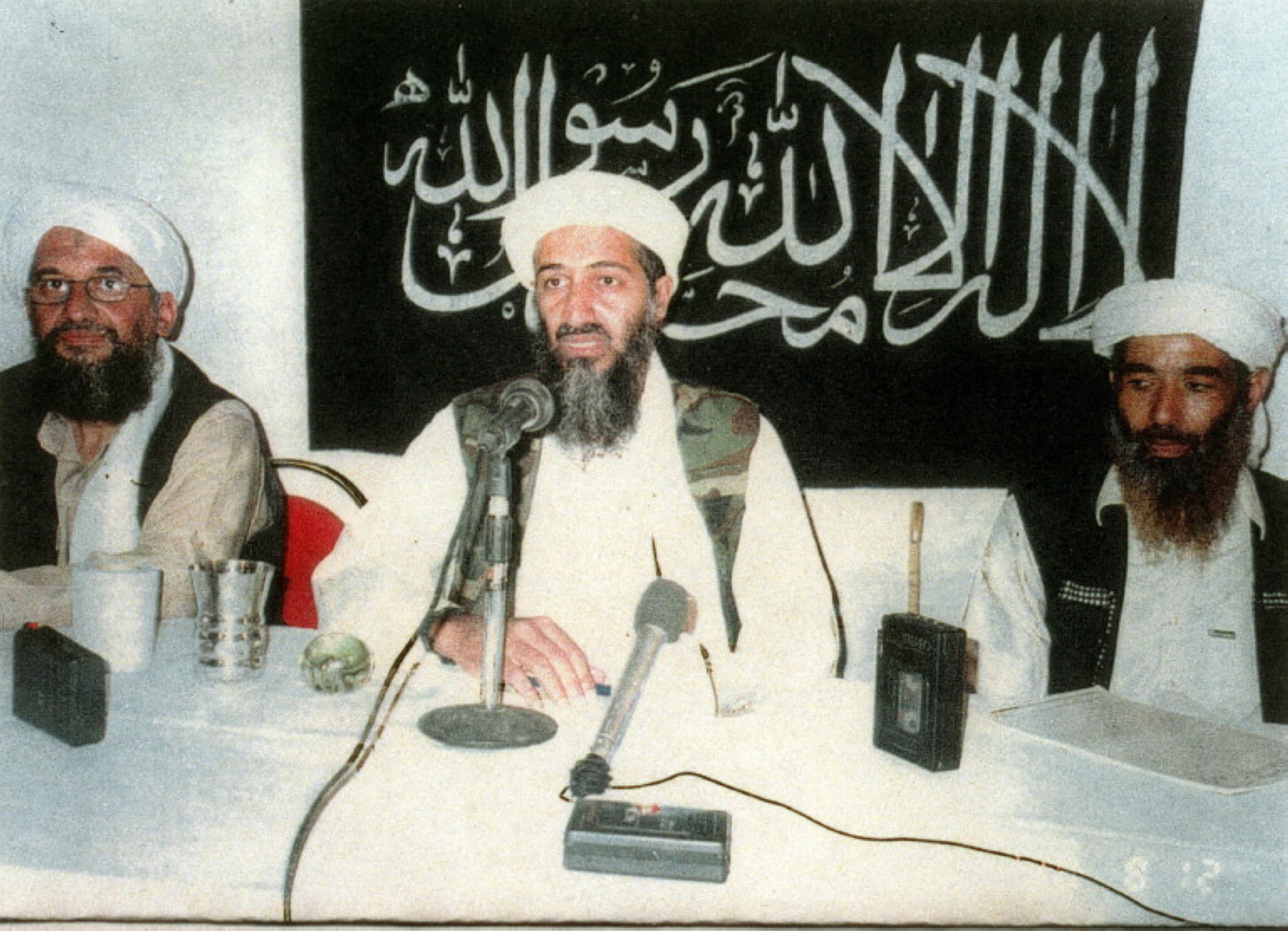
This undated photo was obtained in October 2001 from the office of the US Attorney for the Southern District of New York, shows Osama Bin Laden (C) and Ayman Al-Zawahiri (L).

Other key figures

One of bin Laden's colleagues in Afghanistan was al-Zawahiri, who would become his second in command and eventual successor in al-Qaeda. He had a long history in Egypt of involvement in the group Egyptian Islamic Jihad, including leading it from 1982 to 2001 and being directly involved in its efforts to topple the secular government of Anwar Sadat that included his 1981 assassination.

Another key figure in al-Qaeda's early development, and one often overlooked, was Abdullah Azzam, a Palestinian Islamic scholar. In response to the Soviet invasion of Afghanistan, he issued a fatwa describing it as the duty of Muslims to resist foreign invaders. He worked with bin Laden to recruit Muslims to join the fight against the Soviet military and became an advocate of a transnational jihad and openly called for a vanguard to lead it, although he was not directly involved in the creation of al-Qaeda. A car bomb in 1989 ended Azzam's life, although his ideas continued to resonate with many.

As for bin Laden, the 1990s would see the leader of al-Qaeda expelled from Saudi Arabia in 1991 after he failed to dissuade the Saudi government from hosting US troops in response to the Iraqi invasion of Kuwait. He was then exiled to Sudan, from where he witnessed American troops withdraw from Somalia a few months after 18 US soldiers were killed in the ongoing civil war in that country.

Over the years, there have been suggestions that al-Qaeda was involved in some form in the famous "Black Hawk Down" incident in Mogadishu. Whatever the truth, the lesson taken by bin Laden and al-Qaeda was that the United States did not have the stomach for a fight in which American soldiers came home in body bags. At that point, the terrorism of September 11 lay in the future, but the complex forces were already pushing al-Qaeda in that direction.  

font change