A serious game plan to advance a two-state solution with unified support from the US and its regional partners would help turn the tide against Iran and those who support it.
Al Majalla dedicates its February issue to exploring Iran's use of militias to exert influence and negotiate with the United States and other major powers.
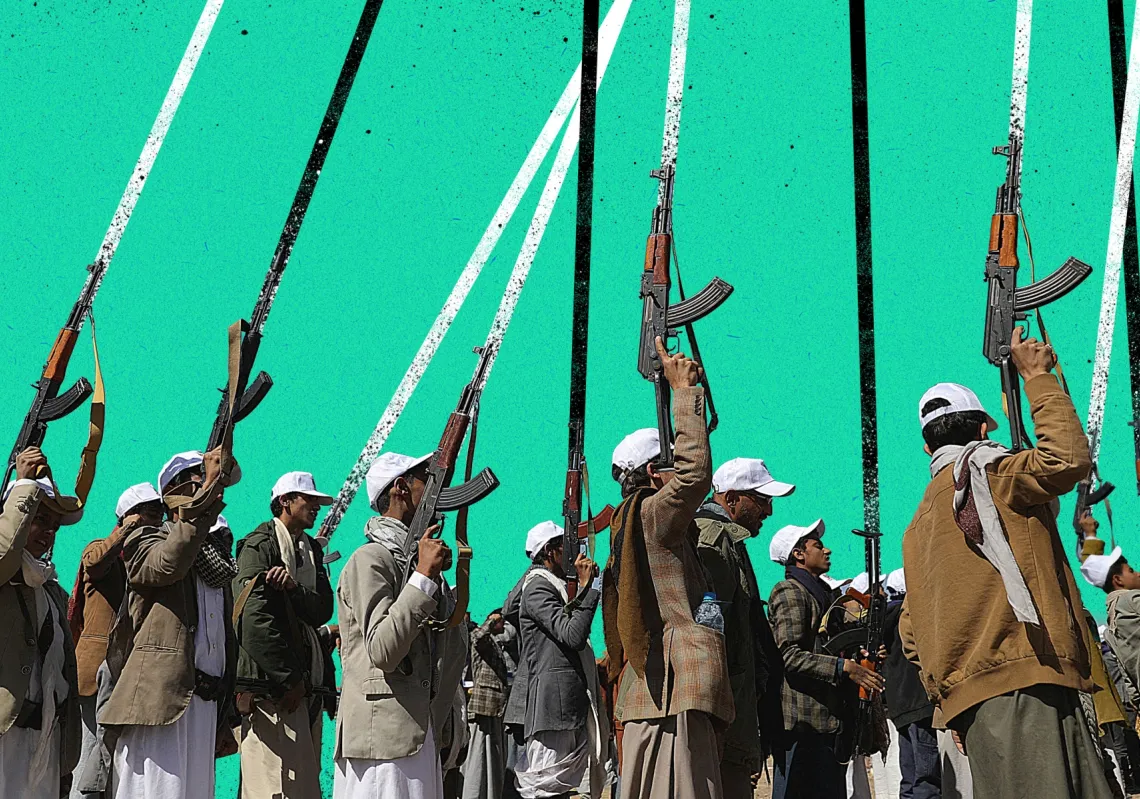
From Iraq to Syria and Lebanon to Yemen, Iran-backed militias have expanded their power and influence. However, regional escalation following the 7 October attack on Israel is testing their limits.
Friday's drone attack on one of Iraq's largest gas fields has led to a temporary suspension of production, resulting in major power cuts across the country's northern Kurdistan region.
Tehran hit out at groups in Kurdistan and Syria, but its attack on Pakistan raised the most eyebrows, not least because it was met with a military response. What's going on? Lots, say analysts.
Iran is moving its proxy pieces around on the Middle East chessboard to pressure a ceasefire in Gaza while Israel tries to drag the US into a regional war
Any disruption in the Hormuz has cascading knock-on effects that extend far beyond energy markets, impacting international trade. Al Majalla explores all this and more.
The current conflict is unlikely to go global for now, but the speed at which it has spread regionally is alarming. A look at history shows the geopolitical factors that led to world wars.