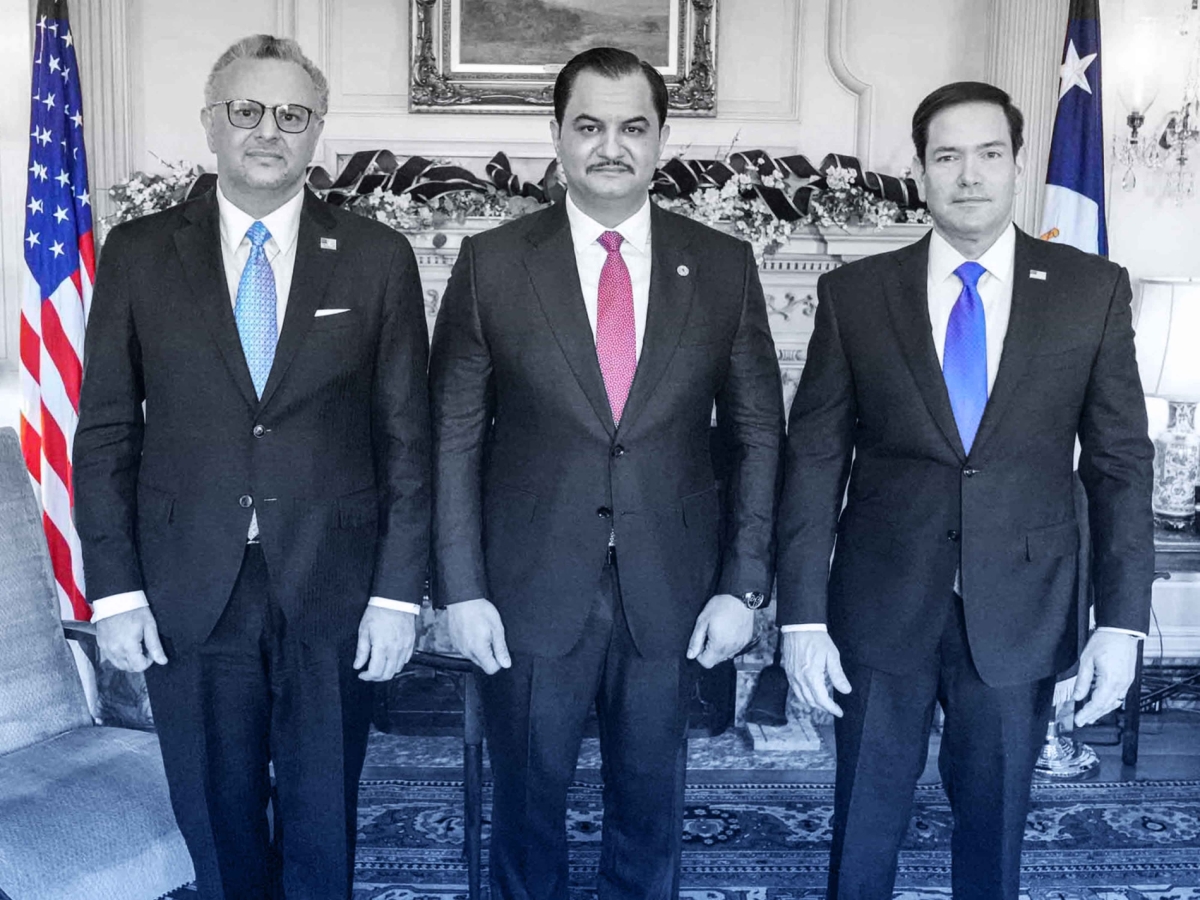
US plan for Libya: unification or management of division?

A US envoy wants the institutions of western Libya to accommodate the son of an eastern warlord as Libyan president. Is this another doomed effort to unite the feuding factions, or could it work?

Massad Boulos, Trump's Middle East advisor, speaks at the Libya Energy and Economic Summit at the Tripoli International Conference Centre in Tripoli on 24 January, 2026.
MAHMUD TURKIA / AFP
Massad Boulos, Trump's Middle East advisor, speaks at the Libya Energy and Economic Summit at the Tripoli International Conference Centre in Tripoli on 24 January, 2026.

US plan for Libya: unification or management of division?

Donald Trump’s Middle East advisor, Massad Boulos, has a tough job when it comes to Libya, a country torn between west and east since the fall of longtime leader Col. Muammar Gaddafi in 2011. Boulos, an American of Lebanese Christian heritage, has made remarks that some have interpreted as optimistic about his latest initiative, which seeks to end the political division that has weighed on Libya for many years.

The initiative, which has yet to be put in writing, centres on transitional arrangements that would bring the state’s divided institutions under a single framework. This would include Abdul Hamid Dbeibeh’s government in Tripoli, but with Saddam Haftar at the head of a new presidential administration.

Saddam is the son of East Libyan strongman Khalifa Haftar. Aged 82, Khalifa Haftar is the commander of the Libyan National Army (LNA), based in Tobruk, where Libya’s House of Representatives is also based. In the capital, Tripoli, Dbeibeh heads the rival western Libyan Government of National Unity (GNU), with Turkish backing, whereas the LNA has had support from other Middle Eastern states, as well as Russia.

Boulos’s plan confronts a complex Libyan reality, with several earlier efforts to unite the country’s rival factions having run aground. Some blame those with regional ambitions—foreign actors seeking spheres of influence—for producing a reality closer to two quasi-states, with power distributed according to the ‘facts on the ground’. After so many years, the international community now largely accepts the situation.

The latest US initiative has both supporters and opponents, depending on who stands to win or lose influence and resources. Libya is oil-rich, with billions of dollars in annual oil revenues at stake, but the country has been gripped by political paralysis since failed elections in 2021.

The Boulos effort coincides with mounting US interest in the eastern Mediterranean and North Africa, specifically energy security, and curbing Russia’s expanding influence in eastern Libya. American officials do not want oil production to once again become an instrument of political or military pressure in the hands of any Libyan party.
KHALED DESOUKI / AFP
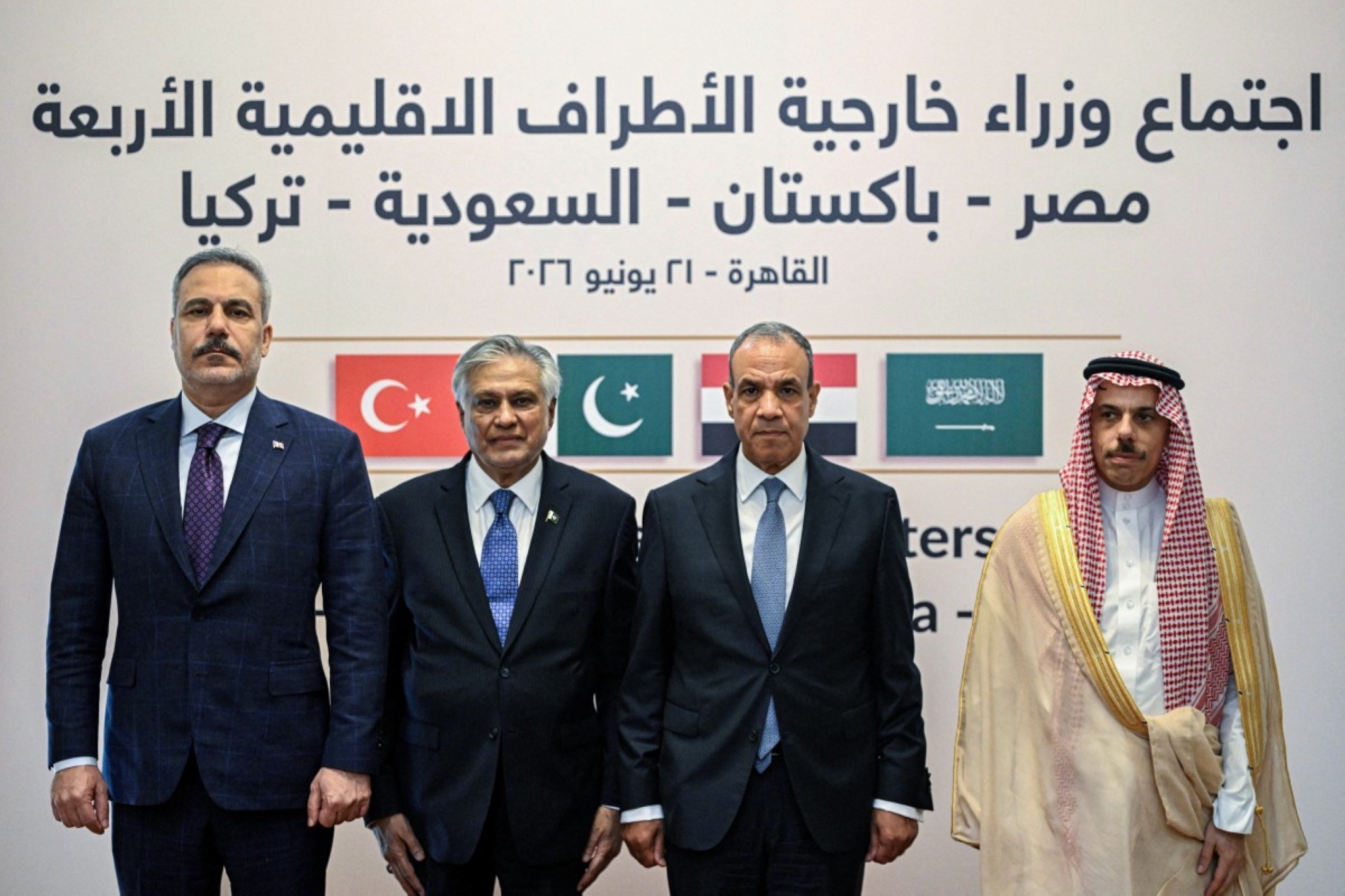
Türkiye's Foreign Minister Hakan Fidan, Pakistan's Foreign Minister Ishaq Dar, Egypt's Foreign Minister Badr Abdel Ati, and Saudi Foreign Minister Faisal bin Farhan pose for a picture ahead of a meeting in Cairo on 21 June 2026.

Libya was a prominent topic of discussion during a meeting in Cairo on 21 June with the foreign ministers of Egypt, Pakistan, Saudi Arabia, and Türkiye. Outside the meeting, the ministers met with Boulos to discuss developments in Libya, Sudan, and Iran. All four countries want to preserve Libya’s state unity.

Two days later, on 23 June, Egypt’s intelligence chief Maj. Gen. Hassan Rashad visited Tripoli, where he met Türkiye’s intelligence chief Ibrahim Kalin, who arrived in Tripoli from Benghazi in the east. Italian spy chief Gen. Giovanni Caravelli was also in the Libyan capital at the same time. Kalin met Dbeibeh, Presidential Council chair Mohamed al-Menfi, Deputy Defence Minister Abdulsalam al-Zubi, and Interior Minister Imad al-Trabelsi after meeting Saddam Haftar in Benghazi.
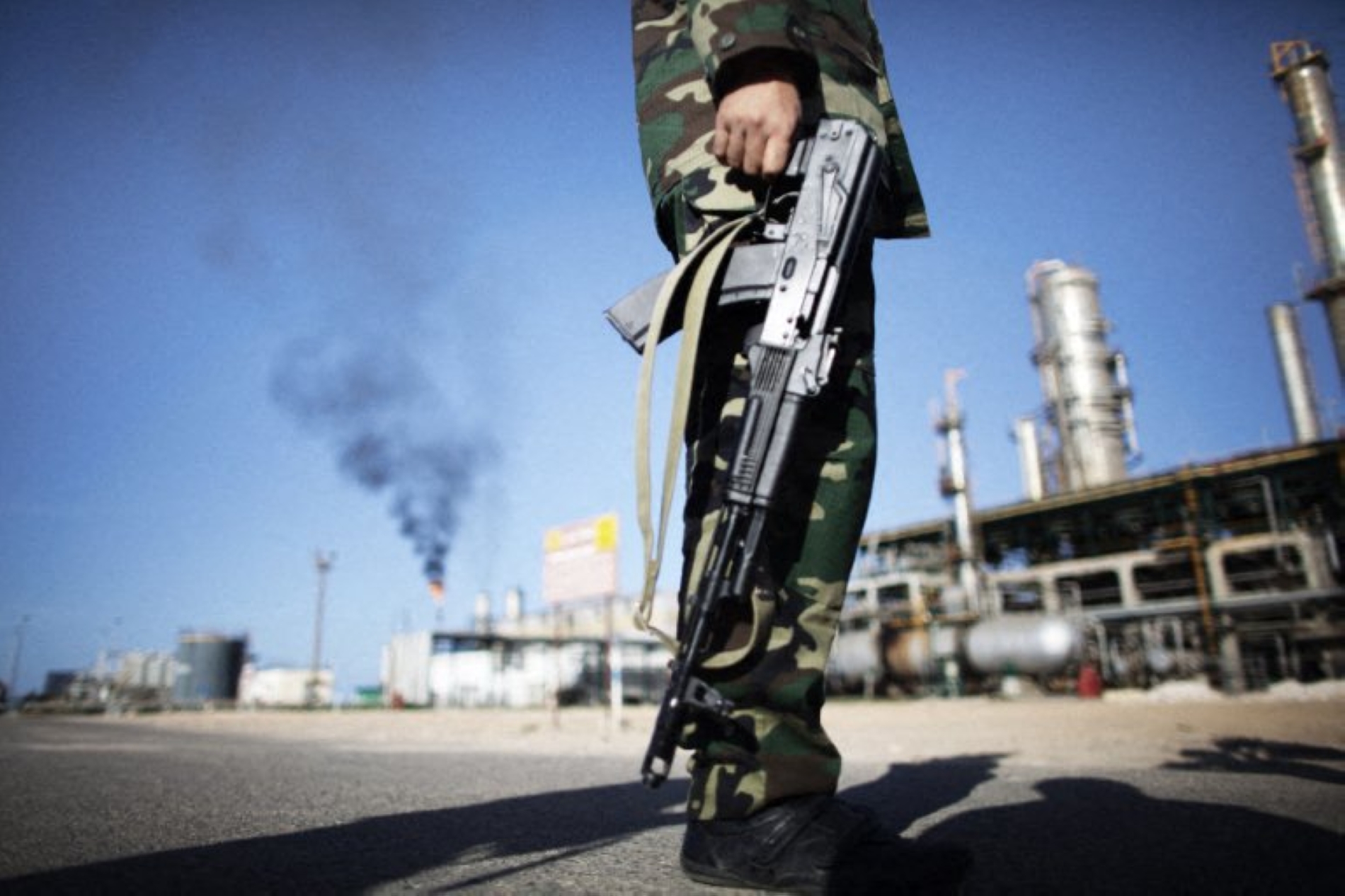
Libya has the largest proven oil reserves in Africa. This vast untapped potential is central to the political struggle.

Mixed reception

In eastern Libya, attitudes towards the power-sharing initiative appear more positive. Forces stationed in the east, led by Khalifa Haftar, have signalled their readiness to negotiate over the American proposal, saying it may lead to a political settlement that finally breaks the stalemate. Saddam Haftar is seen as the initiative's main beneficiary. Most members of the Tobruk-based House of Representatives welcome the plans.

The welcome was not universal, however. Opponents of the initiative include some within Haftar's eastern camp, not least Aguila Saleh, speaker of the House of Representatives. Although Dbeibeh has approached the initiative with caution and has not rejected it outright, both the Presidential Council and the High Council of State have rejected it.

Media Division – Libyan Army
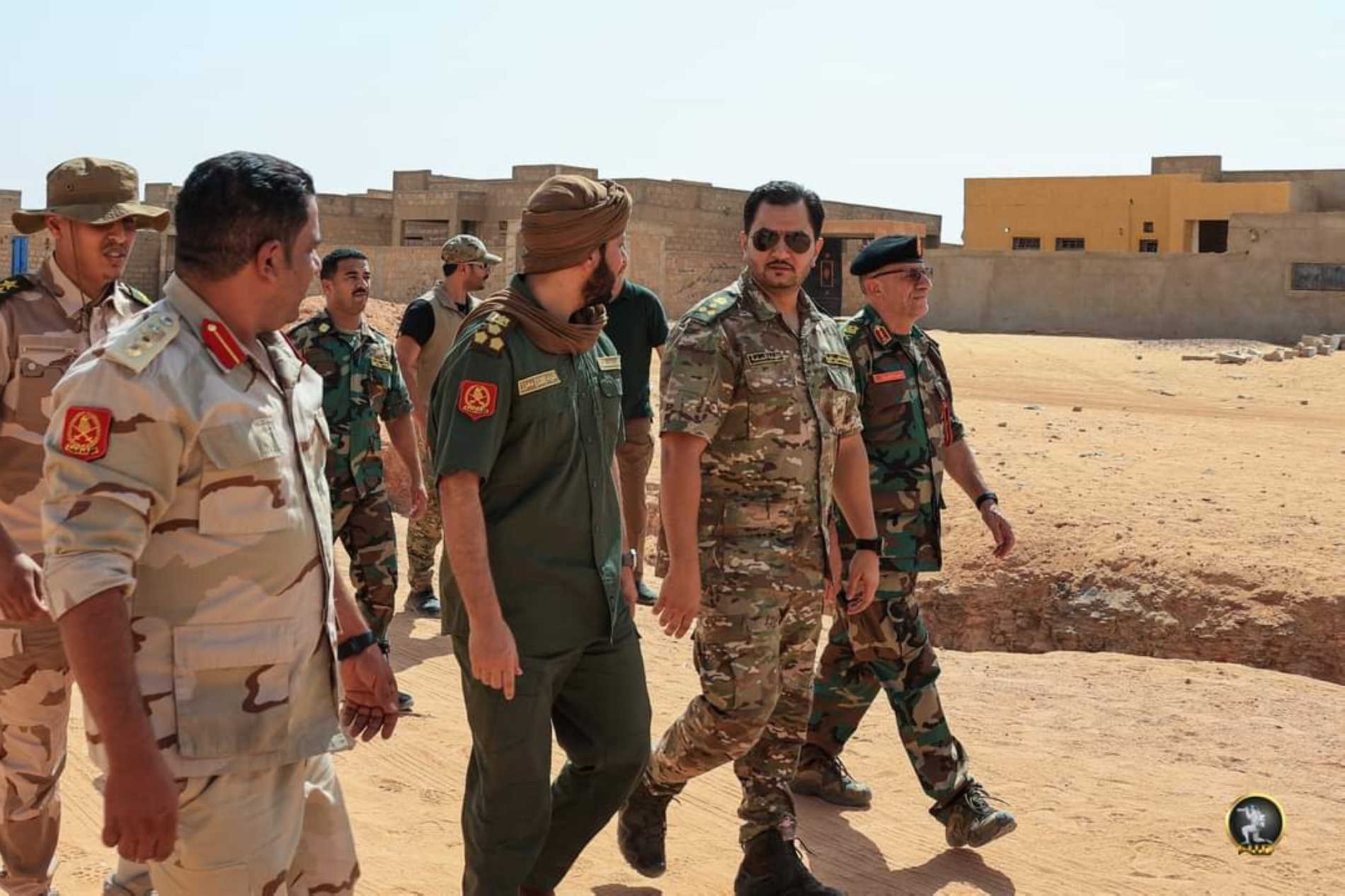
This video grab shows Saddam Haftar overseeing Southern Libya operations.

The High Council also closed the door legally, declaring that any such settlement would fall outside the framework of the Libyan Political Agreement, adding that any negotiations by representatives who did not have an official and explicit mandate from the Council would be null and void.

Grand Mufti Sadiq al-Ghariani called on Dbeibeh to coordinate with the Presidential Council and the High Council, and urged military forces in western Libya to reject the plan, warning that any government dominated by the Haftar family would target their political opponents in the west. Many in Tripoli agree. Although it is being presented as unifying, they think it would consolidate the existing map of influence based on the military and economic balance of power, rather than end the division.

Political institutions such as the House of Representatives and the High Council of State would be marginalised, they say, with civil forces without armed wings or direct security influence cast aside. For these opponents, such an approach runs counter to the democratic path that the US says it supports.

Speaking to the Financial Times about the initiative, Boulos said: "Our plan is to have a unified government and to unify all institutions." He urged American oil companies to invest in Libya, noting that energy giants ConocoPhillips and Chevron had already signed agreements in 2026. Libyan oil production could double to three million barrels per day (bpd) by the end of the decade, he said.

Libyan oil is officially the property of all Libyans, but it is managed by the National Oil Corporation, with revenues supposedly deposited in the Central Bank of Libya. Yet the country also has private oil institutions linked to armed groups that wield considerable influence, raising fears that some revenues are falling outside the state's established channels.

As institutional division persists, oil remains the prized asset, leaving the sector vulnerable to closures and disruptions in both production and exports. Libya has the largest proven oil reserves in Africa, an estimated 48 billion barrels. By comparison, Nigeria is the continent's largest oil producer, but it only has reserves of 38 billion barrels. This vast untapped potential makes Libya's oil central to the political struggle. Libyan parties are not so much contesting ownership of the oil as competing for control over the institutions and facilities that manage its production, export, and revenues.

AFP
A fighter from the National Transitional Council guards the Zawiya oil refinery, 40 kilometres west of Tripoli, on 27 October 2011.

UN dialogue track

The Boulos initiative is not the only game in town. The United Nations is facilitating dialogue, as announced by the head of the UN mission, Hanna Tetteh, in her recent briefing to the UN Security Council. Another initiative is underway among Libya's three councils: the House of Representatives, the High Council of State, and the Presidential Council. It was launched by the latter's chairman, Mohamed al-Menfi, High Council chairman Mohamed Takala, and House speaker Aguila Saleh. They issued a new road map calling for general elections before 17 February 2027.

By comparison, the Boulos initiative is somewhat opaque, given the lack of publicly available detail, but some believe it has greater prospects because it is backed by the United States. Whether it can be implemented given the major objections is the big question, but Washington had some success in April when it secured agreement on the first unified Libyan budget between east and west in more than 13 years.

No one is holding their breath. Efforts to unify Libya and hold elections have been frustrated and thwarted time and again since Gaddafi. The Skhirat Agreement (sponsored by the UN) led to the formation of the Government of National Accord; this was followed by the Paris and Palermo conferences, which focused on advancing the political process and holding elections. In 2020, a Berlin track led to the 5+5 Joint Military Commission, which reached a ceasefire agreement.

This was followed by the Libyan Political Dialogue Forum, which produced the GNU under Dbeibeh, aiming to unify institutions and prepare for elections, but those efforts also failed owing to disputes over power-sharing, the distribution of oil revenues, and the unification of the military establishment. Mistrust among Libyan factions runs high, leading to the duplication of executive authority and a contest over legitimacy.

Factionalism and partisanship have infiltrated all pillars of the state, including the judiciary, which is increasingly fragmenting despite UN efforts to preserve it. The UN warns that undermining confidence in the state's institutions will complicate any political or electoral transition, and judges adjudicate constitutional and electoral disputes.

Domestic complexity is compounded by factors from abroad. Official international and UN recognition still leans toward the GNU in Tripoli, headed by Dbeibeh and supported by Türkiye, but Egypt, the United Arab Emirates, and Russia maintain close relations with Haftar's camp in the east, while Italy and the United States deal pragmatically with both.

LNA/AFP
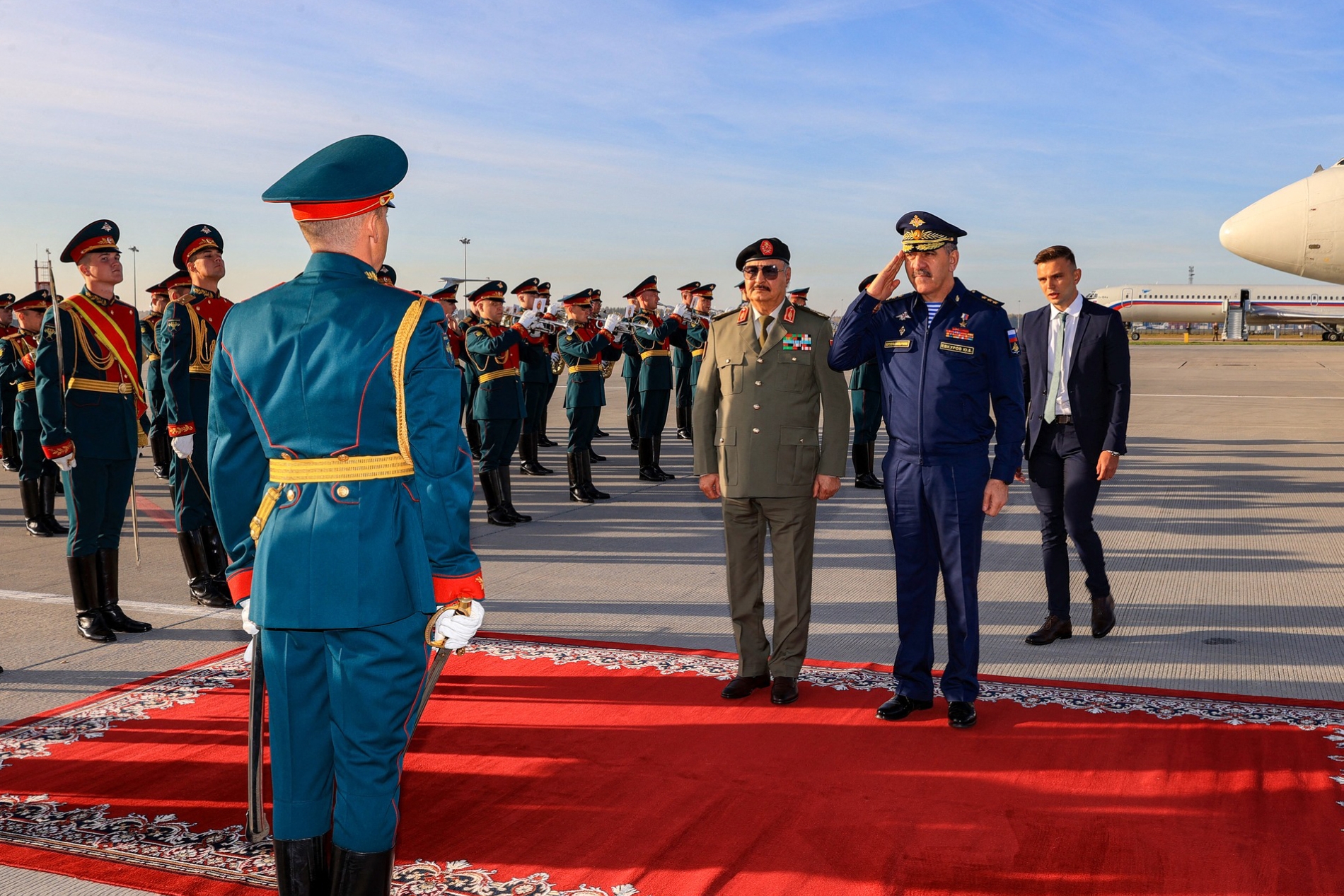
Russia's Deputy Defence Minister Yunus-bek Yevkurov (2-R) received Khalifa Haftar (C) at a Moscow military airfield on September 26, 2023.

Laying the foundations

If the latest American initiative is not to become yet another failed Libyan negotiating framework, it must be supported by clear implementation mechanisms and binding international guarantees. The real challenge is no longer the drafting of another political agreement; it is ensuring its implementation and preventing the parties from using it as an open-ended transitional phase that reproduces the existing division.

Three conditions are essential. First, there needs to be a clearly defined timetable for the transitional phase, one that specifies the powers of each party, the limits of its influence, and the scope of its responsibilities, while preventing overlap or conflict. This will require monitoring and follow-up mechanisms to ensure that agreed commitments are implemented without obstruction.

Second, the state's core sovereign institutions must be unified, not least the judiciary, which faces a major challenge. The constitutional crisis also remains unresolved, meaning those charged with leading the transitional phase may instead prolong it. Alongside the judiciary, there is an urgent need to unify the Central Bank, financial and oversight institutions, and the Ministry of Foreign Affairs.

Unfortunately, Libya's recent experience shows that power-sharing agreements do not necessarily lead to stable institutions.

Third, Libya needs a clear plan for national elections that transfers legitimacy from temporary understandings to elected non-military institutions. Such a plan would show that any agreement is more than a prelude to a temporary division of power.

In the end, the principal challenge facing the American initiative does not appear to lie in bringing Dbeibeh and Haftar to the same negotiating table; it lies in bringing the centres of power into a state-building project capable of accommodating Libya's political institutions and rebuilding trust. Unfortunately, Libya's recent experience shows that power-sharing agreements do not necessarily lead to stable institutions, and that unifying the government does not automatically mean unifying the state.

font change