The US wanted Syria to abstain from meddling in Iraqi affairs, deny refuge to former Saddam loyalists, expel Palestinian organisations from Syria, and withdraw Syrian military forces from Lebanon
On the eve of America's invasion of Iraq in March 2003, Syrian and Iranian leaders met to consider their options. In part 6 of a seven-part series, Al Majalla reveals their shared concerns and hopes.
Washington must seriously reform its notoriously slow and complex foreign military sales process to help regional partners meet the rising strategic challenge of Iran
Saudi Arabia's new approach that looks after its own interests seems to be paying off. China has been pivotal in getting regional players to cooperate peacefully in a way that benefits all.
A serious game plan to advance a two-state solution with unified support from the US and its regional partners would help turn the tide against Iran and those who support it.
Al Majalla dedicates its February issue to exploring Iran's use of militias to exert influence and negotiate with the United States and other major powers.
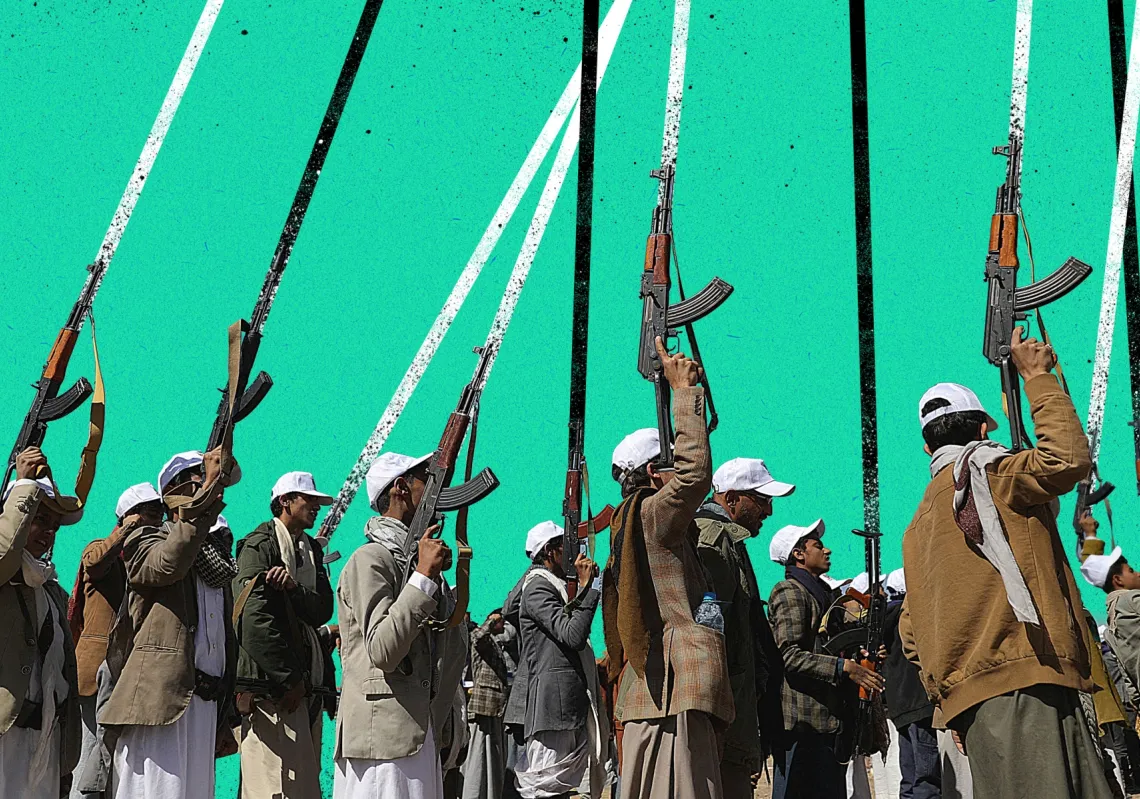
From Iraq to Syria and Lebanon to Yemen, Iran-backed militias have expanded their power and influence. However, regional escalation following the 7 October attack on Israel is testing their limits.
A US envoy wants the institutions of western Libya to accommodate the son of an eastern warlord as Libyan president. Is this another doomed effort to unite the feuding factions, or could it work?
As the FIFA World Cup 2026 shows, identity, belonging, and tension combine to make football fandom unlike any other sport. So, what is going on in fans' brains?
Beijing's duty-free access for African exports promises mutual economic gains, but more importantly, it deepens its strategic influence across the continent