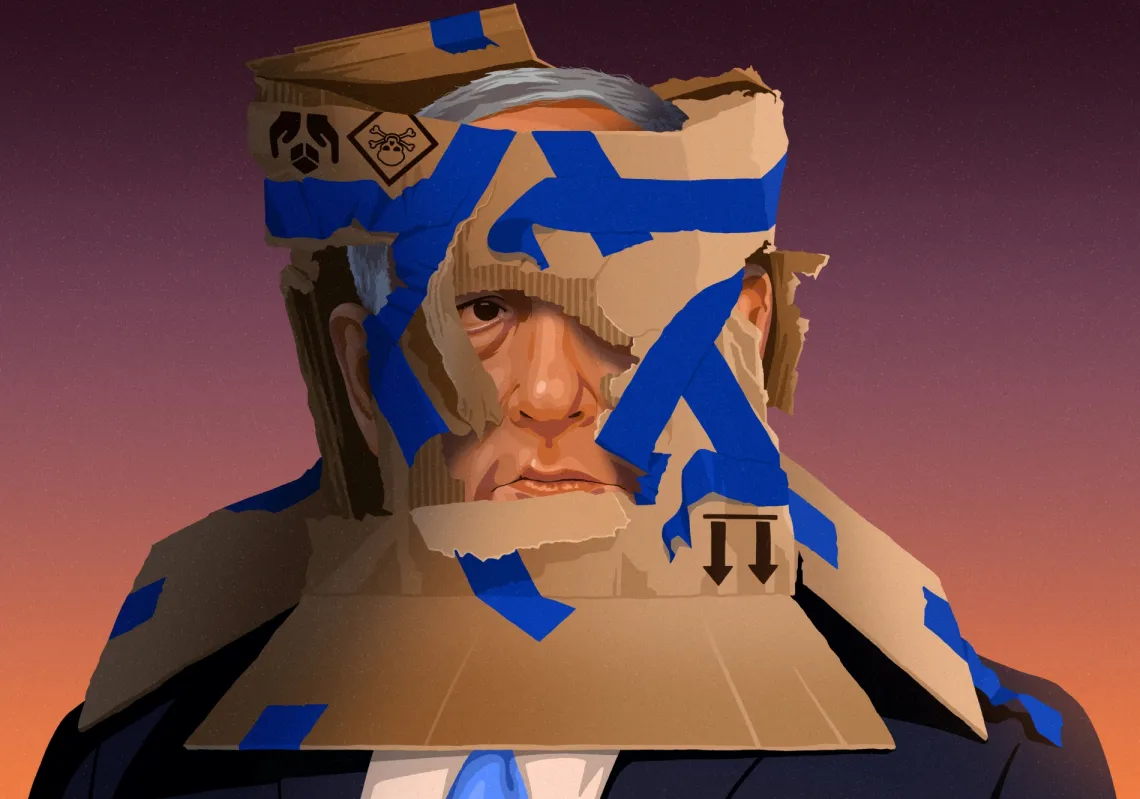

Israel's prime minister continues to pick fights in his northern neighbour for personal political reasons, despite Washington and the Arab world wanting Syria to succeed
Israel's aggression and territorial expansion have become a political, financial, and moral burden, as they have on its Western government allies, who find it increasingly difficult to defend
Fear, mistrust, and resentment, coupled with the intense foreign pressure on the Lebanese government to disarm Hezbollah, are setting the country up for implosion
At Riyadh's behest, Trump brought the conflict back into the global spotlight when he pledged he would work to end the fighting at the Saudi-US investment forum in Washington
Fourteen men stand accused of sectarian killings in the coastal region last March. The credibility of the trial will depend on how the proceedings hold up under public scrutiny.
Syria is rising from the ashes. It is rebuilding internally, seeking to overcome past enmity by being open and inclusive while also consolidating national unity as a key priority.
Kyiv looks to be under renewed pressure amid reports that Russia and the US have been secretly drafting a 28-point peace plan to put an end to the conflict
They may push states to prioritise viable projects over prestige ones, empower the private sector rather than crowd it out, and pursue fiscal discipline as a matter of necessity rather than rhetoric
A two-week truce has sparked a cautious market rebound, but deep anxiety persists over renewed escalation and its impact on global growth and inflation
Sources tell Al Majalla that Iran was able to build a rapport with US Vice President JD Vance in Islamabad, but sensed his hands were tied in the presence of Trump's son-in-law and close friend
The first is on the border against Israel, which seeks to seize their land and drive them northwards; the second is within Lebanon itself, against a state that seeks to marginalise them