The US president has picked legal fights with big American TV news channels and they have backed down, but the British broadcaster has said it will see him in court.
The gunman in Palmyra shows that terrorism is alive and well in Syria, while the reaction to his crimes shows that it has some support. Yet most Syrians want peace. Now, they must fight for it.
The veteran Palestinian politician has changed the rhetoric over the Gaza war and seems to be aligning more closely with Türkiye and Arab states, at the expense of Iran and the Muslim Brotherhood.
Washington's new vision of the world ditches alliances, plants an American flag in South America, embraces Israel and hydrocarbons, and lets Europe dangle.
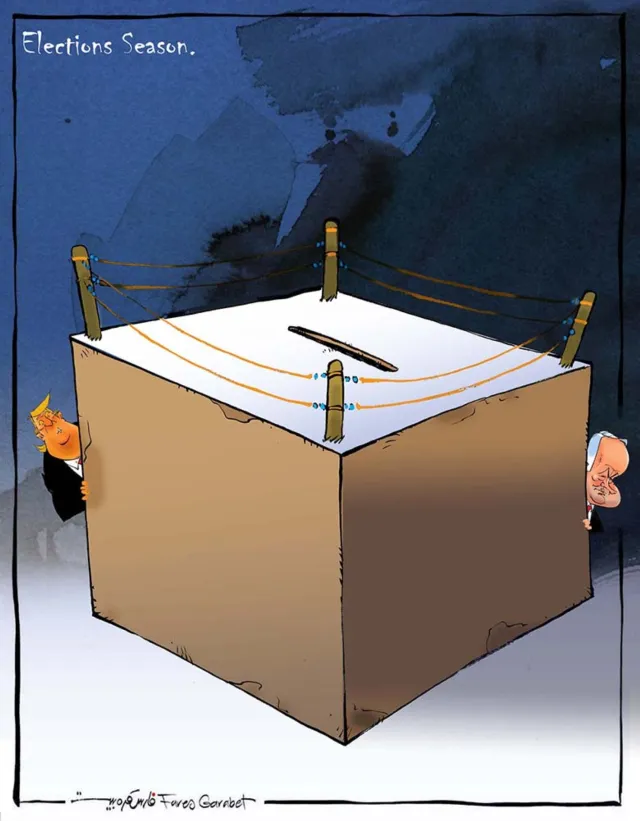
President Donald Trump sees the world in terms of spheres of influence, power, and deals. This leaves little room for alliances, multilateralism, humanitarianism, or anything other than US interests.
Soldiers singing about 'rivers of enemies blood' has spooked Tel Aviv, where a minister said 'war' was now inevitable. For Syria's president, the moment requires a fine balance.
Once upon a time, America and Europe were on the same page when it came to foreign policy. These days, they aren't even in the same library. Russia has taken note.
The movement has been banned before but has always adapted to the circumstances to survive. After its latest proscription, the pen may become the group's foremost enemy.
A former spy chief and a billionaire cousin of Bashar al-Assad are plotting sectarian strife from the Moscow exile. It won't work, despite the raging and the millions being spent. Syria has moved on.
If 2025 demonstrated the promise of transition, the coming year is when the hard work of reform, justice and accountability must begin. Syrians want more than promises; they want results.
As support for Israel weakens across the US political spectrum, once-taboo questions about military aid, lobbying influence, and US backing are moving into the mainstream
Algeria is one of Africa's largest producers of hydrocarbons, and its proximity to customers in Europe makes it of growing interest as importers fret over a prolonged supply crisis from countries
Through extravagant processions led by palace women, the Mamluk state projected a message of power and prestige at home and abroad, turning the Hajj obligation into a soft-power tool