Europe eyes Algeria's shale gas amid supply crisis

Algeria is one of Africa’s largest producers of hydrocarbons, and its proximity to customers in Europe makes it of growing interest as importers fret over a prolonged supply crisis from countries

Lina Jaradat

Europe eyes Algeria's shale gas amid supply crisis

Algeria is experiencing a surge in interest from states keen to tap into the North African country’s energy reserves, as the global oil and gas crisis deepens amid Iran's continued closure of the Strait of Hormuz. Earlier this month, Amin Nasser, Saudi Aramco’s chief executive, warned that the depletion of onshore inventories was “rapidly accelerating,” as Gulf energy exports remain stuck behind the maritime blockade.

Along with Angola and Nigeria, Algeria is one of Africa’s largest producers of hydrocarbons, and its proximity to customers in Europe makes it of growing interest as importers fret over a prolonged supply crisis from countries such as Saudi Arabia, the United Arab Emirates, Kuwait, Qatar, and Bahrain.

In April, Algeria launched its 2026 licensing ​round, offering seven exploration blocks located in Ouargla, Illizi, ​Touggourt and El Bayadh. They include both gas and oil prospects that officials claim contain hundreds of millions of barrels of oil and large volumes of natural gas. The aim is to boost output and attract foreign investment. Successful bidders will sign production-sharing or participation agreements with state energy firm Sonatrach early next year. Algeria’s Oil and Gas Minister Mohamed Arkab said the new bidding round “will help ​strengthen global energy security and ​reinforce Algeria’s role as a regional energy hub”.

Increasing demand

In early May, Algeria and Egypt signed two energy agreements aimed at strengthening supply security, with Egypt buying Algerian crude. Alongside that, a subsidiary of state-owned Egyptian General Petroleum Corporation has signed a $1bn contract to start developing the second phase of Algeria’s Hassi Bir Rekaiz oil field. Italian firm Arkad is a member of the consortium.

Demand is high, but Algeria has five refineries capable of processing around 30 million tonnes of crude every year. Currently, the top importers of Algerian oil are Ukraine (109,984 shipments), the European Union (71,144 shipments), and Lithuania (42,815 shipments). China is also a customer. In recent weeks, there have been several high-level visits, including Italian Prime Minister Giorgia Meloni, Spanish Foreign Minister José Manuel Albares, and Portuguese Foreign Minister Paulo Rangel. On the agenda has been Algerian energy supplies to Europe.
AFP
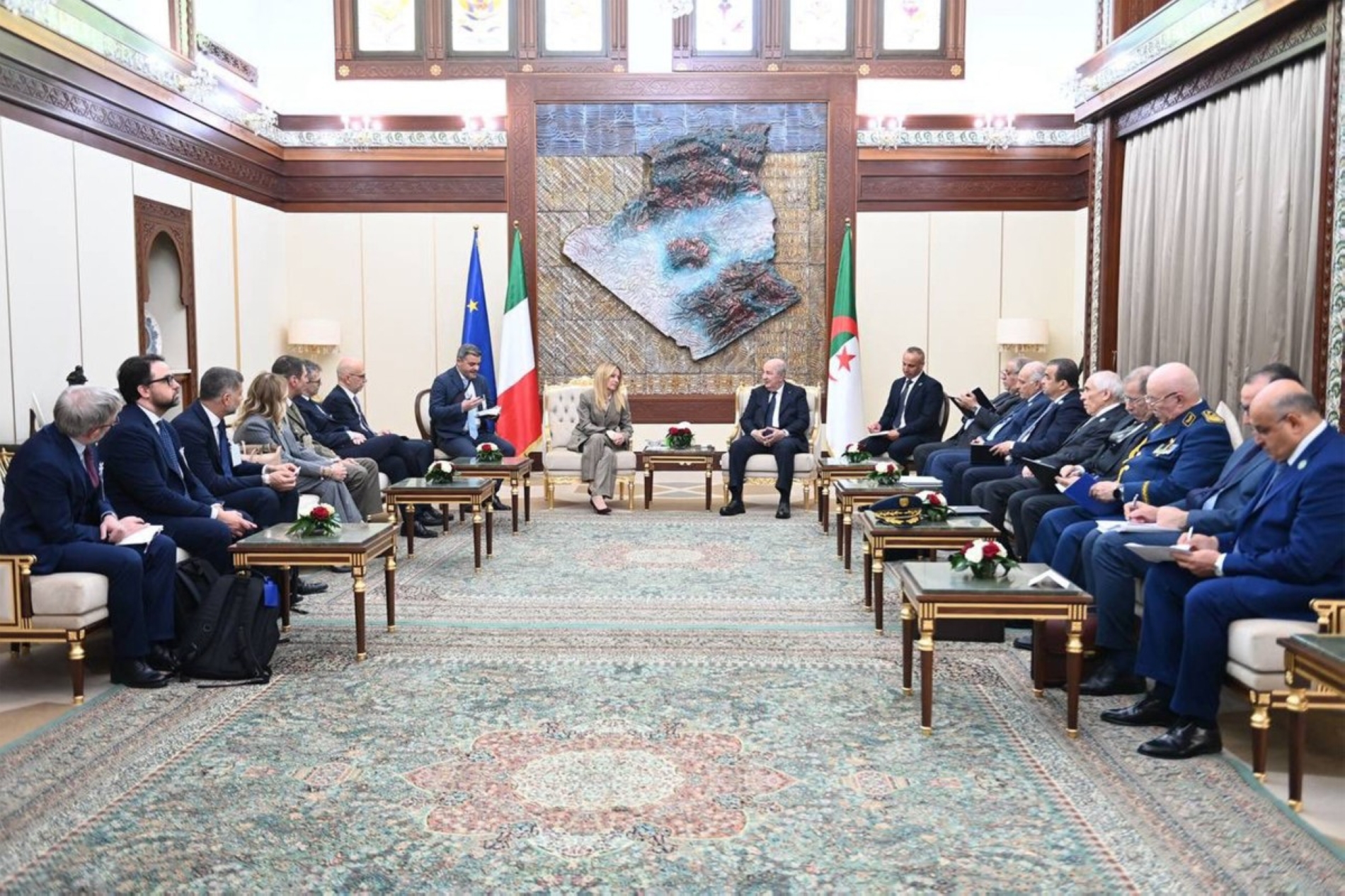
Algerian President Abdelmadjid Tebboune receives Italian Prime Minister Giorgia Meloni in Algiers, on 25 March 2026.

There are, however, questions about Algeria’s capacity to meet rising energy demand, and suggestions that this might be the time for the country to diversify its energy sources to include shale gas. The latest official data show that Algeria’s natural gas production rose by 1.5% year-on-year in February to 8.95 billion cubic metres, an increase of 128 million cubic metres compared with the same period last year.

Average daily output also climbed to 11.29 billion cubic feet, up from 11.12 billion cubic feet per day in February of the previous year. At the same time, domestic gas consumption increased by 4% to 5.17 billion cubic metres, driven mainly by the power generation sector, which alone consumed 1.64 billion cubic metres and depends almost entirely on gas. This prompted economists to sound the alarm, as rising domestic demand for gas adversely affects the country’s exports, particularly to southern Europe.
Amid profound global energy transformations, the exploitation of offshore and unconventional resources becomes an urgent necessity

Suleiman Gallati, a geophysical engineer at Sonatrach

Technical debate

Faced with growing demand for gas, specialists are now debating whether to exploit the shale gas in the Algerian Sahara. Among them is Suleiman Gallati, a geophysical engineer at Sonatrach. In September, he gave a lecture about unlocking Algeria's offshore and unconventional hydrocarbon resource potential. "Algeria can by no means rely solely on conventional hydrocarbons at a time when the world is undergoing profound energy transformations and mature fields are in decline, making the exploitation of offshore and unconventional resources an urgent necessity," he said.

Algeria ranks third globally in recoverable reserves, after China and Argentina, according to studies by the US Energy Information Administration covering 41 countries around the world. These reserves are across the Berkine, Illizi, Timimoun, Ahnet, Mouydir, Reggane and Tindouf basins. The latter is one of the more recent discoveries in the south, covering a prospective area of more than 40,000 square miles within Algeria's borders. According to official figures, these basins contain around 3,419 trillion cubic feet of shale gas.

AFP
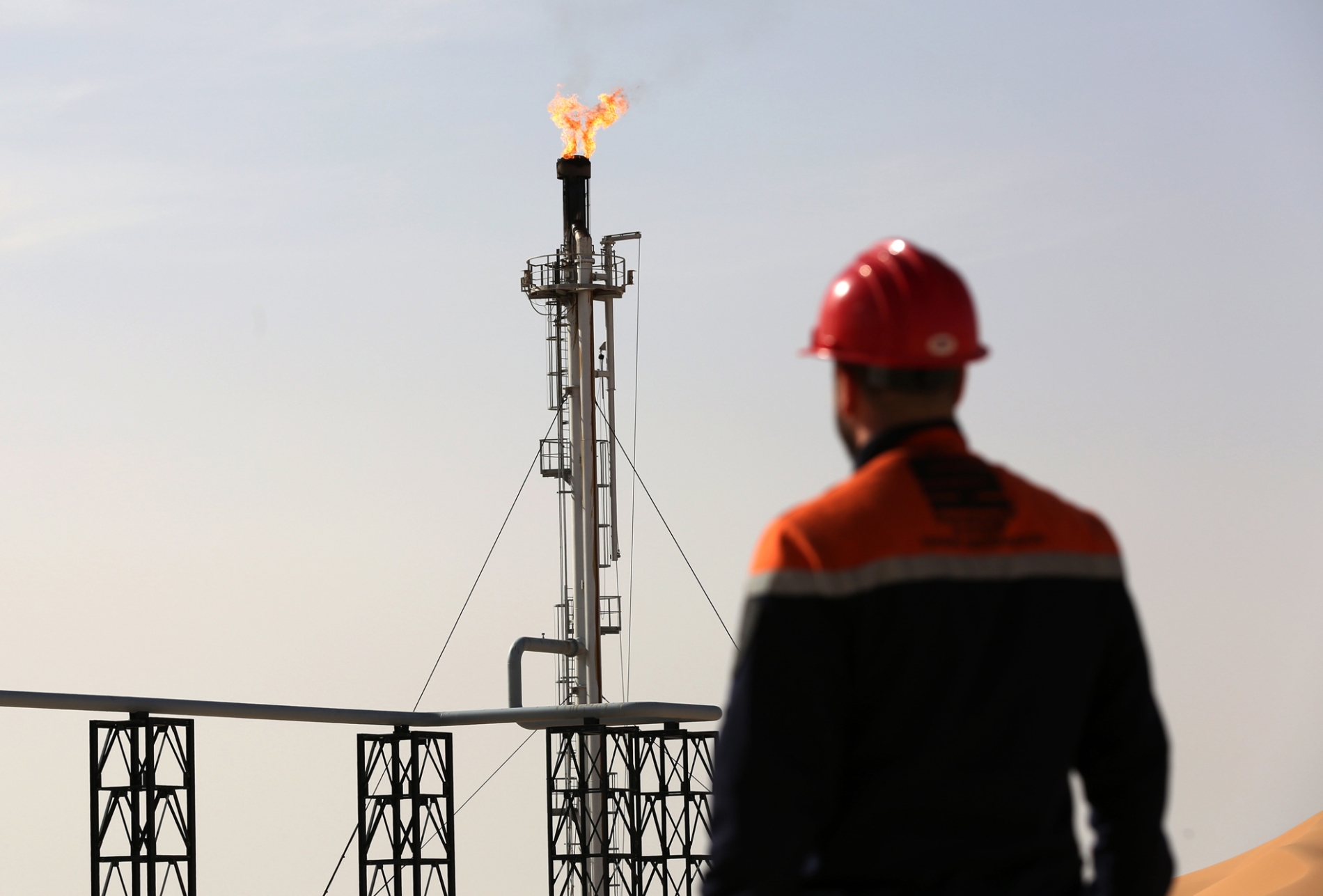
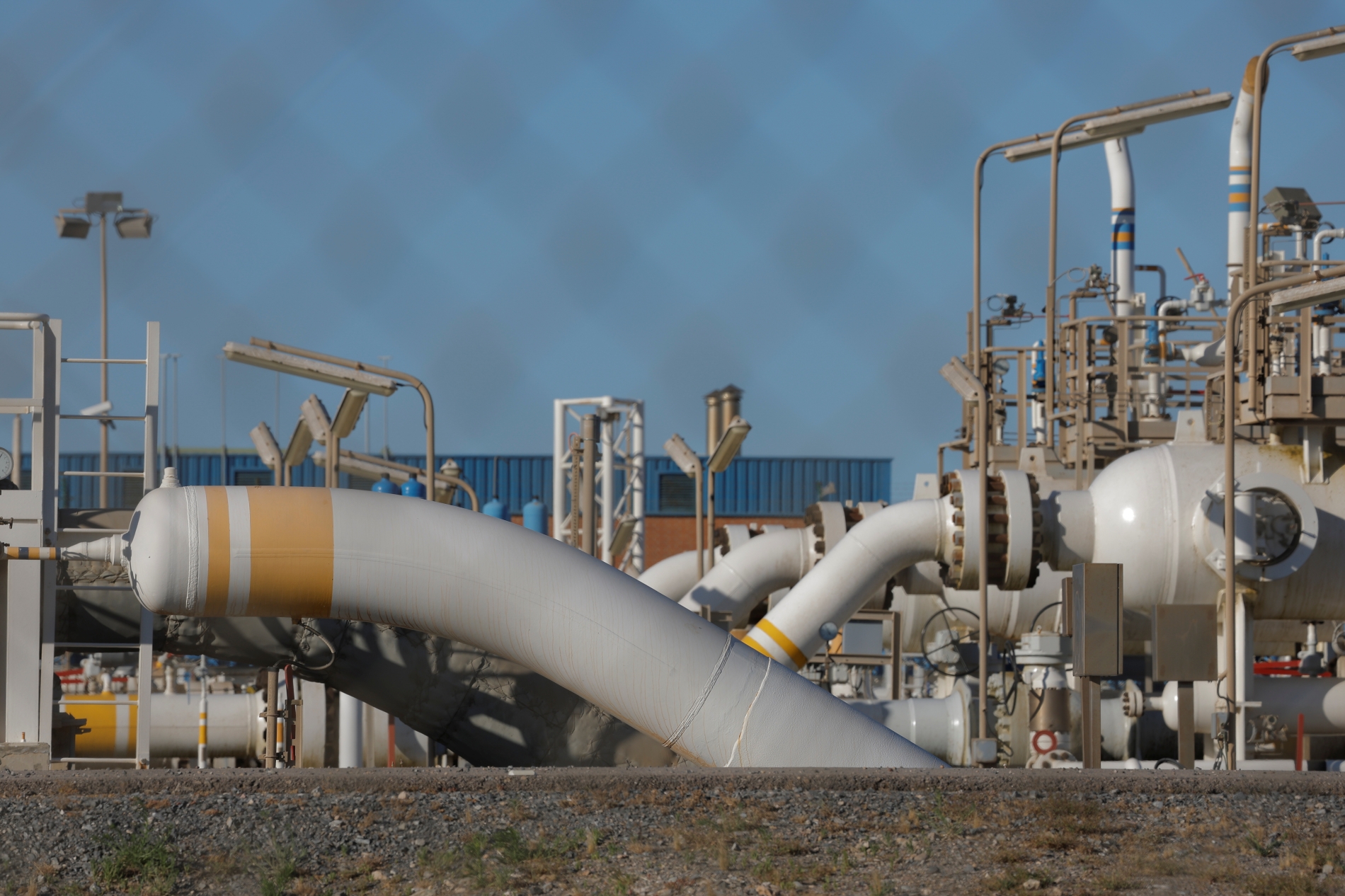
A Sonatrach facility in Algeria which produces 60,000 barrels of crude oil/day and nearly 2 million m3 of natural gas.

Professor Nasreddine Sari, secretary-general of the Algerian Centre for Economic Studies and Research on Local Development Issues, told Al Majalla that "Algeria can strengthen its position as an energy power on the international stage, especially amid growing signs of demand in the European regional market and in global markets, and the acute need for a secure and reliable supplier". He added that developing shale gas, also known as schist gas, "could raise Algeria's gas production from its current 137 billion cubic metres to around 200 billion cubic metres a year by 2030".

He said: "Expected investment on this front could exceed $50bn, enhancing Algeria's capacity to expand exports to Europe and Asia. Gas could also make a greater contribution to GDP as a vital energy source and one of the key drivers of economic growth." Sari added that the gas could reduce poverty, provide employment and "generate additional revenues exceeding $25bn by 2035, strengthening Algeria's ability to finance development projects and expand investment in renewable energies".

Addressing concerns

Despite Algeria's vast reserves, progress on shale gas has been slow owing to concerns around the environmental impact of hydraulic fracturing, known as fracking. The technique involves the high-pressure underground injection of fluids consisting of water, sand, and chemicals to fracture deep rock formations and release the resources trapped within them. Sari said the focus should be on "attracting international expertise to ensure the highest levels of environmental safety".

Despite the slow pace, a broad understanding appears to have been reached with foreign partners on the technical aspects, while negotiations continue with the US energy giants ExxonMobil and Chevron over certain commercial details for the exploration and development of unconventional resources.

Reuters
The arrival site of the Medgaz subsea natural gas pipeline between Algeria and Spain, in Almería, Spain, on 10 June 2022.

The secretary-general of the Algerian Centre for Economic Studies and Research on Local Development Issues says Algeria was "relying on important legal reforms, foremost among them the 2019 Hydrocarbons Law, which created a more attractive investment environment". The current legal framework for the exploration and exploitation explicitly includes shale oil and gas activities, with the aim of attracting foreign investors by strengthening partnerships through participation and production-sharing contracts, and by removing depth restrictions.

Forward planning

Sari said it was important "to build a national consensus" around shale gas "by involving citizens in information and decision-making, and by ensuring transparency at every stage of exploitation, so as to avoid a repeat of the 2015 scenario, when the country witnessed popular protests in the south after former Algerian President Abdelaziz Bouteflika announced the start of exploration operations".

Residents of the parched south fear that fracking could pollute and deplete the region's precious water table. Water is used in fracking, with the required volume ranging from 1,000 to 25,000 cubic metres per well. There are also concerns over contamination of the earth's surface, but other studies suggest that leakage from wells and processing equipment is rare.

If Algeria addresses the environmental, technical, and social obstacles, it could become a major player in the global gas market, both as a traditional exporter of natural gas and as a leading producer of shale gas. This would give it growing geopolitical weight and make a substantial contribution to strengthening partners' energy security at both the regional and international levels.

font change