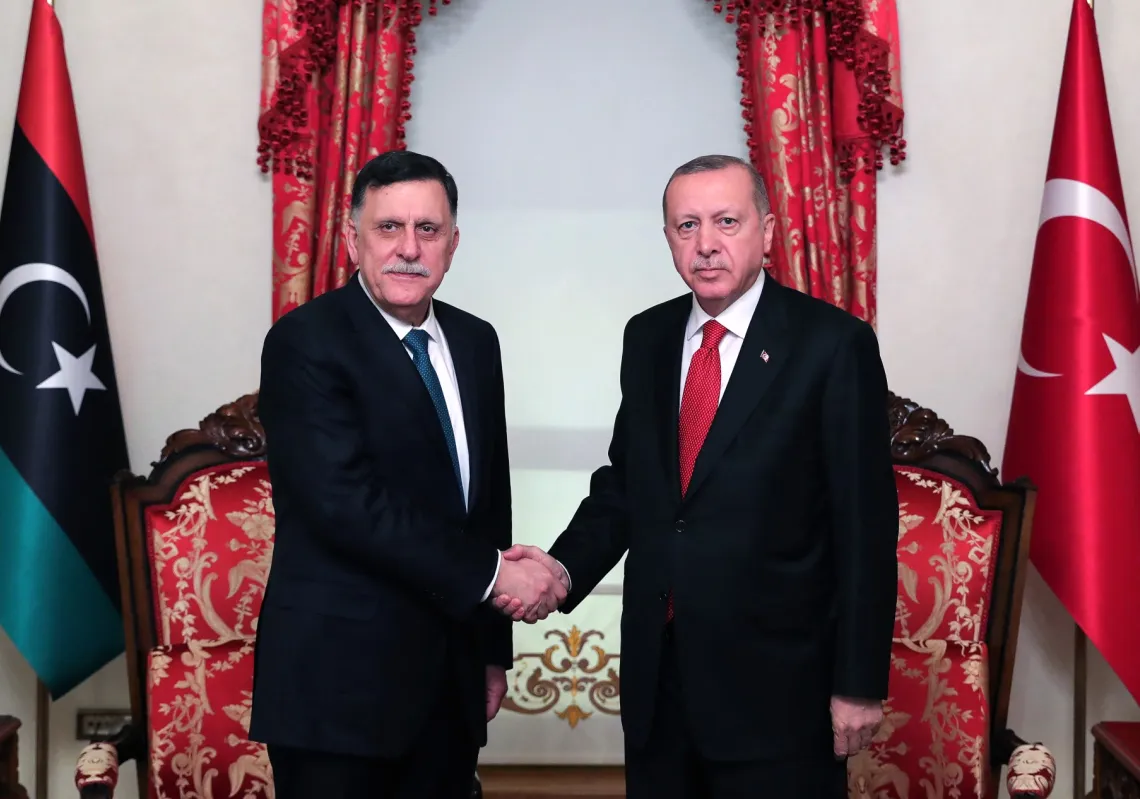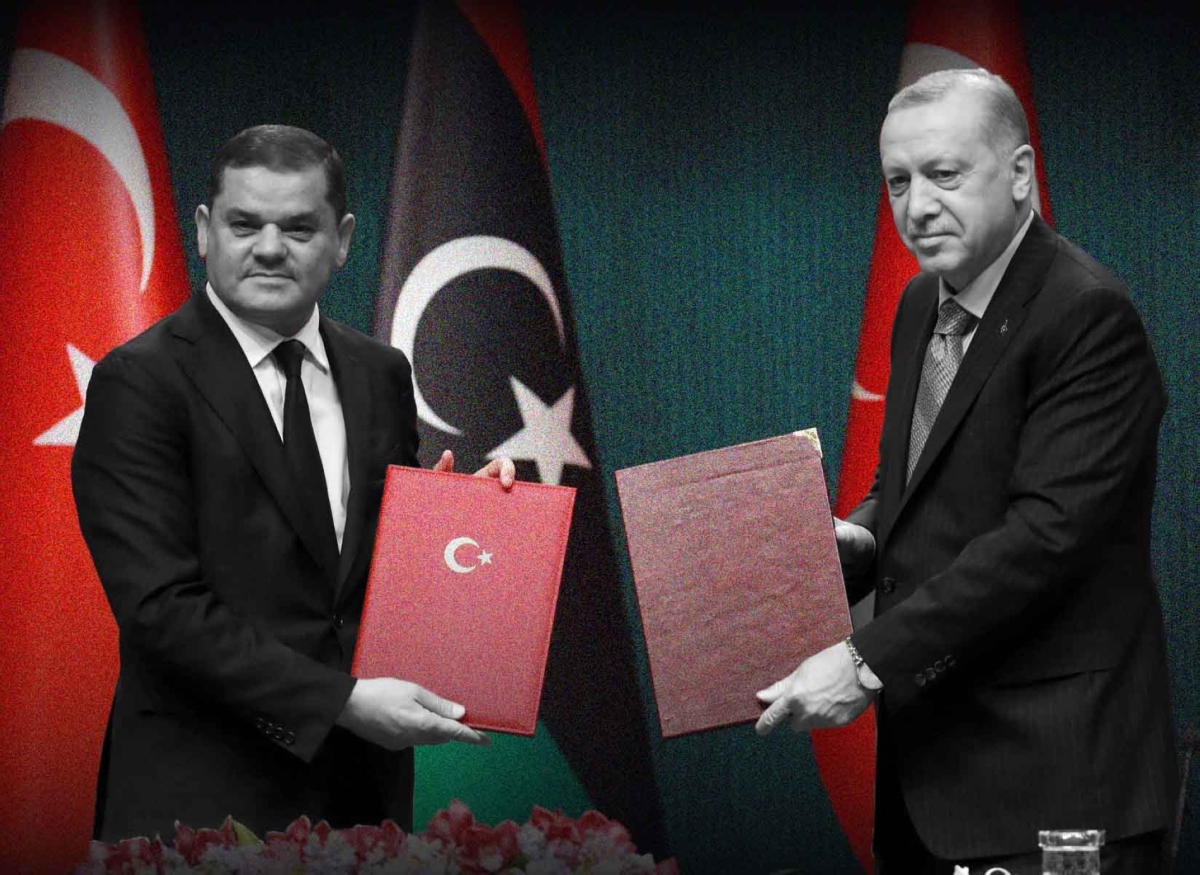

Athens may feel betrayed, and Tel Aviv threatened, but Ankara must be celebrating a major triumph—one that paves the way for its expanded influence in the Eastern Mediterranean. On 20 October, eastern Libya’s parliament ratified a maritime boundary delimitation deal that Türkiye and authorities in western Libya had already agreed to in 2019. Now all of Libya approves.
The eastern ratification offers an insight into the political ambitions of Saddam Haftar, the son of Libya’s elderly leader, Khalifa Haftar. Saddam is the deputy commander of the Libyan National Army (LNA), which controls eastern Libya, and has been busy cultivating ties with the Greeks, Turks, Israelis, Americans, and Egyptians, to name but a few, flying to Cairo, New Alamein (Egypt’s new ‘summer capital’), Athens, and even Abu Dhabi last month, where he reportedly met Israeli Prime Minister Benjamin Netanyahu, himself there on an unannounced visit.
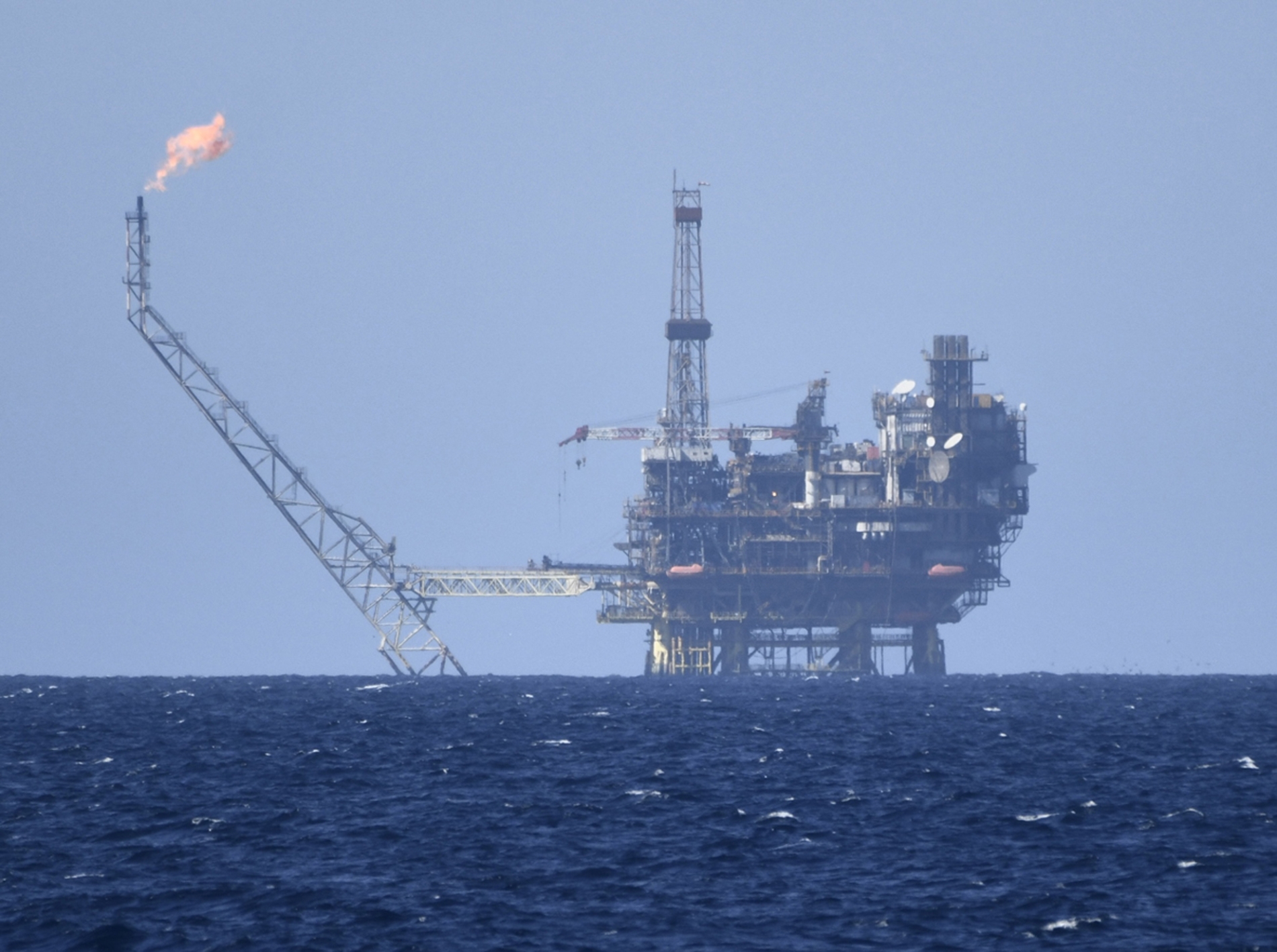
The delimitation deal matters because the eastern Mediterranean Sea contains huge deposits of natural gas. Defining various interested states’ Exclusive Economic Zones (EEZs) paves the way for determining which seabed resources belong to whom. Saddam Haftar is believed to have reassured Athens that eastern Libya would not endorse the 2019 memorandum of understanding (MoU) signed by the Tripoli government and Türkiye, yet when it came to picking a side, he appears to have chosen Türkiye.
This gives Ankara a hard-fought geopolitical victory, rewarding its persistence in pursuing its foreign policy goals. Yet the ratification is the ultimate about-turn, because seven years ago, when the MoU was signed, the Haftars were at odds with Türkiye, which has been defending the authorities in western Libya, including the capital, Tripoli. Fast forward to 2026, and alliances are changing in a reshuffle that upends the regional balance of power. This presents fresh challenges for Egypt, which stands to lose out because the EEZ ratified by the Haftars overlaps with Egypt’s EEZ.
Firm rejection
Cairo’s response to eastern Libya’s ratification vote was one of swift and total rejection. The Foreign Ministry said the MoU had no legal effect (so no legal implications), infringed on Egypt’s EEZ, and violated the international law of the sea and the 1982 UN Convention on the Law of the Sea regarding the delimitation of EEZs and continental shelves based on the principles of equity and justice. “Egypt reserves the right to safeguard its rights and counter any attempt to undermine them,” the ministry said.
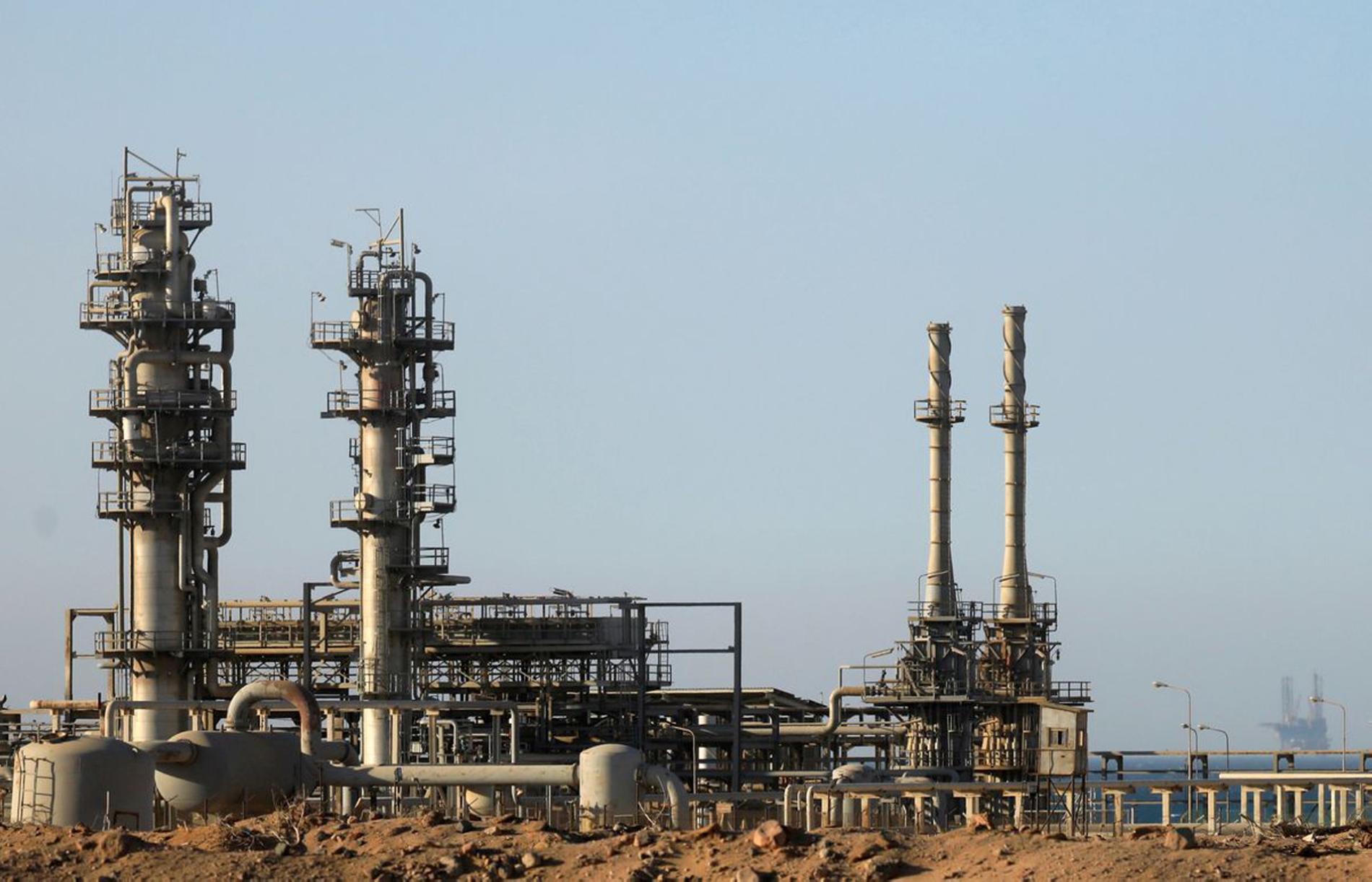
Egypt’s rejection of the MoU is partly rooted in political rivalries between Cairo and Ankara, but in practical terms the EEZ presents problems for Cairo’s Eastern Mediterranean energy plans. Egyptian energy analyst Ramadan Abul Ela said the MoU hurts Egypt’s interests as it “amounts to an infringement of Egypt’s maritime boundaries, one that necessitates Egyptian defence of these boundaries by all legal means”.