
In Sandi Tan’s 2021 novel Lurkers, a character named Rosemary remembers her father being happy only when he was playing Grand Theft Auto: Vice City. All he wanted, she recalls, was to wander along the virtual beach, gazing for hours at the orange waves. If a stray bullet struck him or he fell victim to an attack, he would simply return to the game and resume his journey towards the sea.
The scene captures a profound change in our relationship with storytelling. Grand Theft Auto (GTA) was conceived as a world of crime, adventure, and extreme violence—enough to have it banned in some countries. Yet in Tan’s novel, it becomes a place of contemplation and solitude. Within the limits of a world designed for them, players can shape their own experiences, perhaps even stories the game’s creators never imagined.
Video games have thus achieved something beyond the reach of other art forms, including cinema and television drama: they create a virtual double of ourselves, moving through an imaginary world over which we exercise some control. Video games have effectively broken through the barrier the screen imposes.
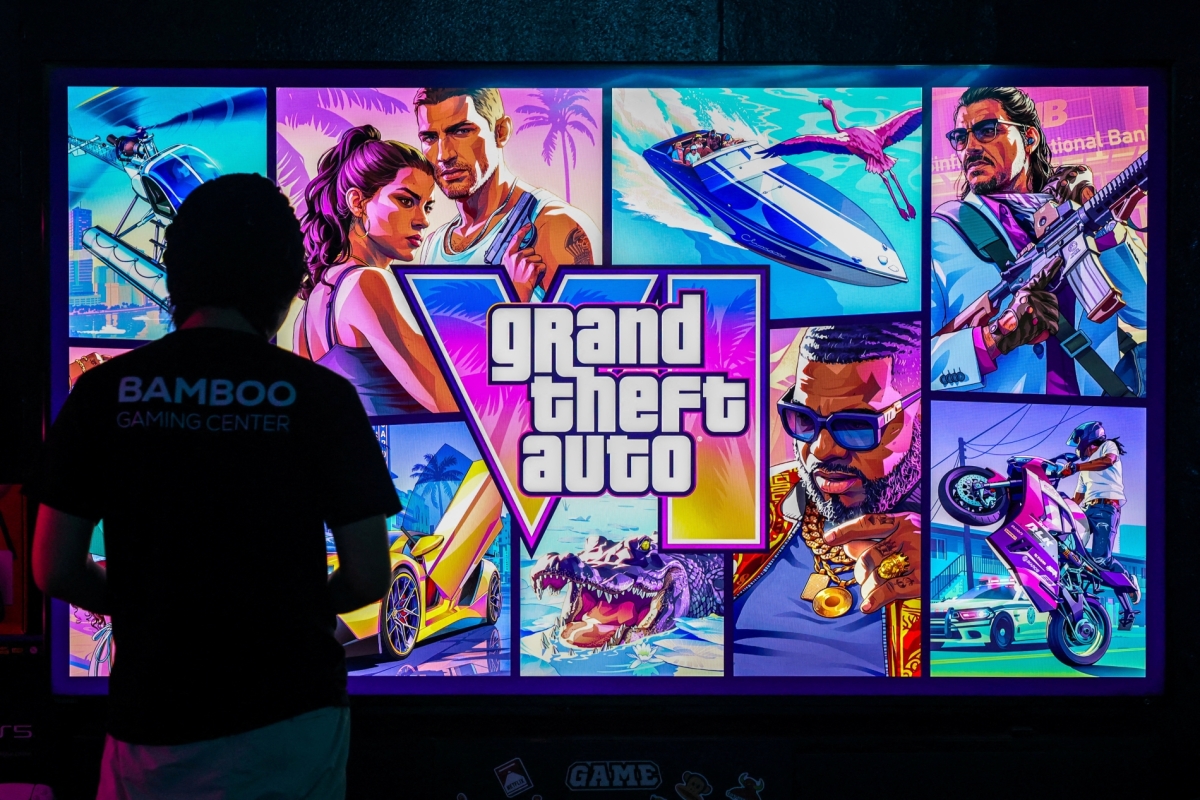
Now, more than two decades after the release of Vice City, the fictional metropolis has returned. The release of the sixth instalment of the series, Grand Theft Auto VI (GTA 6), has attracted extraordinary worldwide attention, much of it stemming from the long anticipation surrounding its production.
GTA has become a popular-culture icon, acquiring its own devotees and rituals. But this raises a broader question. Have video games become capable of fulfilling some of the functions long associated with literature and cinema? They construct entire worlds, portray societies in all their contradictions, and offer experiences so absorbing that they seem part of our own lives.
The critical reception to GTA 6 has lent further weight to this question. It is the largest video game release of all time, making $3.8bn in its first day alone. With pre-sales of 32.5 million units and a near-perfect 99 out of 100 on Metacritic, it has been hailed as a ‘masterpiece’. Critics’ praise centres on the game’s richly detailed virtual world, where characters, places, and everyday life feel woven into a single fabric.

Strikingly, some critics have focused more on the game’s human dimension than on the violence and high-speed pursuits traditionally associated with the series. The Guardian highlighted Lucia and Jason’s relationship, suggesting that amid the clamour of its fictional world, the game offers a love story of unexpected emotional power.
Reviewers have also described its virtual setting as one of the most convincing and richly detailed worlds in gaming history. These responses suggest that video games are increasingly discussed and judged using the vocabulary and standards that cultural journalism long reserved for literature and cinema.
Could a video game, then, become the Great American Novel?
The Great American Novel
Since the 19th century, the idea of the Great American Novel has embodied the ambition to move beyond individual lives and capture American society at a particular moment in its history. Writers such as Herman Melville, Mark Twain, F. Scott Fitzgerald, and John Steinbeck, as well as Don DeLillo and Thomas Pynchon, have pursued that ambition in different ways. Yet the underlying question has remained much the same: can a work of fiction capture the spirit of America and reveal what the country hides beneath its public image?
This does not mean that GTA 6 can readily be placed alongside Moby-Dick or The Great Gatsby. The distinction between a novel and a video game lies as much in the nature of the experience as in the medium. The comparison becomes more persuasive, however, when we consider the series’ ambition to create an entire social world, rather than simply a setting in which characters act out their stories.
In a conventional novel, the author chooses where readers go, who they meet, and what they witness. In an open-world video game, players can abandon the main storyline, wander through neighbourhoods and streets, tune into radio stations, watch passers-by, and discover details that serve no immediate purpose in the plot. The setting itself becomes part of the narrative.
The series achieved this in earlier instalments, particularly the fourth and fifth. Its fictional cities became satirical versions of New York and Los Angeles, with their class divisions, obsession with wealth, consumer culture, and clamorous media. The stories went beyond the rise and fall of individual criminals to explore the society that produces them and sometimes elevates them to folk-hero status.
In the sixth instalment, Rockstar Games introduces two central characters, Lucia Caminos and Jason Duval, bound together by romance and a partnership in crime. Lucia emerges from prison hoping for a better life, while Jason struggles to escape the criminal world he grew up in. A seemingly straightforward job draws them into a wider conspiracy, forcing them to depend on each other in a world that offers neither of them an equal chance.
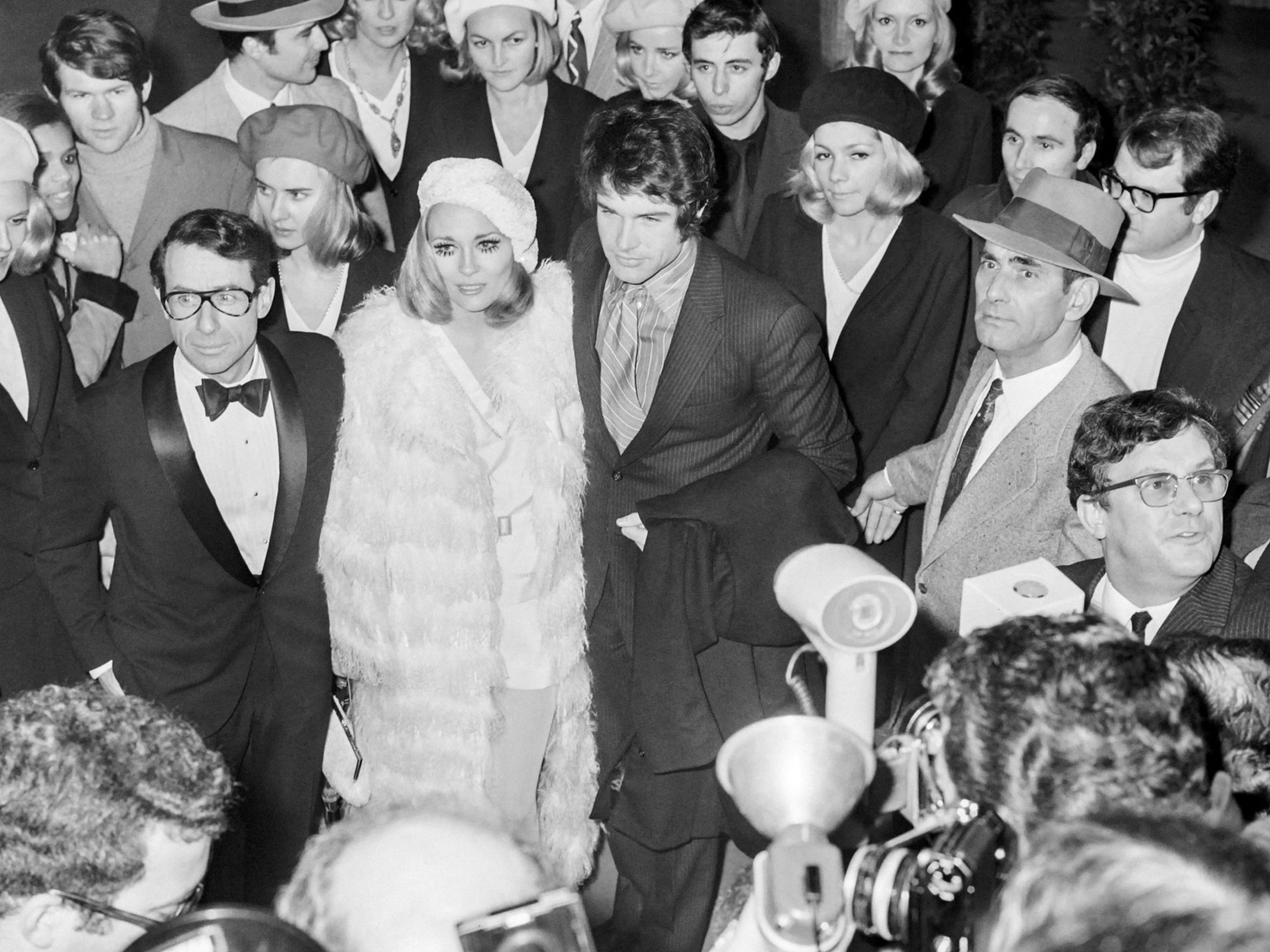
Their story recalls a long American tradition of outlaw narratives, from the legend of Bonnie and Clyde to films that explore the conflict between lovers and authority. Oliver Stone’s Natural Born Killers offers a more pointed comparison, portraying violence as mass entertainment and criminals transformed into celebrities in a culture of spectacle.
What makes GTA 6 particularly interesting is the social question beneath the adventure: what does the pursuit of a better life mean in a society where legitimate routes to wealth appear closed to some of its members?
This is one of the recurring paradoxes of American literature: a society that celebrates individual success yet continually produces stories of people who can achieve it only by breaking the law. In this sense, GTA moves from telling stories of crime to telling the story of the American Dream as it turns into a nightmare.
The cinema of the 21st century?
Video games have borrowed extensively from cinema: framing, camera movement, editing, soundtracks, character development, dialogue, and even acting techniques involving motion and performance capture. Many games now feature dramatic sequences that can be watched as self-contained cinematic scenes.
Video games, however, offer something conventional cinema cannot provide: interactivity. In a film, we might watch a character enter an abandoned building and wish we could warn them of the danger ahead. But we cannot change what happens. In a game, we decide whether to enter, which route to take, and how to confront the danger. Even when the central plot is predetermined, the shift from watching to acting fundamentally changes our relationship with the story.