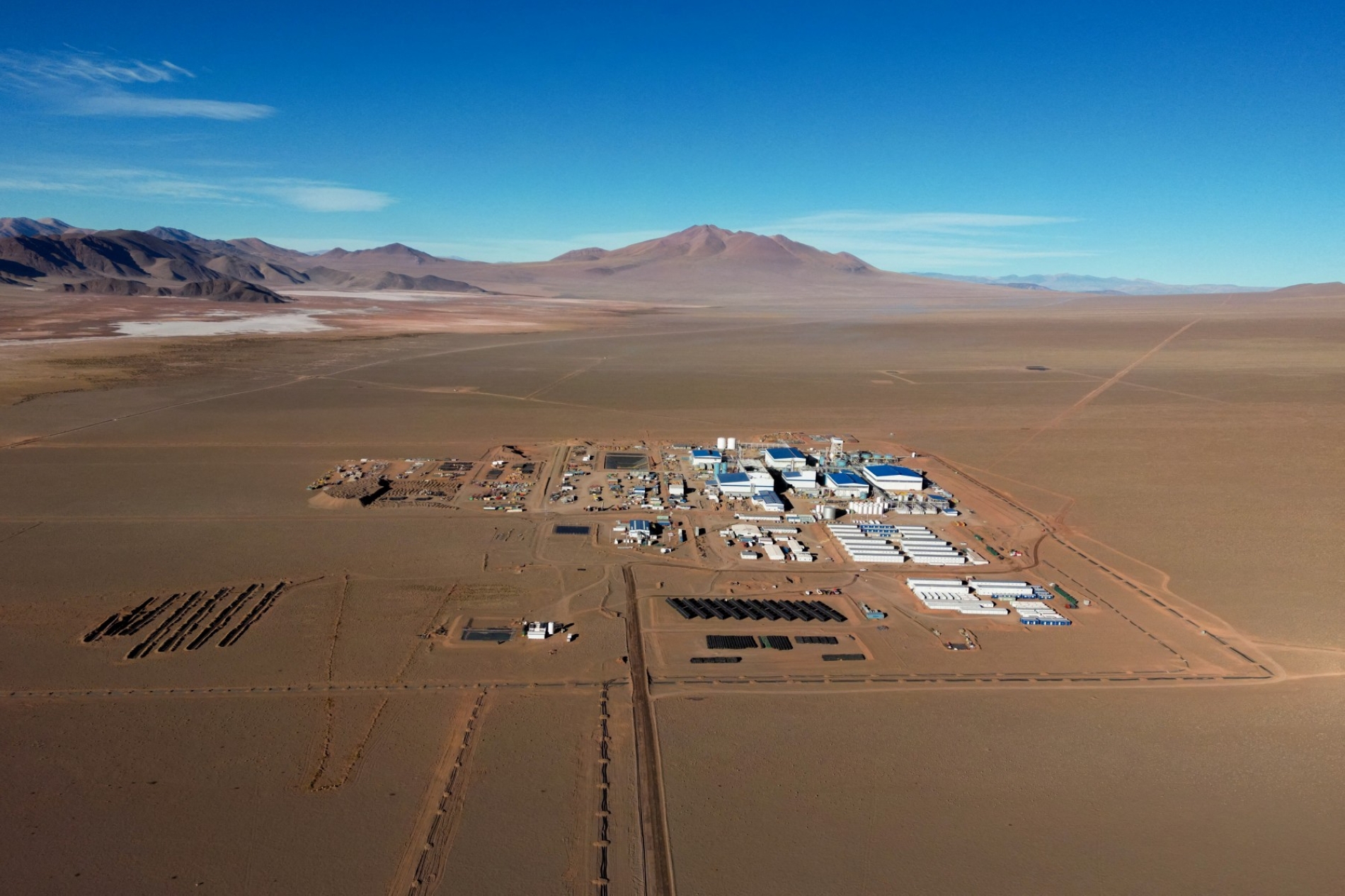
At the Port of Vinton in Louisiana, mining company Aclara plans to build a rare earths separation plant supplied by two projects in South America. Penco in southern Chile and Carina in Brazil’s Goiás state would each produce a concentrate containing several rare earth elements, and the Louisiana facility would then separate the mixture into individual compounds, some of which are used to make permanent magnets for electric motors.
It is an example of how Washington’s search for alternatives to Chinese refining is drawing attention to mineral deals in Chile, Argentina, and Brazil. Their terms can determine where plants are built, who buys what they produce, and how much of the value stays in the region. In October, Aclara said it had completed the initial engineering work and thinks the plant will cost $494mn to build. US export credit agency EXIM may finance up to $750mn for a wider development in Louisiana that also includes plans to make rare earth metals and alloys.
Investment decisions
For Chile and Brazil, the industrial benefits would depend on the work done before the concentrates are shipped and the expertise local firms could build around it. Mining in more countries broadens the sources of raw material, yet manufacturers remain exposed to disruption if they depend on the same few processors. China’s position in refining is therefore central to Washington’s effort to diversify, and Aclara’s proposed separation plant could reduce that dependence.
For Latin America and the Caribbean, the same investment decisions have consequences for what the region can sell. The International Energy Agency estimates that last year the region refined only 20% of the key energy minerals it extracted, excluding lithium. Refining more locally could let producers sell more valuable products and create demand for chemical engineers, technical services, and specialised equipment. In turn, where a plant is built can determine which businesses acquire the expertise to take on future projects.
Washington brought the search for more diverse mineral supplies into the Shield of the Americas, a regional initiative the Trump administration launched in March to coordinate efforts against organised crime. In September, 15 governments called for security measures against criminal networks, economic cooperation to diversify critical mineral supplies, and explore ways to screen investments. To coordinate a regional response to transnational crime, they proposed routing consultations through the Organisation of American States under the Rio Treaty. It brought security and mineral supplies onto the same diplomatic agenda.
Chile was pursuing minerals cooperation with Washington before it formally joined the Shield of the Americas in September. In April, Santiago had signed a deal on critical mineral supply chains alongside a separate security agreement. When the associated Americas Counter Cartel Coalition met in October, Chile attended as an observer pending a decision on whether to join.
Where to process
Aclara’s plans for Penco and Louisiana have analysts wondering how much of the processing Chile can retain within its borders. At Penco, Aclara would prepare the concentrate for shipment to Louisiana, creating openings for Chilean suppliers to provide equipment and maintain the machinery used in the first stage of processing. The economic return for Chile would depend in part on whether local businesses could turn that experience into contracts on other projects, allowing the benefits to last beyond the work at Penco itself.
On the sales side, Aclara recently reported on continuing talks with prospective customers, without naming any. A study of the negotiations found that the deal preserved the existing pricing policy and narrowed Chile’s freedom to revise it. The agreement requires, for instance, that any such measure preserve the EU’s ability to source raw materials from Chile.
Chile’s trade agreement with the EU links access to lithium with an effort to build domestic processing capacity. Santiago retained the ability to make lithium available at preferential prices to companies that use it to make higher-value products in Chile. For an investor assessing potential sites, lower input costs could make a Chilean location more competitive.