Libya’s martime deal with Türkiye ruffles feathers in Egypt

Cairo’s response was one of swift and total rejection, as the EEZ ratified by the Haftars overlaps with Egypt’s EEZ and Cairo

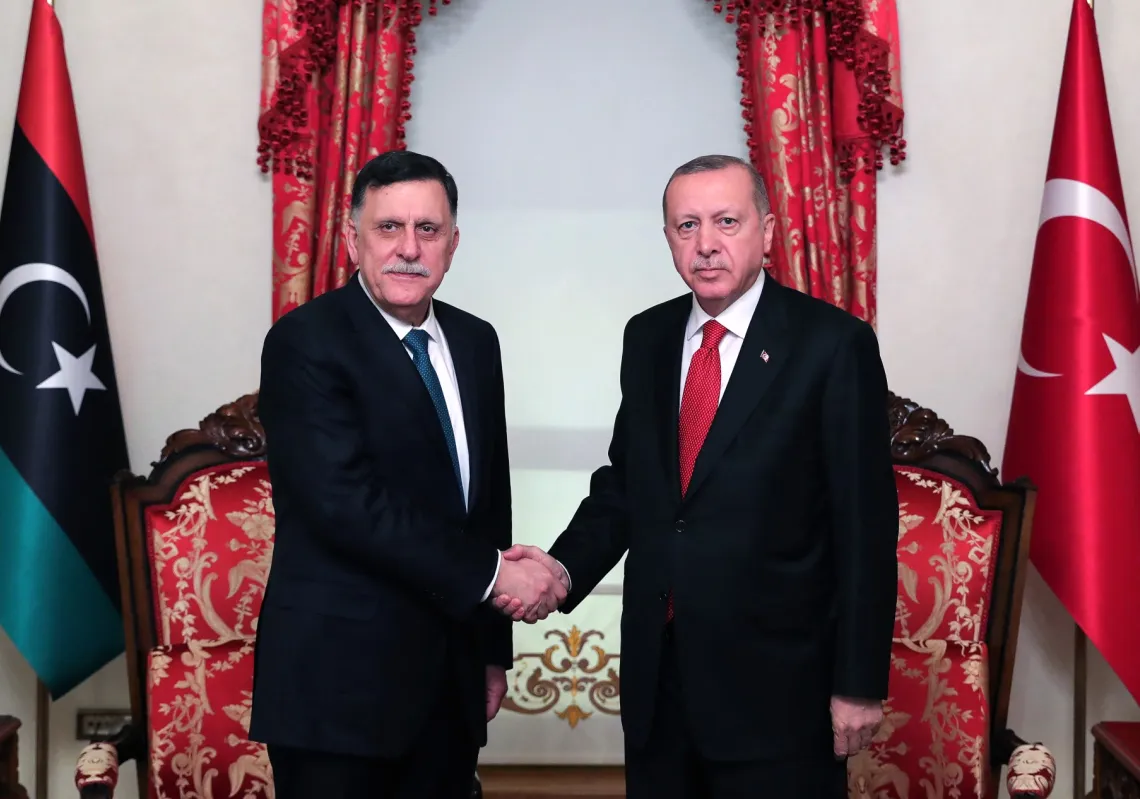
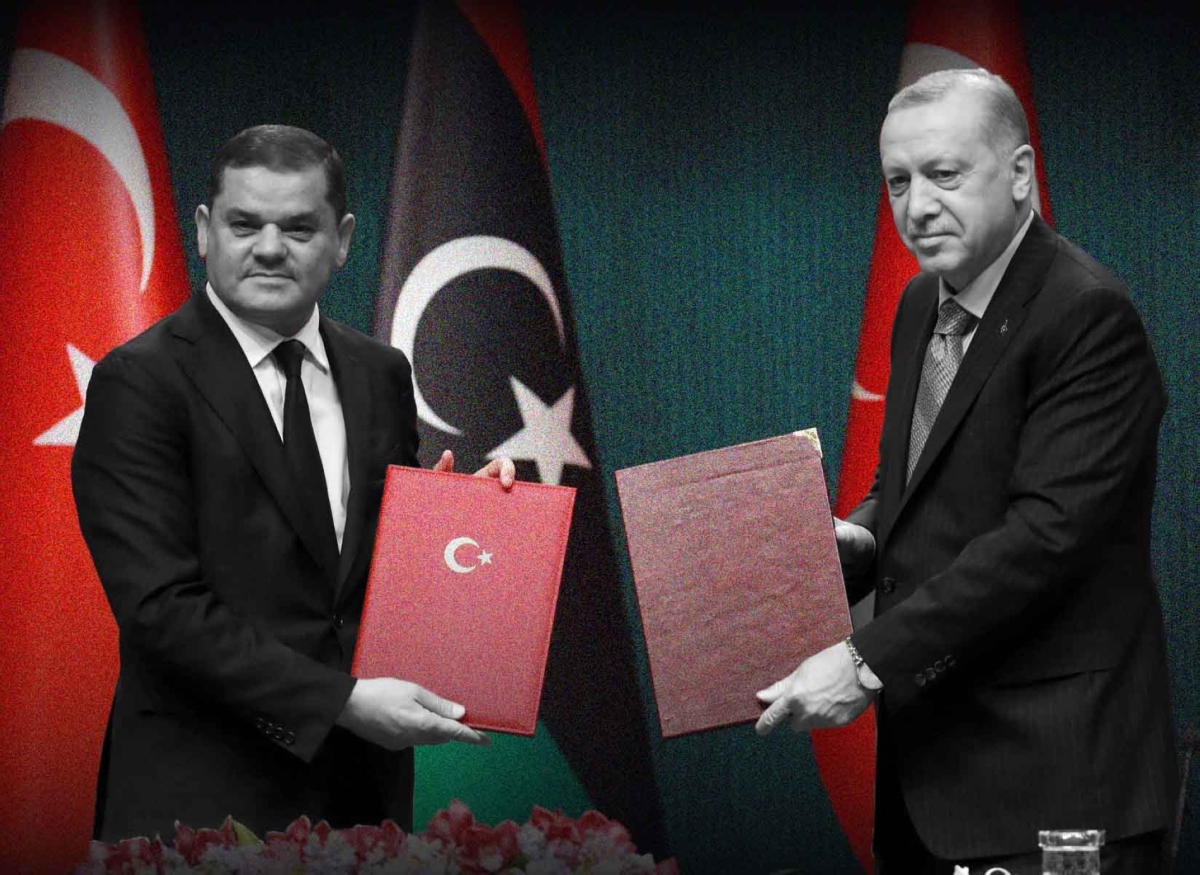
Turkish President Recep Tayyip Erdogan  and Libyan Government of National Unity Prime Minister Abdul Hamid Dbeibah pose during a signing ceremony in Ankara, on 12 April, 2021.
Adem ALTAN / AFP
Turkish President Recep Tayyip Erdogan and Libyan Government of National Unity Prime Minister Abdul Hamid Dbeibah pose during a signing ceremony in Ankara, on 12 April, 2021.

Libya’s martime deal with Türkiye ruffles feathers in Egypt

Athens may feel betrayed, and Tel Aviv threatened, but Ankara must be celebrating a major triumph—one that paves the way for its expanded influence in the Eastern Mediterranean. On 20 October, eastern Libya’s parliament ratified a maritime boundary delimitation deal that Türkiye and authorities in western Libya had already agreed to in 2019. Now all of Libya approves.

The eastern ratification offers an insight into the political ambitions of Saddam Haftar, the son of Libya’s elderly leader, Khalifa Haftar. Saddam is the deputy commander of the Libyan National Army (LNA), which controls eastern Libya, and has been busy cultivating ties with the Greeks, Turks, Israelis, Americans, and Egyptians, to name but a few, flying to Cairo, New Alamein (Egypt’s new ‘summer capital’), Athens, and even Abu Dhabi last month, where he reportedly met Israeli Prime Minister Benjamin Netanyahu, himself there on an unannounced visit.

The delimitation deal matters because the eastern Mediterranean Sea contains huge deposits of natural gas. Defining various interested states’ Exclusive Economic Zones (EEZs) paves the way for determining which seabed resources belong to whom. Saddam Haftar is believed to have reassured Athens that eastern Libya would not endorse the 2019 memorandum of understanding (MoU) signed by the Tripoli government and Türkiye, yet when it came to picking a side, he appears to have chosen Türkiye.

This gives Ankara a hard-fought geopolitical victory, rewarding its persistence in pursuing its foreign policy goals. Yet the ratification is the ultimate about-turn, because seven years ago, when the MoU was signed, the Haftars were at odds with Türkiye, which has been defending the authorities in western Libya, including the capital, Tripoli. Fast forward to 2026, and alliances are changing in a reshuffle that upends the regional balance of power. This presents fresh challenges for Egypt, which stands to lose out because the EEZ ratified by the Haftars overlaps with Egypt’s EEZ.
Reuters
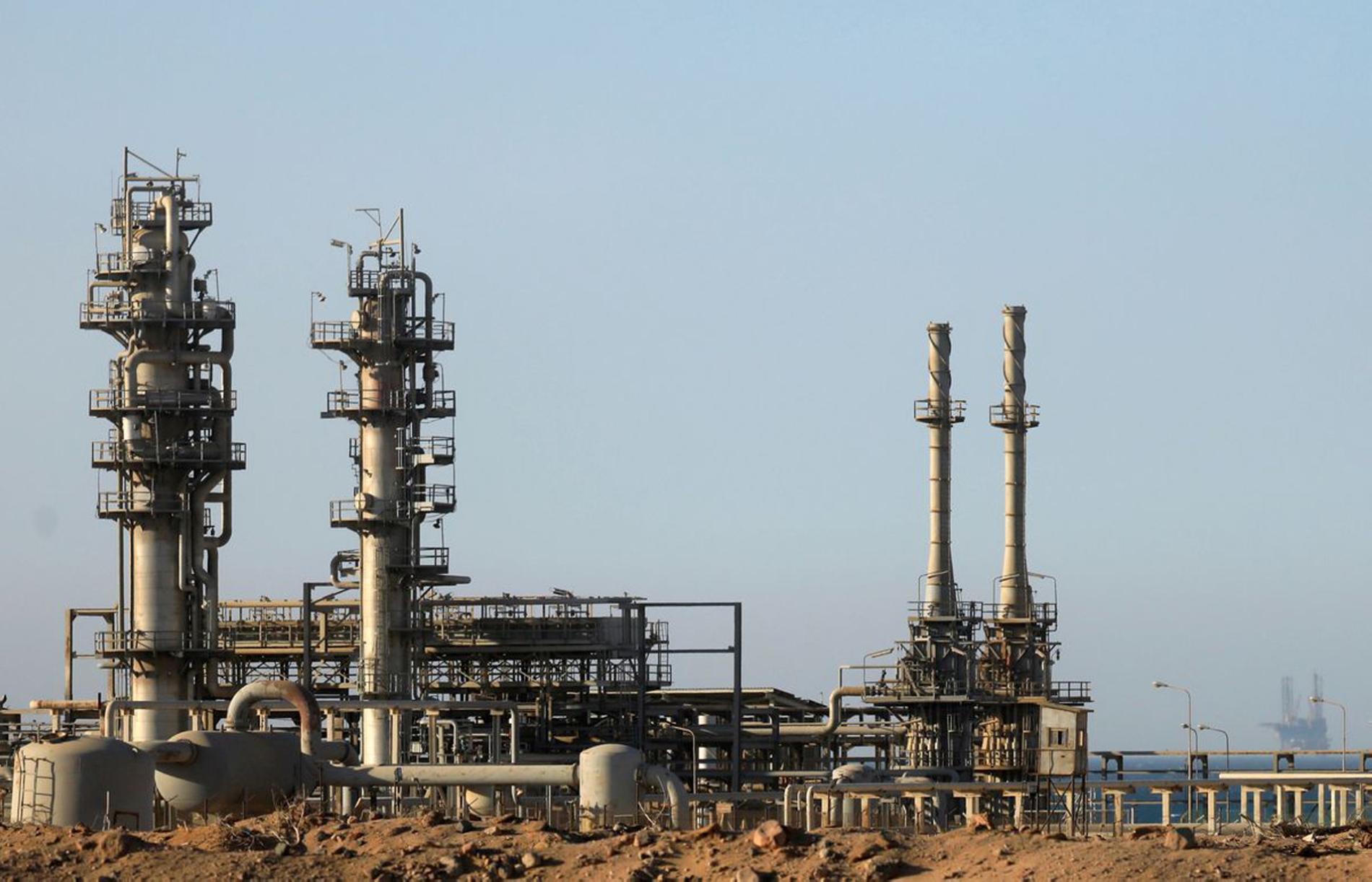
An Egyptian gas plant as seen from the Suez desert road outside Cairo.

Firm rejection

Cairo’s response to eastern Libya’s ratification vote was one of swift and total rejection. The Foreign Ministry said the MoU had no legal effect (so no legal implications), infringed on Egypt’s EEZ, and violated the international law of the sea and the 1982 UN Convention on the Law of the Sea regarding the delimitation of EEZs and continental shelves based on the principles of equity and justice. “Egypt reserves the right to safeguard its rights and counter any attempt to undermine them,” the ministry said.

Egypt’s rejection of the MoU is partly rooted in political rivalries between Cairo and Ankara, but in practical terms the EEZ presents problems for Cairo’s Eastern Mediterranean energy plans. Egyptian energy analyst Ramadan Abul Ela said the MoU hurts Egypt’s interests as it “amounts to an infringement of Egypt’s maritime boundaries, one that necessitates Egyptian defence of these boundaries by all legal means”.
The maritime deal between Ankara and the eastern Libyan government infringes on Egypt's maritime boundaries

Egyptian energy analyst Ramadan Abul Ela

Speaking to Al Majalla, he said ratification of the MoU in eastern Libya "does not make it either legal or binding for other countries," noting that it violates the UN Convention on the Law of the Sea, to which Türkiye is not party. Yet Cairo's opposition to the 2019 deal drew much of its weight from the refusal of Benghazi (the de facto 'capital' of eastern Libya) to recognise it.

In recent years, Egypt has been trying to delineate its maritime borders with other Mediterranean states, striking a delimitation deal with Cyprus in 2003 and with Greece in 2022. In the same year, it unilaterally set its own western maritime boundary with Libya via presidential decree. Türkiye wants Egypt to scrap its boundary deals with Cyprus and Greece, promising Cairo a larger continental shelf if it partners with Ankara, but Egypt's energy ambitions are based on it being a regional energy hub where Mediterranean gas is collected, processed, and re-exported to the international market, especially Europe.

Getty Images
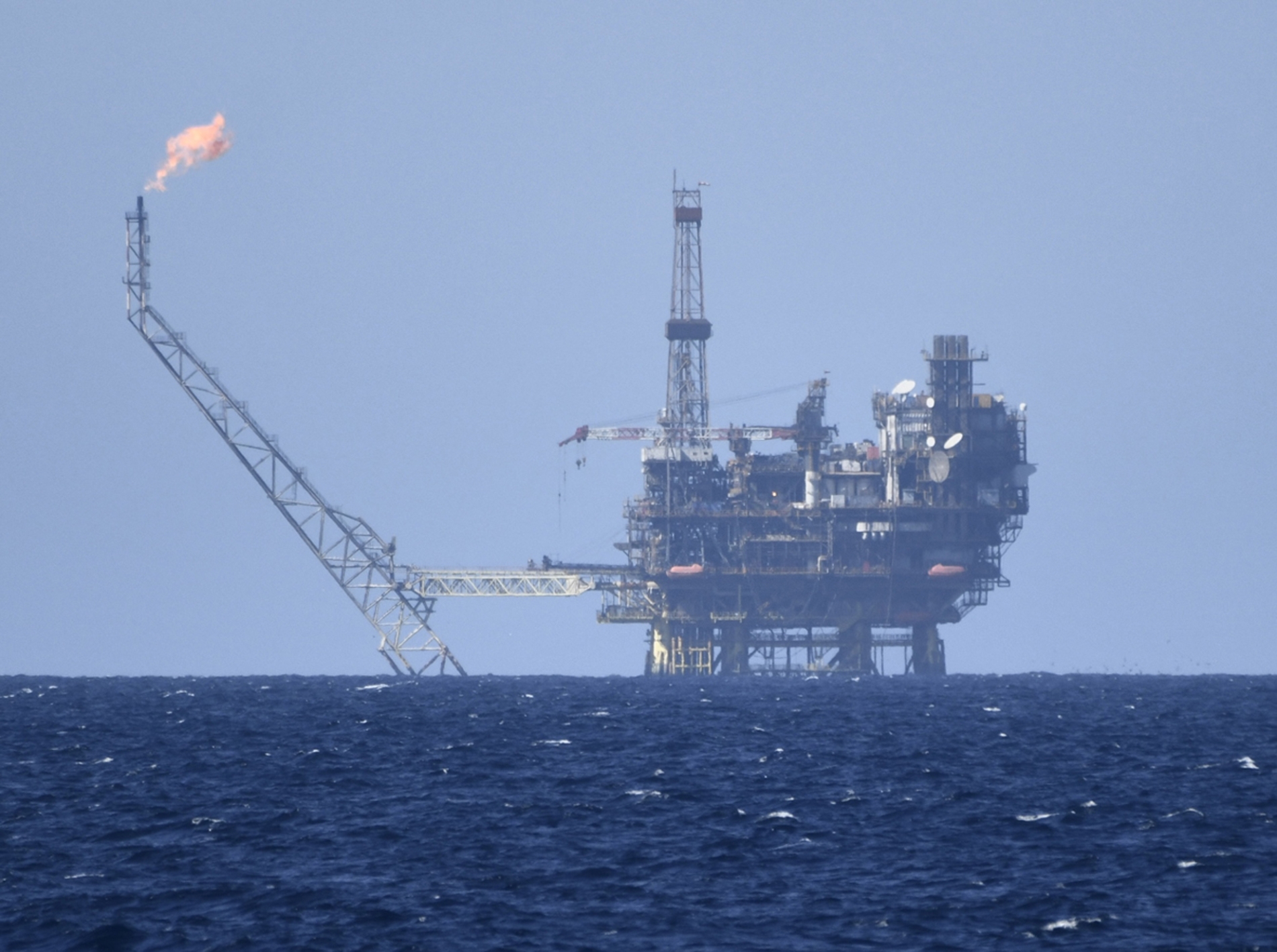
An oil and gas platform off the coast of Libya on 25 February 2022. Türkiye and Greece are at loggerheads over a Turkish-Libyan agreement on maritime boundaries in the Mediterranean Sea.

Divergent courses

The newly approved delimitation agreement gives Ankara a maritime 'blanket' across the Eastern Mediterranean that will intersect with any future offshore pipeline or electricity interconnectivity project linking Egypt with Europe. It also represents a U-turn on the Haftar family's positioning. Khalifa, who effectively ruled eastern Libya since the 2011 downfall of Muammar Gaddafi, regularly visited Cairo and depended on Egypt to build his eastern Libyan force. Their close alliance, and hostility towards Türkiye, reached a zenith in 2020 when Egypt's President Abdul Fattah al-Sisi threatened direct military intervention if western Libyan forces (backed by Türkiye) entered territory controlled by Haftar.

Libyan political analyst Mohamed Emtyred believes the eastern Libya parliament's MoU ratification does not necessarily mean that Egypt has lost an ally. "This is a sovereign decision for Libya," he said. "Even though Egypt opposes it, the deal does not infringe on Egyptian sovereignty." He noted that growing relations between eastern Libya and Türkiye are nothing new and that Cairo has been kept informed.

Emtyred said the 2019 MoU has been thoroughly studied by eastern Libyan institutions since it was signed by Tripoli and Türkiye. Egypt, he claimed, stands to benefit from the agreement, which expands its continental shelf by thousands of square kilometres. He attributed Cairo's anger to its previous agreements with Israel and Cyprus for the processing and subsequent re-export of gas at its sprawling liquefaction plants. "In the end, Egypt defends its economic interests, and nobody can blame it for doing so," he said.

Nevertheless, the decision by Benghazi is seen by Cairo as the latest example of a diversion of course by the new generation, led by figures such as Saddam Haftar. Another issue of tension has been the arms shipments entering Sudan from eastern Libya to support the Rapid Support Forces, a militia at war with the Sudanese Armed Forces, which is backed by Egypt. Cairo has protested these arms shipments, but to limited effect.

AFP
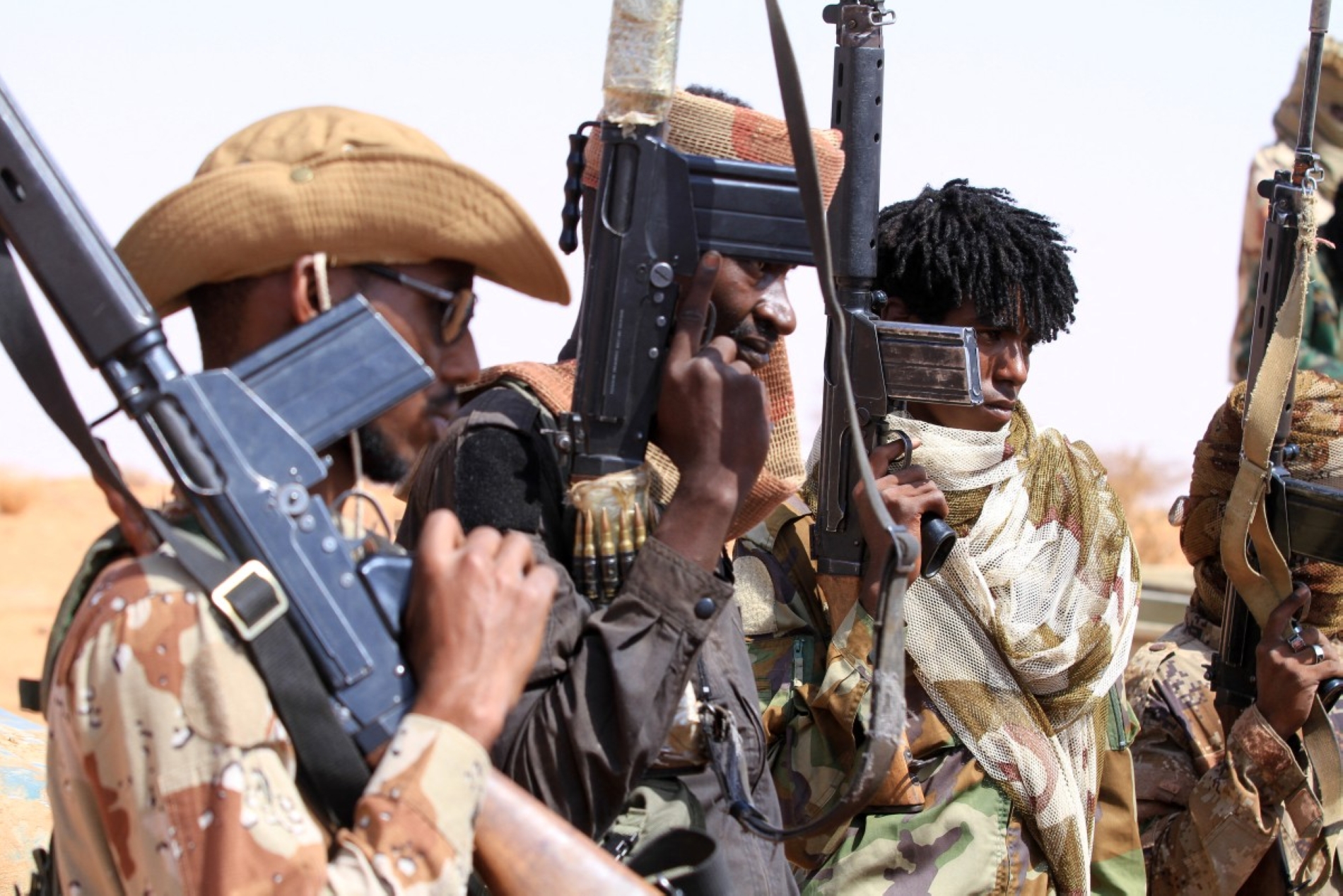
A group of armed defectors from the "Rapid Support Forces" arrives in a vehicle—believed to be on their way to surrender to the Sudanese Army—west of Omdurman, Khartoum State, on 19 August 2026.

Balancing act

In its 21 October statement, the Egyptian Foreign Ministry cited Cairo's rejection of the Türkiye-Tripoli MoU when it was signed seven years ago. At that time, Cairo and Ankara did not see eye-to-eye economically and politically, but things have changed dramatically in recent years, with fences mended. It has helped that their interests align across several areas, including the Gulf, Sudan, and the Horn of Africa. Egypt and Türkiye have also outlined an ambitious framework for bilateral investment, trade, and defence equipment manufacturing.

It highlights Egypt's balancing act over maritime boundaries. While it seeks to protect its maritime interests, it does not want to risk its newly forged ties with Ankara, nor does it want to alienate strategic allies in Athens and Nicosia. Yet as Greece and Cyprus inch ever closer to Israel, their 'pull factor' for Cairo slowly weakens. Egyptian policymakers are now re-evaluating so-called 'legacy strategies,' wondering whether they in fact may risk a new conflict.

In 2019, Egypt launched the Eastern Mediterranean Gas Forum, an OPEC-like bloc of gas producers and consumers, and invited non-bloc members, which most interpreted as an invitation to Türkiye. Although Ankara has still not signed on, analysts think the situation today offers an opening for the forum to unite former rivals. Egypt, in maintaining sound diplomatic relations with nearly every party, could lead as mediator. For optimists, a win-win on Mediterranean gas is still just about possible.

font change