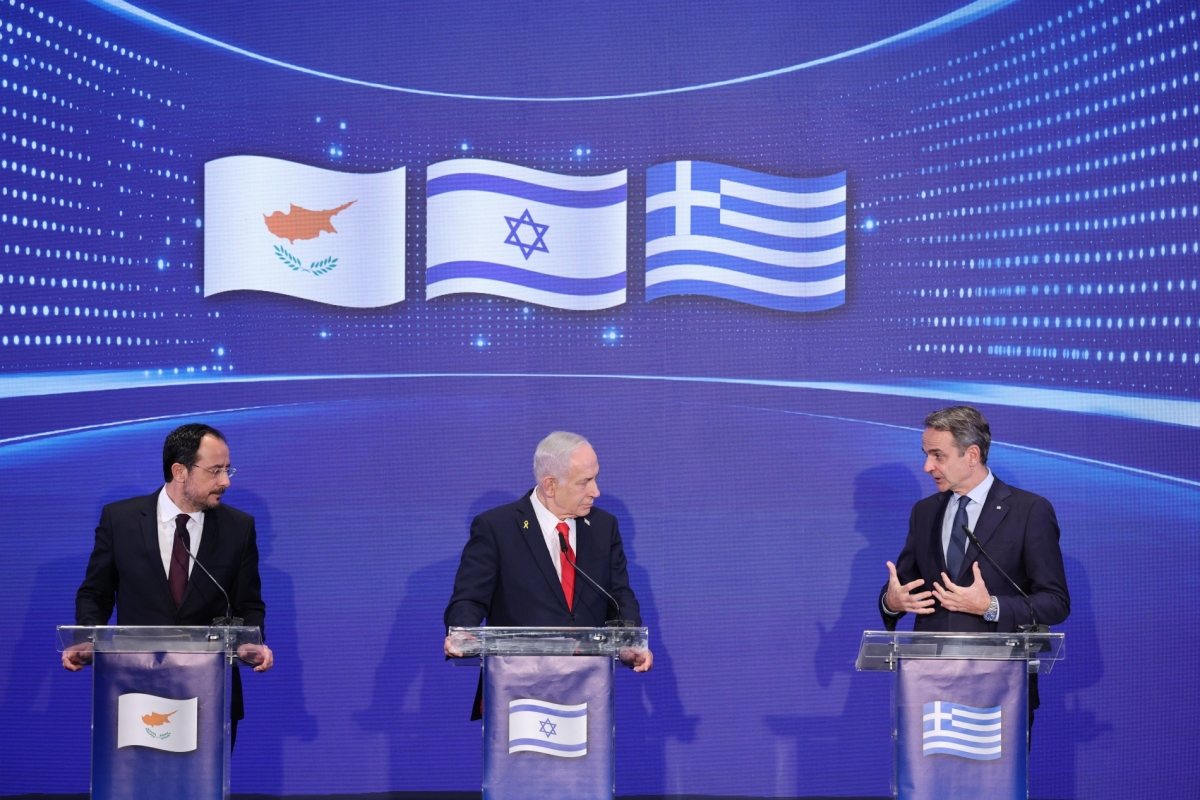

Israeli Prime Minister Benjamin Netanyahu hosted Greek Prime Minister Kyriakos Mitsotakis and Cypriot President Nikos Christodoulides in Jerusalem earlier this week, for the 10th meeting of the “Tripartite Summit.”
The first Tripartite Summit was held in 2016, when natural gas reserves were discovered in the Eastern Mediterranean and Türkiye’s relations with Israel and several Arab countries—particularly Egypt and several major Gulf countries—were extremely strained. The IGC (Israel-Greece-Cyprus) Trio’s raison d'être is to both form a united front against Türkiye and cooperate to optimise natural gas resources.
But Netanyahu described this week’s trilateral summit as the most consequential meeting to date. According to the joint statement released after the meeting, the parties agreed to reinforce ongoing trilateral cooperation on security, defence, and military matters, deepen collaboration to safeguard sea lanes and critical infrastructure against emerging threats, and advance joint energy projects, electricity interconnectors, and renewable energy initiatives.
During the joint press conference, an Israeli journalist asked Netanyahu if the summit aimed to send a message to Türkiye, to which he replied, “We don't seek confrontation with anyone. This coalition defends international norms and stability. And we hope that it will not be tested.”
Without naming Türkiye, the Israeli premier added, “To those who fantasise that they can reestablish their empires over our lands, I say this will not happen. We have the means to defend ourselves.”
Evolving relations
Relations between Türkiye and Israel, although occasionally interrupted due to Israel’s policies over the Palestinians, have been relatively good over the decades and reached their highest point in the 1990s when Israeli jets conducted training flights over the vast Anatolian plains, and hundreds of thousands of Israeli tourists chose to vacation in Türkiye.
But since Recep Tayyip Erdoğan's AKP (Justice and Development Party) came to power in 2002, and under Netanyahu’s premiership, relations have gradually deteriorated. In 2010, they were seriously frayed when Israeli commandos raided the Mavi Marmara, a Turkish ship that was part of an international flotilla sailing in international waters in the Mediterranean to deliver aid to Gaza. And Israel’s war on Gaza over the past two years has further deteriorated relations.
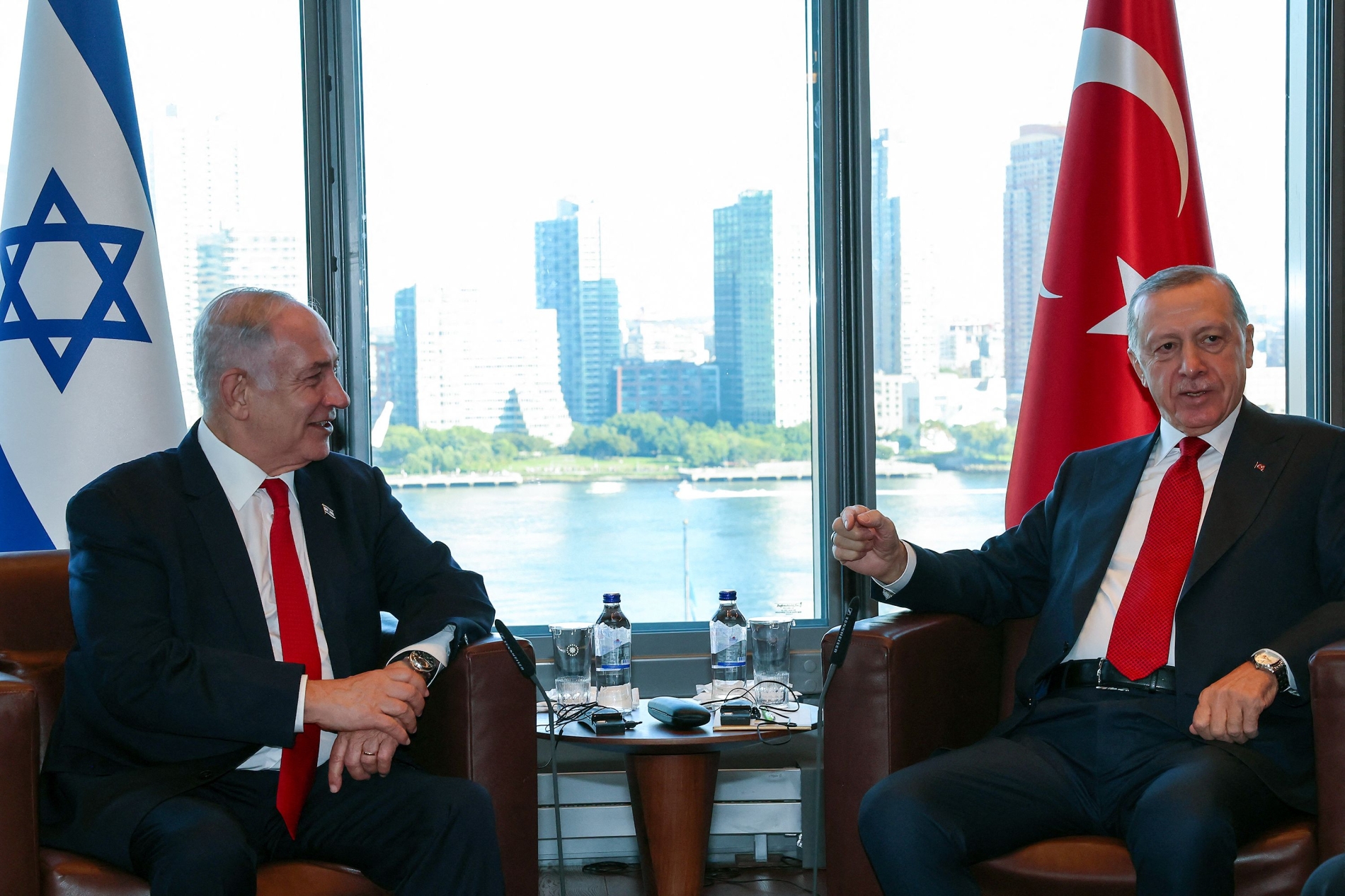
Currently, there is a cold war being waged between the two countries, and a risk of direct confrontation over Syrian territory and in the Mediterranean. Israel views Türkiye’s role in the Middle East—particularly its influence and presence in Syria—as a threat, because it wants to be the dominant force in the region—particularly in Syria and Lebanon.
Presidents Donald Trump and Recep Tayyip Erdoğan have a rather warm relationship, with the Trump administration assigning Türkiye a special role in Syria and Gaza, whereas Israel opposes a Turkish presence in Syria and is strongly against it having any role in the mechanisms envisaged for Gaza.
Netanyahu will likely raise these objections to Trump when he visits Washington at the end of December, and possibly suggest Greece and Cyprus as alternatives to Türkiye for implementing the US president's 20-point Gaza Peace Plan.
Exploiting historical grievances
Greece and Türkiye are NATO allies, but their fractious history and disagreements over the economic zone, continental shelf, territorial waters, and the legal status of the Aegean islands have strained relations. Once again, Netanyahu is pursuing a policy of exploiting historical grievances and fears to form alliances (the tripartite coalition) against “common threats, in this case, Türkiye.

Security issues have topped the trilateral cooperation agenda. Greece and Cyprus are interested in Israel’s technological capabilities—particularly in defence and artificial intelligence—and are in the process of procuring millions of euros' worth of air defence systems and missiles from Israel to be deployed against Türkiye.
Ahead of the summit, the IGC Trio was rumoured to be preparing a “Rapid Response Force” with contributions from all three nations, but no such announcement was made. Sources have said that the issue of this joint force was discussed, but it was ultimately shelved, at least for now, as it could conflict with NATO commitments, provoke Türkiye and negatively impact perceptions of other countries in the region over Israel’s intentions.
Nonetheless, the following day, military leaders of the three nations signed a joint action plan in Nicosia and a military cooperation programme between Greece and Israel. According to Greek media, the action plan includes joint training for special operations units and the exchange of expertise on modern threats, including unmanned systems (UAVs) and electronic warfare. An intensive programme of joint land, sea, and air exercises was also announced, along with the establishment of the Maritime Cybersecurity Centre in Cyprus.
Beyond security considerations, energy issues are also at the forefront of the tripartite cooperation. Over the past 25 years, the discovery of offshore natural gas in Israel—and later in Cyprus—has sparked a battle over energy in the eastern Mediterranean.