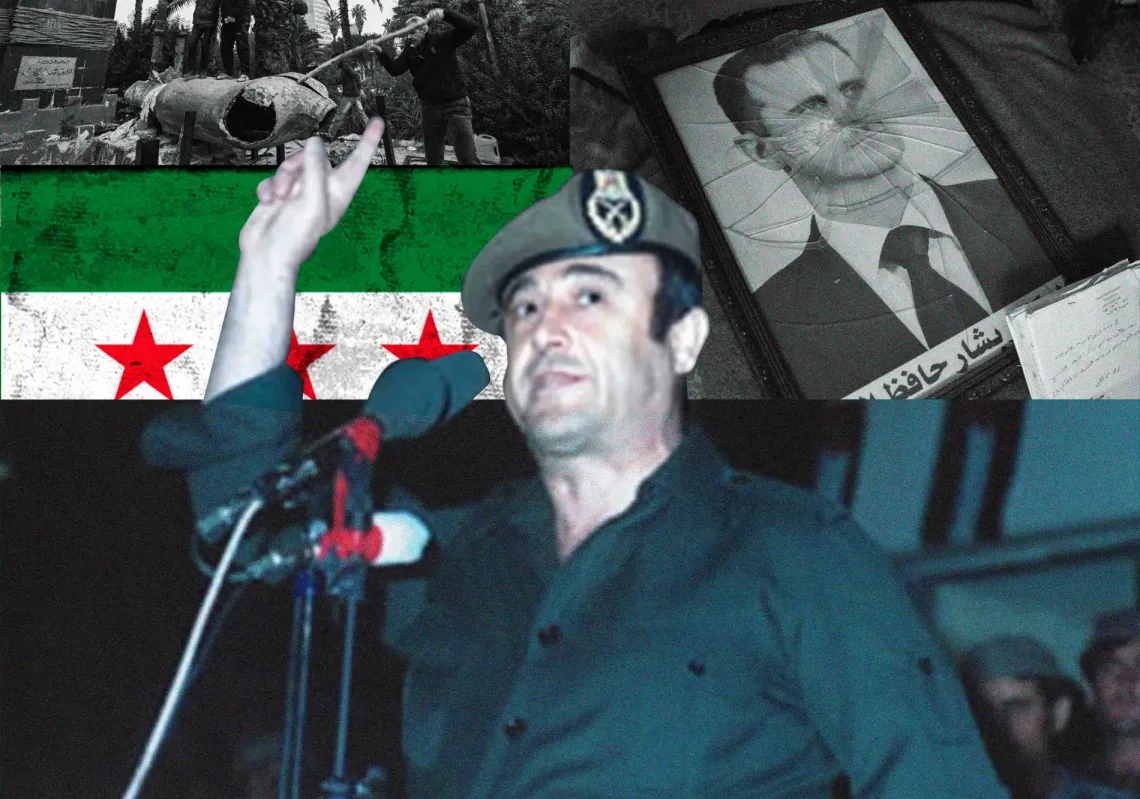
Bashar's uncle was a key figure in the Assad regime who oversaw the bloodiest massacre committed by an Arab state against its own people in history, earning him the title 'the Butcher of Hama'
In the final of a three-part series, Syria's late former Vice President Abdul Halim Khaddam reveals that Bashar al-Assad's brother Maher misled Rafic Hariri before his assassination.
In Part 2 of a three-part series, Syria's former Vice President Abdul Halim Khaddam recalls a stormy meeting between the Syrian and Lebanese leaders just months before Hariri was killed
In Part 1 of a three-part series, Al Majalla presents exclusive excerpts from the memoirs of the late Syrian Vice President Abdul Halim Khaddam, including how he helped replace one Assad with another.
Joe Biden, Chuck Hagel, and Colin Powell debated with Bashar al-Assad on their intent to get rid of Saddam. In part 5 of a seven-part series, Al Majalla reveals what was discussed for the first time.
Before it invaded Iraq in 2003, the US was trying to reassure Iran that it would not be targeted next. In part 3 of a 7-part series, Al Majalla publishes private discussions held in Damascus.
The Kurdish leader was party to secret talks with the Americans in the run-up to the US invasion of Iraq. In part 2 of a 7-part series, Al Majalla reveals for the first time what he told the Syrians.
Al Majalla reveals the last communications between Khaddam and Hafez al-Assad before he passed away and also the unheeded advice he gave to Bashar al-Assad after becoming Syrian president.
Abdul Halim Khaddam died in his Parisian home fifteen years after fleeing Syria and defecting from the Assad regime. Khaddam played a significant role in ensuring the transition of power from Hafiz…
The former Fox News presenter, who now wields more influence over US politics than he did at the network from 2009-23, is now a vehement critic of Trump in recent months, in part over Israel
Both the government in Addis Ababa and armed Tigrayan independence fighters have their supporters, from as near as next door to as far away as Tel Aviv
War is driving demand for munitions, and the fibres from cotton seeds are used to produce artillery shells. With only a few producers, demand is soaring.