Test of wills: Iran’s ability to outlast the US blockadehttps://en.majalla.com/node/330783/business-economy/test-wills-iran%E2%80%99s-ability-outlast-us-blockade
Test of wills: Iran’s ability to outlast the US blockade
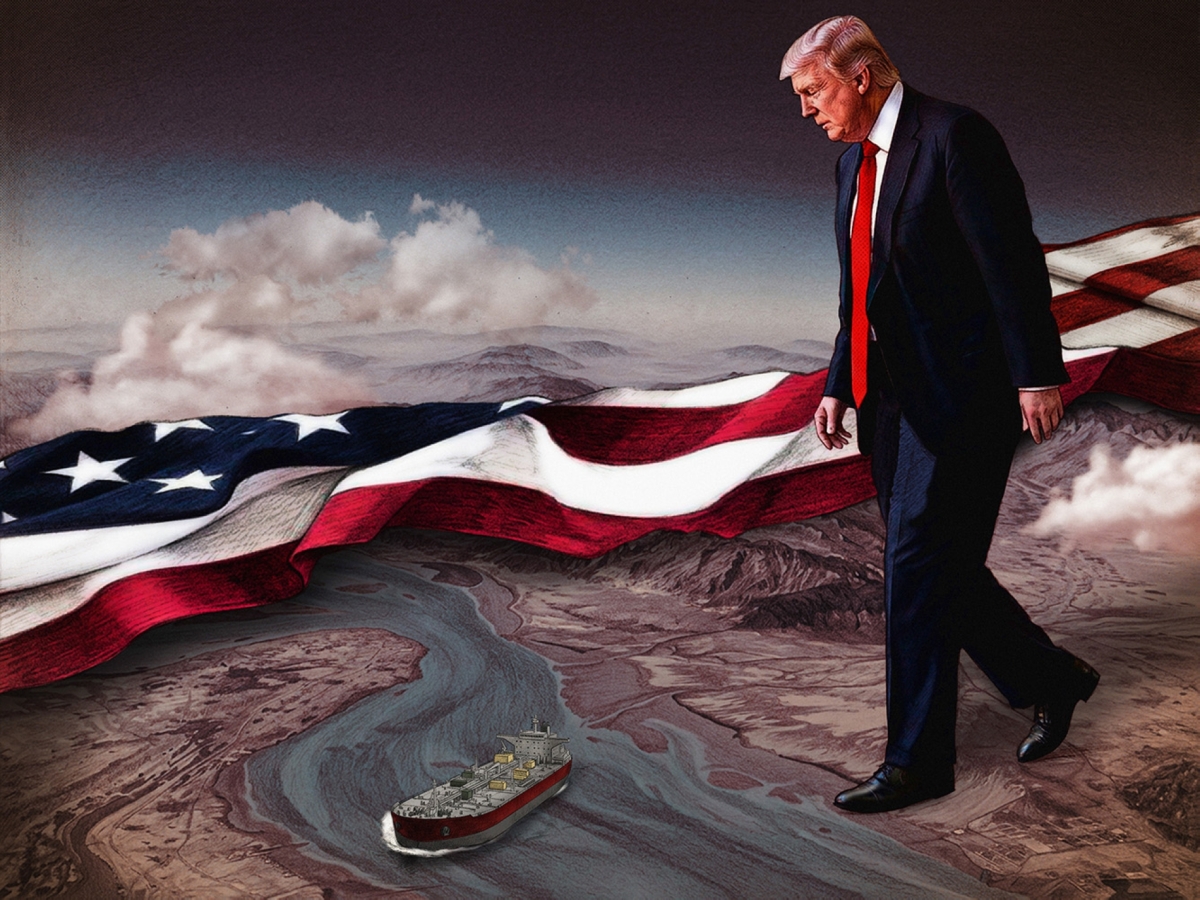
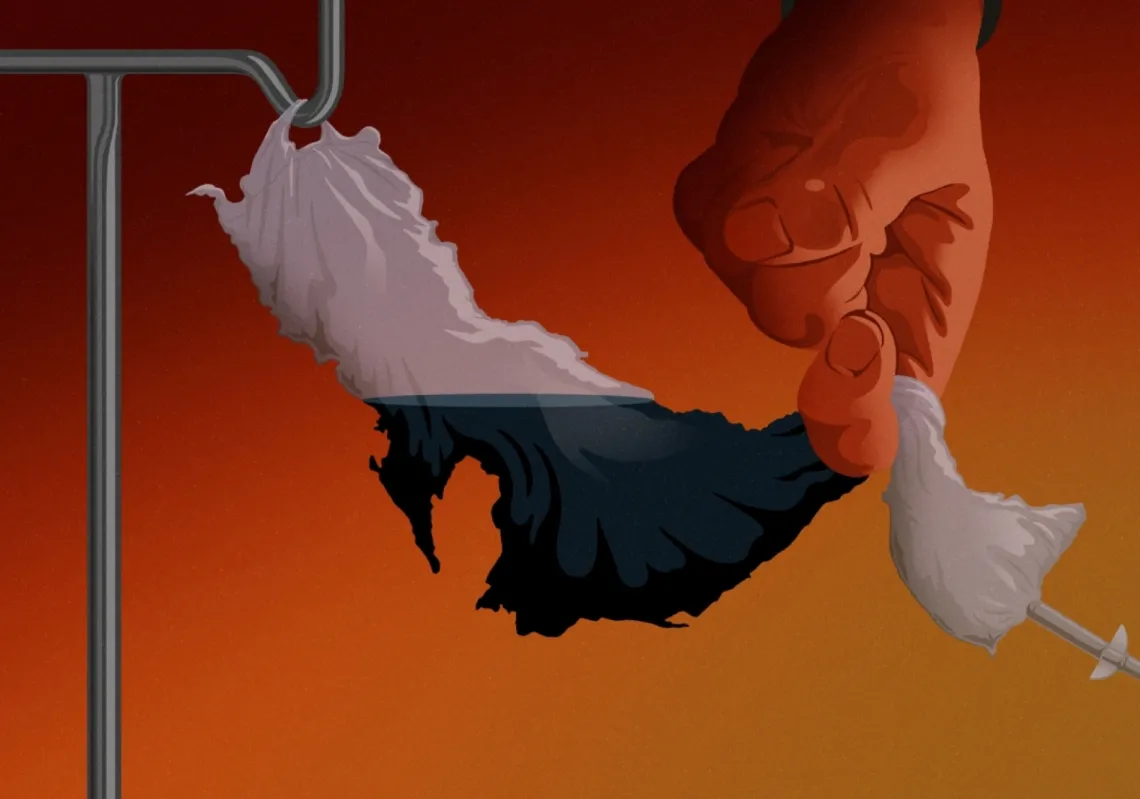
The standoff in the Hormuz is not simply a question of whether Tehran can survive economic pressure, but whether Washington can sustain the pressure at an acceptable cost.
Axel Rangel Garcia
Test of wills: Iran’s ability to outlast the US blockade
Economic blockades have long been used as a tool of coercion, deliberately positioned between diplomacy and war. From the British naval blockade of Germany in World War I, which helped weaken the German economic system over time, to the Soviet Berlin Blockade, which sought to force Western withdrawal by cutting off all land access to the city, blockades aim to compel political concessions by restricting access to critical supplies. Even in the nuclear age, the US “quarantine” of Cuba during the Cuban Missile Crisis demonstrated how blockades can pressure adversaries without immediate escalation to full war. In each case, the objective was not outright victory, but to reshape the opponent’s calculations under mounting economic strain.
The logic is straightforward: when military victory is out of reach, the fight shifts to controlling movement—who can trade, who can import, who can travel, and who can access the outside world.
Yet the unfolding confrontation between the United States and Iran marks a qualitative shift. This is not a peripheral blockade on a limited economy. It is an attempt to exert pressure on a state whose economic lifelines run through one of the most critical arteries of the global system, the Strait of Hormuz.
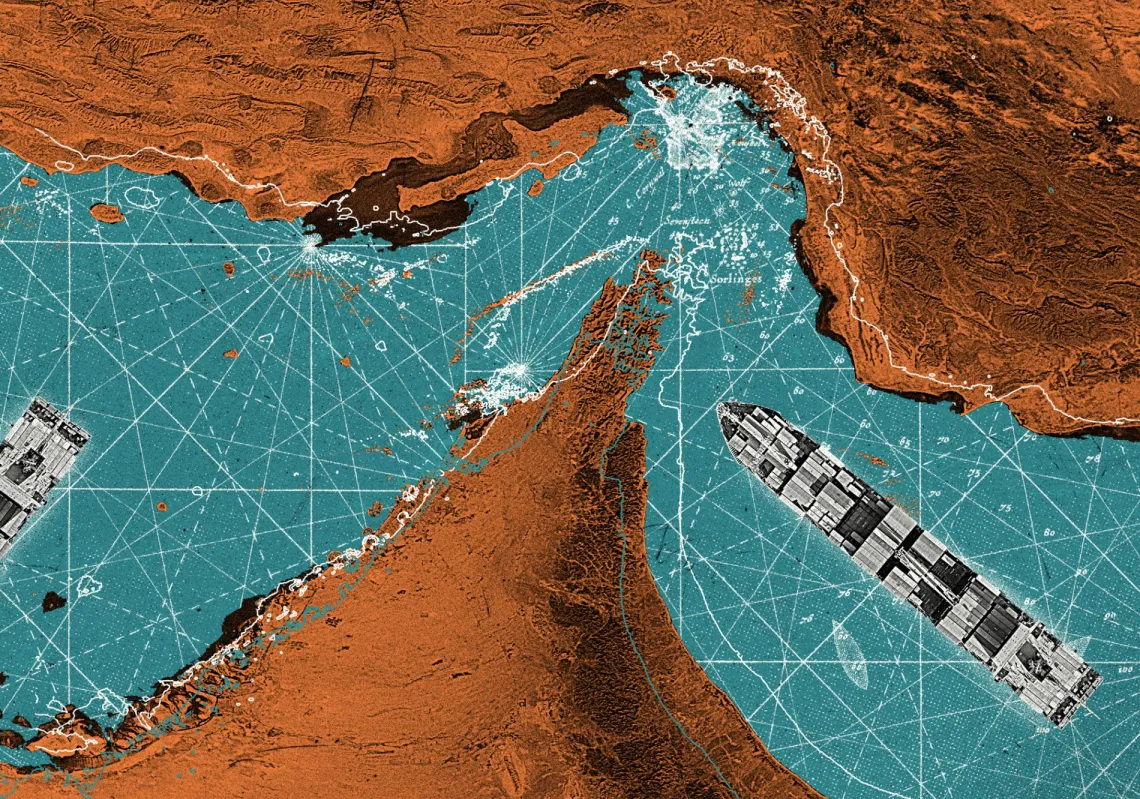
Unlike many historical cases, the Iranian economy is structurally exposed. Its trade geography is narrow, concentrated, and heavily maritime. More than 90% of its external trade passes through the Gulf. Export earnings are dominated by oil and petrochemicals, while key industrial inputs, food imports, and financial flows depend on access to the same corridor. To disrupt Hormuz, therefore, is not to tighten constraints at the margins but to press directly against the core of the system.
And yet, to assume that such pressure produces immediate collapse is to misunderstand both the structure of Iran’s economy and the logic of blockade warfare. The initial phase of a blockade is often deceptive. Iran has accumulated buffers over years of sanctions and strategic isolation: oil stored at sea, alternative payment channels, informal trade networks, and a state apparatus accustomed to crisis management.
In the weeks following the imposition of US-imposed maritime restrictions, these mechanisms can sustain a degree of continuity. Oil already in transit continues to generate revenue. Floating storage—tankers effectively parked offshore—acts as a temporary reserve. Imports slow down, but do not immediately stop. The system bends but does not break.
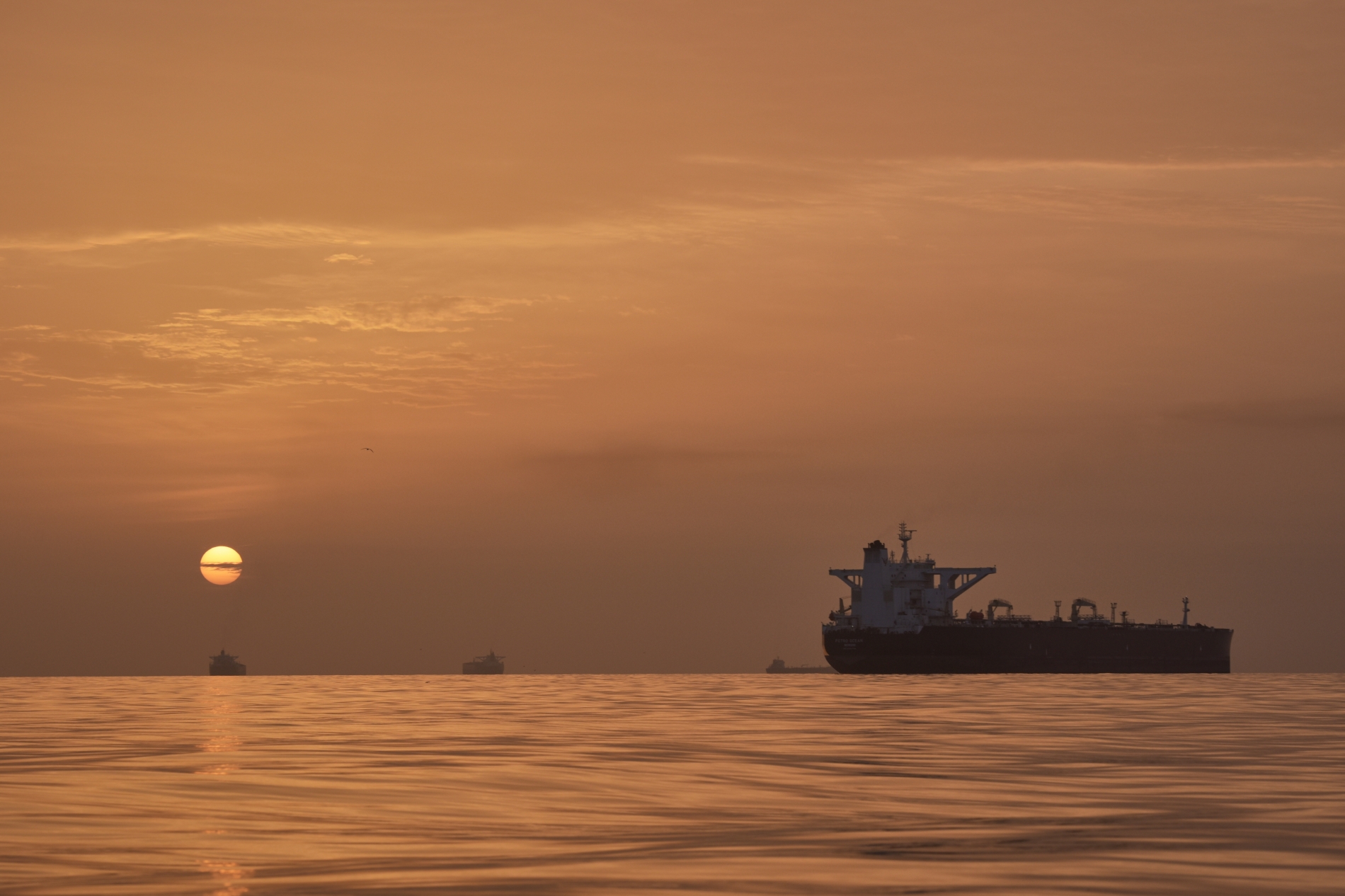
The sun rises behind tankers anchored in the Strait of Hormuz off the coast of Qeshm Island, Iran, Saturday, 18 April 2026.
Emerging constraints
This resilience, however, masks deeper constraints that emerge with time. The most immediate of these is physical rather than financial. Oil exports cannot simply be rerouted indefinitely. Oil storage capacity, both onshore and offshore, is finite. Once filled, production must be reduced. Analysts increasingly converge on a critical timeline: storage pressures begin to bite within weeks, not months. Iran’s available onshore and offshore storage capacity— augmented by floating storage on tankers—can absorb only a limited volume of unsold crude before forcing production cuts.
At that point, Iran faces a forced adjustment—cutting output not as a strategic choice, but as a technical necessity. For mature oil fields, such interruptions carry risks that extend beyond the present. Prolonged shutdowns can damage reservoirs, reducing future production capacity and eroding long-term revenue streams.
Parallel pressures unfold on the import side. Iran’s industrial base depends on a steady inflow of machinery, raw materials, and intermediate goods. Food security, too, is tied to maritime access. As shipping routes become restricted and insurance costs surge, these flows begin to fragment. What emerges is not a complete cessation of trade, but a costly and inefficient reconfiguration.
For the US, maintaining a naval blockade over an extended period carries legal, political, and strategic constraints.
Alternative routes—overland corridors through neighbouring states, secondary ports, or northern pathways—exist, but they cannot replicate the scale or efficiency of Gulf-based logistics. The result is rising costs, delays, and shortages that ripple through the domestic economy.
It is in this second phase—measured in months—that the cumulative effects of the blockade become visible. Foreign exchange inflows are very likely to shrink as exports decline. The national currency comes under even more pressure. The rial has already shown sharp volatility in recent days, trading in parallel markets at well over 1,600,000 per dollar at peak moments, compared to roughly 1,300,000–1,350,000 just two months earlier, with intra-week swings of more than 10–15% underscoring the currency's sensitivity to escalating geopolitical risk, while inflation, already embedded in the system, accelerates. And markets fragment, with multiple exchange rates emerging across official, semi-official, and black-market channels. Industrial production slows as inputs become scarce. Unemployment rises. What began as a disruption of external trade evolves into a broader contraction of economic activity.
Ability to adapt
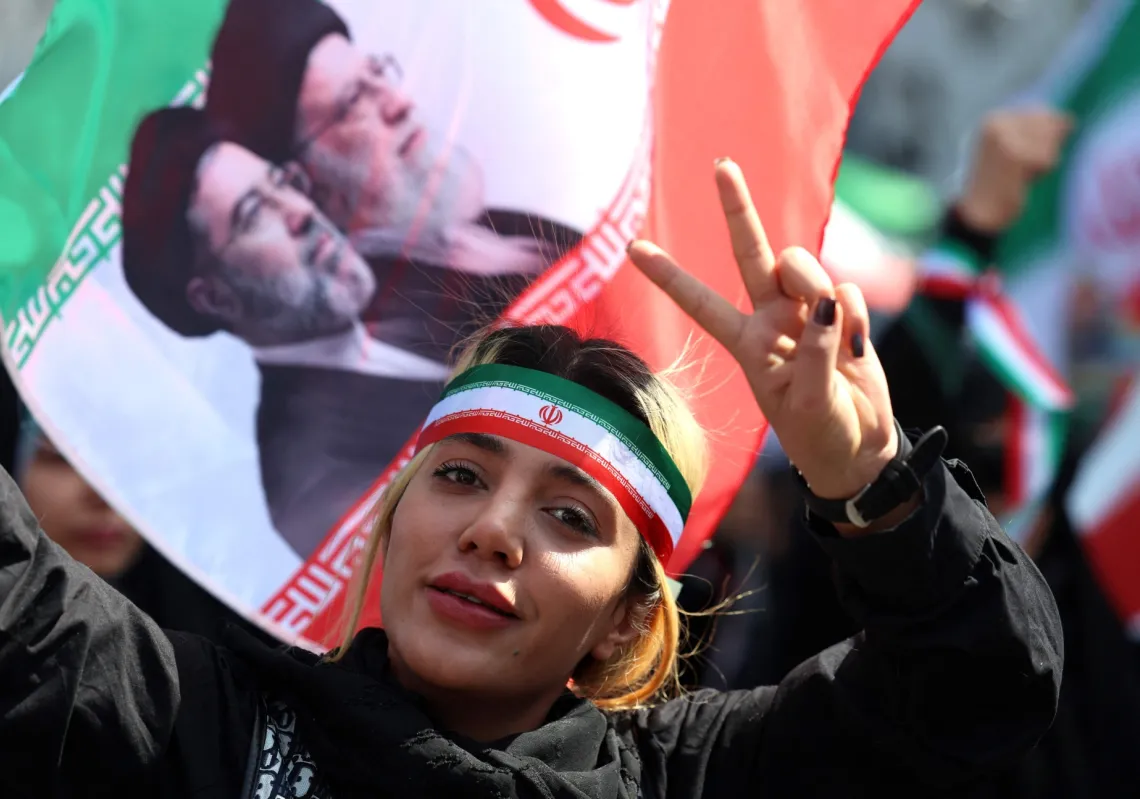
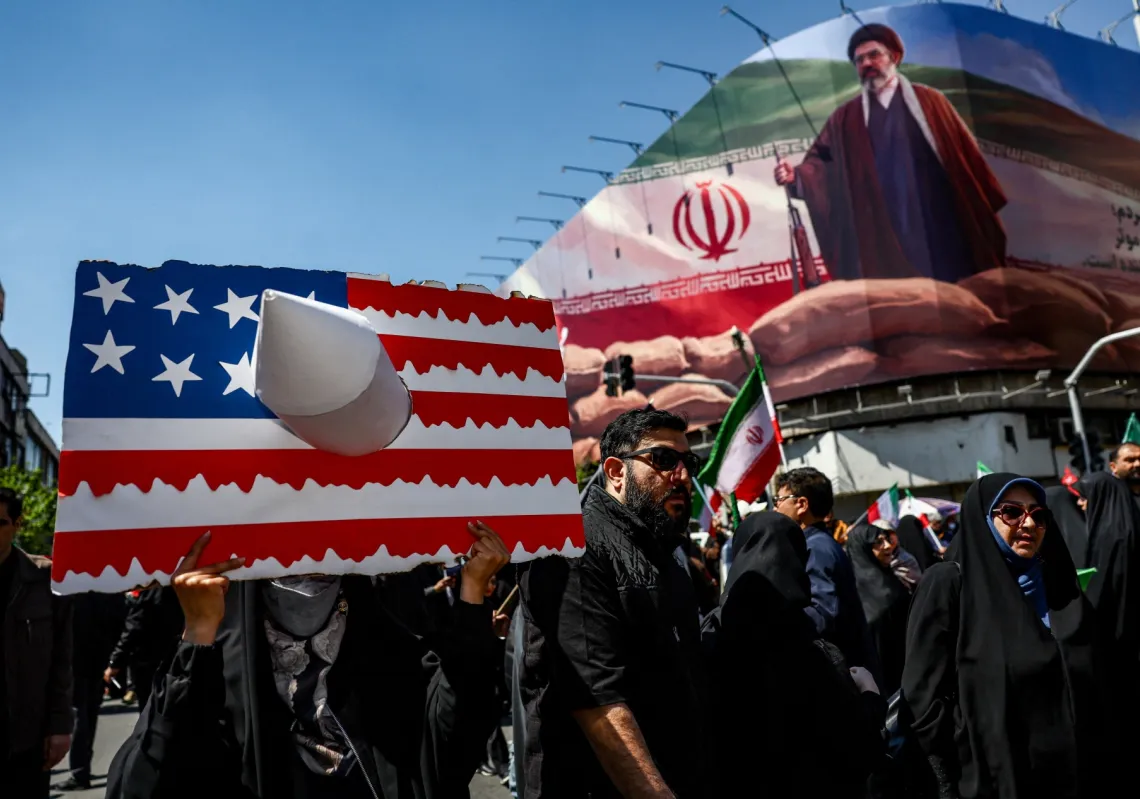
Yet even here, the relationship between economic pressure and political outcome remains uncertain. Iran's political system is not structured in a way that directly translates economic decline into political concessions. In fact, the state has developed mechanisms of control and adaptation that allow it to absorb significant levels of hardship. Rationing, price controls, and public security enforcement can stabilise the system in the short to medium term. More importantly, external pressure often reinforces internal cohesion within key segments of the regime. The narrative of resistance—i.e. survival against external coercion—becomes a unifying force rather than a destabilising one.
Blockading Iranian ports is an act of war and thus a violation of the ceasefire.
Striking a commercial vessel and taking its crew hostage is an even greater violation.
Iran knows how to neutralize restrictions, how to defend its interests, and how to resist bullying.
This internal logic is reflected in the language of Iranian officials. They do not frame the blockade as a technical dispute over shipping or sanctions, but as a declaration of war. Foreign Minister Abbas Araghchi has described the maritime restrictions as an act of war and a violation of ceasefire conditions. For his part, Parliamentary Speaker Mohammad Bagher Ghalibaf has linked any reopening of Hormuz to the lifting of the US blockade. Senior officials have emphasised unity—"one nation, one path"—rejecting external narratives of fragmentation. Perhaps most tellingly, Araghchi has characterised "the battlefield and diplomacy" as coordinated fronts in a single struggle. In this view, economic pressure is not separate from negotiation; it is a tool within it.
Nowhere is this more evident than in Iran's approach to the Strait of Hormuz itself. The US blockade seeks to isolate Iran by restricting its access to global markets. Iran's response has been to transform that isolation into leverage. By threatening or restricting traffic through Hormuz, it seeks to shift the burden of disruption outward. Roughly one-fifth of global oil flows through this narrow passage. That amounts to roughly 20–21 million barrels per day—around a fifth of global oil supply—alongside roughly one-fifth of global LNG trade, underscoring the strait's centrality to the global energy system. Any interference has immediate effects on prices, shipping costs, and global supply chains. This dynamic has led some analysts to describe the situation as one of mutually assured disruption. If Iran cannot export freely, it will ensure that others cannot do so without cost.
The implications of this strategy extend far beyond the bilateral confrontation. Energy markets react quickly to uncertainty. Prices rise.
Brent crude has climbed sharply in recent days, repeatedly breaching $100 and moving into the $100–110 range amid renewed tensions, while war-risk insurance premiums for tankers transiting the Gulf have surged several-fold. Freight rates for large crude carriers have also spiked as operators price in heightened risk and disrupted flows.
Shipping routes are reconsidered. Major consumers —particularly in Asia—face heightened vulnerability. China, as the largest importer of Gulf energy, has a direct stake in maintaining stability. It sources a substantial share—around 40% or more—of its crude imports from the broader Middle East, much of it shipped via the Strait of Hormuz. Over time, these external pressures can feed back into the US political calculus. A blockade that disrupts global markets risks eroding international support and imposing costs on allies.
Ability to sustain
This brings into focus a critical but often overlooked dimension of blockade warfare: endurance is not one-sided. The effectiveness of a blockade depends not only on the target's ability to withstand pressure, but on the initiator's capacity to sustain it. For the US, maintaining a naval blockade over an extended period carries legal, political, and strategic constraints. Sustained deployment of carrier strike groups and supporting naval assets in the Gulf can cost millions of dollars per day, while rising global energy prices feed back into domestic political pressures, particularly in an election-sensitive environment.
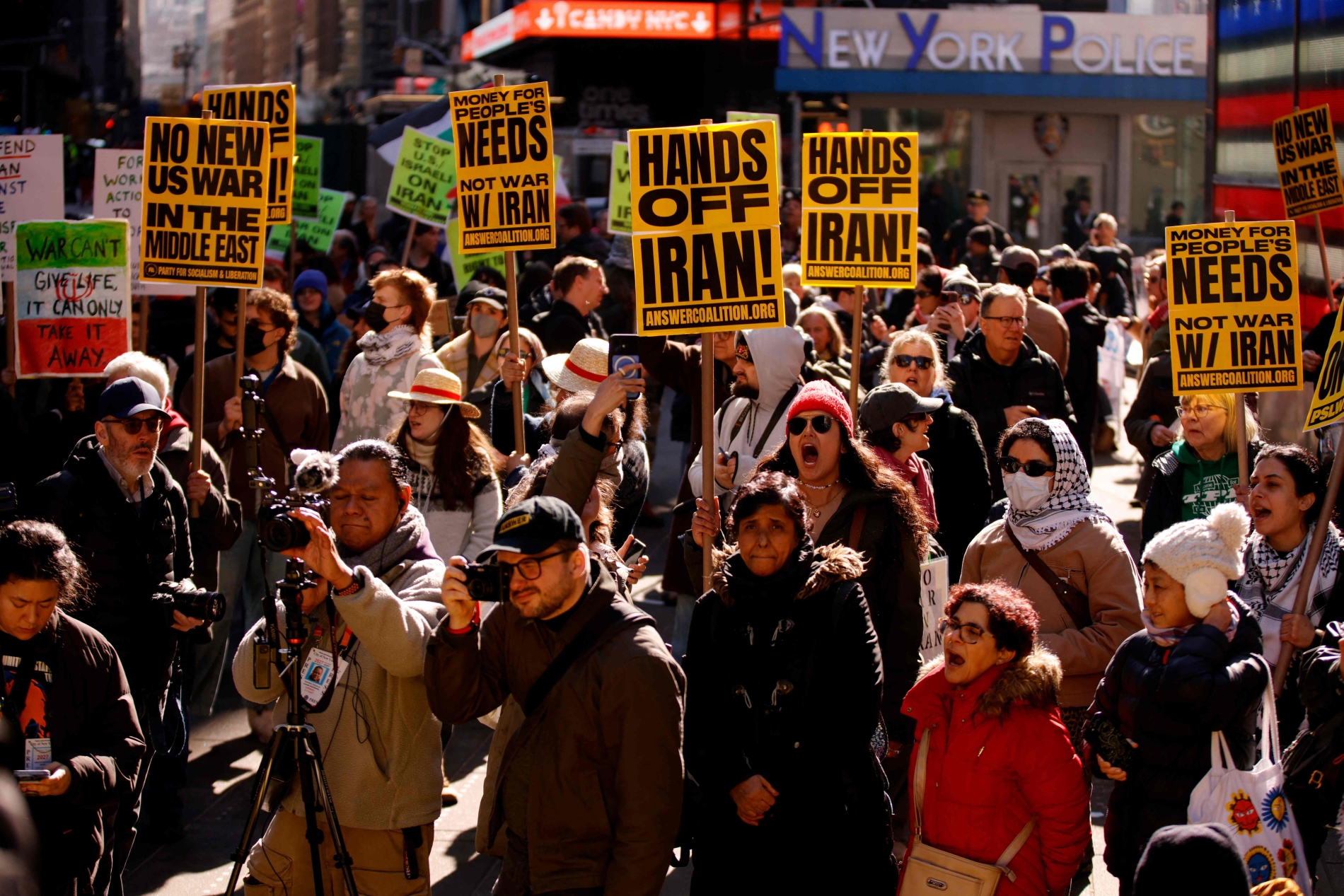
People hoist signs during a "Stop the War on Iran" protest in Times Square in New York City on 28 February 2026.
Domestic political timelines—including electoral considerations and congressional oversight—intersect with operational realities on the ground. Internationally, resistance from major powers and affected states can limit the scope and duration of enforcement.
In this sense, the confrontation over Hormuz is not simply a question of whether Iran can survive economic pressure, but whether the United States can sustain it at an acceptable cost. The longer the blockade persists, the more it resembles a contest of endurance rather than a decisive instrument of coercion. Each side seeks to outlast the other's tolerance for economic and political strain.
Timing, too, shapes the effectiveness of this strategy. Economic coercion tends to be most potent before an adversary has adapted to new conditions. In the case of Iran, years of sanctions, combined with experience from earlier conflicts, have produced a system already conditioned for survival under pressure.
Imposed after the onset of open conflict, the blockade risks becoming less a tool of coercion than a catalyst for further escalation. Instead of forcing concessions, it may incentivise countermeasures—such as targeting shipping, raising global costs, and widening the scope of the crisis.
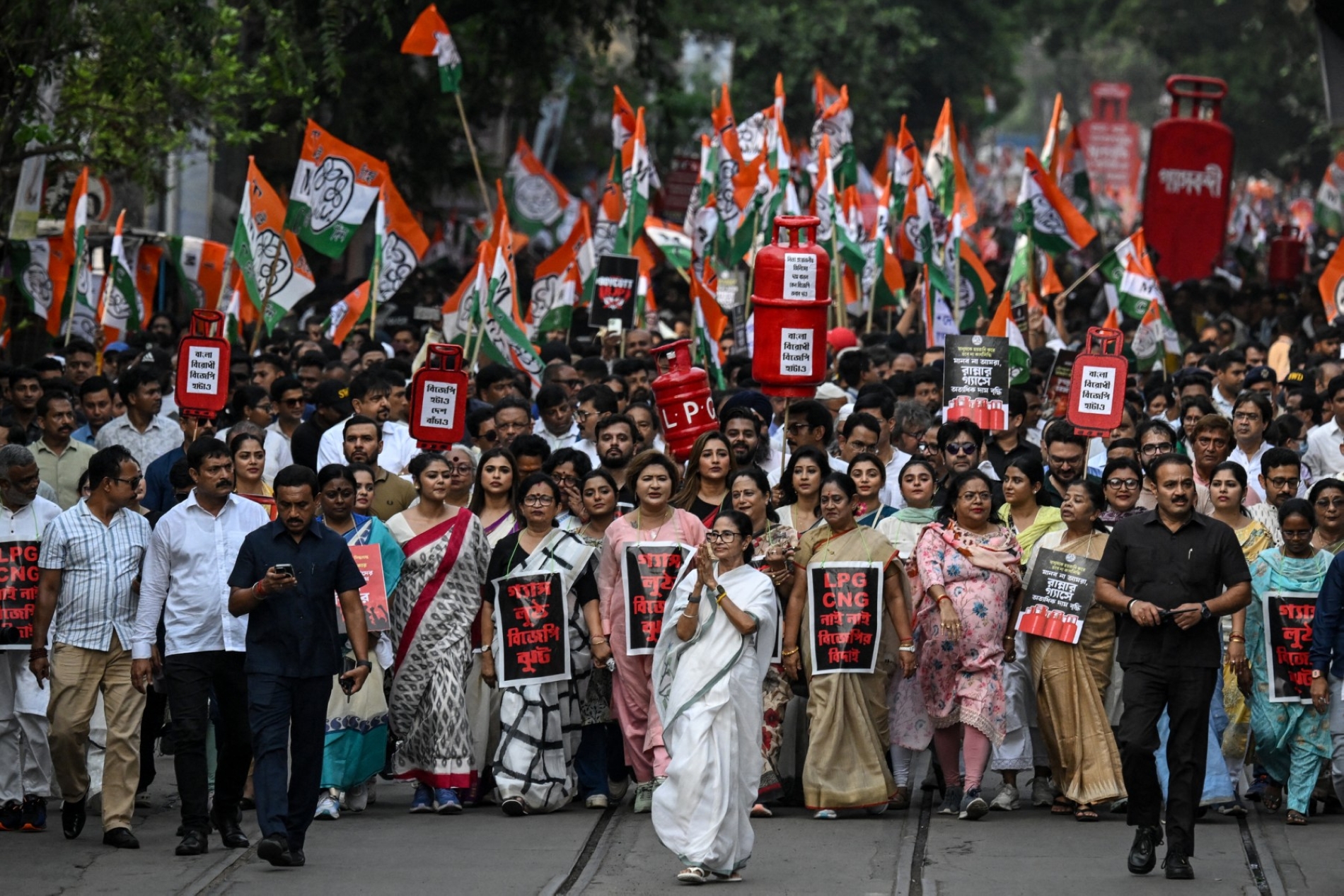
Protestors rally against the price hike and shortage of liquid petroleum gas (LPG) in Kolkata on 16 March 2026 as the Middle East war disrupts supply chains.
The scale of potential economic losses remains substantial. Estimates suggest that a tightly enforced blockade could cost Iran hundreds of millions of dollars per day in lost exports, disrupted imports, and associated economic activity. Prior to the crisis, Iran was exporting roughly 1.5–2 million barrels per day; even a partial disruption to these flows can result in daily revenue losses exceeding $100mn–$200mn, depending on enforcement intensity and oil prices. Over the course of months, this translates into tens of billions in lost revenue.
The longer-term costs—reduced production capacity, degraded infrastructure, and lost investment—could be significantly higher. While important, these figures do not capture the full strategic picture. Economic loss is only one variable in a broader calculation that includes political survival, strategic leverage, and international dynamics.
The longer the blockade lasts, the more it becomes a contest of endurance rather than a decisive tool of coercion. Each side seeks to outlast the other.
Strategic dance
Ultimately, the US blockade isn't a straightforward instrument of economic strangulation; it is part of a larger strategic dance in which both sides seek to shape the environment in their favour. For the United States, the objective is to increase pressure to the point where negotiation becomes preferable to resistance. For Iran, the objective is to redistribute that pressure—transforming a national crisis into a global one, and in doing so, altering the terms of engagement.
The outcome won't be determined solely by the depth of economic damage inflicted on Iran or by the immediate success of naval operations in the Gulf. It will depend on the interplay between endurance and escalation, between internal resilience and external pressure. In this contest, victory is unlikely to take the form of decisive collapse or clear concession. It is more likely to emerge, if at all, through a gradual recalibration of costs—one that pushes both sides toward a negotiated accommodation.
In the end, the logic of blockade warfare remains what it has always been: not to win outright, but to force a change in behaviour. Whether the current standoff in the Strait of Hormuz achieves that objective—or instead entrenches a new and more volatile equilibrium—will depend less on the severity of the pressure applied than on the limits of endurance on both sides.