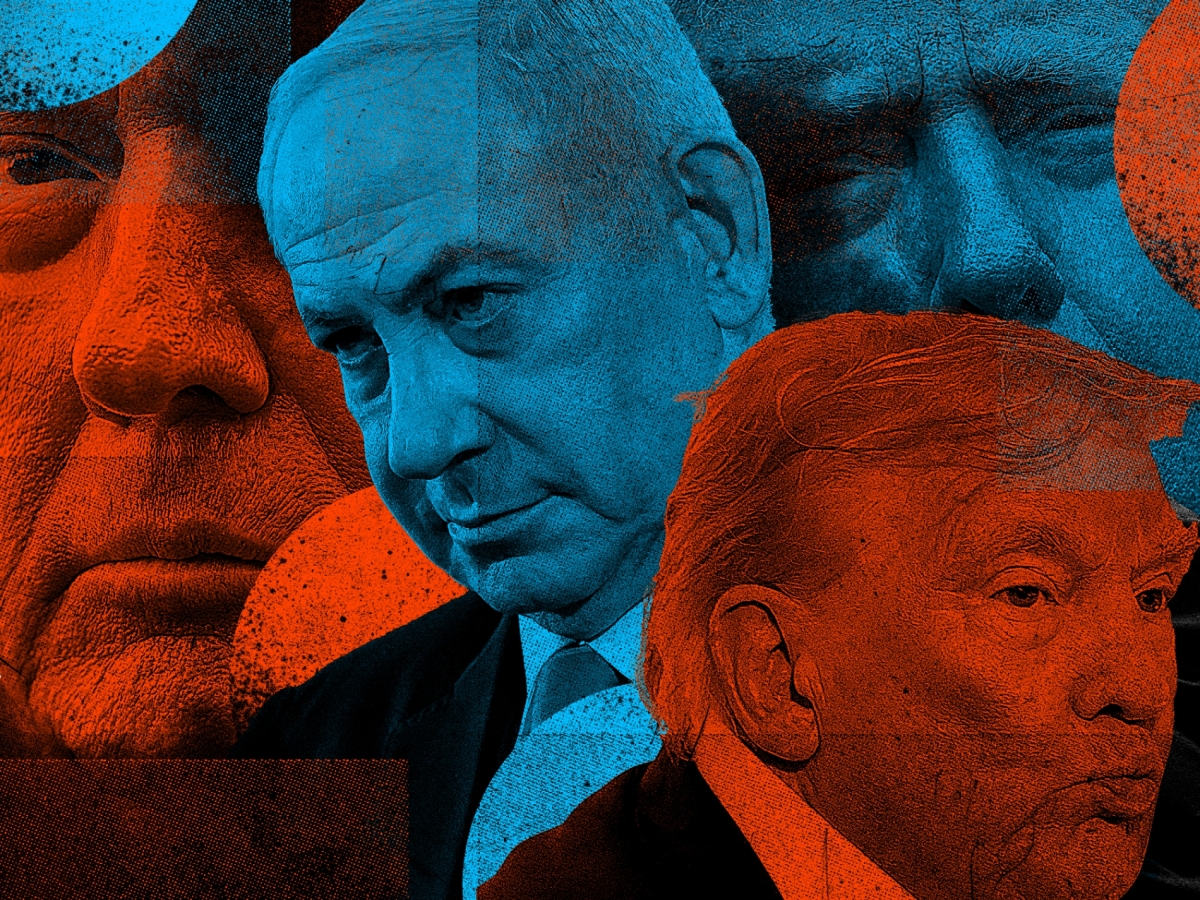
Netanyahu's Iran victory claim falls on deaf ears in Israel

Many Israelis actually believe that they lost the war, with opposition leader Yair Lapid accusing the Israeli premier of having led the country into "strategic collapse and diplomatic catastrophe"

Al Majalla

Netanyahu's Iran victory claim falls on deaf ears in Israel

Ever since a ceasefire was declared between the United States, Israel, and Iran by US President Donald Trump on 8 April, a debate has raged in Israel over the effects of the war that began on 28 February. Israel’s next legislative elections are to be held on 27 October, so politicians of all stripes are keener than ever to make their points. Yet, to an extent, the war has changed little in the debate that preceded it, or in the politics that led to it, at least as far as Israel is concerned.

Prime Minister Benjamin Netanyahu and his far-right parliamentary allies have boasted of the war’s “historic achievements”. Just 18 hours after Trump’s ceasefire announcement, and on the day that Israel dropped 100 bombs across Lebanon in 10 minutes, its media broadcast a recorded address from Netanyahu describing what he said were Israel’s gains not only from the war against Iran but from its campaigns against Hamas and Hezbollah, too.

Pleading his case

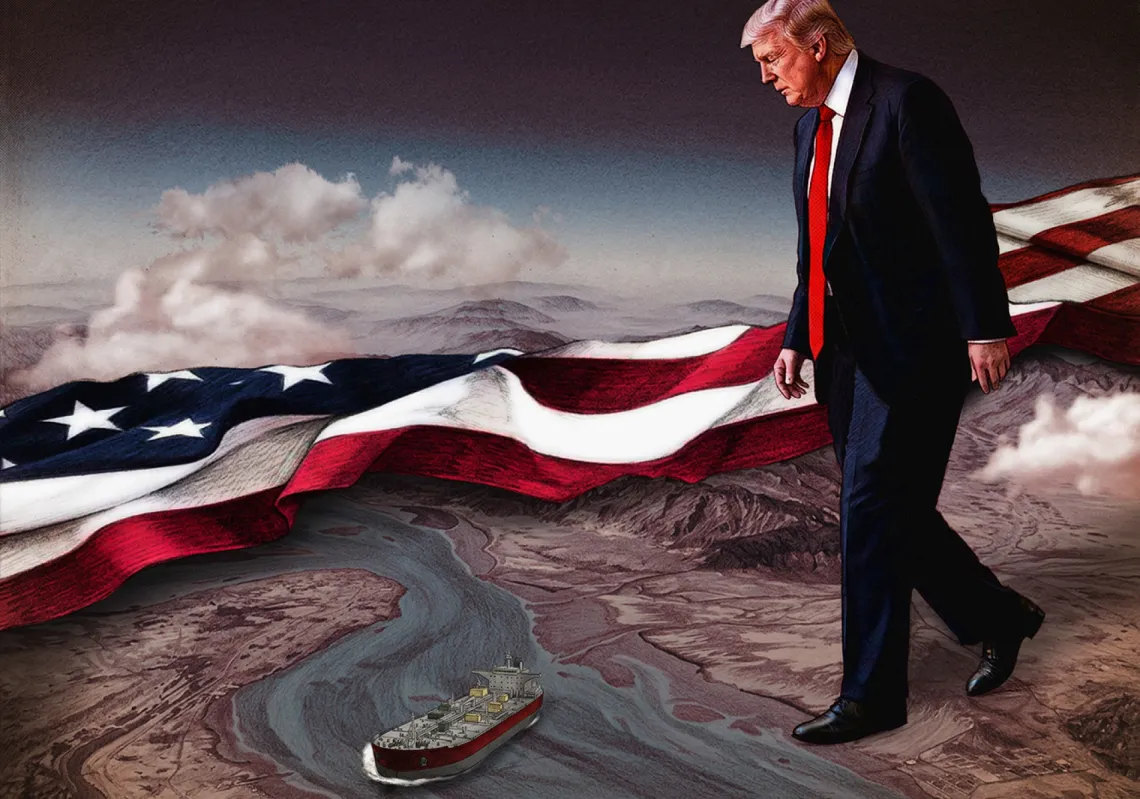
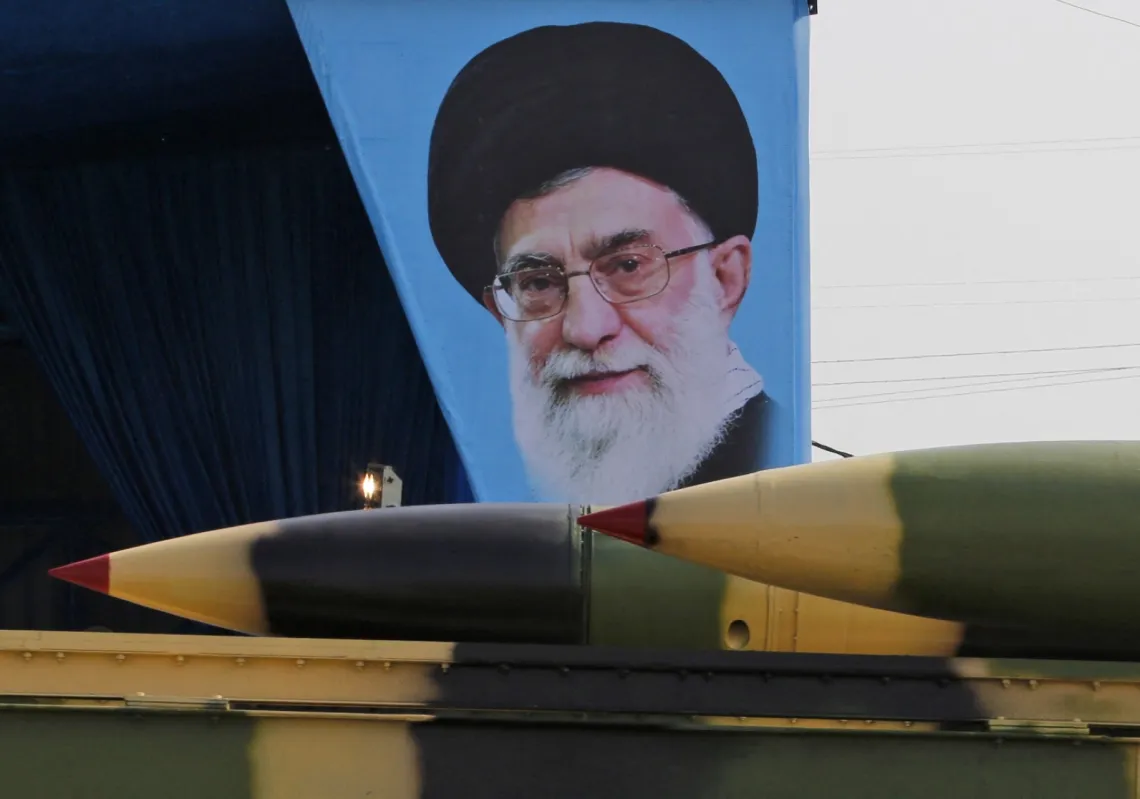
In his argument that the US-Israeli war against Iran had achieved its aims, he made several points. One was that it had deepened Israel’s relationship with the United States, the pair having now gone to war together for the first time in their histories. Another point was that the Iranian regime had been weakened in terms of its leadership, military strength, nuclear programme, and ability to raise money. The Iranian threat had been pushed far into the future, he argued, with Israel emerging stronger and more resilient as a result.

Netanyahu praised Israel’s armed forces and security agencies and implied that its superiority was creating new alliances with Arab states, presumably those that had suffered Iranian attacks during the conflict. He also noted that Israel took more Arab land. “We have created deep security zones beyond our borders, in Lebanon, Syria and Gaza, where we control more than half of the Strip,” he said. At the same time, Israel has further entrenched its effective control over the West Bank.

Netanyahu’s supporters have echoed these points, seeking to prove the necessity of a war that most Israelis supported. The prime minister’s camp argues that the result (a weakened Iran) has been the justification, giving Israel a stronger and more central strategic position in the region.

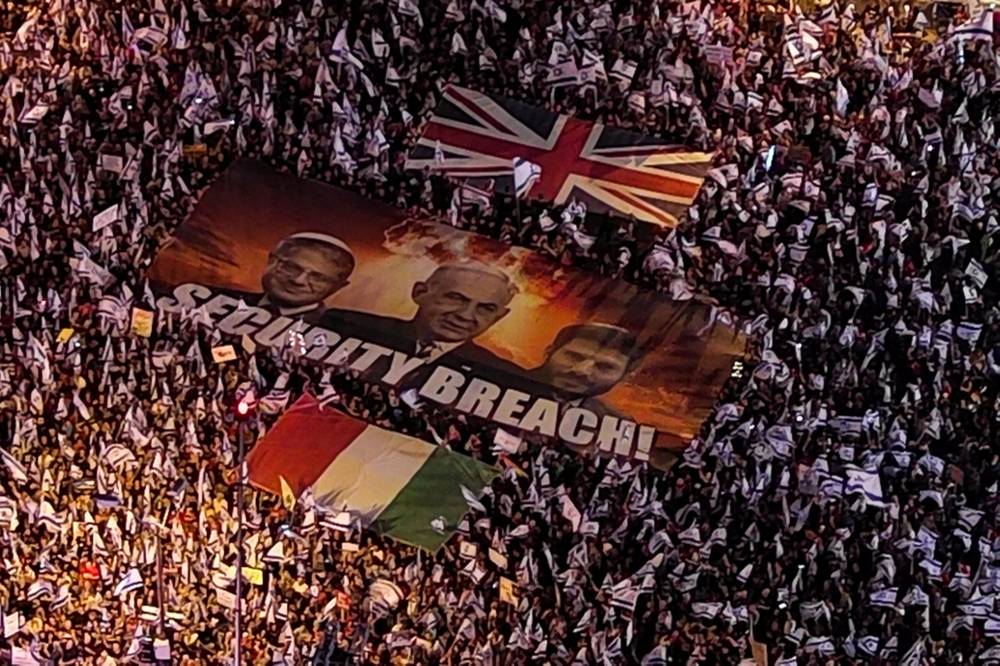
There are domestic considerations as well. Netanyahu and his far-right government allies want to change the nature of Israel and are using their thin parliamentary majority to rapidly undertake legislative changes to this effect. A priority for several years now has been to subjugate Israel’s previously independent judiciary to politicians, efforts that brought tens of thousands onto the streets in protest before October 2023.
Reuters
Protesters with Israeli flags during a mass protest against the government's justice system reform plans in Tel Aviv, Israel, 25 March 2023

Netanyahu may have had an earlier election had he not been able to pass a budget. This has given him precious months to prepare more effectively for the vote in October, keeping the religious parties on-side with a bill exempting strictly Orthodox Jews from compulsory military service, despite the army chief's recent warning that his forces were feeling the strain of the demands on service since October 2023.

Buoyant from six weeks of war against Iran alongside the Americans, Netanyahu and his supporters say it produced a strategic victory, giving Israelis a heightened sense of personal and collective security. Alongside this has been the expectation that the public would support him and the right-wing parties. Yet polling has failed to confirm this.
If Iran is Netanyahu's central obsession, then this war is the greatest failure of his life

Israeli journalist Gideon Levy

Counter argument

But a broad spectrum of voices inside Israel has cautioned against the rhetoric of victory and achievement. Some think that by surviving, the Iranian regime—and by implication, Hezbollah—emerged from the war stronger and more determined to preserve their military capabilities and assert themselves as Israel's principal rivals in the region, while the war damaged and weakened Israel's internal cohesion.

Most important of all is the portrayal of the war, and of Netanyahu, having dragged Trump and the US into a conflict that fulfilled none of the initial promises Trump had set out. Criticism inside the US has therefore intensified, both of the war itself and the decision to launch it, cutting across currents of thought, ideology and politics. This has drawn Israel into an internal American debate that may have deeply damaging consequences for relations between them in the years to come.

Within Israel, the prime minister's principal political critic has been Yair Lapid, leader of the opposition in parliament and head of the Yesh Atid party. He supported the war against Iran but has criticised the manner in which it was brought to a stop unilaterally by the Americans, seemingly without coordination with Israel and Netanyahu, despite Netanyahu's denials that this was the case.

Lapid questioned the achievements Netanyahu claimed, arguing that the war had in fact weakened Israel's position and harmed its interests. He accused Netanyahu of having "led Israel into a strategic collapse and a diplomatic catastrophe, and Israel has become a state under guardianship, unable to lead itself, excluded from the negotiating table and from decision-making".

He summed up his position by saying that Israel "had no role in decisions concerning its national security, and we have never witnessed such a political disaster in our history. The army did what was required, but Netanyahu failed politically and strategically, achieving none of his objectives... It will take years to repair the damage caused by Netanyahu's arrogance, negligence and absence of strategic planning".

He was followed by the former prime minister Naftali Bennett, a former settler leader who heads some polls as the candidate to head Israel's next government. Bennett said that "the objectives of the war were clear: the full and permanent dismantling of the nuclear programme, the halting of regional terrorism and missiles, and the removal of 460kg of enriched uranium from Iran," adding: "These objectives were not achieved."

Bennett described this as a "failure (that) leaves Israel facing an Iran that is more vengeful and more determined," saying: "The reason so many people feel frustrated is that the leadership sold us illusions... The government did not speak to us honestly. Netanyahu and his ministers constantly boasted of total victory… All these empty promises have collapsed before our eyes." Hamas, Hezbollah and Iran were all still standing, he said. "A government that is dismantling Israel from within cannot defeat the enemy outside."

FADEL ITANI / AFP
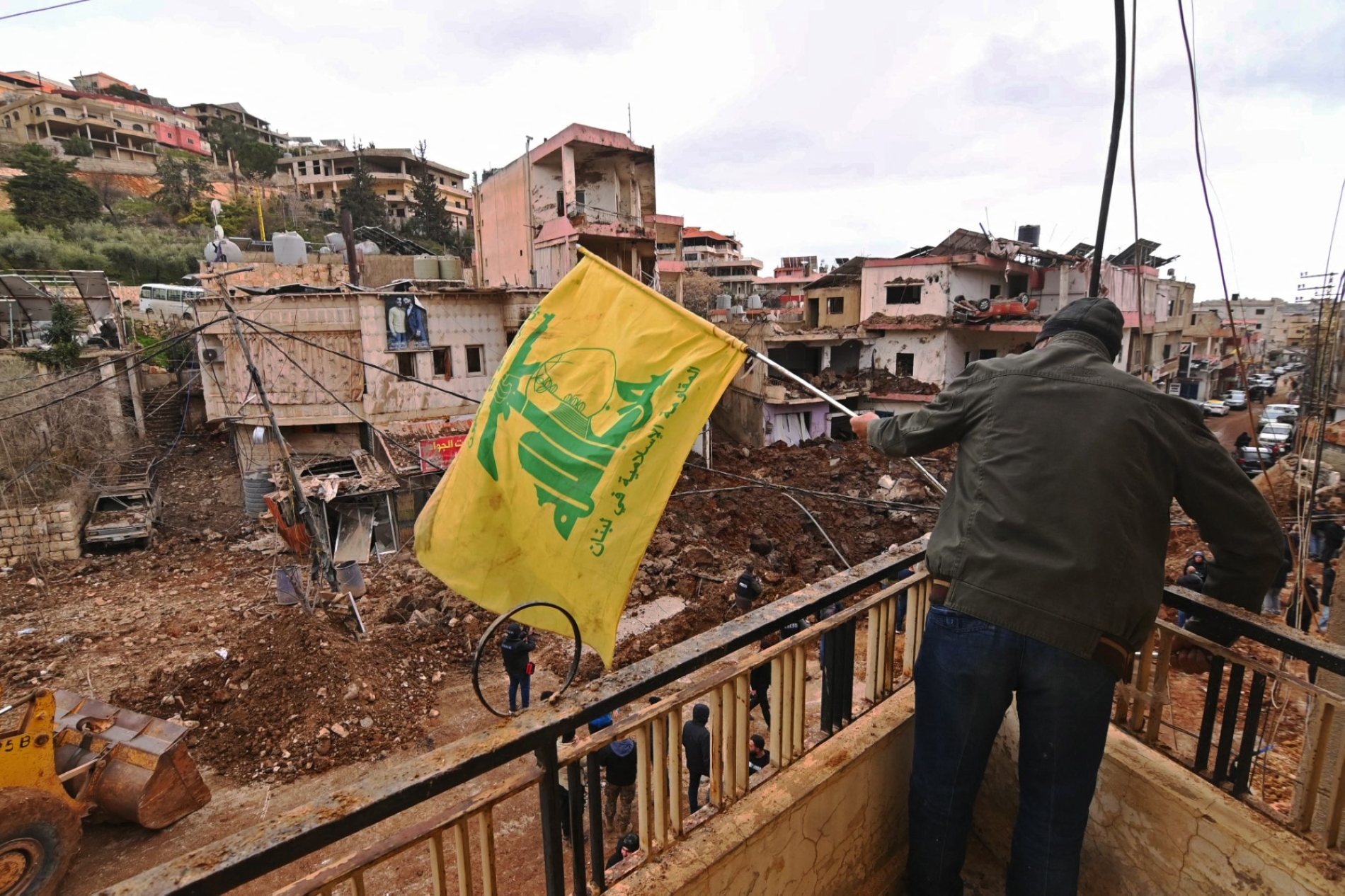
A man fixes a Hezbollah flag on the balcony of a damaged building at Nabi Sheet town after an Israeli military operation in the Bekaa Valley of Lebanon, on 7 March 2026.

Growing backlash

Since the ceasefire was announced, the backlash has intensfied. Israeli media outlets, commentators and politicians have voiced their frustration with the results of the war and the ceasefire, laying the blame at Netanyahu's door. Many argue that the greatest danger lies in the global, economic, and diplomatic threat posed by the war and its consequences for Israel's special relationship with the US.

Generally, Netanyahu has not been criticised for going to war against Iran, but rather for the way the war ended and for what they saw as Israel's failure to extract greater benefit from military operations. In this sense, there could be said to be a Zionist consensus in Israel's approach to Palestine and the wider region. Arab parties and anti-Zionist factions were virtually alone in opposing the war.

The reason so many people feel frustrated is that the leadership sold us illusions. We now face an Iran that is more vengeful and more determined.

Former Israeli PM Naftali Bennett

Arab leaders saw this as a war of aggression waged by the US and Israel against the Arab region and the Palestinian people in particular. Jamal Zahalka of the High Follow-Up Committee said, "Israel does not rely on any diplomatic solution. The Israeli security doctrine, which has been reshaped since 7 October, rests primarily on the army's achievements in the field, not on gains secured at the negotiating table... Accordingly, Israel puts forward conditions in negotiations that cannot be met, and it wagers on force, on more force, and on returning to force whenever it deems necessary."

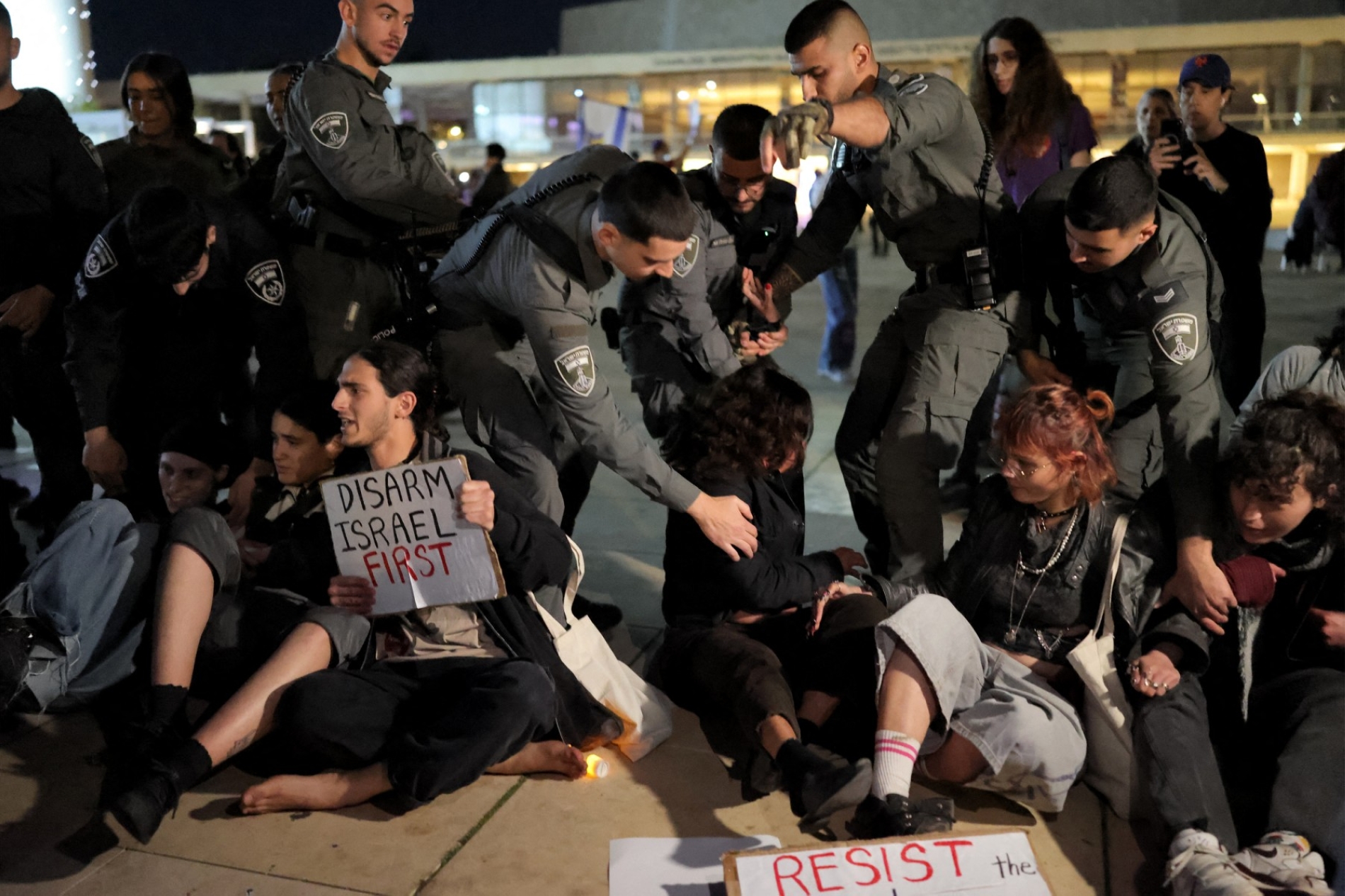
In the days before the ceasefire was announced, Jewish and Israeli-Arab activist groups demonstrated in major cities and petitioned the Supreme Court to lift restrictions on anti-war protests, but the police, under the far-right minister Itamar Ben-Gvir, took a forceful approach to the demonstrators, arresting several.

ILIA YEFIMOVICH / AFP
Israeli border guards attempt to remove protesters from the weekly anti-war demonstration at HaBima Square in Tel Aviv on 28 March 2026.

Writing in Haaretz, left-leaning Israeli journalist Gideon Levy said of Netanyahu and the Iran war: "This is the greatest failure of his life. It is far worse than 7 October 2023... Netanyahu had many accomplices in the previous failure, but in this latest one, he alone, without exception, bears the blame. If he has spent his entire life working on… If Iran is a central obsession, then this war is the greatest failure of his life."

The reason, he explained, was that Israel had emerged weakened, while "Iran emerges defeated, yet seven times stronger and more capable". He added that Netanyahu was "forced to end it without being consulted… He is the man who thought this war would immortalise his name in the history books as a saviour, and the same man who bears full and sole responsibility for its failure".

Since June 1967, Israel has known no complete victory in war and remains caught in the same protracted cycle. The pace of those less-than-victorious wars has intensified because of Israel's right-wing political shift, with fascist tendencies and hostile government policies, not least towards the Palestinians. This Netanyahu government shows little concern for the costs paid at home or abroad. What it worries about is the portrayal of its victory over enemies, both within Israel and beyond.

Those enemies change. It may be one enemy today, but a different enemy tomorrow. The constant 'moving on' gives a sense of a nation preparing for the next war as soon as the last one ends, a central shift that must be watched. Elections can curb the worst tendencies of war-thirsty Israeli leaders, as could a firmer Arab and international position. Until they do, the next target will be getting lined up.

font change