Some say Al-Burhan's forces need a significant victory to let them negotiate with their heads held high, but with the paramilitary RSF gaining ground, that looks less likely. Where does this end?
From the arming of tribes to protect goat herders to the rise of the RSF, who are currently fighting the military, Al Majalla sheds light on Sudan's endemic militia problem.
An accord between one of the warring generals and a former civilian prime minister may have at first appeared positive, but in fact, makes a path to peace more treacherous.
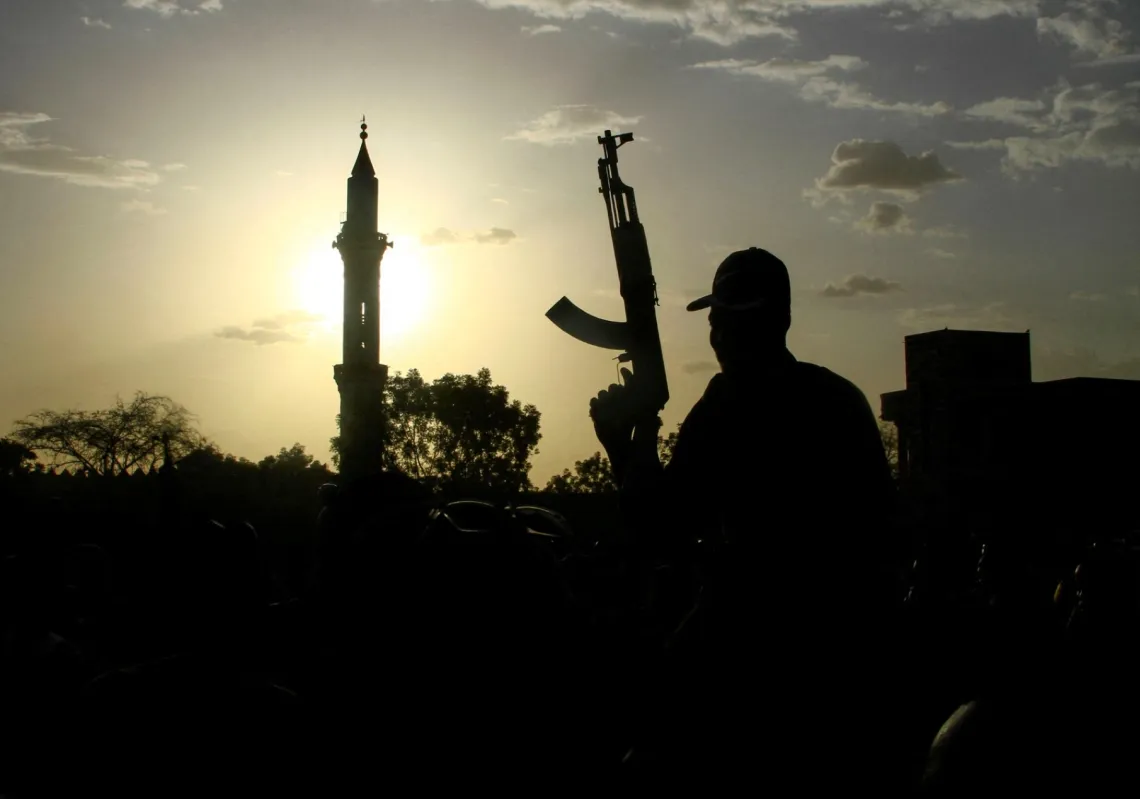
As the deadlock in fighting continues with no end in sight, there is growing suspicion that Islamists are involved with the war and could complicate it further while suffering continues on the ground
There is consensus that the regular army needs to be purged of political influence. Progress depends on reaching an agreement on what to do about the Rapid Support Forces, and justice must be served.
The ill-fated coup of October 2021 cost Sudan and its people nearly $9bn. Meanwhile, experts estimate that the direct and indirect costs of the Sudanese war hover around $100mn per day.
Eradication of rebels? Removal of remnants of the old regime and the transfer of authority to civilians? History shows us that many proposed outcomes from either faction in the conflict seem unlikely.
Sudan's de facto leader appeared in public to refute links with Islamists and an international deal to get him out of the capital. The priority now should be UN help for a proper peace process.
Former UK ambassador to both Sudan and Saudi Arabia says Riyadh could play an important intermediary role because it has experience dealing with both the Sudanese military and the RSF
As support for Israel weakens across the US political spectrum, once-taboo questions about military aid, lobbying influence, and US backing are moving into the mainstream
Algeria is one of Africa's largest producers of hydrocarbons, and its proximity to customers in Europe makes it of growing interest as importers fret over a prolonged supply crisis from countries
Through extravagant processions led by palace women, the Mamluk state projected a message of power and prestige at home and abroad, turning the Hajj obligation into a soft-power tool