This month's arrival of 3,000 US marines in the Red Sea stirs debate over US intentions. Is it an attempt to reassure allies or a bid to curb Chinese influence? Al Majalla explains.
China sees Taiwan as a breakaway province that will eventually fall under Beijing's control. On its part, Taiwan sees itself as distinct from mainland China, with its own constitution and…
The new multipolar order may not prove more unstable than the era of US dominance. A closer look suggests that multipolarity offers several advantages, especially to non-Western countries.
Countries near the South China Sea will have to find a way to live with rising tensions where a breakthrough between Beijing and Washington remains unlikely
The united response to Russia might have been the exception rather than the rule. It has long proved difficult for the EU to agree on foreign policy positions.
If any conclusion is to be drawn from US Secretary of State Anthony Blinken's high-stakes visit to China, it is that neither Washington nor Beijing can afford to let relations sink any lower
China says its engagement in the Middle East is strictly economic and has no intention of filling political vacuums left by the West. However, Bejing's assurances haven't eased their worries.
China has neither the willingness nor the ability anytime soon to substantially project military power into the Middle East. To continue to meet its ends in the Middle East, Beijing may not need to.
The G7, which now consists of neither the seven largest economies nor the seven most prosperous democracies, feels increasingly out of date to a world that has moved on
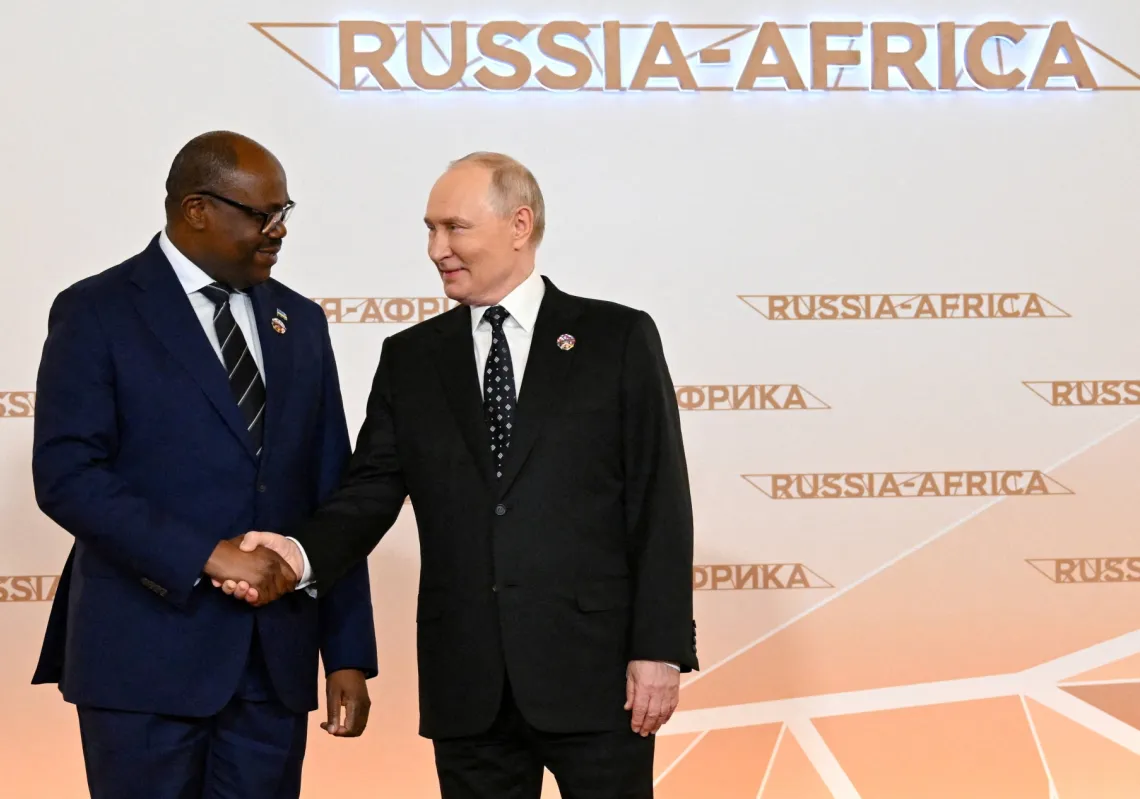
Amid competition for influence and resources, Russia knows that Africa is a market with potential. For African states, Russian companies are still of interest, but the value equation needs to change