Can China's $3bn loan to QatarEnergy revive LNG exports?

While the financing does not mean Beijing has bought Doha's political loyalty, it demonstrates the growing interdependence between the two countries

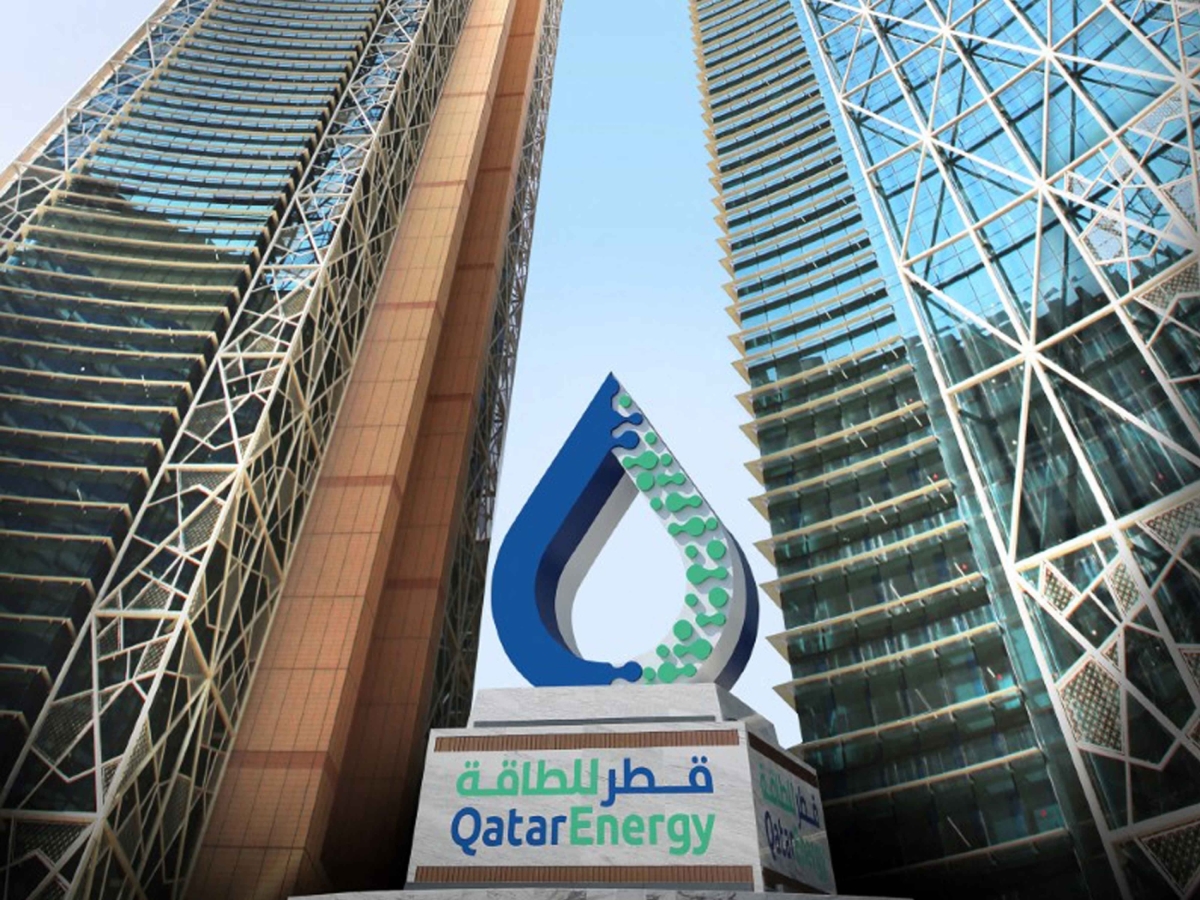
QatarEnergy headquarters in the capital, Doha, on 8 November 2022.
AFP
QatarEnergy headquarters in the capital, Doha, on 8 November 2022.

Can China's $3bn loan to QatarEnergy revive LNG exports?

When QatarEnergy secured a $3bn loan from four major Chinese banks in October 2026, it appeared at first glance to be a routine financing agreement between a national energy company and international lenders. Its timing, however, made it far more significant than a figure on a balance sheet. The loan came as Qatar was trying to restore liquefied natural gas exports following the strikes that damaged its facilities at Ras Laffan, while shipping through the Strait of Hormuz remained sporadic and exposed to the risks of war.

Three contests converged in this single transaction: Qatar’s effort to reclaim its standing as a reliable gas supplier, China’s drive to secure long-term energy supplies and a broader struggle for influence in a market where finance can no longer be separated from security and maritime transport.

The loan does not mean that China has bought Qatar’s political loyalty or become the security guarantor of its gas facilities, but it does reveal the growing interdependence between the two countries. Qatar needs liquidity, customers, ships and commercial flexibility; China needs competitively priced gas that it cannot fully replace from other sources. China is helping Qatar weather the crisis and restore its presence, but in the process it is building long-term influence within the country’s gas industry.

The five-year facility was provided by Bank of China, the Industrial and Commercial Bank of China, the Agricultural Bank of China and China Construction Bank (Asia). According to published information, it was priced at 50 basis points above the Secured Overnight Financing Rate, or SOFR—a competitive rate given the heightened risks across the region.

The proceeds will be used for general working-capital purposes. This is an important distinction: the transaction was not announced as dedicated financing for repairs at Ras Laffan or for the construction of a particular production train. Its timing can reasonably be linked to the need to offset weaker cash flow and finance operations, repairs and insurance. It would be inaccurate, however, to portray it as a Chinese loan specifically intended to rebuild facilities destroyed in Iranian strikes.
MAHMUD HAMS / AFP
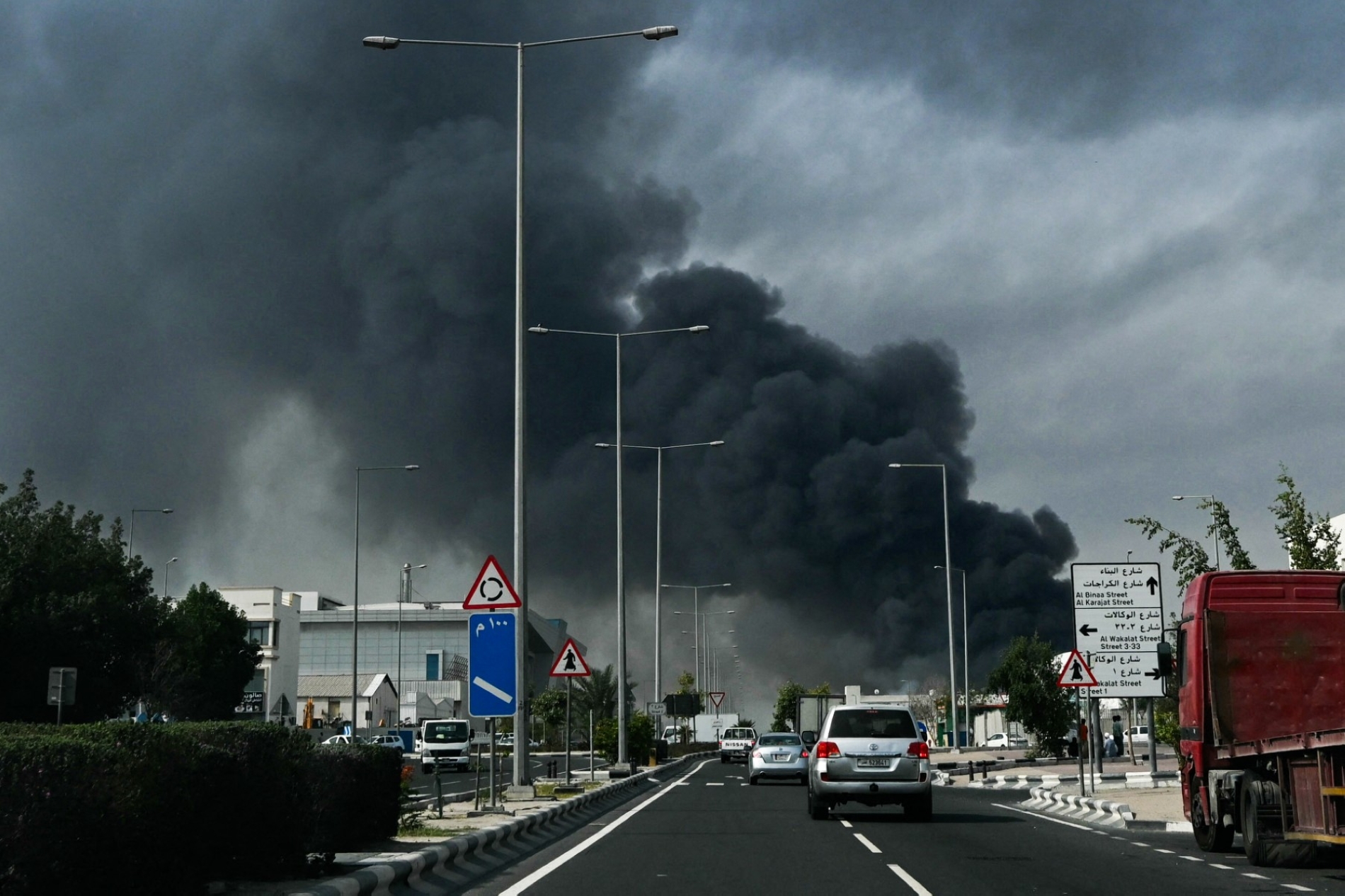
Motorists drive past a plume of smoke rising from a reported Iranian strike in the industrial district of Doha on 1 March 2026.

Nor is there any publicly available evidence that Qatar pledged gas reserves as collateral or granted the Chinese banks rights over project management or gas pricing. The facility is denominated in US dollars and linked to an American interest-rate benchmark, rather than the renminbi. It therefore does not represent a departure from the dollar-based financial system.

The loan also remains modest when set against the approximately $28.75bn invested in the North Field East expansion, or Qatar’s plan to increase its LNG production capacity from 77 million tonnes a year to 142 million tonnes by the end of the decade. It gives QatarEnergy time and liquidity but does not transfer control of the country’s gas industry to its lenders.

The strikes on Ras Laffan knocked approximately 12.8 million tonnes a year of LNG capacity out of service, equivalent to around 17% of Qatar’s export capacity. Saad Sherida Al-Kaabi, Qatar’s Minister of State for Energy Affairs and the President and CEO of QatarEnergy, said the lost capacity represented about $20bn in annual revenue. Production of condensates, liquefied petroleum gas, helium and naphtha was also affected.

Initial estimates suggested that repairing the two damaged liquefaction trains could take between three and five years. The Pearl gas-to-liquids plant, known as Pearl GTL, has begun restoring part of its operations, although repairs to the damaged section are expected to continue into early 2027.

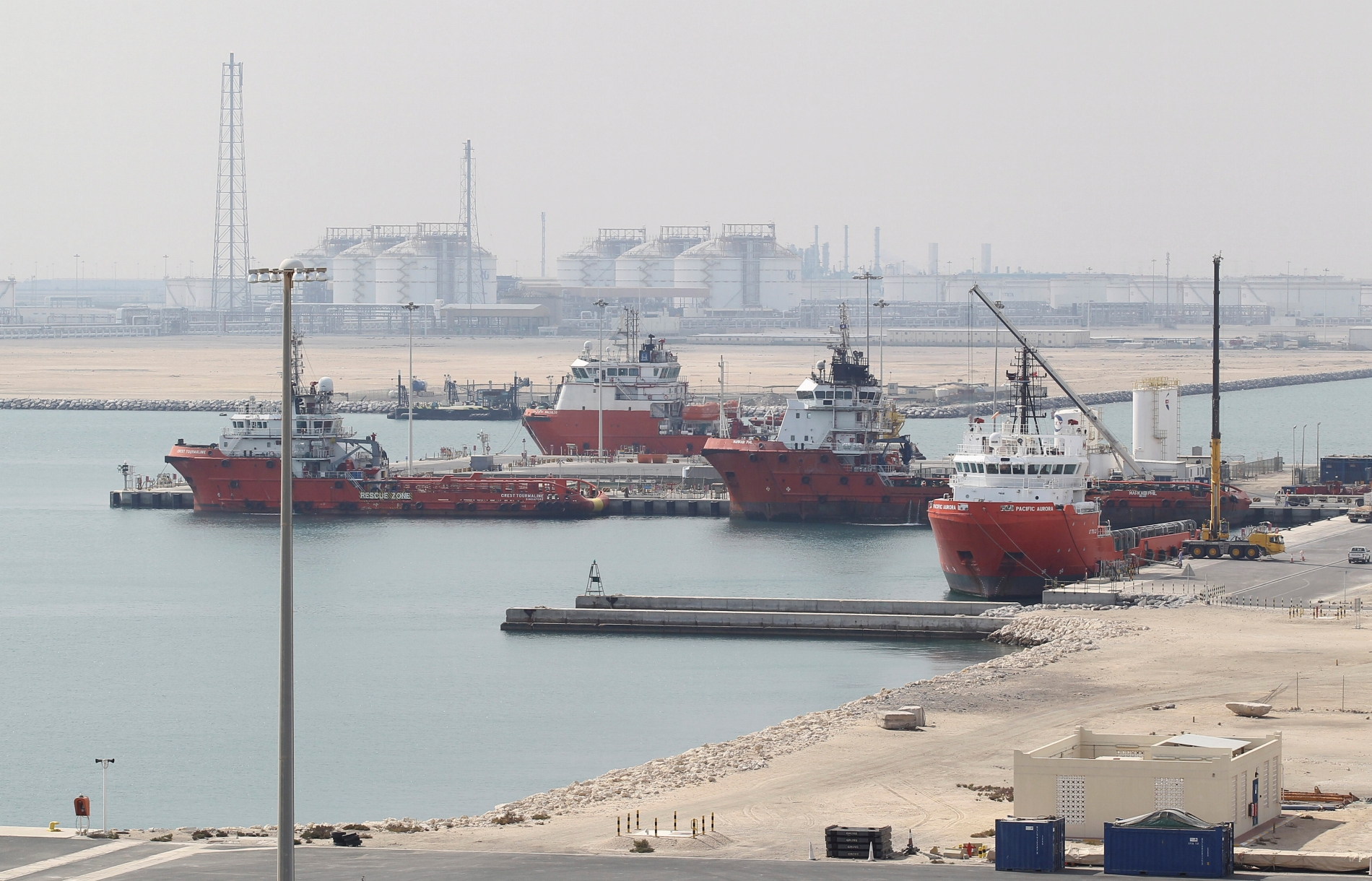
Recovering production, however, would not resolve the entire problem. LNG exported from Ras Laffan must pass through the Strait of Hormuz, and Qatar has no pipeline to an alternative port capable of handling comparable volumes. The liquefaction trains may be operational and the storage tanks full, but gas cannot be converted into revenue if carriers cannot enter and leave safely. The fundamental vulnerability of Qatari gas lies neither in a shortage of buyers nor in inadequate reserves, but in the fact that production sits behind a single maritime chokepoint for which Doha has no complete alternative.
AFP
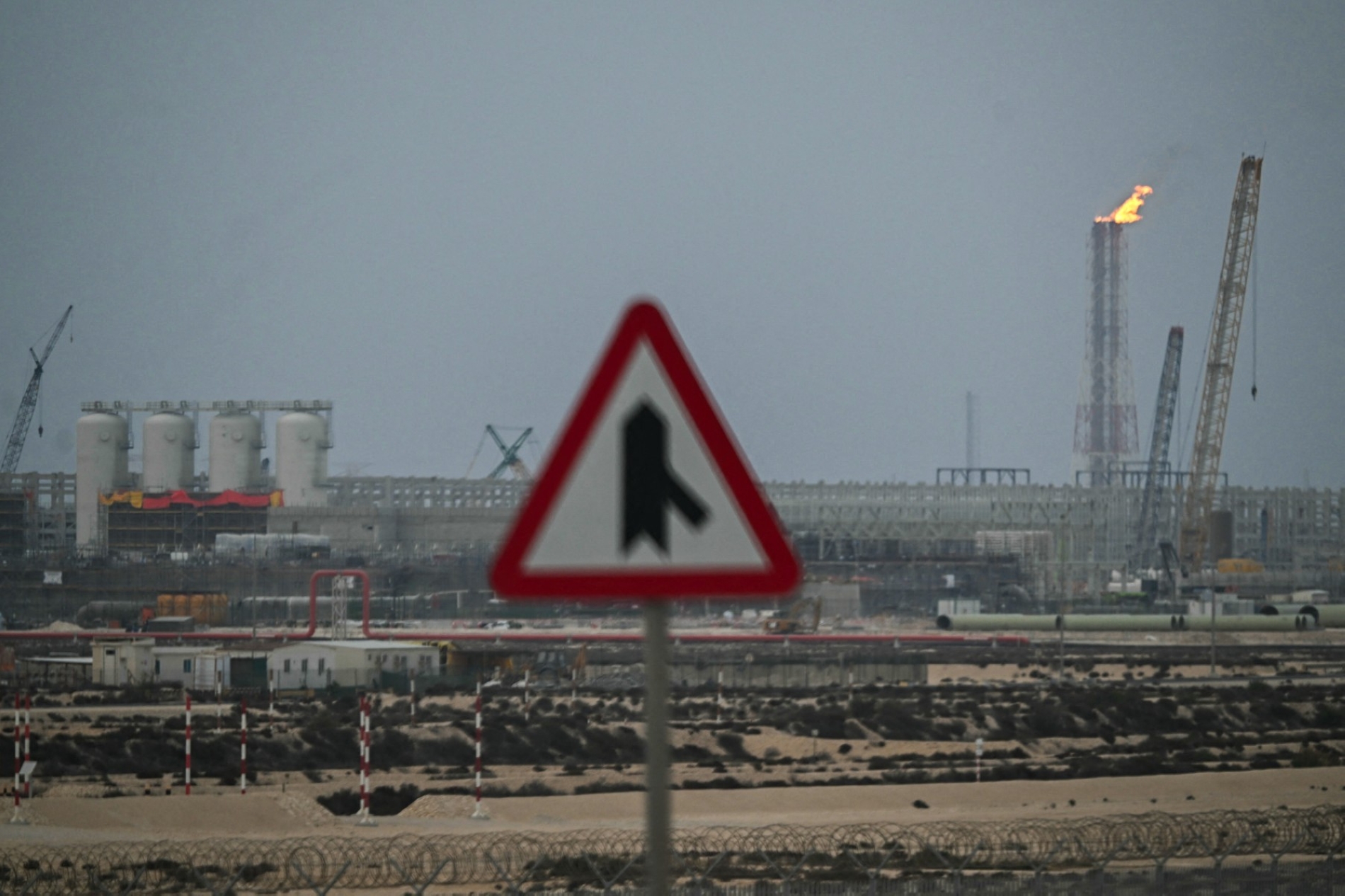
Ras Laffan Industrial City, north of the capital, Doha, on 2 March 2026.

During the first six months of the war, Qatar’s LNG exports fell by around 96%. By late August, the country had lost close to $24bn in sales, according to calculations based on shipping and price data. Traffic recovered partially in September, when between 19 and 21 LNG cargoes passed through the Strait of Hormuz. Thirteen of them were Qatari shipments, according to one vessel-tracking company.

Some carriers made the passage with their automatic identification system transponders switched off, while other companies continued to avoid the area or demanded steep insurance premiums. By mid-October, Kpler estimated that Qatar’s exports for the month were on course to reach no more than about 600,000 tonnes, compared with approximately 1.6 million tonnes in September, as attacks resumed. QatarEnergy also extended its force majeure declarations for some Asian customers into November and for European customers into December.

To keep at least part of the trade flowing, Qatar and other Gulf producers have resorted to arrangements that are unusual in the LNG business, including ship-to-ship transfers outside the highest-risk area. One carrier crosses the strait with the LNG before transferring its cargo to another vessel, which then completes the longer voyage to the buyer.
Qatar benefits from low-cost financing, a long-term buyer and a partner capable of supplying both ships and capital

This operation is considerably more complex than transferring crude oil from one tanker to another. LNG must be kept at approximately minus 162 degrees Celsius and requires specialised equipment and precise coordination. Three such transfers involving Qatari and Emirati cargoes bound for India and Japan were recorded in August.

Yet this arrangement does not genuinely bypass Hormuz: Qatari gas must still cross the strait before it can be transferred to the second vessel. It reduces exposure for some larger carriers, or for companies more reluctant to accept the risk, but it neither creates a new export route nor provides transport capacity comparable to Qatar's normal export volumes.

QatarEnergy can also buy cargoes from other suppliers to meet its contractual commitments. Doing so, however, raises costs in a market where Asia and Europe are competing for the same alternative supplies.

AFP
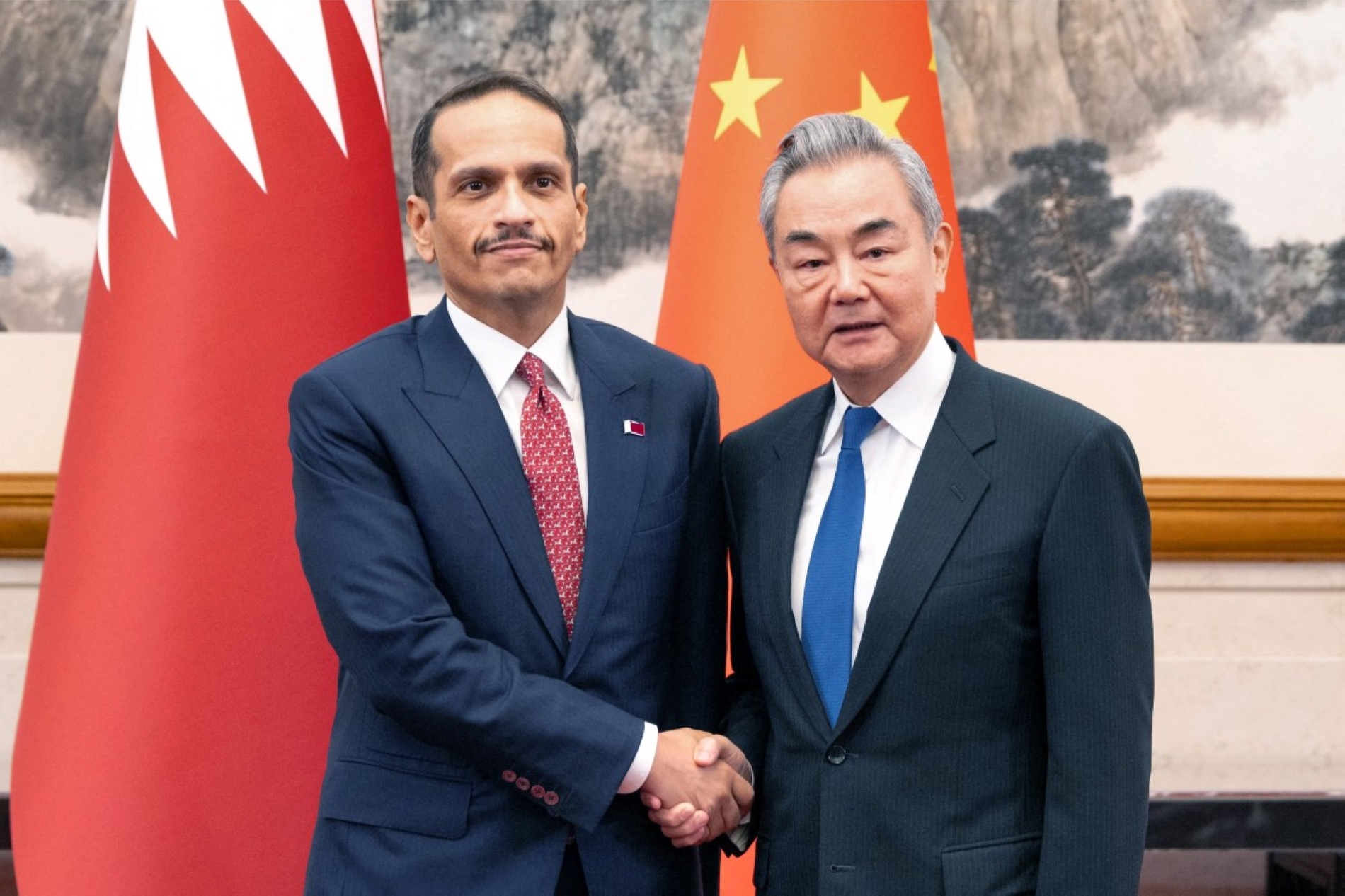
Chinese Foreign Minister Wang Yi, upon receiving Qatari Prime Minister and Minister of Foreign Affairs Sheikh Mohammed bin Abdulrahman bin Jassim Al Thani, Beijing, on 8 September 2026.

Qatar's relationship with China did not begin with this loan. Between November 2022 and November 2023, QatarEnergy signed 27-year contracts to supply four million tonnes of LNG a year to Sinopec from the North Field East project and another four million tonnes annually to the China National Petroleum Corporation, or CNPC. It subsequently signed another contract with Sinopec for three million tonnes a year from the North Field South project.

Together, these contracts cover 11 million tonnes annually —a significant share of the new production expected to come on stream. In addition to purchasing the gas, Sinopec and CNPC acquired minority stakes in joint ventures holding interests in individual production trains. Those stakes did not diminish QatarEnergy's control of the projects.

China has also become an important centre for building Qatar's future LNG fleet. QatarEnergy has increased its total order book to 128 carriers, including 24 giant QC-Max vessels being built in China. Each has a capacity of 271,000 cubic metres, and the combined value of the giant carriers is estimated at approximately $8bn. China's strength does not come from a single loan, but from having the bank, the customer, the production partner and the shipyard seated on the same side of the negotiating table.

Qatar was China's largest LNG supplier in 2025, accounting for around 29% of its imports. When exports from Ras Laffan were disrupted, Qatari shipments to China fell by 57.6% during the first seven months of 2026, to 4.7 million tonnes. Qatar's share of Chinese LNG imports consequently dropped to 13.3%.

Beijing replaced part of the shortfall with supplies from Australia, Russia, Canada and producers in Southeast Asia, while also increasing domestic production and its reliance on pipeline gas. These alternatives were neither cost-free nor sufficient to fill the entire gap, particularly as China's direct imports of US LNG have all but ceased amid trade disputes.

The loan cannot therefore be viewed simply as a favour China granted from a position of overwhelming strength. Beijing itself wants to protect a supplier with which it has signed contracts lasting several decades. It also wants to prevent the continuation of a crisis that has driven up Asian prices and forced it to compete with Japan, South Korea, India and Europe for spot cargoes.

The loan gives the Chinese banks no publicly declared right to influence Qatari policy. It does, however, strengthen Beijing's negotiating position when new supply contracts, production stakes, shipbuilding orders and financing arrangements come up for discussion.

AFP
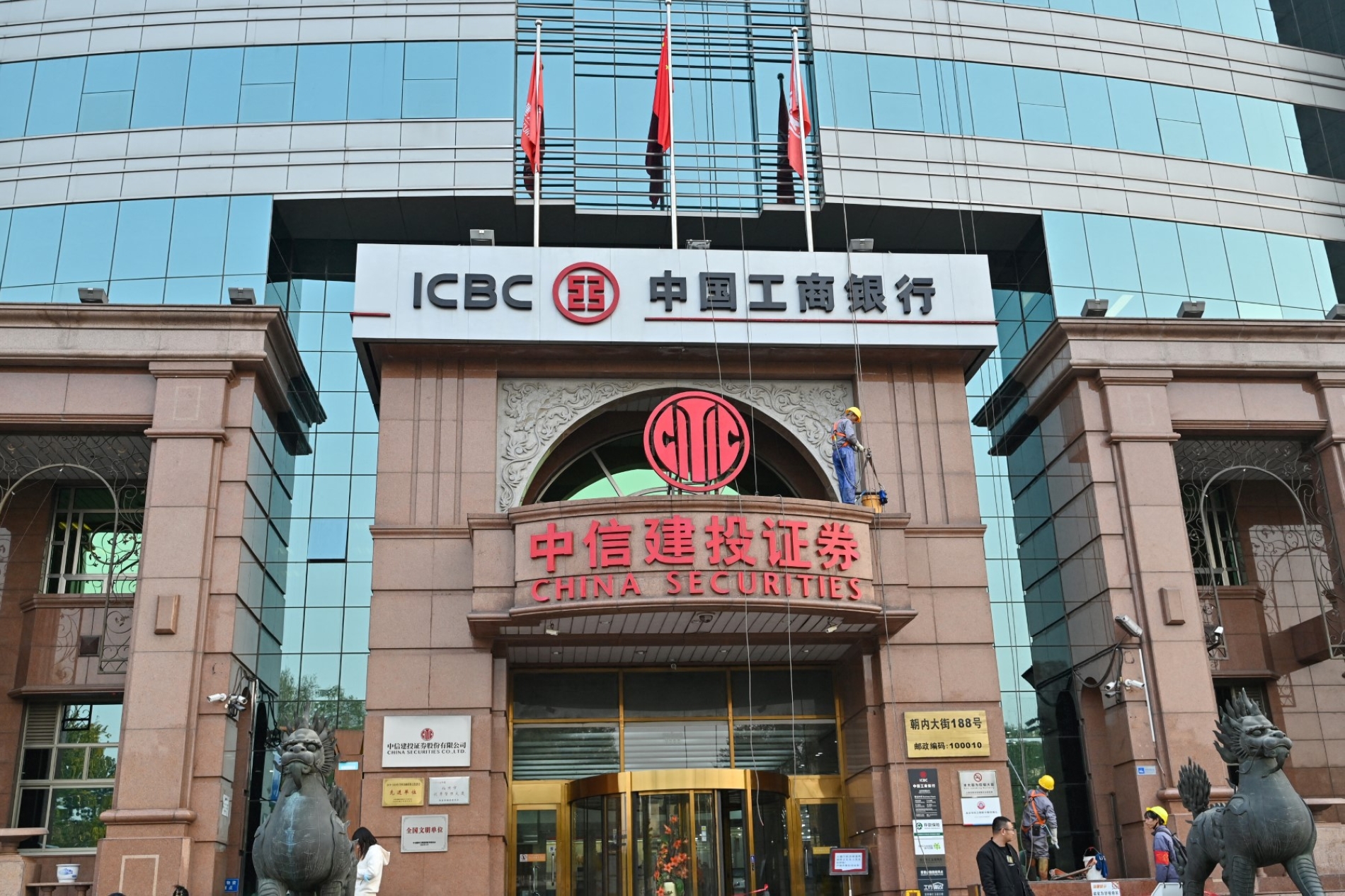
Industrial and Commercial Bank of China (ICBC) in Beijing, on 7 November 2024.

The transaction forms part of a broader expansion of Chinese finance in the Gulf. Lending by Chinese banks to Gulf borrowers rose more than fivefold in 2025, reaching a record $11.5bn, excluding bilateral loans. Chinese banks also provided more than a third of the financing for Saudi Arabia's Jafurah gas project.

Qatar, however, is not entering this relationship from a position of weakness or isolation. It has substantial sovereign reserves, a strong credit rating and American and European partners in the North Field expansion, including ExxonMobil, Shell, TotalEnergies, ConocoPhillips and Eni.

QatarEnergy also owns a 70% stake in the Golden Pass LNG project in Texas, which will have a production capacity of around 18 million tonnes a year; ExxonMobil owns the remaining 30% Golden Pass gives the company an export platform outside the Gulf, although it cannot by itself replace all the volumes lost at Ras Laffan. Qatar can use China to broaden its options beyond exclusive dependence on the West, while also drawing on its Western partnerships to prevent closer ties with Beijing from becoming a relationship of dependency.

China wields considerable economic influence over Iran. It is the principal buyer of Iranian oil subject to sanctions and one of the country's most important commercial and financial outlets. This does not, however, prove that Beijing controls Tehran's military decisions. Nor does the loan demonstrate that China has provided a security guarantee against further attacks on Ras Laffan.

Reuters
Ras Laffan Industrial City, north of Doha, Qatar, on 6 February 2017.

Beijing itself has been harmed by the disruption to shipping through Hormuz. It has lost access to a substantial share of its Qatari supplies and faced higher prices. Its interests therefore lie in restoring stable navigation, not in prolonging the crisis to extract concessions from any of the parties involved.

Closer financial ties with China may give Qatar an additional diplomatic channel to Tehran, but Beijing cannot replace deterrence arrangements or guarantees of safe navigation. Financing can ease a liquidity shortage, and diplomacy may reduce risk, but restoring Qatar's export strength ultimately requires secure maritime passage and facilities that can operate reliably.

Qatar benefits from low-cost financing, a long-term buyer and a partner capable of supplying both ships and capital. China benefits from securing competitively priced gas and expanding its presence in one of the world's most important energy industries.

China benefits from securing competitively priced gas and expanding its presence in one of the world's most important energy industries

Every long-term contract, production stake and tanker built in China increases the cost to Qatar of distancing itself from Beijing. Conversely, the more heavily Chinese companies and banks become invested in the North Field, the greater the cost to China of applying pressure that could threaten Qatar's stability or the flow of its gas.

The loan alone will not restore Qatari exports to their previous levels, because banks cannot alter geography or secure the strait. It does, however, give QatarEnergy the financial room to continue repairs and expansion, and to preserve its customer network until security conditions improve. Chinese financing is neither a free rescue package nor an inescapable trap. It is an agreement between two parties that need one another, while each is trying not to become captive to that need.

font change