Anne-Claire Legendre’s vision for the Institut du monde arabehttps://en.majalla.com/node/333839/culture-social-affairs/anne-claire-legendre%E2%80%99s-vision-institut-du-monde-arabe
Anne-Claire Legendre’s vision for the Institut du monde arabe
As the institute approaches its 40th anniversary, its president outlines a new vision for cultural collaboration between the Arab world and Europe
AFP
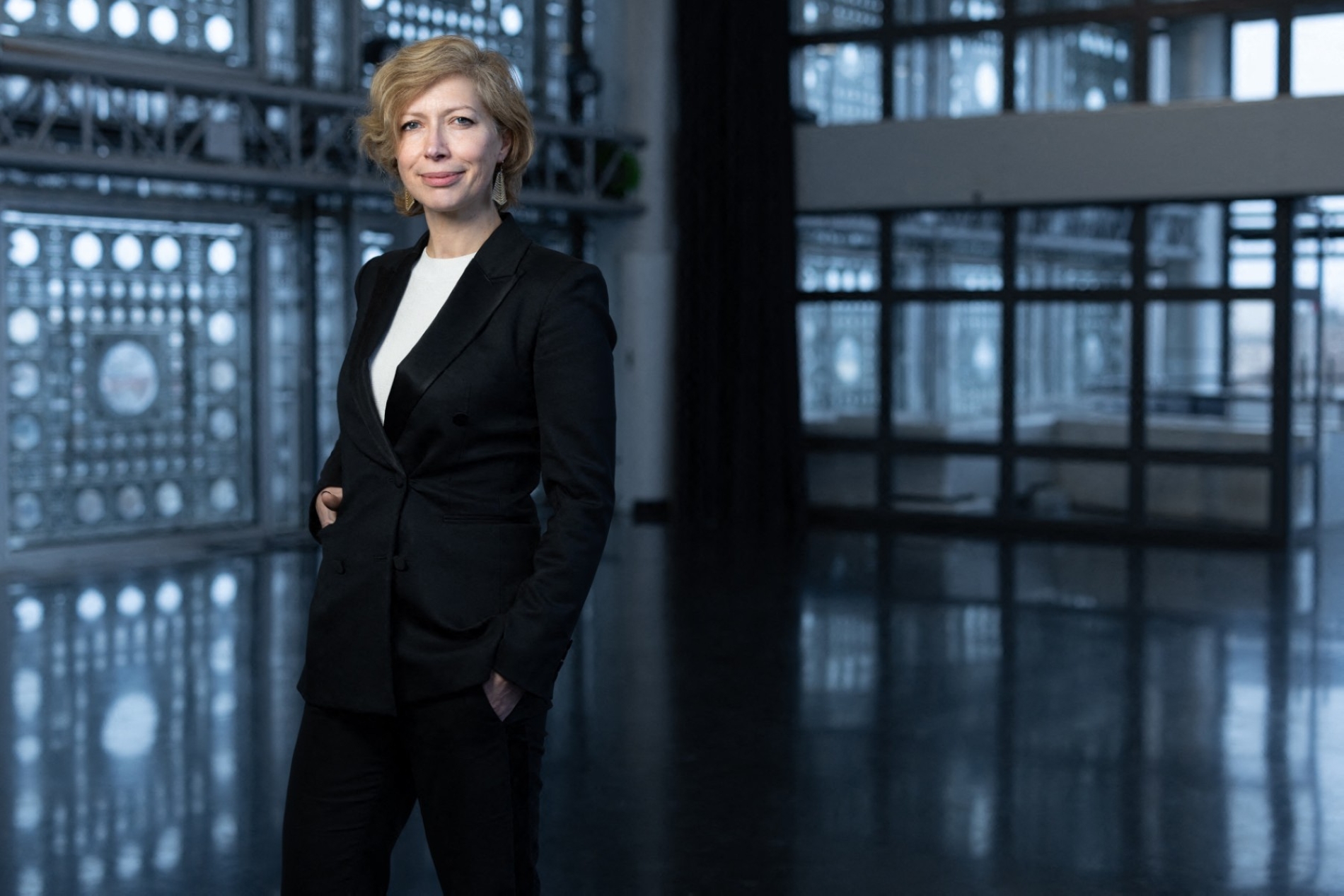
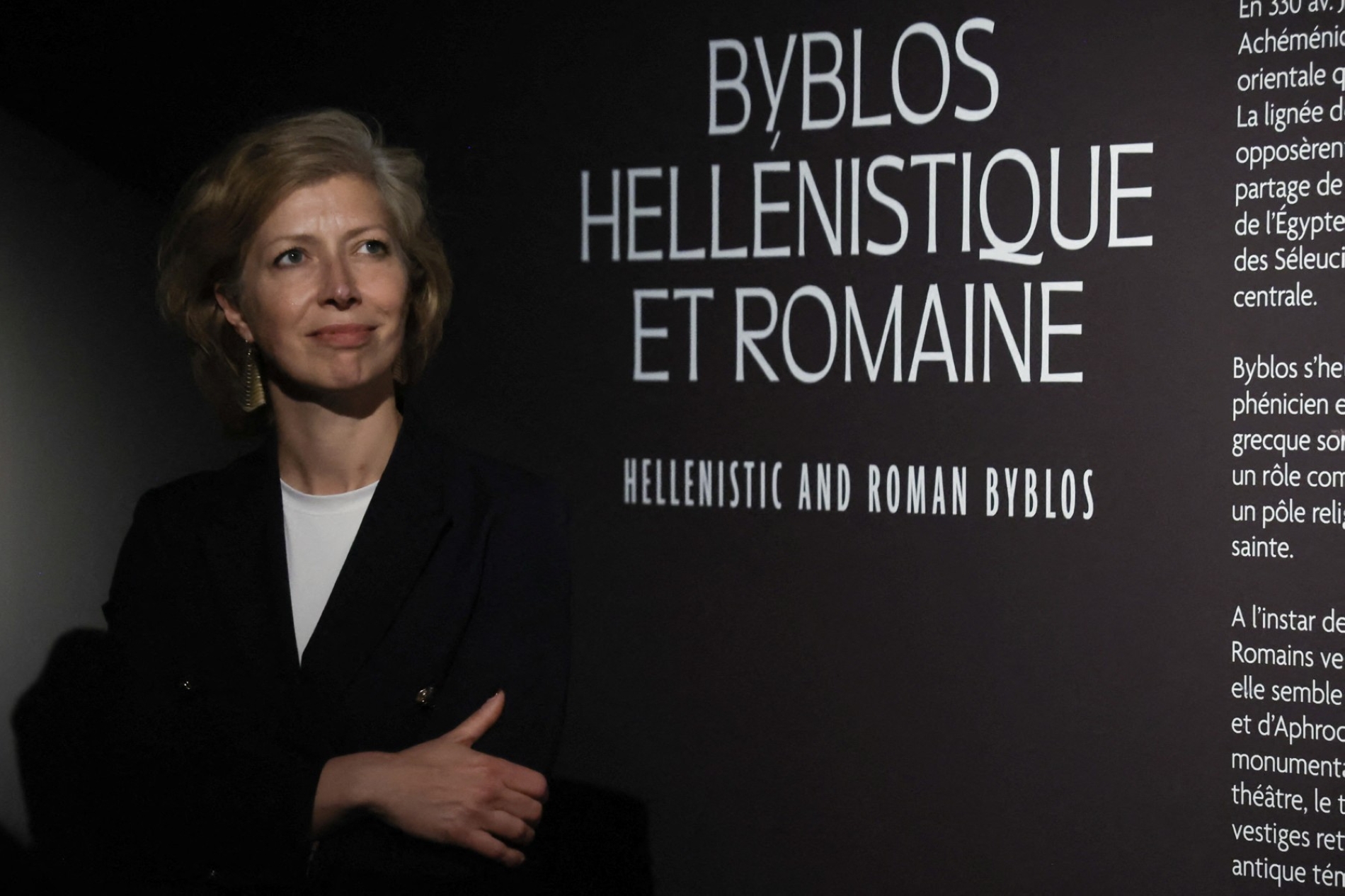
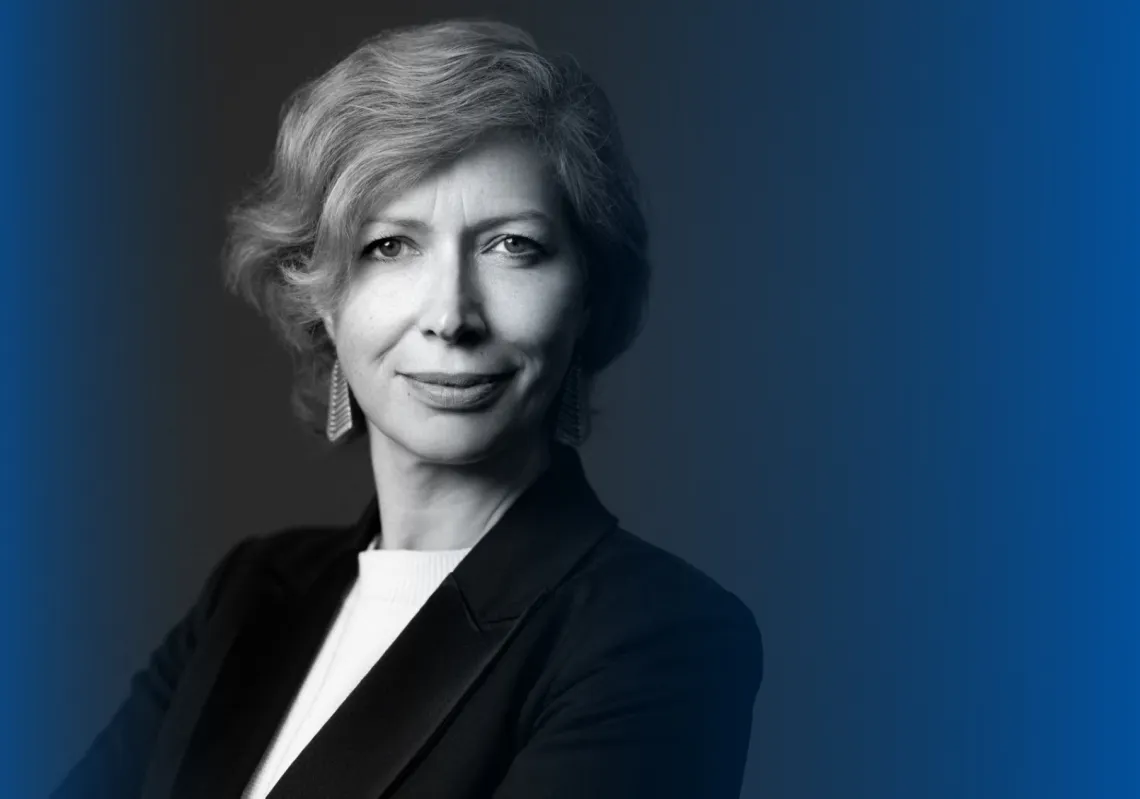
Anne-Claire Legendre, the newly appointed president of the Institut du monde arabe, poses for a portrait at the institute’s headquarters in Paris, on 18 February, 2026
Anne-Claire Legendre’s vision for the Institut du monde arabe
Since becoming president of the Institut du monde arabe in Paris, Anne-Claire Legendre has sought to redefine the institution's role as it approaches its 40th anniversary. Appointed amid profound changes across the Arab world and growing political and cultural polarisation, Legendre brings with her two decades of diplomatic experience.
Her career has taken her from the French Ministry for Europe and Foreign Affairs to France’s Permanent Mission to the UN, then to Kuwait as French ambassador, before she became President Emmanuel Macron’s adviser on North Africa and the Middle East. She also studied Arabic at the National Institute for Oriental Languages and Civilisations in Paris.
Legendre was closely involved in the French diplomatic efforts that culminated in the launch of the French-Saudi initiative to revive the two-state solution to the Israeli-Palestinian conflict. This process marked an important milestone on the path towards France’s recognition of the State of Palestine, announced by Macron in September 2025, and in Legendre’s own diplomatic career.
Speaking to Al Majalla at the institute’s headquarters in Paris, Legendre explains how the institution is moving beyond its traditional role of introducing Arab culture to French audiences towards genuine partnerships with Arab artists and cultural institutions. These partnerships aim to foster joint productions and give Arab cultural initiatives greater visibility in Europe. She also set out her vision for supporting young people and the creative industries, developing the institute’s museum, exhibitions and awards, reforming its governance, and securing sustainable funding.
Below is the interview in full:
What does your appointment as president of the Institut du monde arabe mean to you, given your diplomatic career and your knowledge of the Arab world?
I believe it represents a renewed commitment by France, for which this institution holds particular importance. My 20 years in diplomacy have given me the opportunity to establish very close relationships throughout the Arab world. I have made many friends, and I hope to draw on the experience gained over those two decades to develop the Institut du monde arabe and take it into a new phase.
The institute was originally intended to introduce and promote Arab culture. That remains one of our objectives, although I believe our partners now expect more. They want us to develop joint programmes that support the institute, establish models that ensure its financial sustainability, and create opportunities for young artists and creators, and for Arab culture more broadly, to flourish on the world stage. This is our ambition for the years ahead.
Anne-Claire Legendre at the institute’s headquarters in Paris, on 18 February, 2026.
Does your appointment reflect a desire to modernise the institution or change its direction?
Our aim is to define the next chapter in the history of the Institut du monde arabe, looking ahead 20 or even 40 years. We have been asking ourselves what role the institute should play today, against a geopolitical backdrop marked by intense polarisation and conflict.
Our first priority as we approach the 40th anniversary is to refresh our programme, putting young people at its heart. We will organise exhibitions specifically designed for children aged four to 10, introducing them to Arab culture through interactive experiences and works by contemporary artists. We will also launch a new festival devoted to music and cinema and expand our range of awards to support emerging talent and give their work greater visibility. These include prizes in fashion, design, contemporary art, and literature.
One criticism levelled at the institute was that it reflected a Western perspective on the Arab world. We want to move away from that approach
Anne-Claire Legendre, president, Institut du monde arabe
Our second priority is to connect different creative communities and industries. We want to connect the diverse talents of the Arabian Gulf, North Africa, and the Levant with existing networks in fields such as scientific research, academia, and the creative industries. Our aim is to create opportunities for the new cultural and creative industries emerging across the Arab world to develop sustainable business models.
Finally, we plan to establish a new museum, marking a new chapter in the institute's development. It will place a stronger focus on modern and contemporary art. We have an exceptionally valuable collection that is not currently on public display, and we need to find ways to showcase these works and encourage greater appreciation of them.
What is the role of culture in your diplomatic mission? Does politics play a role?
Culture is a means of engagement, a space for exchange, and an opportunity for discussion and dialogue. Our aim is to bring people together through culture who would otherwise have little occasion to meet. Although the institute does have a diplomatic role, we do not engage directly in politics.
This also means addressing highly sensitive issues, particularly given the conflicts that, regrettably, continue to afflict the region. We want to shed light on these conflicts, drawing on the insights offered by academic research.
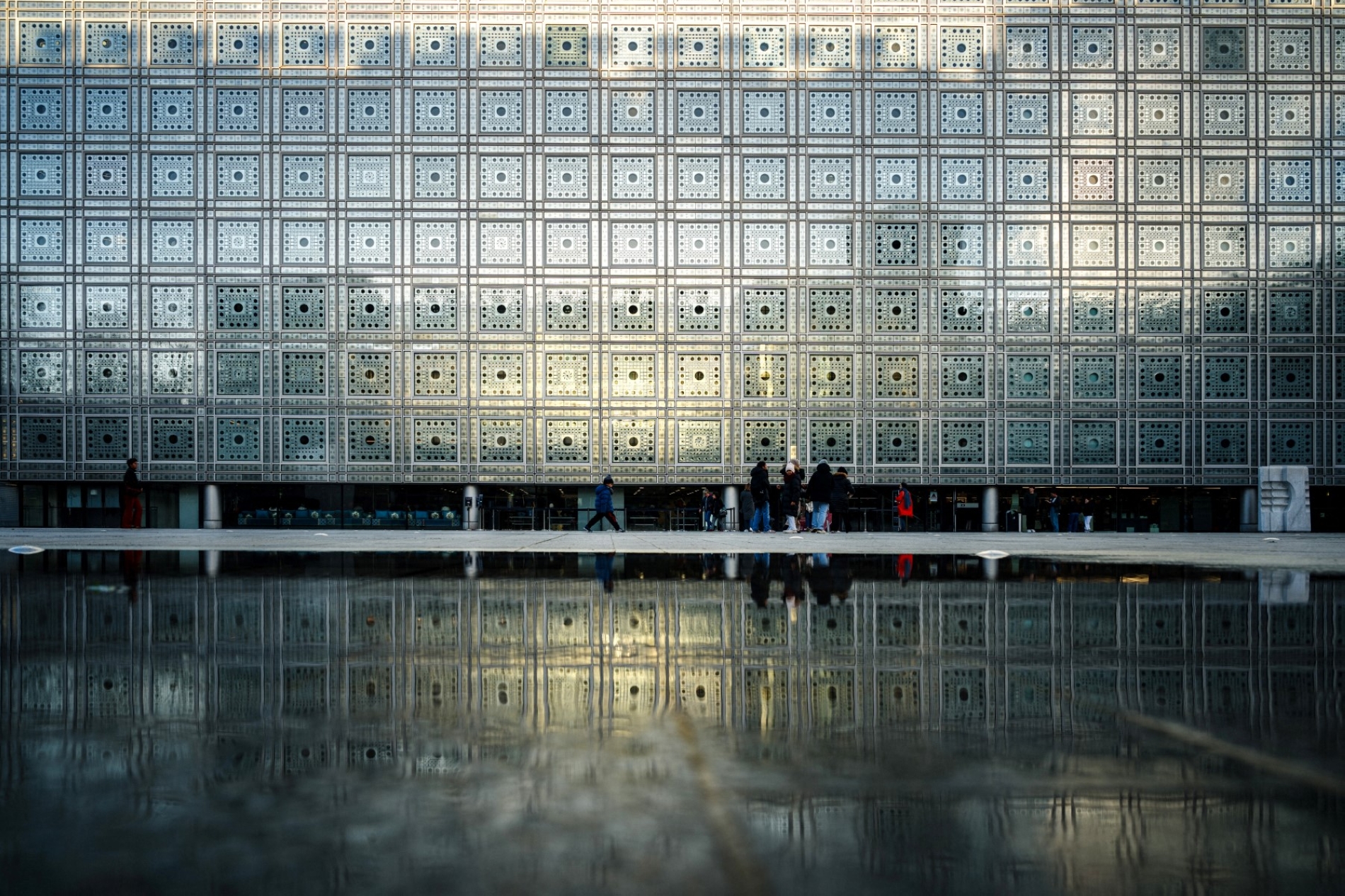
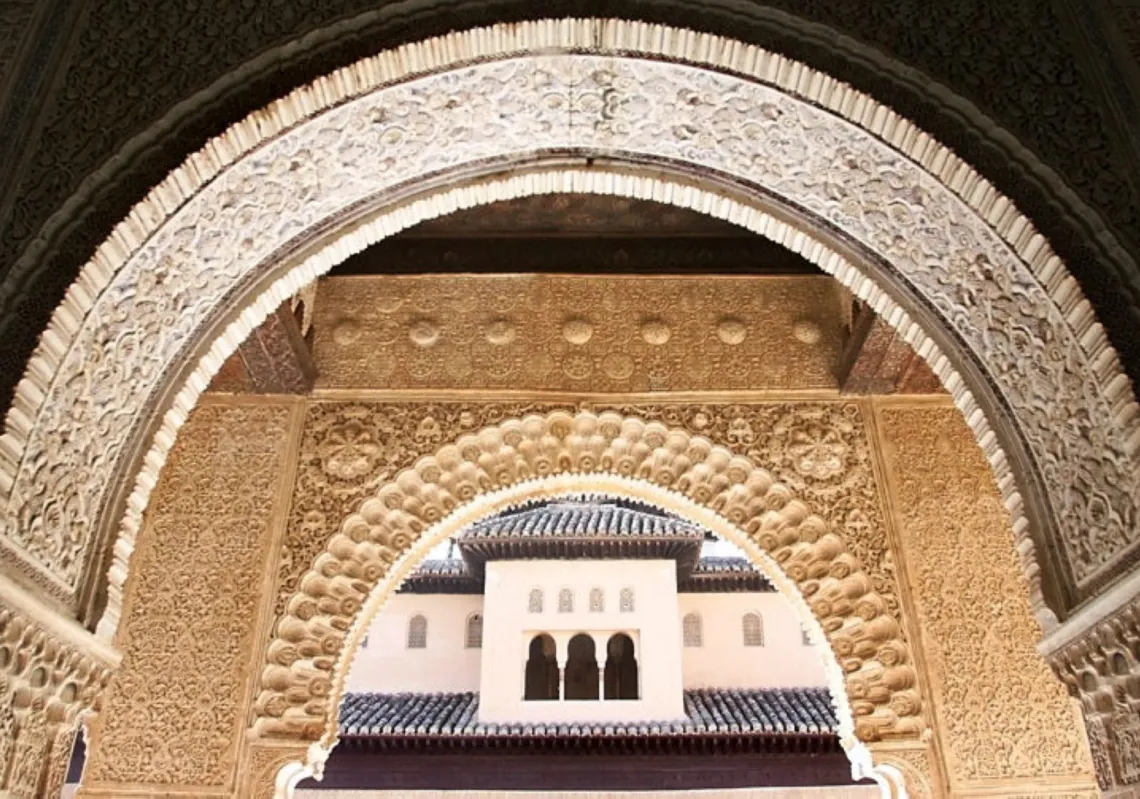
The façade of the Institut du monde arabe, designed by French architect Jean Nouvel in collaboration with the French architectural firm Architecture-Studio, on 3 January, 2024.
It is therefore extremely important for us to maintain close ties with universities and research institutions. That is why we have decided to join an academic network in France that brings together universities specialising in the study of this region. This will enable us to take a more informed view and, we hope, help our fellow citizens better understand what is happening in the region today. It will also deepen their understanding of our own history and the profound ways in which France has been shaped by the Arab world's cultural, intellectual, aesthetic, and political contributions.
I believe telling the story of the deep historical ties between Europe and the Arab world is essential if we are to resist the growing polarisation that we are seeing today.
What will you do differently in your role?
I think one criticism levelled at the institute, or at least a perception held by some, is that it has ultimately reflected a Western perspective on the Arab world. We want to move away from that approach and provide a platform for voices that are seldom heard because they have too little presence or visibility in Europe.
In practical terms, this means giving curators from the Arab world opportunities to curate and oversee exhibitions. It also means working with museums across the region to develop exhibitions that bring their perspectives, interpretations, and analyses of art history and other subjects to Paris.
Take our design and fashion prizes, for example. Our involvement goes beyond the awards themselves. We also showcase the designers' work through exhibitions and fashion shows, giving them opportunities to present their creations in Paris, as we have done with fashion designers.
Princess Noura bint Faisal Al Saud chaired the jury and played a key role in launching the Fashion Futures initiative in Saudi Arabia. Among those attending was Pascal Morand, executive president of the Fédération de la Haute Couture et de la Mode, who is particularly well placed to help integrate these young creators into a wider economic and academic network.
The Palais Galliera, a museum devoted to the history of fashion, was also represented and has a particular interest in the new creative perspectives these designers are bringing forward. One example is Christopher Ghoussoub, a young Lebanese designer who runs Foukhar Studio and is the last remaining potter in the town of Beit Chabab. He won the impact prize as part of the design prize and will be integrated into the network of workshops at the Manufacture de Sèvres.
The institute recently hosted an exhibition on archaeological discoveries. Beyond exhibitions and conferences, what role could the institute play in protecting the Arab world's heritage, particularly in places where it is under threat, such as Gaza and the Lebanese cities of Sour and Saida?
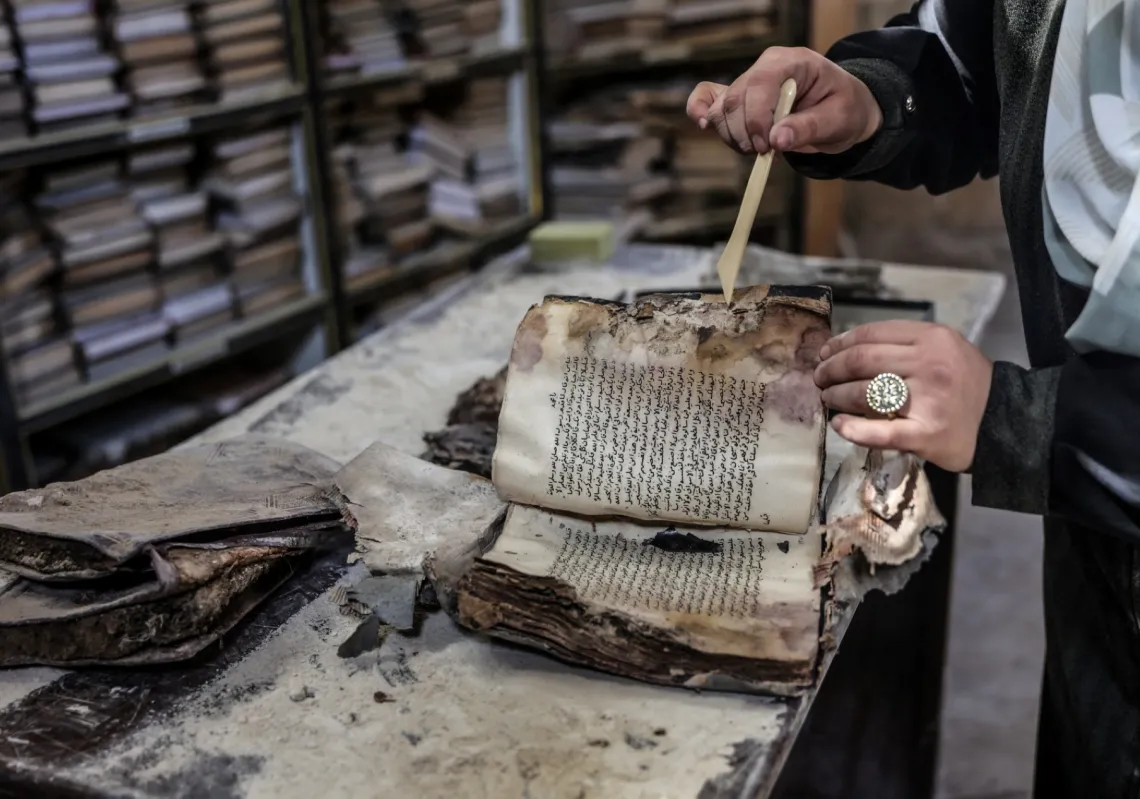
That is an important question. Our relationship with heritage is crucial, particularly as we witness the dangers of its destruction and erasure, both in Lebanon and Palestine. We have witnessed similar threats in Syria and Iraq in the past. These concerns are central to our efforts to tell the story of the region's long history and convey its diversity. The Arab world is extraordinarily diverse, and highlighting that diversity is central to our mission.
This message was also reflected in our exhibition on Byblos, which took place against the tragic backdrop we are all familiar with. The exhibition had originally been scheduled for the previous year, but the war with Israel prevented it from going ahead. The conflict also subsequently threatened the exhibition itself, as certain artefacts could not be transported to Paris without adequate guarantees for their safety amid the Israeli bombardment of Lebanon. Current events have underscored the extent to which sites of immense significance to Lebanese history, and indeed to human history, are under threat.
Anne-Claire Legendre during French President Emmanuel Macron's visit to the exhibition 'Byblos, a Millennial Lebanese City' at the institute in Paris, on 23 March, 2026.
Through the exhibition, we wanted to make a collective appeal for international mobilisation. Armed conflict takes its toll first and foremost on human lives, and protecting people must remain the overriding priority. Yet it also threatens a heritage that belongs to humanity as a whole, extending far beyond Lebanon itself, and that urgently needs international protection. The exhibition also enabled us to raise funds for Lebanon's Directorate General of Antiquities, with the proceeds dedicated to preserving and protecting the country's cultural heritage.
We work closely with the French Ministry for Europe and Foreign Affairs in this field, as well as with ALIPH, an international organisation dedicated to the restoration and protection of cultural heritage. Early next year, we will host an exhibition with ALIPH marking 10 years of efforts to protect heritage in the Middle East.
Tell us about the recent exhibition on Gaza…
Clearly, in the context of the Israeli-Palestinian conflict, it is vitally important to recall the depth of Palestinian history and Gaza's 5,000 years of history. Through these exhibitions, we wanted to bring that long history to life.
We organised two exhibitions. The first explored Palestine's contributions to the world of art, ideas, poetry, literature, and music. It was called 'What Palestine Brings to the World'. The second, 'Treasures Saved from Gaza: 5,000 Years of History', attracted approximately 115,000 visitors. The story of these artefacts is extraordinary. We were the first to exhibit these archaeological objects in France.
The exhibition reminded visitors that Gaza's history stretches back thousands of years, long before the Israeli-Palestinian conflict, and reaffirmed the Palestinians' deep historical connection to the land.
We plan to lend 43 objects from our collections to six new museums in Saudi Arabia. I look forward to continuing this partnership in Riyadh and Paris
Anne-Claire Legendre, president, Institut du monde arabe
On 8 and 9 November, the institute will host an international symposium called 'Gulf States and Societies in Wartime: Transformations and Reconfigurations, Resistance and Repositioning'. What is the principal idea behind this event?
I believe building the shared narratives I have been discussing requires strengthening our relations with the Gulf countries. I have close ties with Saudi Arabia. I have visited many times throughout my career, and I look forward to returning.
Saudi Arabia is experiencing a remarkable cultural renaissance, and the institute has been a partner in that renaissance for years, including our exhibition 'AlUla, Wonder of Arabia', which we hosted in Paris in 2019, and 'Perfumes of the Orient', which travelled to the National Museum of Saudi Arabia in Riyadh in 2024.
We are now working to lend 43 objects from our collections to six new museums in Saudi Arabia. I look forward to continuing this partnership with our Saudi friends in Riyadh and Paris.