As US strikes dismantle Iran’s regime and Venezuela’s leadership, Beijing confronts energy strangulation, chokepoint vulnerability, regime decapitation, and the shattering of Xi’s multipolar ambitions
When the US and Israel launched coordinated strikes on Iran on 28 February, killing Supreme Leader Ali Khamenei and crippling Tehran’s military infrastructure, the world witnessed a dramatic reshaping of the Middle East’s power structure.
Beijing’s public response—measured moral condemnations, an emergency UN Security Council session, the dispatch of a special envoy to the Gulf, and its foreign minister’s conciliatory tone toward Washington—conveyed the impression of a stable world power calmly managing another unwelcome geopolitical disturbance. One that is peripheral to its central national security interest—its relations with the US.
Beijing’s response to Operation Epic Fury has been calibrated and composed. The anxieties beneath this composure, however, are anything but. Behind the careful diplomatic choreography, four deep and interlocking fears are at play. These fears are shaping Beijing’s calculations and restraints regarding the war with Iran.
The first relates to energy, the second to the US’s dominance of geopolitical chokepoints, the third to Washington’s willingness to use military force against its foes, and the fourth to the personal and global ambitions of Xi Jinping, who has advanced a multilateral world order to displace Pax Americana. The Iran war has created a perfect storm of all four fears, which I lay out below.
1. The energy trap
To understand why the war has sent tremors through Beijing’s strategic calculations, we need to look past the renewable energy headlines and focus on the two commodities that power China: crude oil and liquefied natural gas (LNG).
China is the world’s largest importer of crude oil, hitting a record high of 11.55 million barrels per day in 2025. This record, however, masks the underlying picture. China stockpiled 430,000 barrels per day in 2025, accounting for 83% of the year’s entire increase in crude imports. This suggests that actual consumption demand grew only marginally. Such stockpiling reveals Beijing’s existential anxiety over a sudden supply disruption. As the world’s second-largest consumer, China imports 74% of its oil, and domestic production covers only a quarter of its consumption.
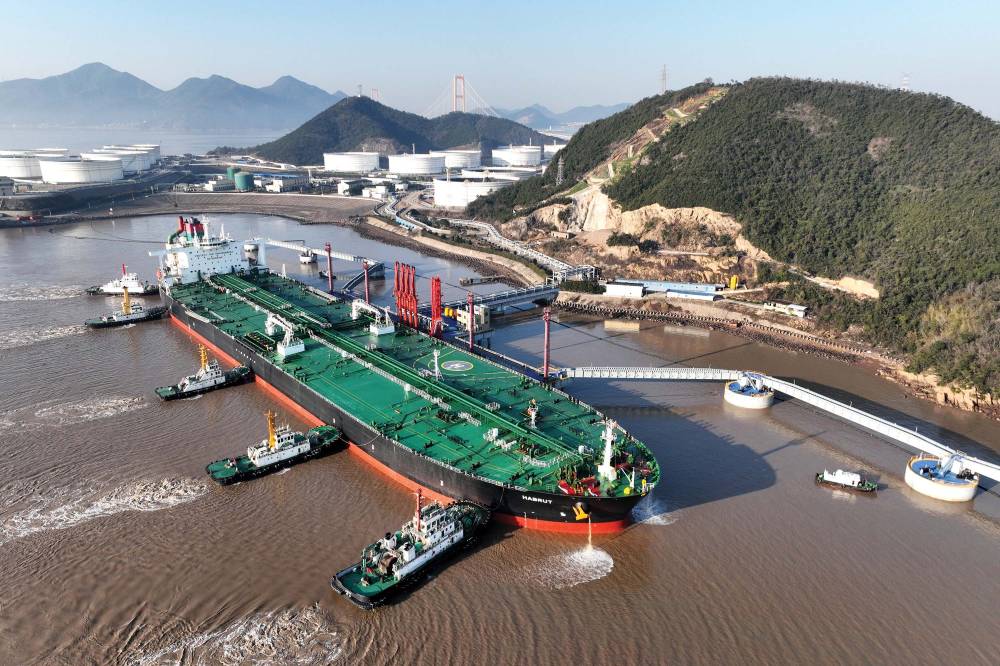
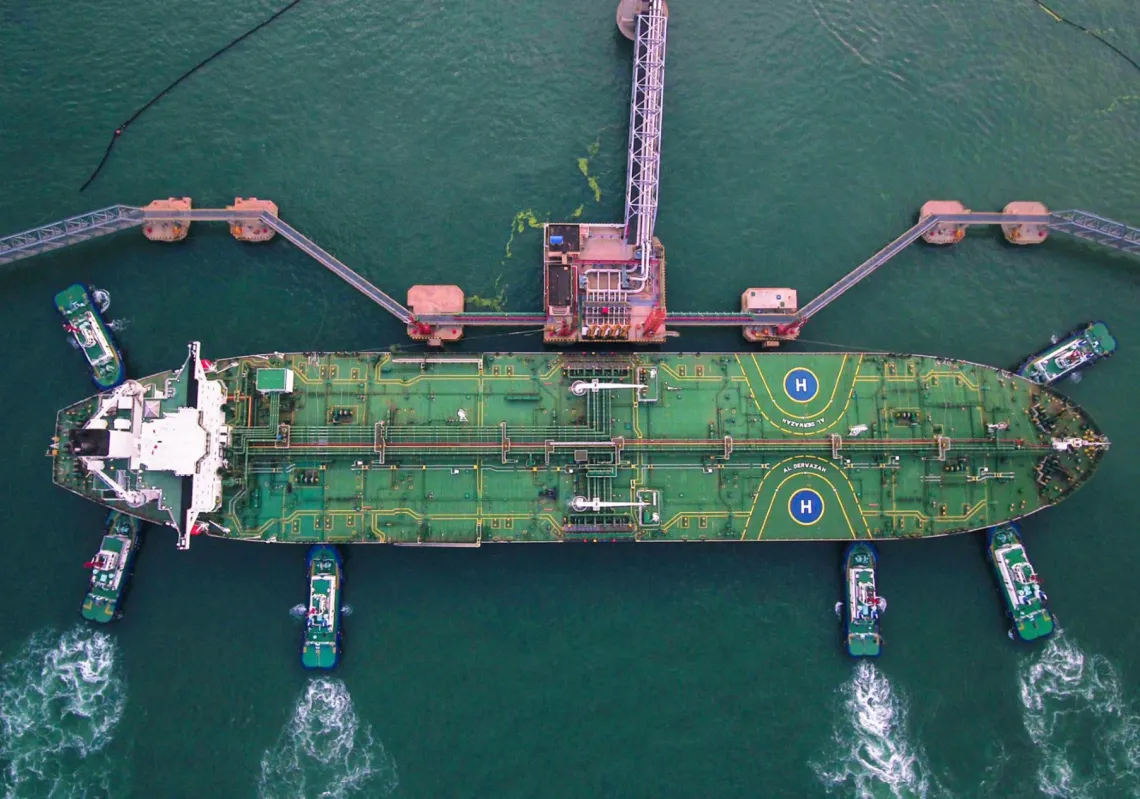
Tugboats push the crude oil tanker Habrut to a reception terminal operated by China Petrochemical Corporation or Sinopec Group on 30 January 2023, in Zhoushan, Zhejiang Province of China.
China’s supplier map is geographically concentrated in a way that should concern any energy strategist. Russia accounts for 20%, followed by Saudi Arabia at 14%, Iraq at 12%, and Iran at 11-14%. The wider Arabian Gulf supplies about 54% of China’s crude. In 2024, Russia, Iran, and Venezuela accounted for 33% of China’s crude imports—three US-sanctioned countries whose oil reaches China through shadow fleets and barter deals at substantial discounts.
Iranian crude sells at $8 to $10 per barrel below Brent. With China importing between 1.3 and 1.4 million barrels per day from Iran, its sudden unavailability could cost Chinese independent refiners up to $4.7bn annually. The primary buyers of Iranian oil are independent ‘teapot’ refineries in Shandong province—a quarter of China’s refining capacity—whose thin-margin business model depends entirely on cheap feedstock.
China wonders if US action in Venezuela and Iran is part of a deliberate campaign to dismantle China's global sphere of influence, one partner at a time
The geopolitical paradox is acute: years of US sanctions on Iran, designed to isolate Tehran, have been indirectly subsidising the economy of Washington's principal strategic rival.
Russia can partially fill the gap. Vortexa data reveals that China received 2.07 million barrels per day of Russian oil in February—370,000 barrels more than in January—replacing much of Venezuela's lost volume. However, due to pipeline capacity constraints, Russia cannot substitute for Iranian supply at scale without years of infrastructure investment. A prolonged halt in Iranian crude would not trigger an immediate oil crisis, but it could collapse a quarter of China's refining capacity and deepen Beijing's structural dependence on Moscow.
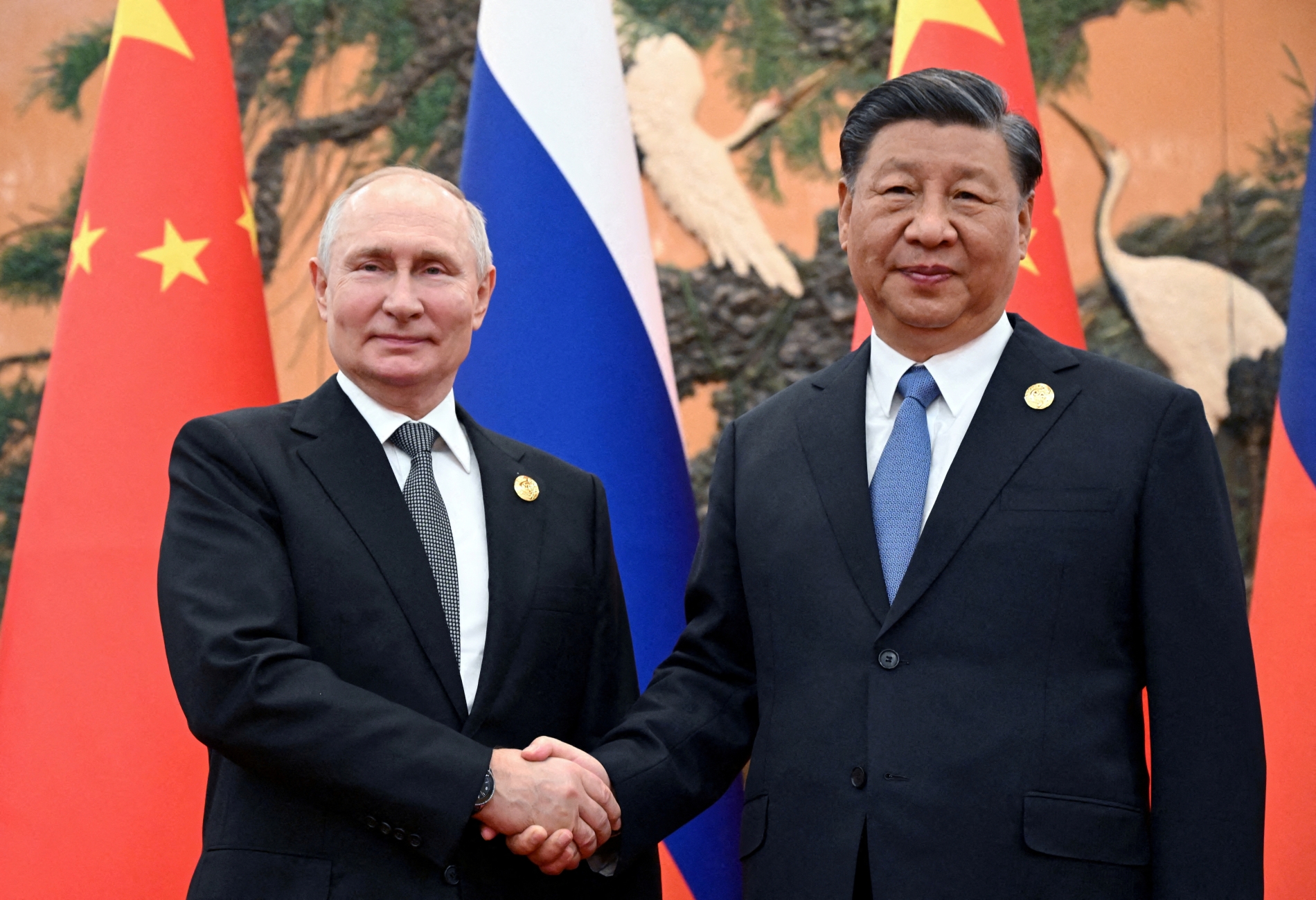
Russian President Vladimir Putin shakes hands with Chinese President Xi Jinping during a meeting at the Belt and Road Forum in Beijing, China, on 18 October 2023.
If oil is China's chronic vulnerability, LNG is its acute pain. China became the world's largest LNG importer in 2023, sourcing 34% from Australia, 23% from Qatar, 11% from Russia, and 10% from Malaysia. Qatar's substantial share makes Iran's drone strikes on the Ras Laffan complex—the world's largest LNG export facility—gravely disruptive.
Benchmark European and Asian gas prices surged nearly 50% in the immediate aftermath of the strikes on Ras Laffan. If China pivots to Australia for immediate replacement, it risks dependence on a staunch US Pacific ally whose LNG supply could be disrupted in a US-China Pacific confrontation. Russia, again, becomes the default—a dependency China is reluctant to embrace but increasingly unable to avoid.
China's global trade and energy flow still operates under the US security architecture, and Washington has demonstrated it is willing to weaponise it
2. The chokepoint nightmare
Chinese strategic discourse is obsessed with the 'Malacca dilemma'. In 2003, former President Hu Jintao warned the Politburo Standing Committee that approximately 80% of China's oil imports transit through the Strait of Malacca, a chokepoint it does not control and cannot easily bypass. In a conflict with the US, American naval power could disrupt Chinese shipping and strangle the world's second-largest economy within weeks. In the two decades since Hu's warning, Beijing has invested tens of billions in global infrastructure alternatives. The US-Israeli war against Iran has revealed that those alternatives remain woefully insufficient.
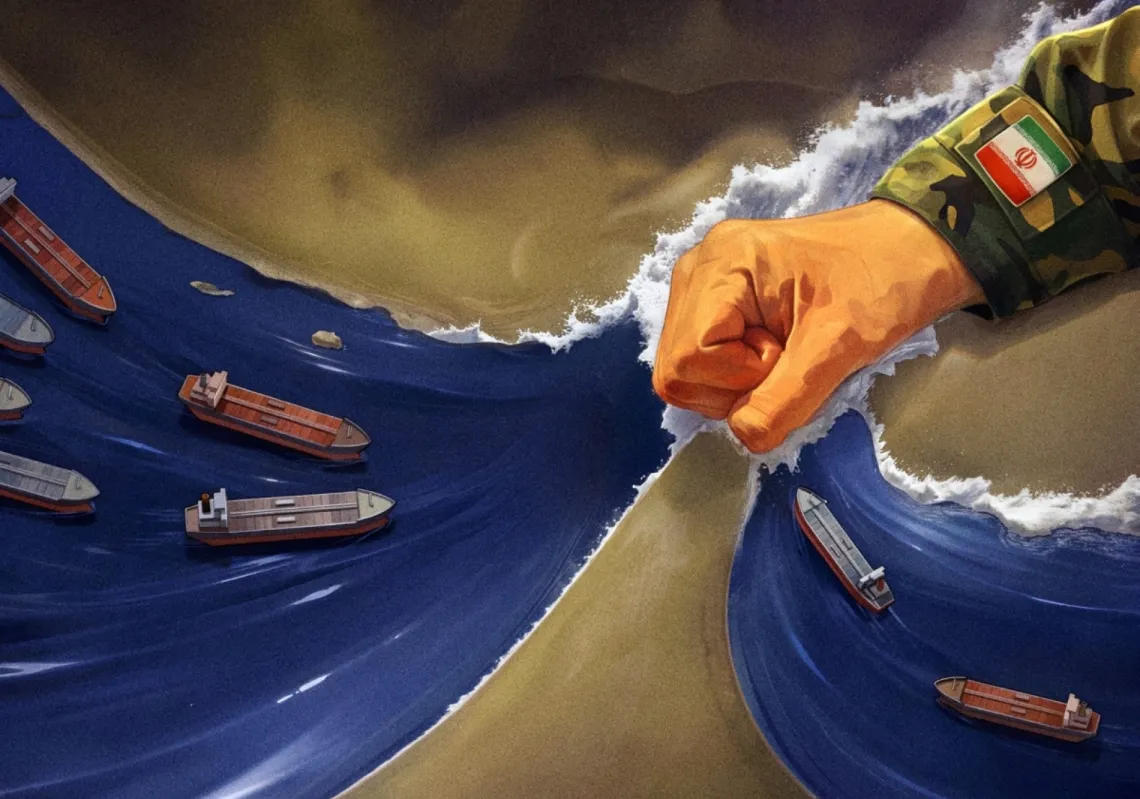
The Strait of Hormuz has been effectively closed, halting roughly 20% of global oil and gas supplies. The Bab al-Mandab Strait was disrupted for over a year by Houthi strikes against Red Sea shipping. In Panama, the Trump administration successfully pressured the country's Supreme Court to rule the CK Hutchison port operation concession unconstitutional, transferring terminal operations to Western operators. The Strait of Malacca remains guarded by US treaty allies. All four arteries of China's prosperity are now simultaneously subject to Washington's capacity and will to interdict.
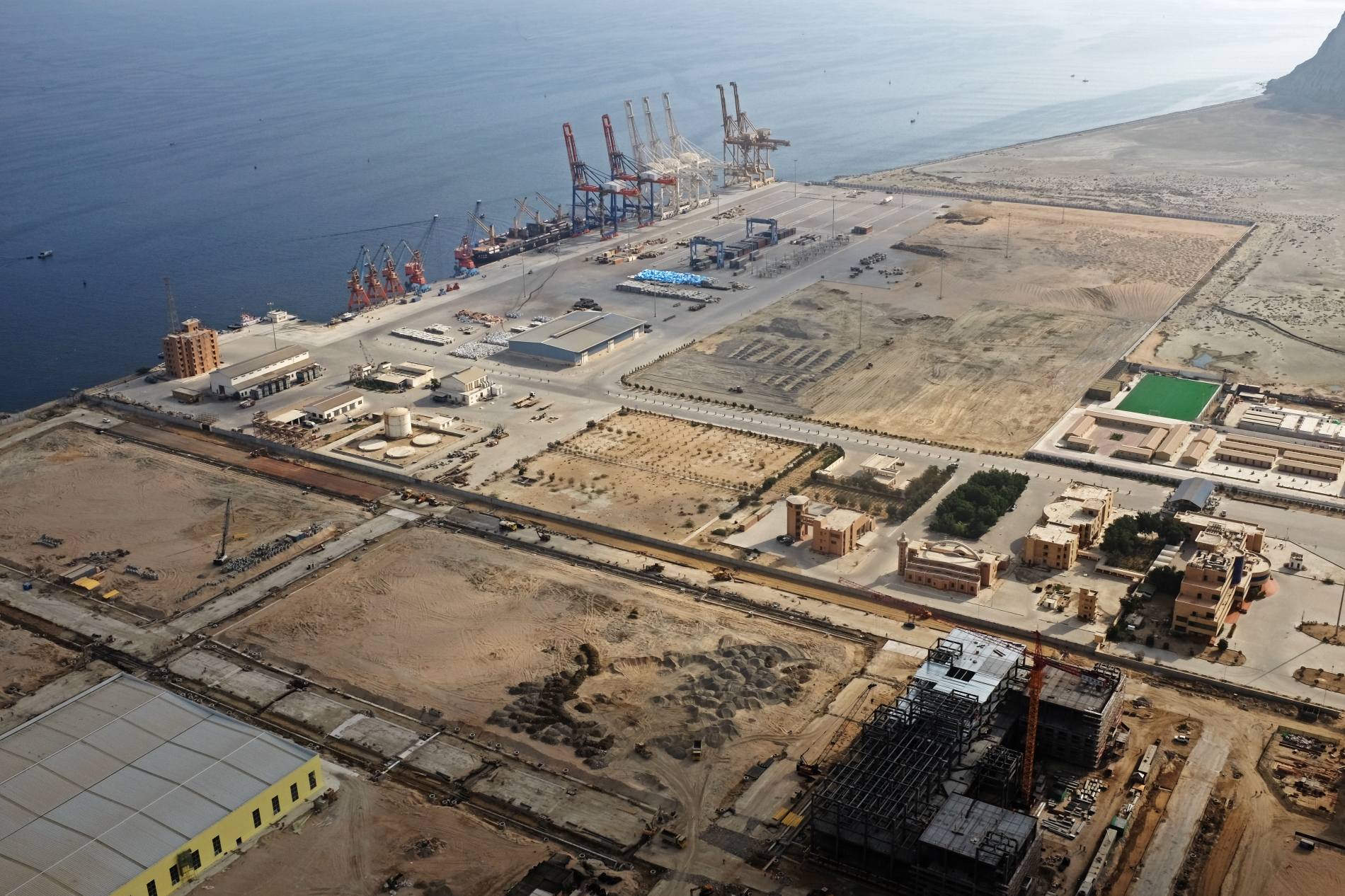
A general view of Gwadar port in Pakistan, on 4 October 2017.
Chinese alternatives—Gwadar Port in Pakistan, Hambantota in Sri Lanka, the China-Myanmar corridor to Kyaukphyu, the Arctic Polar Silk Road, and the Power of Siberia 2 pipeline—share a common feature: each has been delayed, degraded, or blocked by geography, politics, or financial disputes. Gwadar Port, the crown jewel in the China-Pakistan Economic Corridor, has only three berths, compared with Karachi's 33, and handles just 3.2% of Karachi's container volumes. The Myanmar corridor has been inoperative since the 2021 coup. The Arctic route is seasonal. Power of Siberia 2 remains unbuilt.
Meanwhile, Washington is systematically dismantling China's port infrastructure globally through the Strategic Ports Reporting Act and direct pressure on host governments. Hong Kong-based CK Hutchison's remaining 41 ports, spanning every major chokepoint, are firmly in the US crosshairs.
The Iran war has confirmed what Beijing feared: China's global trade and energy flow still operates under the US security architecture—and Washington has demonstrated it is willing to weaponise it.
3. Trump's coercive statecraft
The third fear is what Chinese officials discuss most guardedly but feel most viscerally: the demonstration effect of US-led decapitation and forced regime change as the defining new instrument of Trump-era statecraft.
In 60 days, Washington crossed two unprecedented thresholds. In January, US special forces seized Venezuelan President Nicolás Maduro from Caracas in an overnight raid, installing a compliant successor. In February, a joint US-Israeli strike killed Iran's Supreme Leader in the centre of Tehran. Two of Beijing's closest strategic partners— both signatories of 'comprehensive strategic partnerships' with China—are gone.
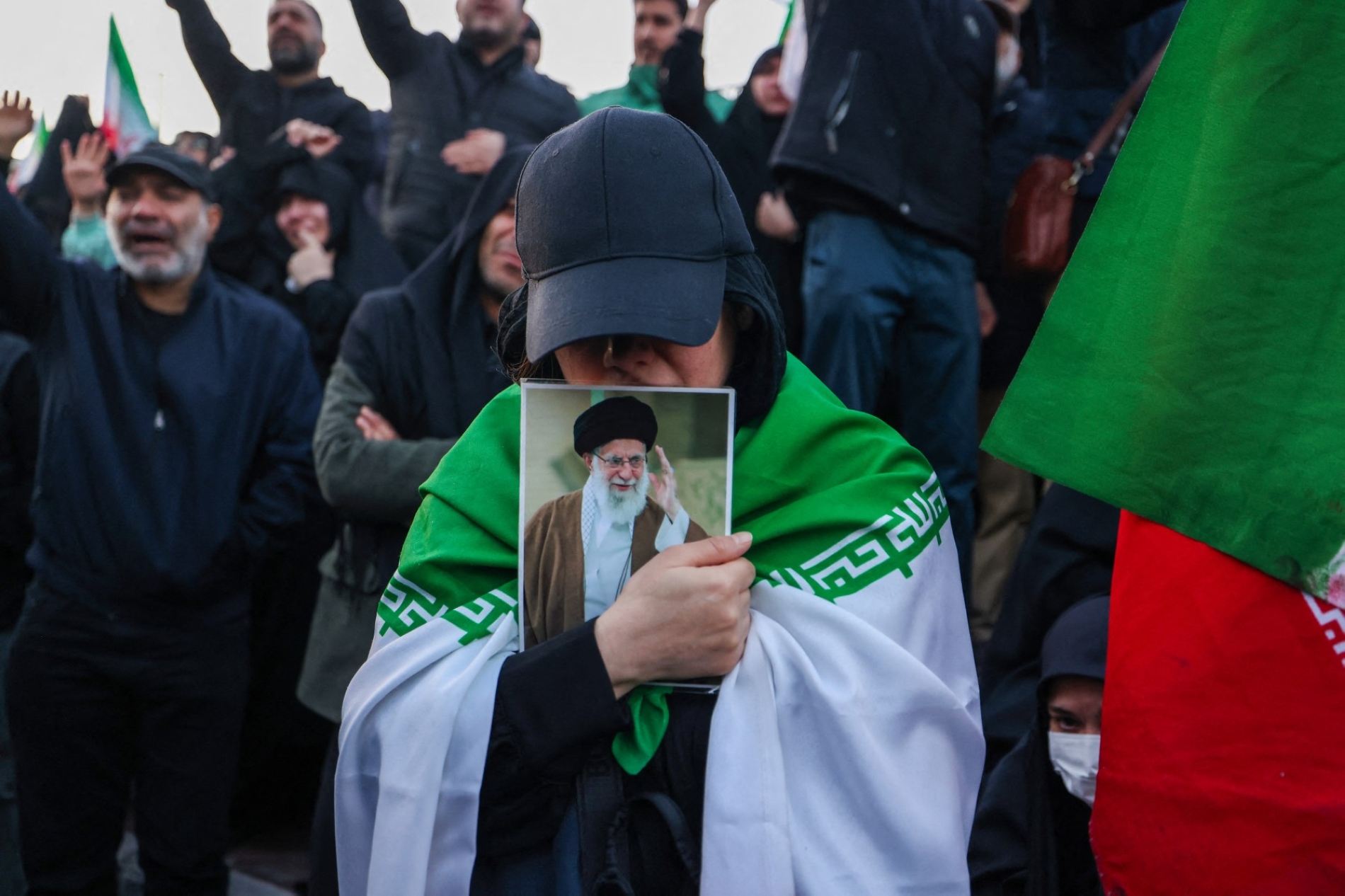
People mourn the death of Iran's supreme leader, Ayatollah Ali Khamenei, who was killed in joint US and Israeli strikes, at a square in Tehran on 1 March 2026.
For President Xi and his inner circle, these are not textbook foreign policy events. They constitute a new American strategic doctrine. Washington will forcibly remove governments it deems adversarial, insufficiently armed, and in possession of assets the US deems strategic. The question Beijing cannot shake is whether these operations are targeted at idiosyncratic hostile leaders or are part of a deliberate campaign to dismantle China's global sphere of influence, one partner at a time.
The most revealing evidence of how deeply these events have rattled the Communist Party of China's leadership is subtle. On 4 January, one day after Maduro's capture, Zhongnanhai—Xi's official compound—vanished from Baidu Maps, Gaode Maps, and Tencent Maps entirely. By March, Beijing residents reported round-the-clock construction in Xishan National Forest Park—the site of the Central Military Commission's command centre. Proven US precision decapitation capability has almost certainly accelerated the construction of what observers have called 'Beijing Military City', an underground command and nuclear bunker complex.
The so-called 'Trump Corollary'—Washington's new doctrine of decapitation strikes and regime change against adversarial governments—has given Beijing a reality check: it is preparing for a possible direct military clash with the US while also working toward a bilateral détente.
4. Xi's unfinished world order
The fourth fear is the most consequential for the world order—and the hardest to remedy—because it is not a hard-power problem but a credibility problem. Energy can be rerouted. Chokepoints can be partially circumvented. Bunkers can be hardened. But the authority to lead the Global South rests on a proposition the Iran war has torn apart: that Chinese partnerships carry real weight, and that the civilisation championing multipolarity is not, in the final reckoning, a rhetorical blueprint.
Since 2013, Xi has constructed sweeping institutional alternatives to the Western-led order: the Belt and Road Initiative (BRI) across 150 countries, the New Development Bank, the expanded Shanghai Cooperation Organisation (SCO), and BRICS enlarged to a ten-nation bloc representing 55% of the global population and a quarter of world GDP.
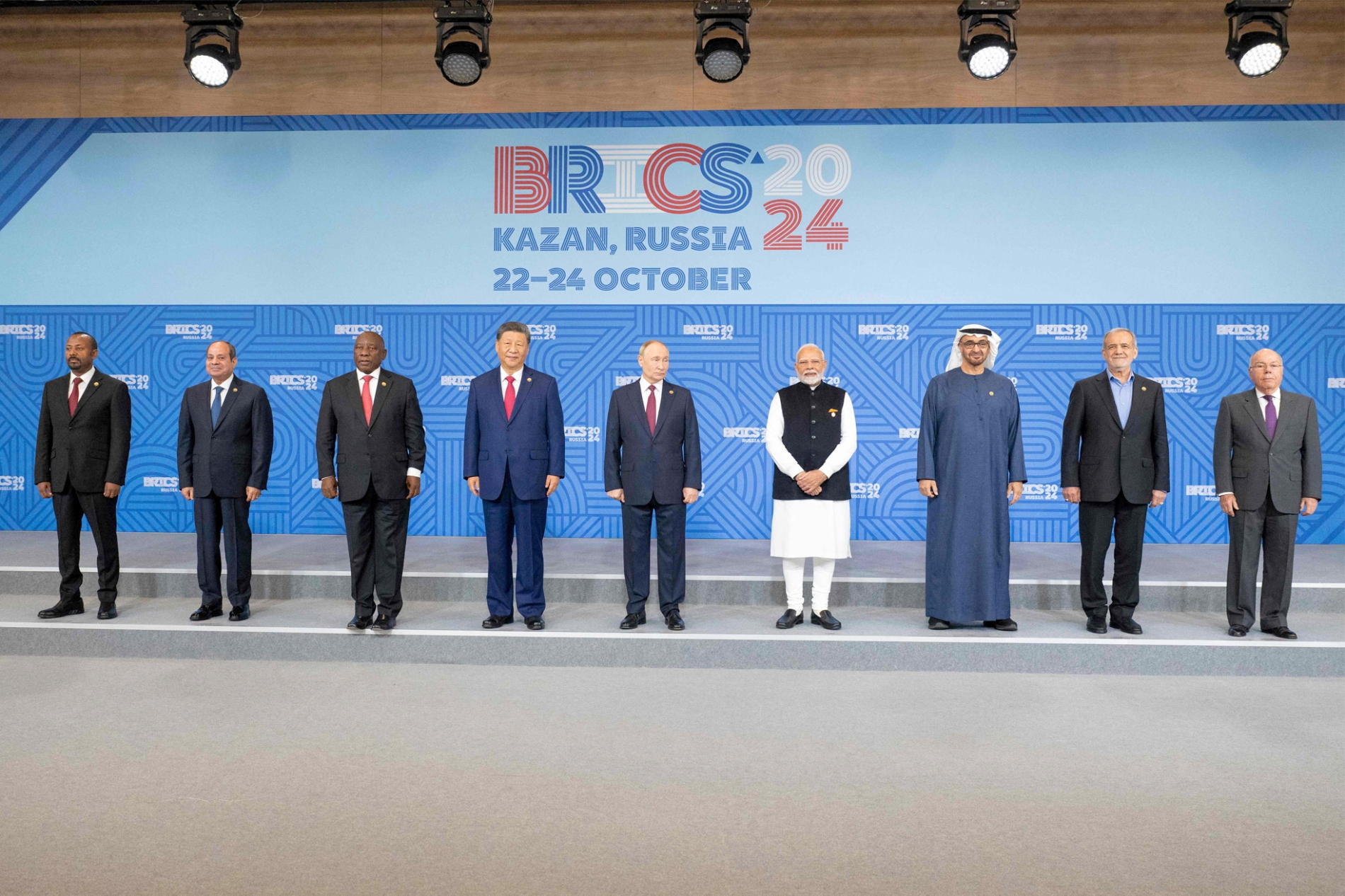
The presidents of Egypt, South Africa, China, Russia, UAE, and Iran, the prime ministers of Ethiopia and India and Brazil's foreign minister pose for a family photo during the BRICS summit in Kazan on 23 October 2024.
Iran and Venezuela were load-bearing pillars of this architecture. Iran was the indispensable land bridge of China's westward BRI corridor and a member of BRICS+ and the SCO. Venezuela anchored China's hemispheric presence. Both have now been effectively dismantled by the US.
China has long maintained, with intellectual coherence, that its deliberate refusal to underwrite security alliances distinguishes it from the overextended US. The BRICS bloc, confronting the assassination of a member state's supreme leader, could not agree on a statement naming the perpetrators. The SCO faces equivalent paralysis.
There is a dimension of genuine opportunity for Beijing. President Trump's withdrawal from the World Health Organisation, his defunding of the World Food Programme, and his open contempt for the UN create genuine demand for the alternative frameworks Beijing has spent a decade constructing. Foreign Minister Wang Yi captured this incisively at a recent National People's Congress (NPC) press conference, positioning China as "the world's most important force of peace, stability and justice" at a time when Washington is demonstrating the opposite. But a world losing faith in US leadership will not automatically transfer that faith to China—not if the price of Chinese partnership is forceful condemnation delivered from a safe distance, while partners burn.
Whether Xi's measured restraint is vindicated greatly depends on how the war in Iran evolves—whether its regime survives, how long the Strait of Hormuz is closed, the limits of US power in containing a war it has inflamed, and Washington's ability to safeguard one of the world's most strategic assets and its freedom of navigation.
Confronted by all four fears over the Iran war, this may be China's deepest reckoning: that, after all, China must live in an American world.