As the US is trying to restrict Cuba's fuel lifeline, Trump says Havana “is ready to fall.” Will it?
YAMIL LAGE / AFP
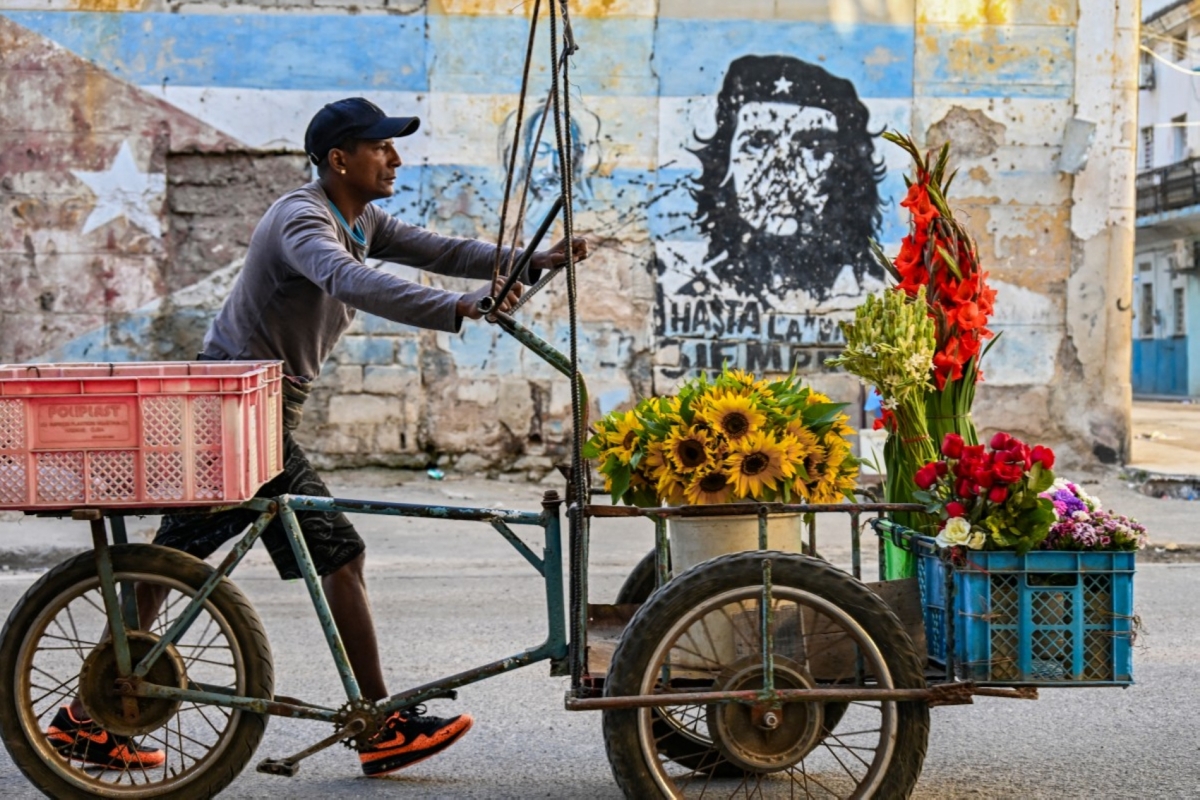
A flower street vendor pushes his cart past a mural depicting Argentine-born revolutionary leader Ernesto “Che” Guevara reading “Until victory, always” in Havana on 25 February 2026.
Cuba, already among the world’s most heavily sanctioned economies, is facing severe blackouts, stalled transport, empty shelves, and intermittent public services. The current wave of US pressure is increasingly focused on restricting Havana's access to fuel, with President Donald Trump threatening tariffs on any country that sends oil to the island. At the same time, Washington is also trying to disrupt the financial and logistical chain that secures payments, enables insurance, and delivers shipments, turning fuel access into an immediate test of state capacity.
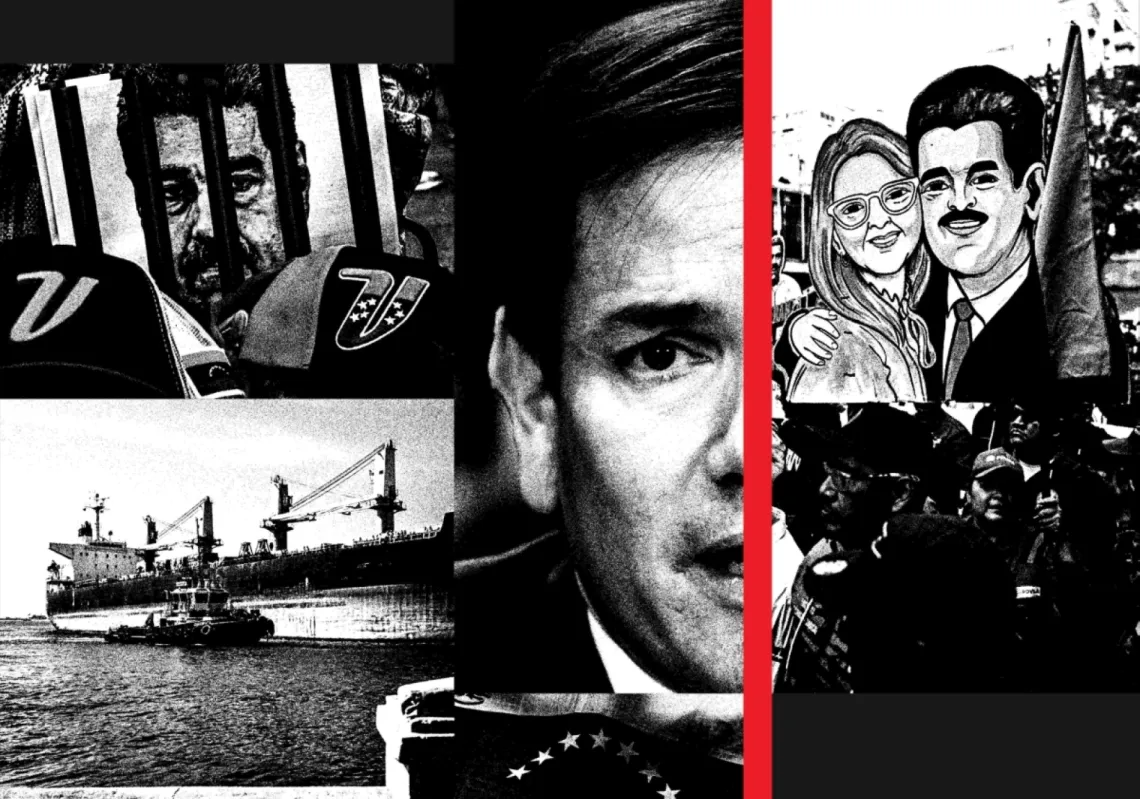
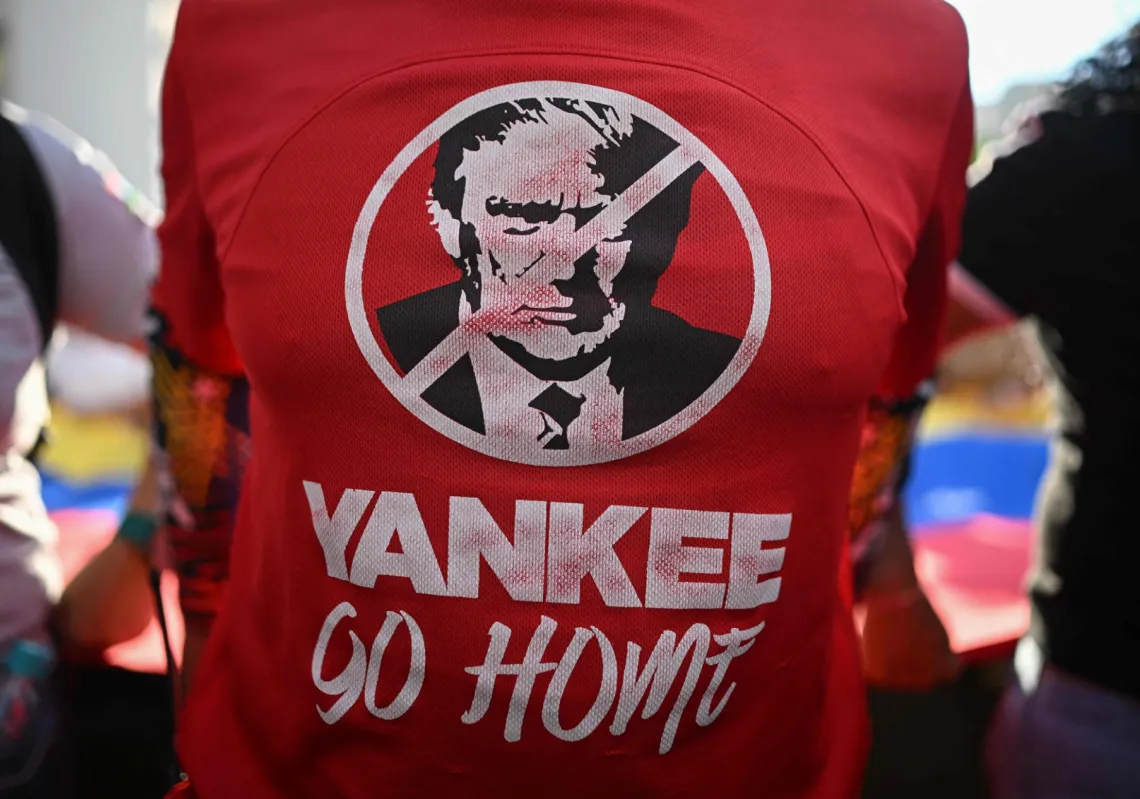
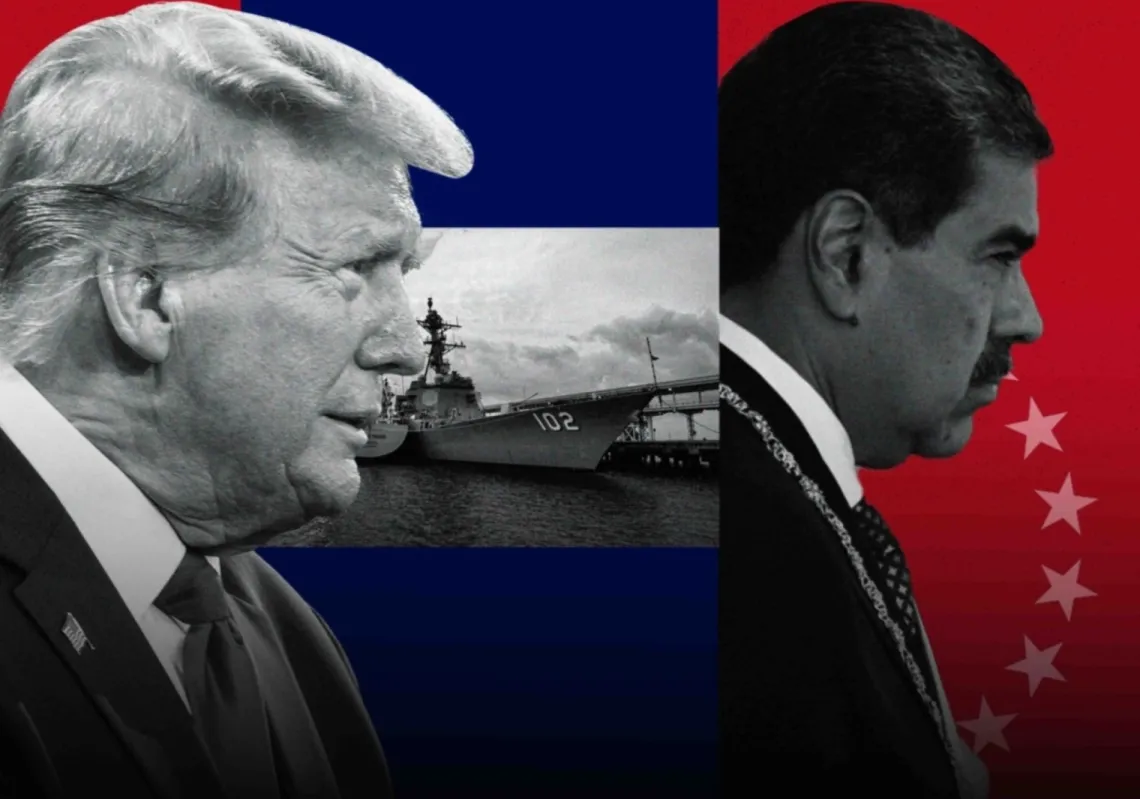
Against this backdrop, Trump has declared that “Cuba is ready to fall.” The political objective appears clear: the US is trying to foster conditions for domestic unrest, in the hopes that it would lead to regime change in the country. Cuba’s reliance on Venezuelan oil has made it particularly vulnerable, given that after the US 'capture' of Venezuelan President Nicolás Maduro, the steady flow of oil is no longer a given.
And while the communist-run Cuban government has, for decades, defied US pressure, finding new ways to survive, it remains unclear whether its endurance can withstand a campaign that targets the energy needed to keep the state functioning.
The central question is not whether the regime will survive, but what will happen when fuel shortages affect daily governance
A decades-old strategy
US sanctions on Cuba began in the early 1960s as part of a Cold War containment strategy. Washington sought to punish its Soviet-allied southern neighbour in a bid to deter other countries in the Western Hemisphere from forming similar alliances.
Over time, this political position crystallised into a dense framework of laws, regulations, and enforcement mechanisms, known as the Cuban Assets Control Regulations.
Incredibly, under this sustained pressure, Havana has repeatedly found ways to adapt. Its leaders built a durable narrative of a nation under siege, while also rebuilding economic lifelines as external conditions shifted. In one era, Soviet support underwrote the system. In another, Venezuelan oil filled the gap. Yet the same adaptability also deepened dependence, leaving Havana heavily reliant on external support.
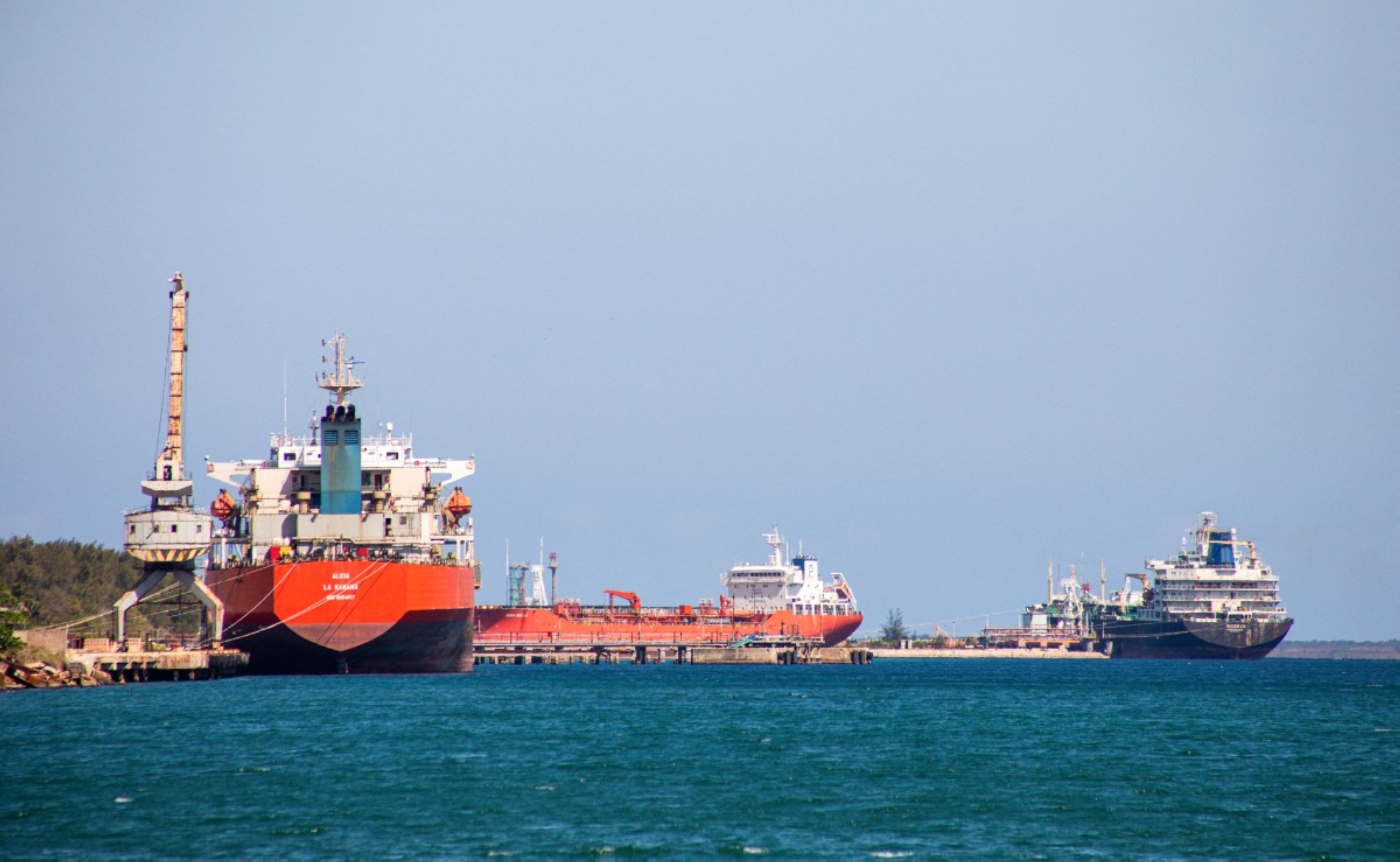
The Nicos I.V. oil tanker (R), sailing under the flag of Saint Vincent and the Grenadines, is seen alongside other tanker vessels in the port of Matanzas, Cuba, on 17 February 2026.
In this view, Cuba's ability to endure sits alongside an acute vulnerability. The margin for error is narrow, which is why some believe the latest pressure could tip the balance.
Others are more sceptical, pointing to Cuba's history of adaptation. When foreign patronage waned, Havana leaned more heavily on tourism, services exports, and diaspora remittances to secure hard currency and keep imports flowing. This suggests that even as fuel access tightens, predictions of imminent collapse may still be premature.
Havana could receive support from parts of the Global South. Russia has signalled solidarity and discussed possible aid shipments as shortages deepen. China could also provide equipment and limited project finance, though any relief is likely to be selective and guided by risk calculations.
As for Central and South American governments, many will be careful not to openly challenge the US push to weaken Havana, mindful of potential repercussions. Even so, they have strong incentives to prevent a deeper humanitarian crisis, as further economic deterioration could drive more Cubans to seek refuge elsewhere in the region. A larger outflow would strain public services and border systems and could generate political friction in host countries, outcomes most governments will seek to avoid.
If the crisis is not properly managed, a bilateral battle between the US and Cuba could turn into a bigger problem of regional instability. The more Washington piles on pressure, the more it risks igniting the region and sparking another migration wave toward the US.
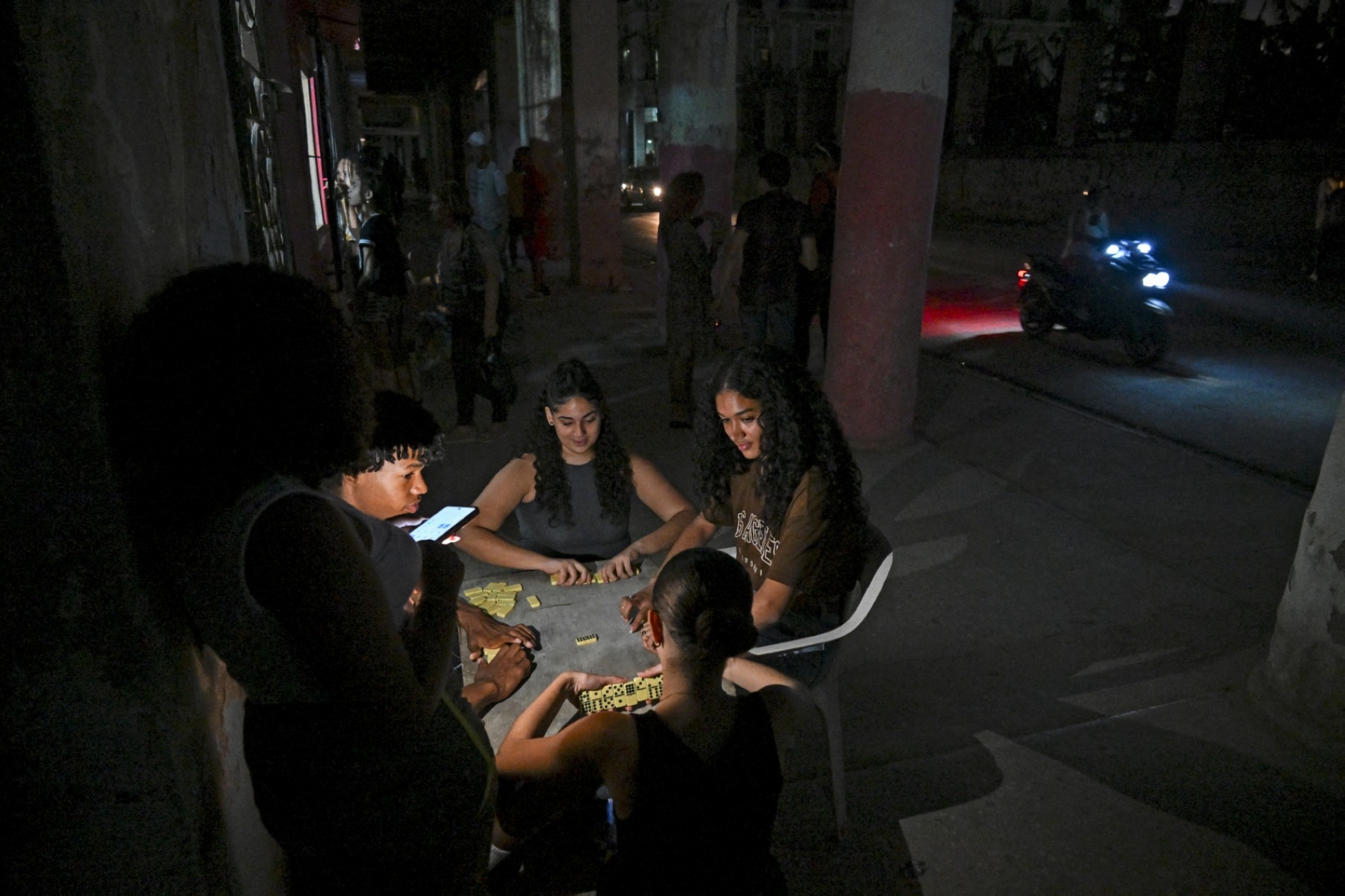
People play dominoes in a street during a blackout in Havana on 21 February.
Three scenarios
So what are the options for the key players going forward? If fuel supplies continue to be restricted, Cuba could maintain national order by rationing and prioritisation. Here, economic activity would contract or stagnate, and migration would steadily increase to relieve pressure. Although bleak, this scenario could become the new normal, with both the US and Cuba holding firm on their positions.
In the second scenario, the fuel crisis could trigger domestic unrest. Here, the state could respond by cracking down alongside selective concessions to restore a minimal level of stability. Here, Cuba's leadership could remain in power, but its ability to govern would slowly erode.
A third scenario could see some form of negotiated relief, in exchange for concessions that both parties could defend domestically. Washington would need a political case for easing. Havana would need deliverables that it can implement without surrendering control. This would be the most challenging route, but it is the only one that can shift the trajectory without compounding civilian costs.
Cuba has repeatedly shown an ability to endure prolonged external pressure, often by shifting the burden onto society and adapting at the margins. So the central question is not whether the regime will survive, but what will happen when fuel shortages affect daily governance.
Whether renewed US pressure will lead to regime change or its leadership will survive amid a prolonged humanitarian crisis remains to be seen. But history has shown Cuba's remarkable ability to endure. The question then becomes, for how long?