Trump sets a devastating precedent in Venezuela

Will Russia and China now assume they can do the same in Europe and Asia?

Al Majalla

Trump sets a devastating precedent in Venezuela

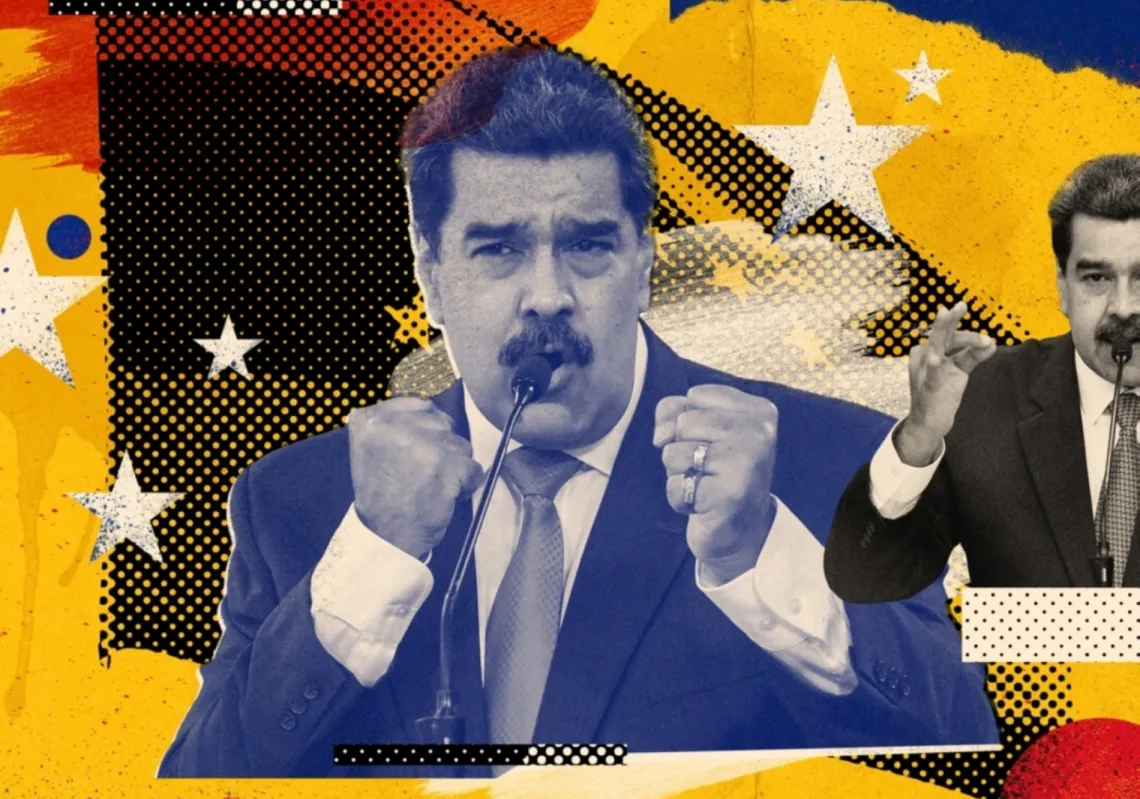
By attacking Venezuela, seizing its president, and promising to “run” the country indefinitely—all without any congressional or United Nations authorisation—US President Donald Trump may well have shredded what little is left of international norms and opened the way to new acts of aggression from US rivals China and Russia on the world stage, some experts say.

In return, Trump probably achieved little in the way of stopping narcotics flows into the United States, even as he asserts what he calls the “Trump corollary” to the Monroe Doctrine in his new National Security Strategy, which aims “to restore American preeminence in the Western Hemisphere.”

While it’s true that much of the world and, by most accounts, a majority of Venezuelans did not see President Nicolás Maduro as legitimate—and Maduro has been indicted in the United States on charges of being a drug trafficker—Trump has now set a potentially devastating precedent, some critics and experts say. Beijing and Moscow could decide to act in similar fashion against regional leaders whom they deem to be threats—especially in Ukraine and Taiwan—all without worrying about the legitimacy of such actions.

“If the United States asserts the right to use military force to invade and capture foreign leaders it accuses of criminal conduct, what prevents China from claiming the same authority over Taiwan’s leadership?” Democratic US Sen. Mark Warner, the vice chairman of the Senate Select Committee on Intelligence, said in a statement. “What stops Russian President Vladimir Putin from asserting a similar justification to abduct Ukraine’s president? Once this line is crossed, the rules that restrain global chaos begin to collapse, and authoritarian regimes will be the first to exploit it.”

At a news conference on Saturday announcing what he called “one of the most stunning, effective, and powerful displays of American military might and competence in American history,” Trump made clear that his goal was regime change—and even long-term US occupation. This in spite of the administration’s repeated denials that this was his goal; Trump ran for president in 2024 on a platform of avoiding such interventions.

“We’re going to run the country until such time as we can do a safe, proper, and judicious transition,” Trump said, and he did not deny suggestions from reporters that this could require years. In a haunting echo of similar claims made more than two decades ago before the US invasion of another oil-rich nation, Iraq, Trump said that any US costs would be reimbursed by “money coming out of the ground”—in other words, Venezuelan oil. “We’re going to be taking a tremendous amount of wealth out of the ground,” Trump added.

“We can’t take a chance that somebody else takes over Venezuela,” the US president said. He said that US oil companies would now be sent in to fix things and restore “American property” that he contends was confiscated, as well as “make the people of Venezuela rich, independent and safe.”

Asked if the occupation would involve US troops, Trump said, “we’re not afraid of boots on the ground if we have to.” In other remarks Saturday, the president also suggested that he could soon move militarily against Mexico and Colombia—telling reporters that Colombian President Gustavo Petro has to “watch his ass.”

Speaking to Fox News, Trump said that despite his good relations with Mexican President Claudia Sheinbaum, “She’s not running Mexico. The cartels are running Mexico,” adding that “something’s gonna have to be done with Mexico.”

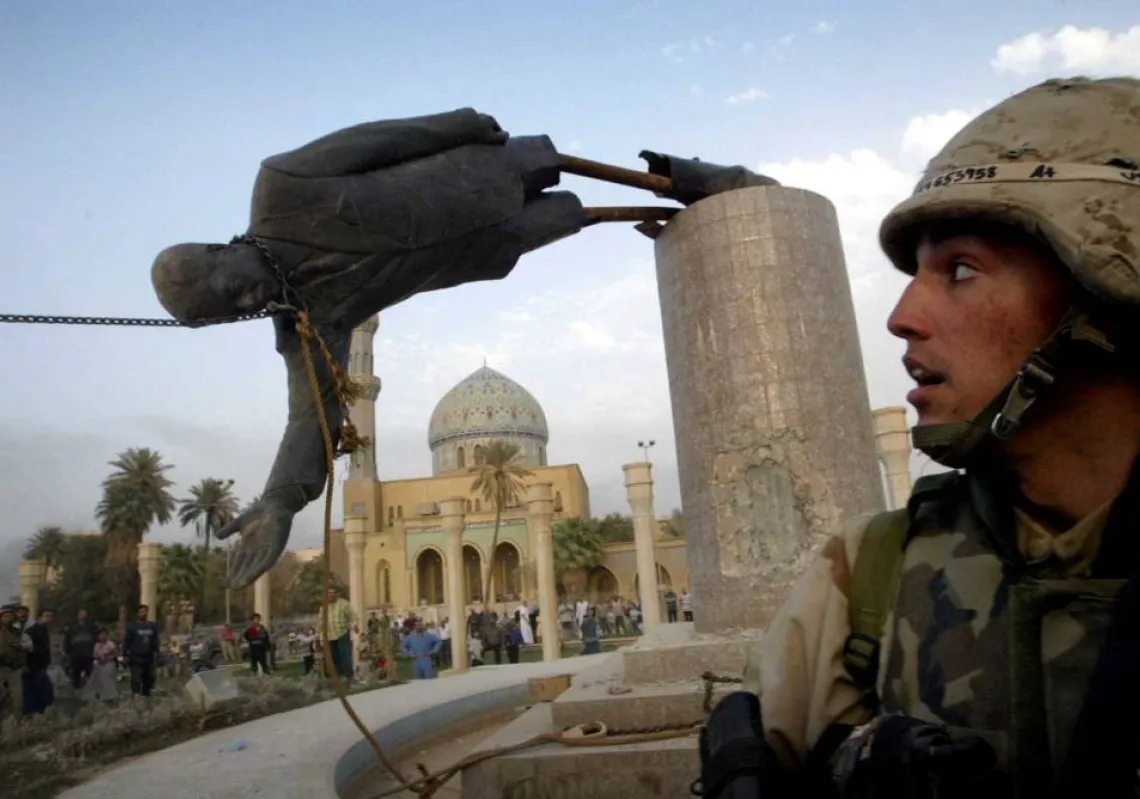
It is noteworthy that more than two decades ago, President George W. Bush’s invasion and occupation of Iraq was seen as a huge blow to the legitimacy of international law; indeed, Putin has cited it as a justification for Russia’s invasion of Ukraine. Yet even in that case, the Bush administration sought UN Security Council authorisation, while Trump and his team have not bothered to do so.
If the US uses military force to invade and capture foreign leaders it accuses of criminal conduct, what prevents China from doing the same in Taiwan?

US Senator Mark Warner

Thus, combined with Trump's military strike against Iran last summer—also done without UN or congressional authorisation—this latest action could be seen as a Trumpian hammer blow to the frail husk of international law that remains.

"I think Trump is really serious about extending US dominion over the Western Hemisphere," said Ryan Berg, the head of the Americas programme at the Centre for Strategic and International Studies. "Their argument is this regime has no legitimacy, and the only legitimisation they need is the Southern District of New York," he said, referring to the district court where Maduro was indicted.

Trump's action "weakens the already compromised US ability to credibly make arguments about rules concerning use of force in international politics—which is zero cost to this administration since it does not care about such things," said William Wohlforth, an international relations expert at Dartmouth University. 

"A lawless administration has reached a new low," said Harold Koh, an expert in international law at Yale and former legal advisor to the State Department. "Trump has baldly violated the UN Charter, with no valid claim of self-defence, and engaged in an illegal extraterritorial arrest that will be vigorously contested in a US court."

In a statement, French Foreign Minister Jean-Noël Barrot said the US operation "contravenes the principle of non-use of force that underpins international law." Other responses from US allies were more muted: European Union foreign-policy chief Kaja Kallas wrote on X that the EU views Maduro as "lacking legitimacy" and called for "restraint" while saying "the principles of international law and the UN Charter must be respected."

Shortly after Trump announced the attack in a post on Truth Social, US Attorney General Pam Bondi wrote on X that Maduro and his wife, Cilia Flores, would now "face the full wrath of American justice on American soil in American courts" after being indicted in the Southern District of New York. Maduro was charged with "Narco-Terrorism Conspiracy, Cocaine Importation Conspiracy, Possession of Machineguns and Destructive Devices, and Conspiracy to Possess Machineguns and Destructive Devices against the United States," Bondi wrote. 

It is noteworthy that only hours before US special operations forces descended on his home in Caracas "in the dead of night," as Trump described it, Maduro met with Qiu Xiaoqi, the Chinese government's special representative for Latin American affairs, at the Miraflores presidential palace.

China fiercely condemned the attack, saying, "Such hegemonic behavior by the US seriously violates international law," according to a statement from Beijing's Foreign Ministry.

"I'm told Chinese diplomats were still in Caracas when the attack happened," Berg said.

What has Trump possibly gained in return? The ostensible reason for the Maduro operation—that he is an indicted drug trafficker responsible for pouring "gigantic amounts" of narcotics into the US mainland, as Trump described it Saturday—doesn't hold up very well against the facts.

"Most of those drugs come from a place called Venezuela," Trump said. But based on US drug enforcement data compiled by the Congressional Research Service, Venezuela is responsible for only a tiny amount of the heroin, cocaine, methamphetamine, and fentanyl imported into the United States. (For example, more than 85% of heroin analysed by US agencies originates from Mexico, and only about 4% is from South America, while most of the cocaine still comes from Colombia.) 

REUTERS/Leonardo Fernandez Viloria
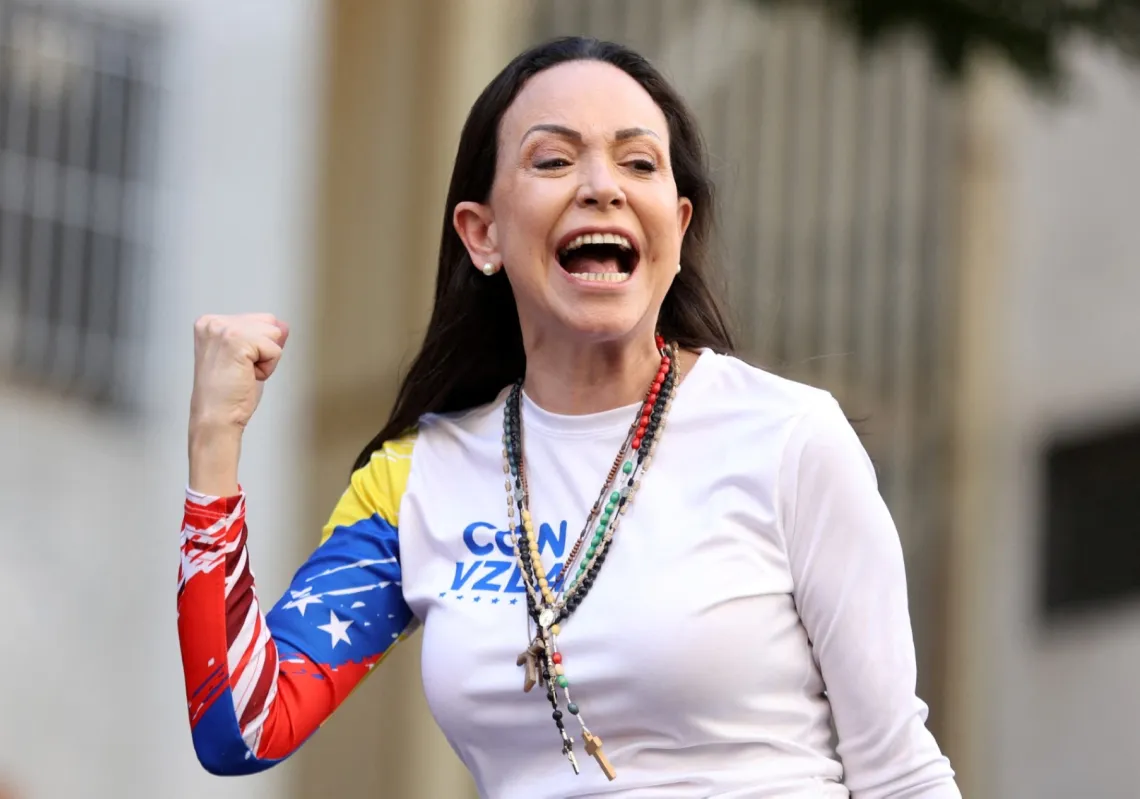
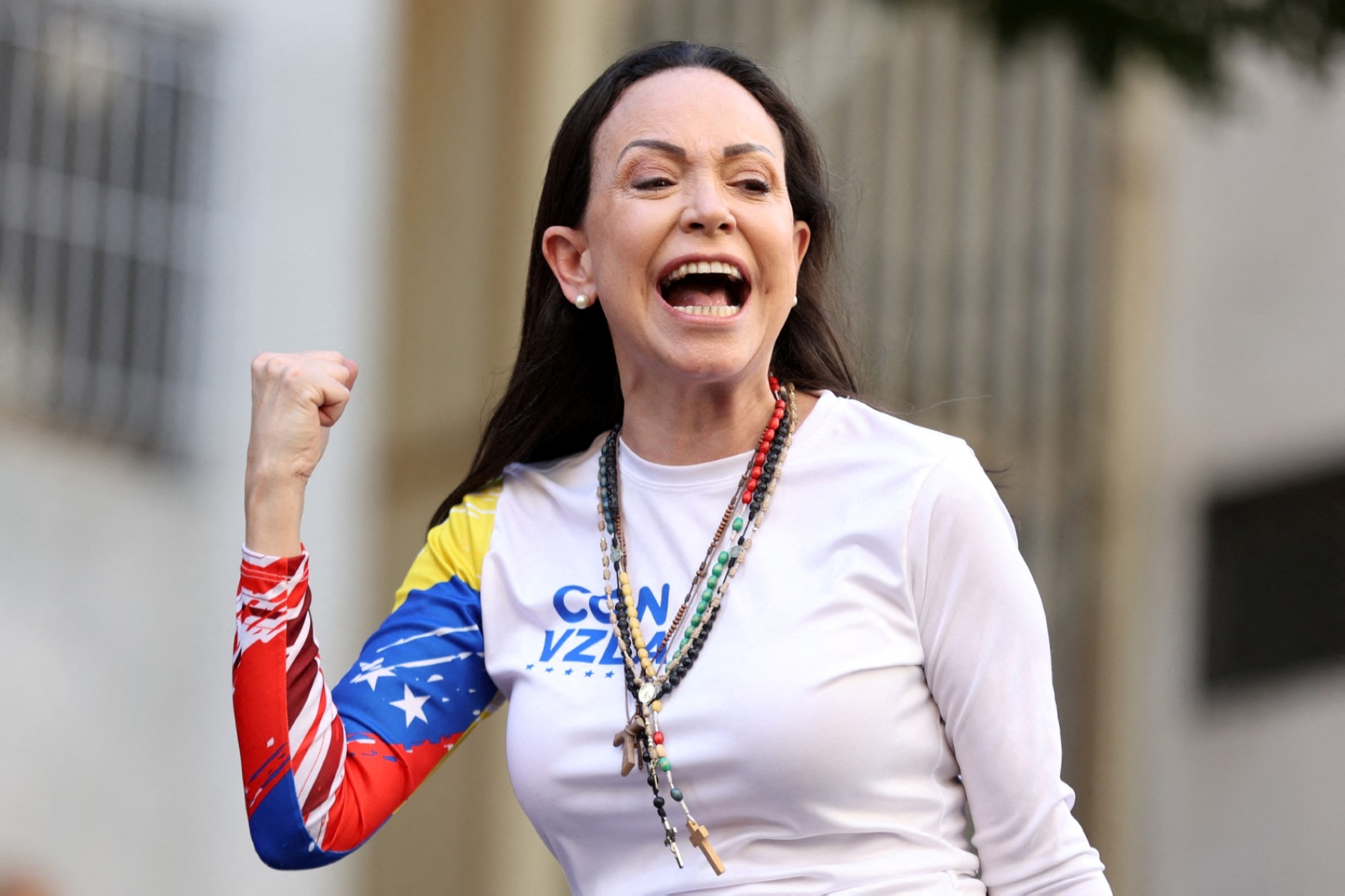
Venezuelan opposition leader Maria Corina Machado gestures at a protest ahead of the Friday inauguration of President Nicolas Maduro for his third term, in Caracas, Venezuela, on 9 January 2025.

Read more: Who is Venezuela opposition leader, Maria Corina Machado?

It's possible, of course, that a US-orchestrated transition in Venezuela could benefit the country, especially if opposition leaders María Corina Machado, the winner of the 2025 Nobel Peace Prize, and her designated candidate Edmundo González—who is believed to have soundly beaten Maduro in the 2024 presidential election—are able to take power.

Even so, on Saturday, Trump appeared to dampen expectations of such an outcome, saying, "I think it would be very tough for her to be the leader. She doesn't have the support within—or the respect within—the country."

The closest precedent to Trump's action may well have been former President George H.W. Bush's decision to send US troops in to capture dictator Manuel Noriega in Panama in 1989, which later helped promote stability in that country, though it did not really alter the stakes of the United States' drug crisis.

But history suggests more pitfalls than promising outcomes may ensue. Nearly every US military intervention in Latin America, going back at least to the Bay of Pigs in 1961, has ended in fiasco—with no real benefit to Washington. And it hasn't really mattered whether the issue was Cold War communism or post-Cold War narcotics. Indeed, the last clear, if ugly, US success in the region may have been the Spanish-American War of the late 19th century.

Nearly every US military intervention in Latin America, going back to the Bay of Pigs in 1961, has ended in fiasco—with no real benefit to Washington

In 1954, the CIA-backed overthrow of Guatemala's elected government created decades of civil war and instability. The Bay of Pigs disaster—President John F. Kennedy's failed coup against Cuban leader Fidel Castro—helped lead to the Cuban Missile Crisis. In 1973, a US-supported coup against President Salvador Allende in Chile opened the way to Augusto Pinochet's brutal 17-year dictatorship—and did permanent damage to the reputation of then-Secretary of State Henry Kissinger. President Ronald Reagan's 1980s intervention against the Sandinistas ended in the Iran-Contra scandal and another civil war.

Beyond that, repeated interventions in Haiti going back to President Woodrow Wilson in 1915, then Presidents Bill Clinton in 1994 ("Operation Uphold Democracy") and George W. Bush 10 years later, have only produced more instability, leading to such vicious gang violence that Haitians can't hold elections. And Washington spent billions on Plan Colombia, including a large amount of military assistance, only to decertify Bogotá in September for "failed" and "ineffective counternarcotics policies."

As for Venezuela itself, an allegedly US-supported coup backfired against then-President Hugo Chávez in 2002. His hand-picked successor was Maduro.

font change

Related Articles