Gaza in ruin: lost deeds muddle proof of ownership

As reconstruction looms, Gaza's Palestinians find themselves unable to prove who they are or what they own, their identity cards and title deeds lost beneath the rubble of war

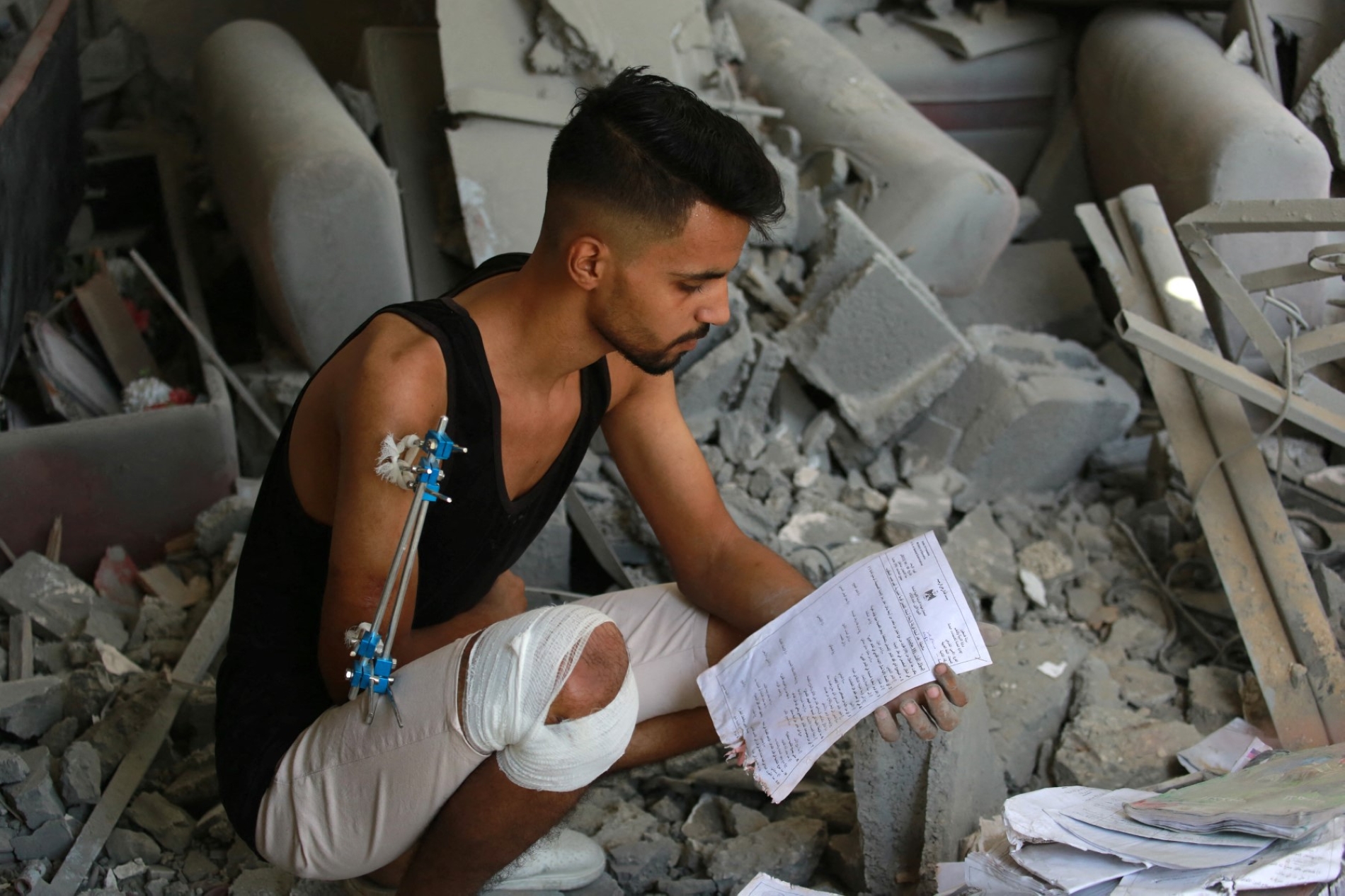
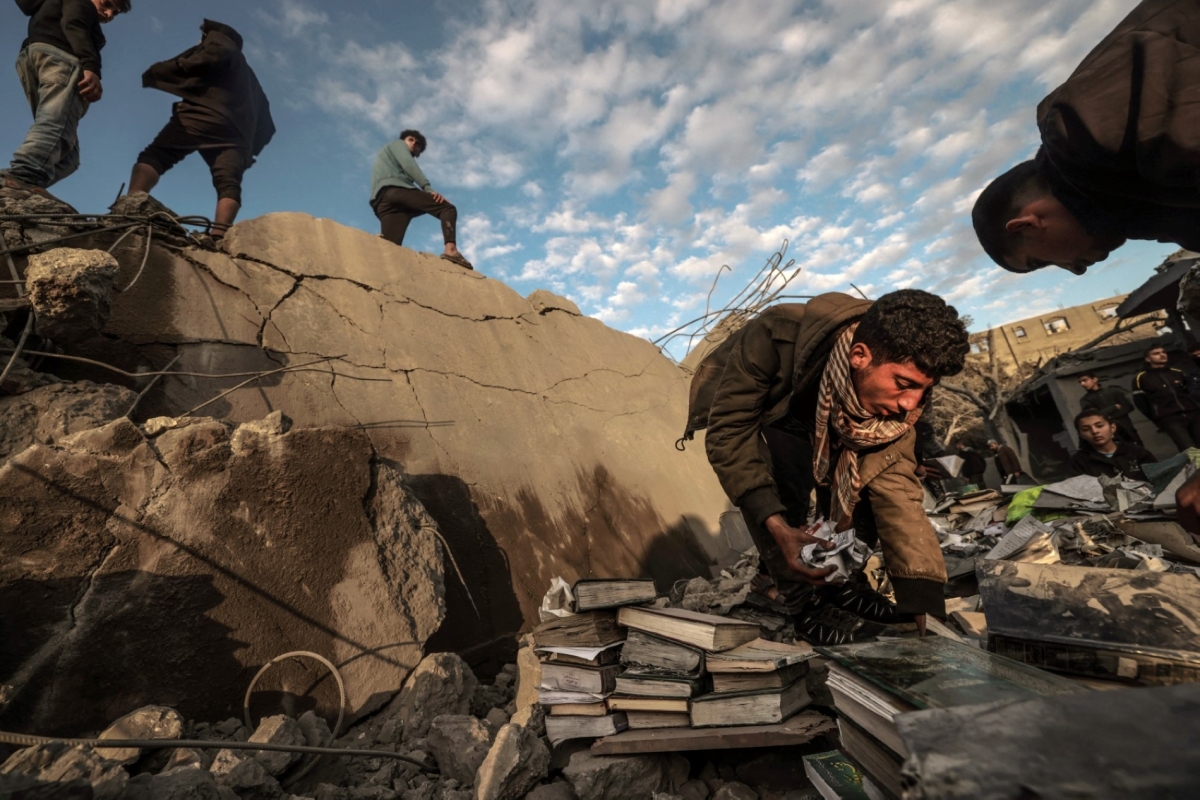
Palestinian youth retrieve books from the rubble of a mosque and buildings which collapsed during Israeli bombardment around the town city of Rafah southern Gaza Strip on 24 January 2024.
MOHAMMED ABED / AFP
Palestinian youth retrieve books from the rubble of a mosque and buildings which collapsed during Israeli bombardment around the town city of Rafah southern Gaza Strip on 24 January 2024.

Gaza in ruin: lost deeds muddle proof of ownership

In Israel’s genocidal war on Gaza, homes did more than burn. Some were shattered, others were levelled entirely, leaving no discernible trace of their former existence. Yet the ruin inflicted upon Gaza goes beyond the destruction of bricks and mortar. It swept away small leather satchels and plastic folders, the contents of which were worth more than gold. Within them lay title deeds to houses and plots of land, inheritance certificates, building permits, identity cards, birth certificates, marriage contracts, and university diplomas.

These papers were not kept haphazardly. They were gathered with care, placed in modest bags, and stored in familiar corners of the home, ready to be seized at the first sign of danger. In the confusion of flight, some families forgot them. Others departed believing their absence would be fleeting.

Though a ceasefire has endured for over four months, the shadow of bombardment and death lingers. Many Palestinians have returned to the districts they once called home. Many more remain displaced. Among those who have returned, a question echoes with painful urgency. It is no longer, ‘Where is my home?’ but rather, ‘How can I prove that I once had a home here?’

In October 2025, UN and Gaza Government Media Office reports indicated 80 to 90% of housing units had been damaged or destroyed since the beginning of the war, with northern and eastern neighbourhoods entirely erased. Such devastation, according to the Ministry of Local Government and the Palestinian Land Authority, has been accompanied by the widespread loss of private and public archives. Municipal headquarters, local registries, and the offices and archives of most ministries have been either destroyed or damaged, rendering them inoperative amid collapsed infrastructure.

Against this backdrop of loss—accompanied by Israel’s rhetoric of displacement and the proposed settlement of northern Gaza—the Palestinian Authority in Ramallah issued a statement rejecting any infringement upon land records or the exploitation of wartime conditions to alter ownership. It affirmed that rights do not lapse when documents are lost, while also calling for urgent protection and documentation mechanisms.
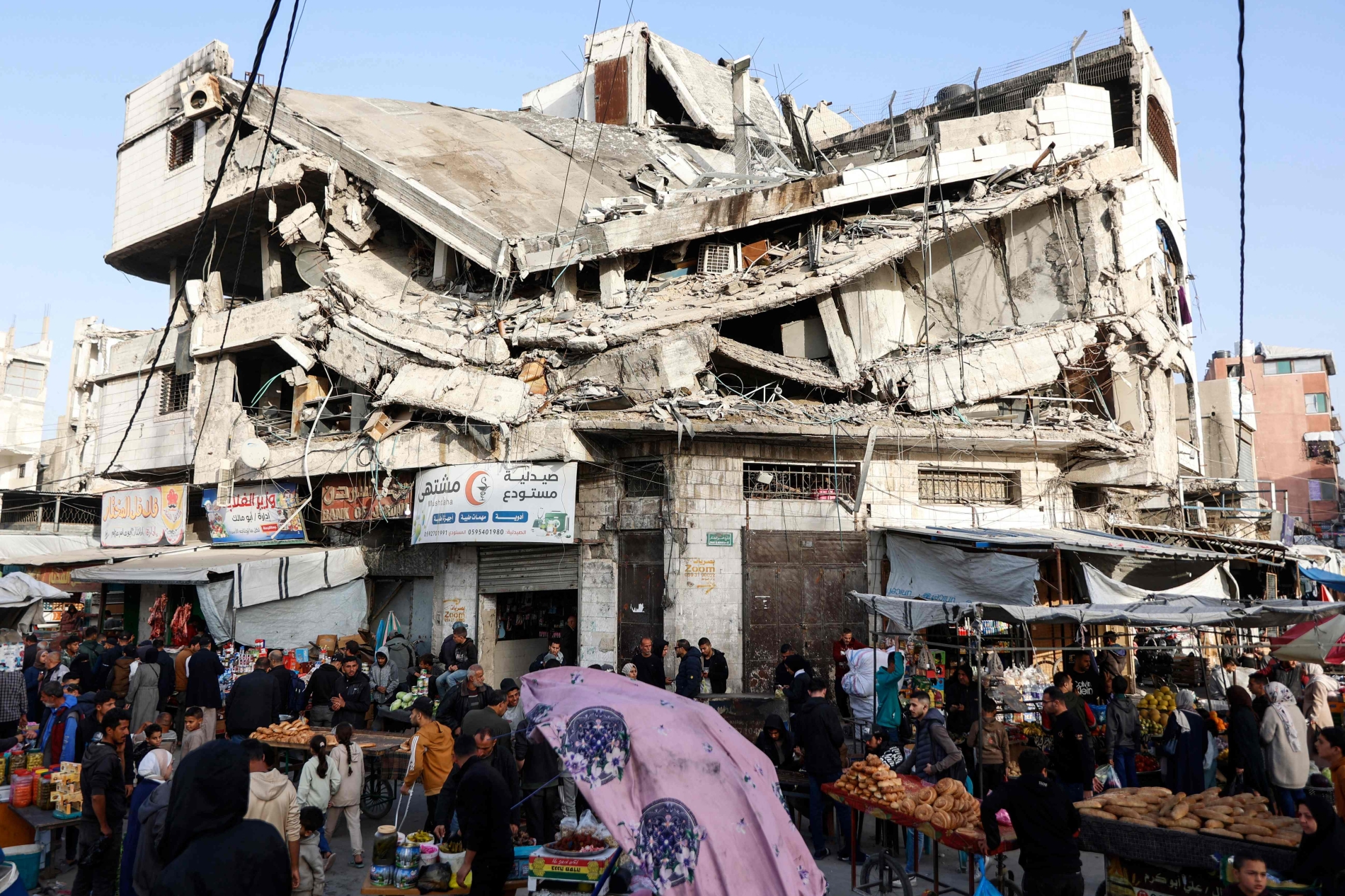
Omar AL-QATTAA / AFP
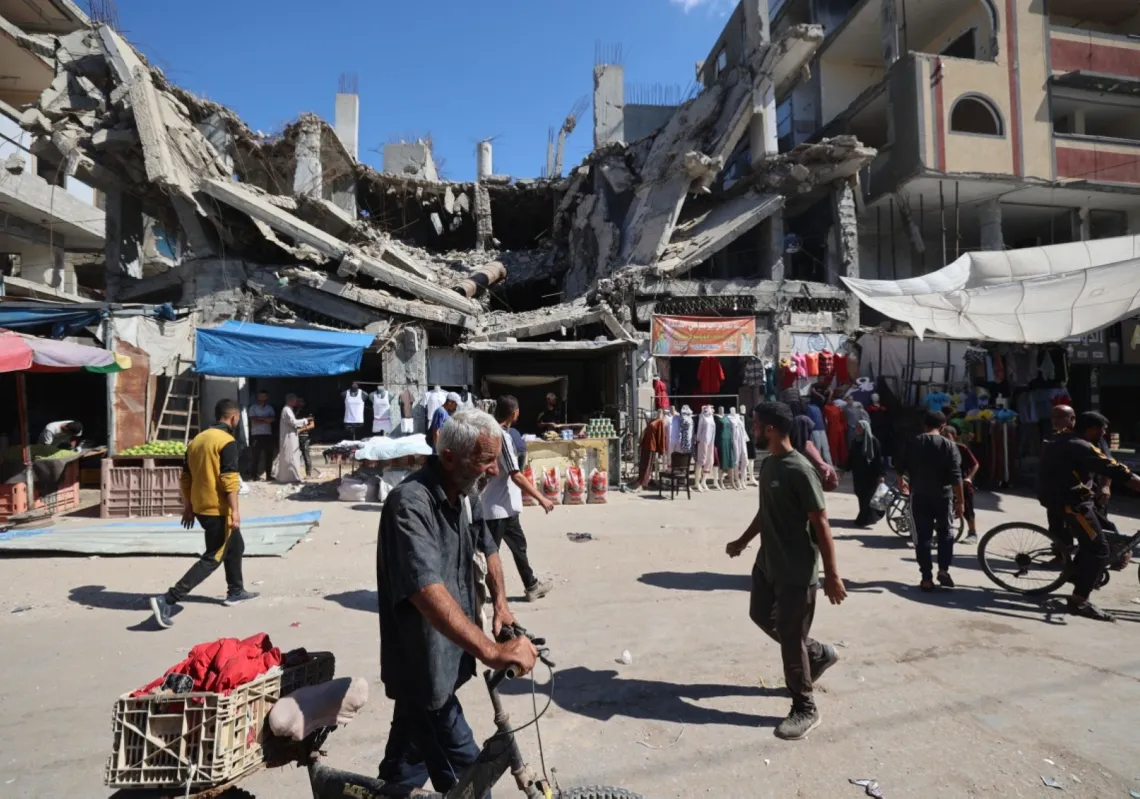
Palestinians shop for food beneath a destroyed building in Gaza City's Zawiya market on 18 February 2026, on the first days of the holy fasting month of Ramadan.

Throughout the war, the UN consistently warned that the widespread destruction of civilian infrastructure, including homes and government facilities, not only jeopardised residents’ access to basic services but also their ability to assert their civil and property rights. UN reports explicitly urged the preservation of official archives and the streamlining of document re-issuance, often via digital or international verification, to prevent statelessness and property disputes.

Lost family documents

Hussein Adwan, a 48-year-old government employee and father of four daughters, owned an apartment in the Al-Karama neighbourhood northwest of Gaza City, where he lived with his family in a residential tower. He also held land in Rafah, where he was born and raised after his family fled the village of Barbara as refugees in 1948. More than 20 years ago, he moved to Gaza City for work, leaving behind his extended family.

In the early days of the war, he left for Rafah with his wife and daughters. “I took only light things for two days and left,” he recalls. The bombardment intensified. Ground incursions followed, particularly in Al-Karama and Al-Sudaniya, which endured unprecedented destruction. Dozens of towers and residential buildings were destroyed during the assault, including the tower that had been his family’s home.

When Adwan and his family left for Rafah, they carried nothing but their identity cards. A small leather bag remained behind, holding every document of consequence. It was lost when the apartment was struck. “My daughters’ birth certificates, my university degree and my wife’s, the title deed to the apartment, papers for land in Rafah, and most precious of all, documents from before 1948 proving my grandfather’s ownership of land in the occupied town of Barbara,” he recalls.
Eyad Baba / AFP
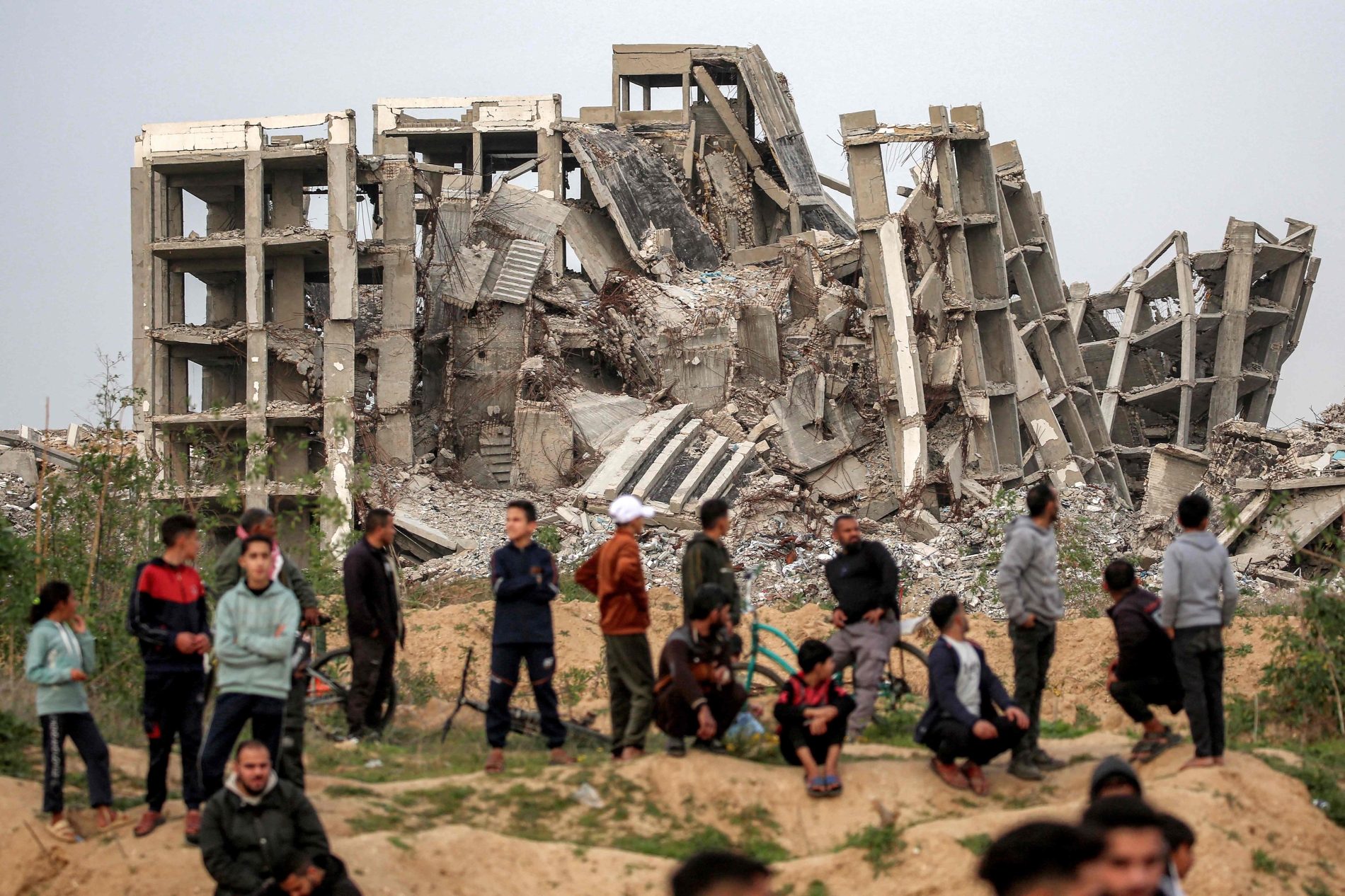
People watch as men perform stunts with dirt bikes and all-terrain vehicles (ATVs) on sand dunes near destroyed buildings in the Zahra neighbourhood, southwest of Nuseirat in the central Gaza Strip, on 6 February 2026.

More than a year later, he returned to his home and found only a mound of concrete and twisted steel. The tower had been reduced to rubble. Of the bag, he says quietly: "It lies beneath the debris. Perhaps it burned. Perhaps it was torn apart. I do not know." He now holds nothing that attests to his ownership of the apartment, not even the plot or building number. Should compensation or reconstruction begin, he fears he will be asked for the single item he no longer possesses: documentary proof.
The bag containing all my family documents lies beneath the debris. Perhaps it burned. Perhaps it was torn apart. I do not know.

Hussein Adwan, Palestinian father in Gaza

He speaks with unguarded anguish of the vanished title deeds, including those for his land in Rafah, the fate of which remains uncertain. Israeli forces continue to control the city, which, following the destruction of most buildings and homes, has been subjected to extensive bulldozing and the erasure of entire neighbourhoods, rendering it unrecognisable. In such a landscape, stripped of landmarks and memory alike, original owners struggle to identify their plots, let alone reclaim them.

His immediate concern is to establish ownership of the destroyed apartment so that any future claim for compensation or reconstruction may be sustained. His greater anxiety concerns the loss of documents proving his grandfather's property rights from before the establishment of the State of Israel, when official deeds were issued under the British Mandate for Palestine. Those fragile papers had survived decades of exile and upheaval, only to vanish in a single moment of war.

OMAR AL-QATTAA / AFP
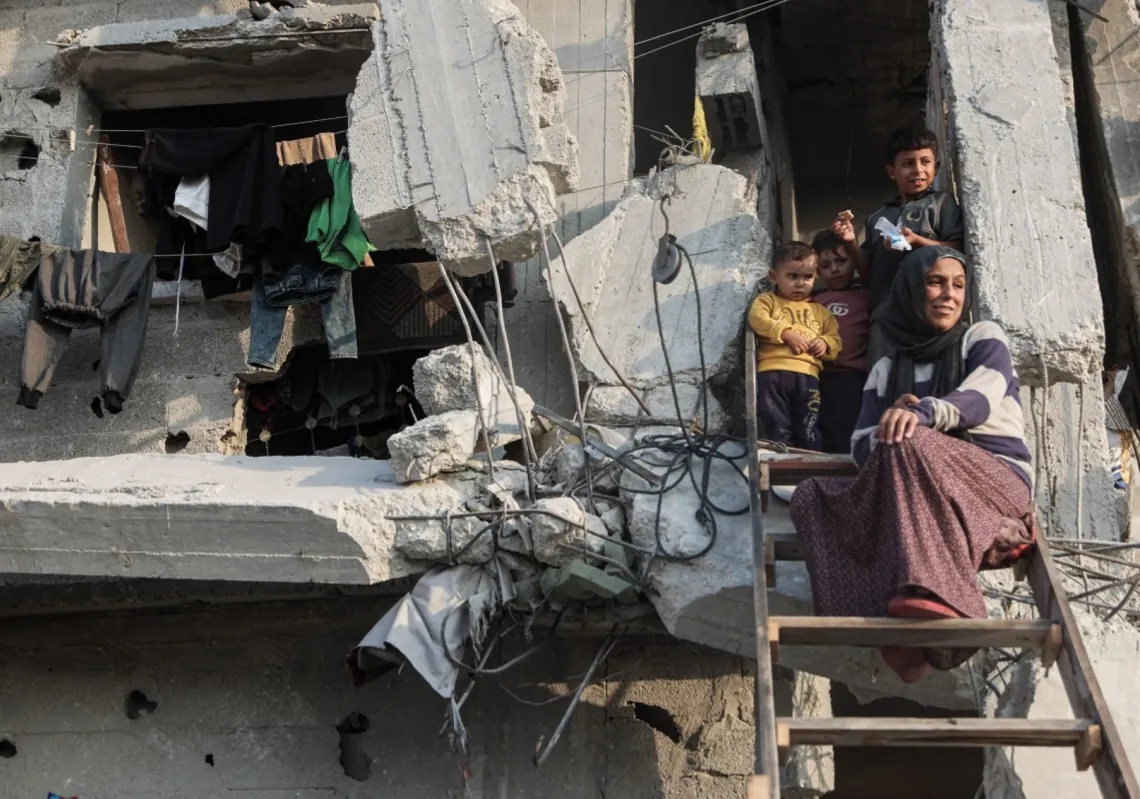
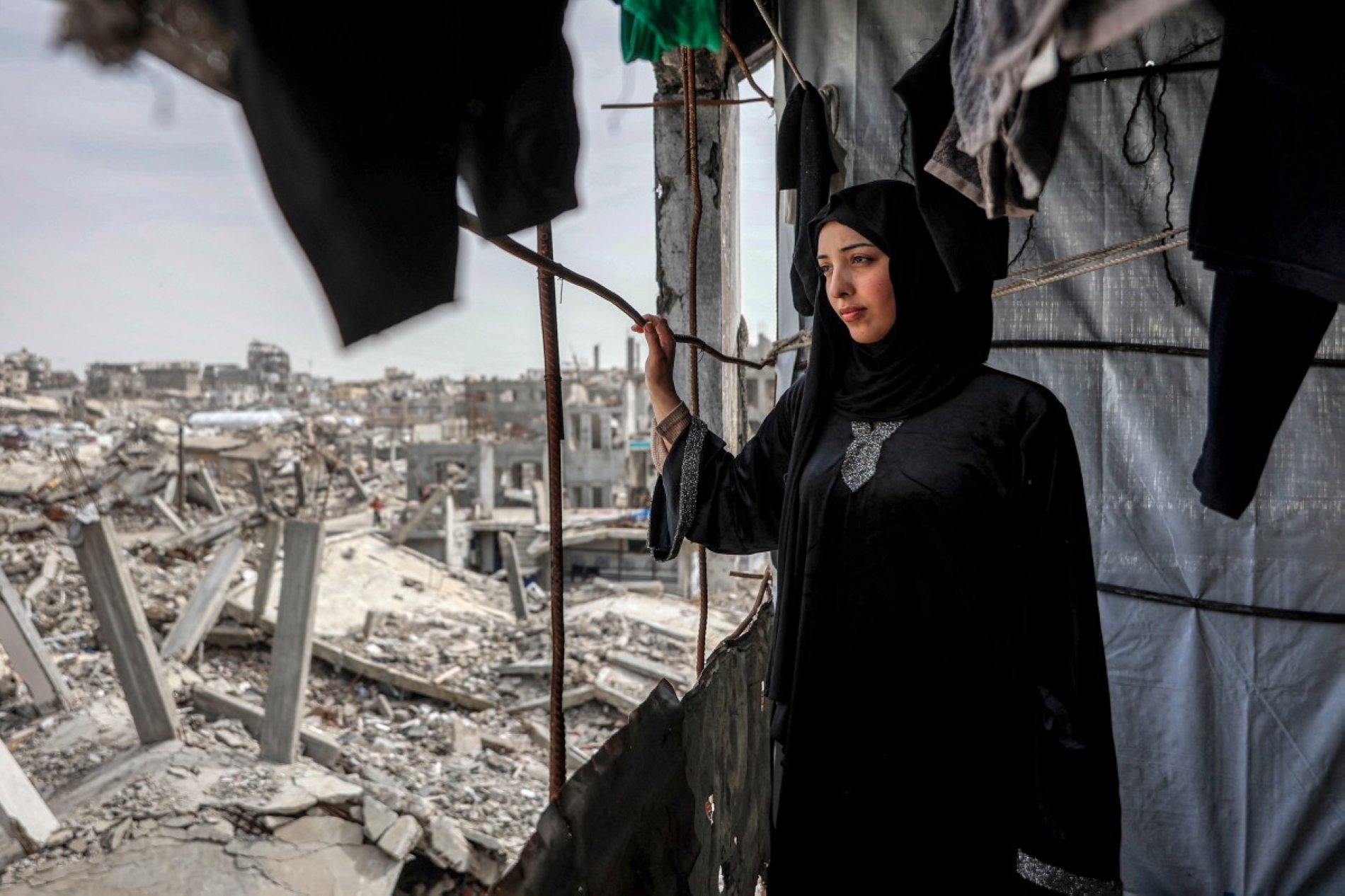
Etedal Rayyan (29) looks out the window of her heavily-damaged house in the Jabalia camp for Palestinian refugees in the northern Gaza Strip on 8 February 2026.

Erased in the blink of an eye

The story of 32-year-old Asmaa Al-Majdalawi is also marked by loss. In the opening days of the war, she fled with her husband and children from Jabalia refugee camp in northern Gaza to the south. She asked her sister to collect their official documents from their rented home. The papers were stored in the family house, which was burned during an Israeli strike in 2024. In that fire, her university certificates, birth records, marriage contract, and other documents were destroyed.

"I was fortunate," she says, "because I had electronic copies of my papers and certificates." Her 29-year-old sister, Reda, was less fortunate. She lost her identity card in the blaze—a loss that soon placed her in acute difficulty. In February this year, Gaza's Interior Ministry resumed issuing replacement identity documents. Yet Palestinian banks, acting on a decision by the Palestinian Monetary Authority, declined to recognise any identity cards issued after 7 October 2023. Those who hold replacement documents remain unable to open bank accounts or conduct financial transactions. This exclusion persists at a time when Gaza's residents face severe cash shortages and rely heavily on electronic payments to secure food, water and clothing.

Getty
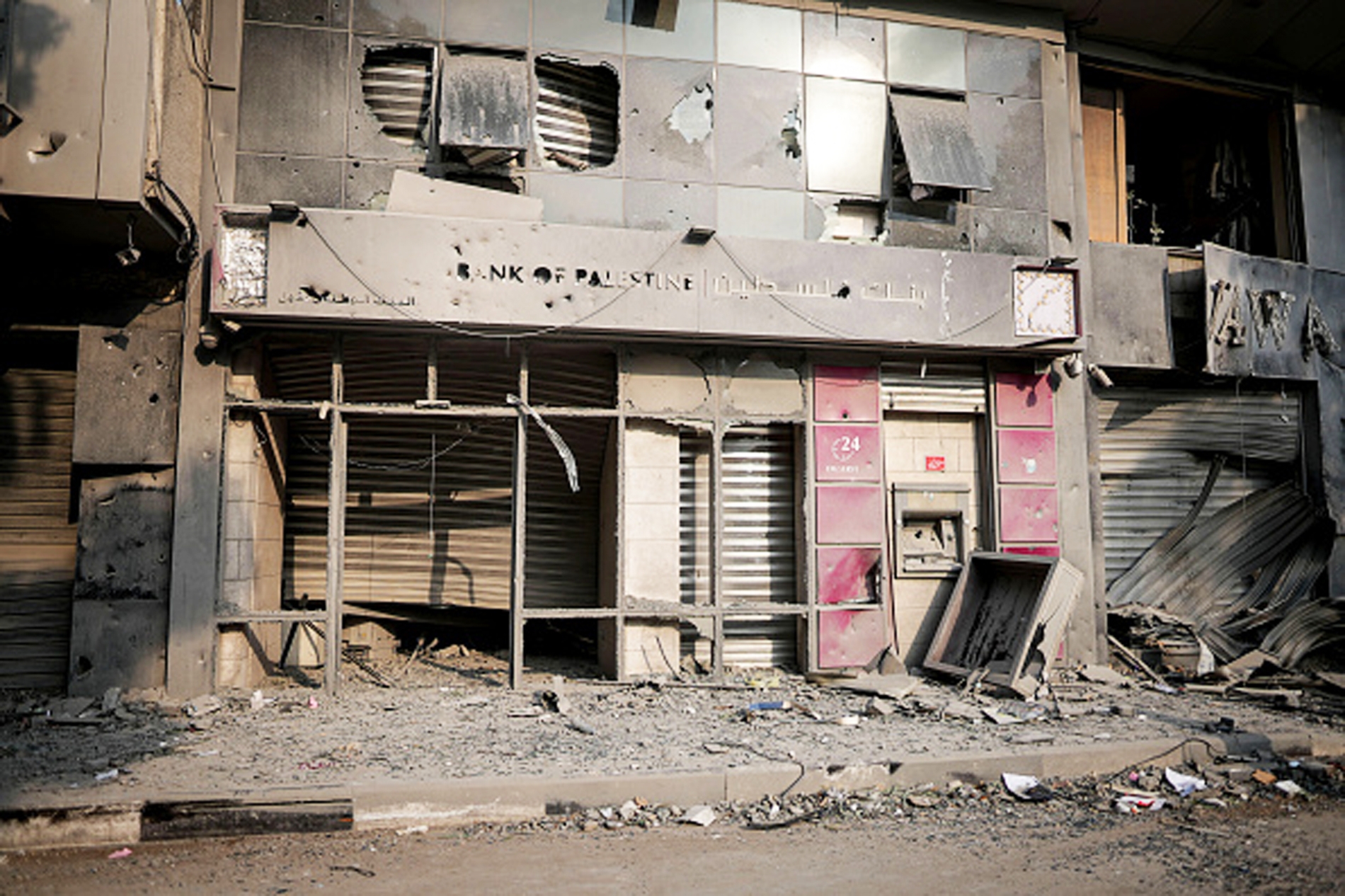
A malfunctioning Bank of Palestine ATM in Rafah, Gaza, on 2 April 2024.

Reda, like dozens of others, must receive her monthly salary and any remittances from relatives abroad through the bank account of a family member as a temporary expedient, whether a parent, sibling or husband. Such arrangements carry their own perils. Should a young man or woman channel income through a parent's account, and that parent dies in ordinary circumstances, the funds deposited there are absorbed into the estate and become subject to inheritance law, unless prior legal documentation or a formally recognised family agreement provides otherwise.

Some families have contrived provisional remedies for the loss of personal papers. Others confront far more intricate predicaments. For example, 42-year-old Ahmad Al-Sheikh Khalil fled with his family from their home in the Shujaiyya neighbourhood east of Gaza City on the first day of the war. The following day, his house was bombed, obliterating every proof of identity and ownership he possessed, including inheritance papers, birth certificates, and other essential records.

"I left the house without any proof of identity, without a marriage contract, without inheritance papers," he says. He later obtained a replacement identity card that allows him to manage daily life in Gaza. Yet the gravest loss, in his view, was the consensual partition agreement that divided the family home between him, his uncles, and aunts after his father's death 30 years ago. "That paper was the most important document in my life," he reflects.

BASHAR TALEB / AFP
Injured Palestinian student Fares al-Farra, 19, salvages academic documents from the rubble of his home, destroyed by Israel in Khan Yunis in the southern Gaza Strip on 16 September 2024.

The burden of legal proof

As talk turns to reconstruction, Al-Sheikh Khalil understands that any future process will demand proof of land ownership, building permits, inheritance documentation, and the consent of heirs. These are the very papers he lost. Their recovery will be exceptionally difficult, as they were never formally registered in official archives. They existed as handwritten documents bearing the seal of a practising lawyer, a common method of recording such arrangements in Gaza in previous decades.

"Most of my uncles and aunts have died over the years," he adds. "To complete a new inheritance division, I must coordinate with their sons and daughters, many of whom live abroad. This requires time, legal authorisations, signatures, postal exchanges, and considerable expense." 

All of this unfolds while local administrative and service institutions continue to grapple with the procedural dislocation caused by the war. No exemptions from taxes or administrative fees have been introduced, even as the economic, political, and social repercussions of the devastation continue to shape every facet of life in Gaza.

Legal and land experts in Gaza, speaking to Al Majalla, affirmed that the loss of ownership documents does not extinguish the underlying right. Establishing that right through legal channels, however, becomes an arduous and draining endeavour, particularly amid transformed landscapes, damaged or paralysed government offices, the absence of comprehensive digital archiving before the war, and the intricate web of longstanding family ownership claims rooted in accumulated inheritance disputes. 

The challenge facing Palestinians in Gaza surpasses the struggle to remain on their land despite danger and threat. It resides in the burden of proving that the land, even now, is still theirs.

font change

Related Articles