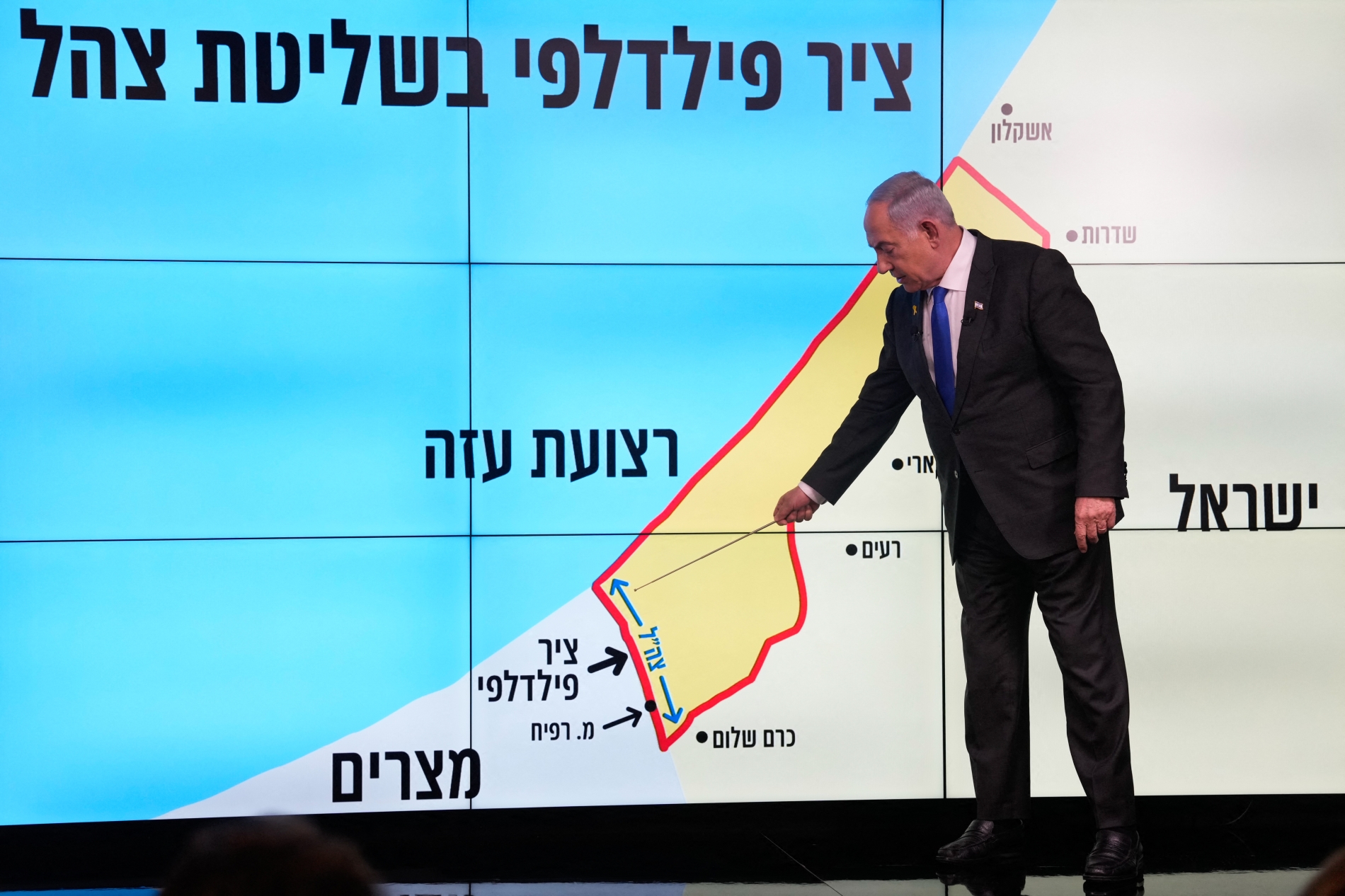
Early in December, Israel’s military chief raised the alarm of the international community, saying the so-called yellow line in Gaza is the country’s new boundary with the enclave. “We will not allow Hamas to reestablish itself. We have operational control over extensive parts of the Gaza Strip, and we will remain on those defence lines,” Israeli army chief of staff, Eyal Zamir, told troops in Gaza. “The yellow line is a new border line, serving as a forward defensive line for our communities and a line of operational activity.”
Israeli troops have withdrawn east of this line, which was drawn as part of the US-brokered ceasefire plan last October, but not any further. The result is a Gaza split in two, with a buffer controlled by the Israeli army, surrounding and sealing the inner section. The Israeli military has already laid out concrete bollards to mark some stretches of the line, according to a report by the Guardian. The area under Israeli military control amounts to more than half of the original territory of the strip, with estimates varying from 53% to 58%.
Under US President Donald Trump’s 20-point peace plan, Israel will not occupy or annex Gaza but progressively hand over the territory it occupies to an international stabilisation force, which will be deployed at a later stage. The plan ultimately calls for Hamas to disarm and have no role in the future government of Gaza and for Israel to withdraw completely from the territory.
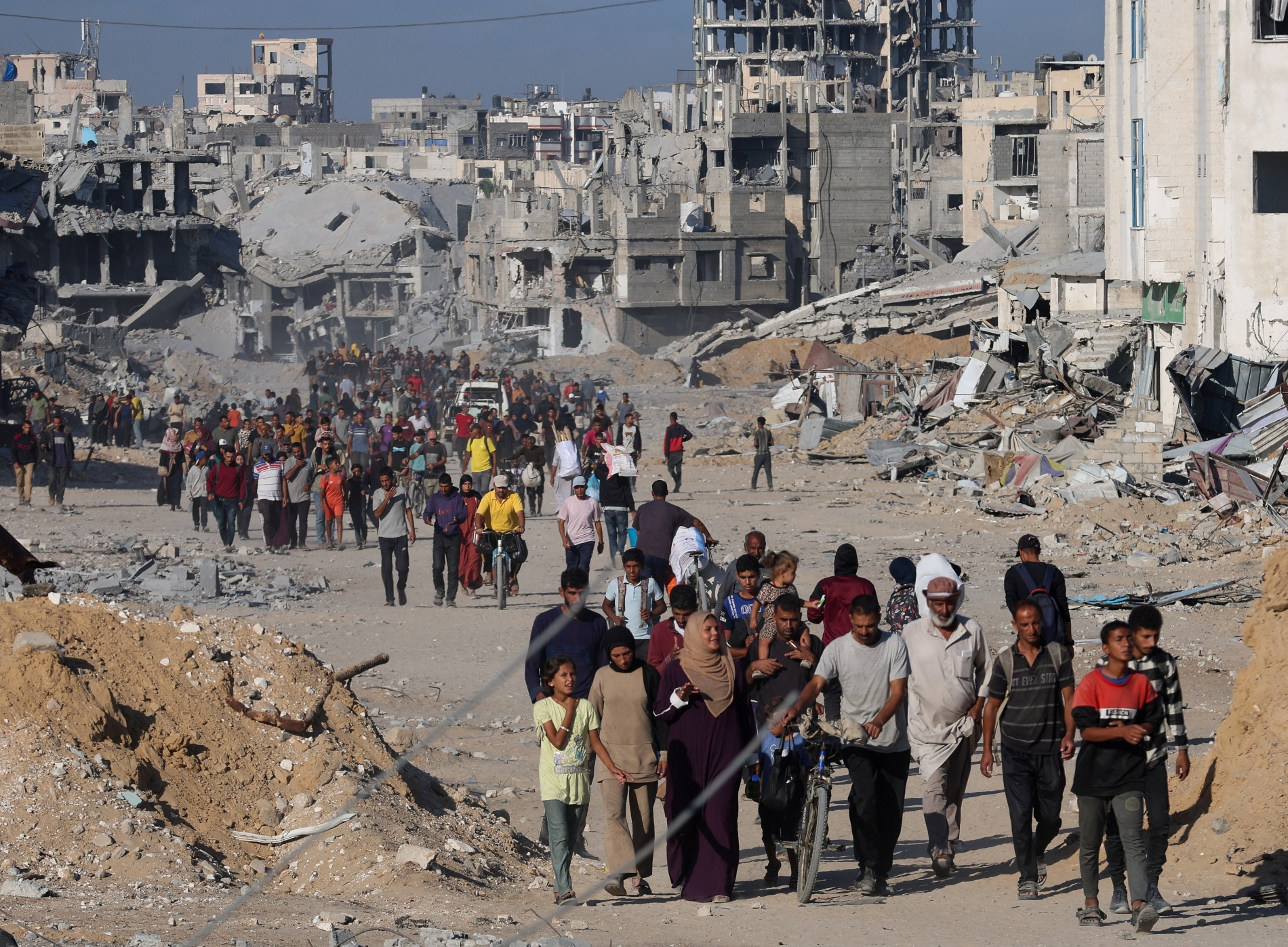
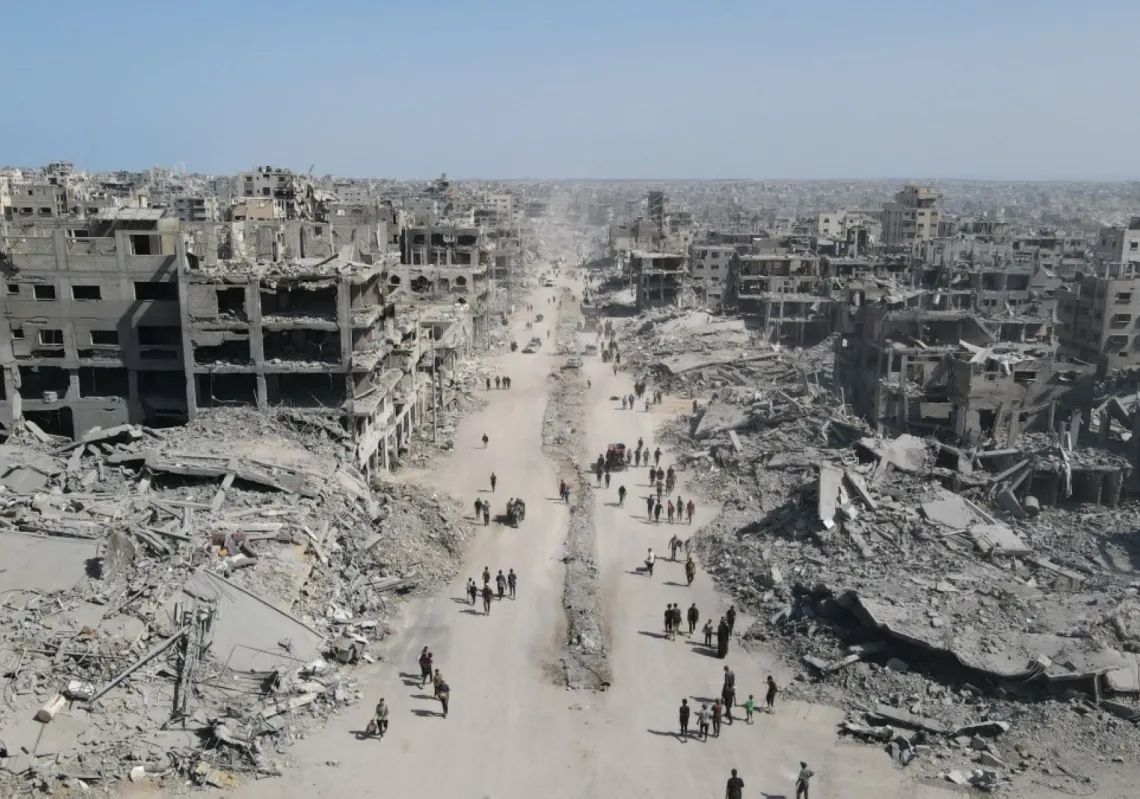
But many fear that the frozen conflict will go on indefinitely, with a de facto partition of Gaza into an area controlled by Israel east of the yellow line, where it has been cultivating anti-Hamas Palestinian groups, and an area controlled by Hamas where reconstruction won’t take place. “It’s right from the kind of typical Israeli playbook of ‘we’ll take as much as we can while there’s a process ongoing that isn’t delivering much.’ Then when it comes down to negotiations, there’s less to negotiate over,” said Sam Rose, the acting director of Gaza affairs at the UN Relief and Works Agency for Palestine Refugees (UNRWA), in an interview with Foreign Policy.
The area east of the yellow line controlled by Israel creates a buffer with the rest of Gaza, which Israel says it needs for the security of the communities living in the south of the country. However, it deprives the rest of the strip, where most of its population of over 2 million people is now crammed, of a border with Egypt, isolating it even more than it was before the war triggered by the October 7 2023, Hamas attack.

What’s more is that it contains most of the agricultural land used by Palestinians in Gaza before the war, producing some of the food consumed by residents and even some crops it exported, the UN said. “If that land is unavailable permanently, it does have major implications for Gaza’s economy,” Rose said.
Holding on to that territory may be just part of Israel's negotiation strategy, several experts said. “If they pull back a bit, then they’ll seem to have compromised on something, when actually this was not anything that was up for negotiation anyway, so I think some of it is just the way Israel does things and the way it puts things out there,” Rose said.