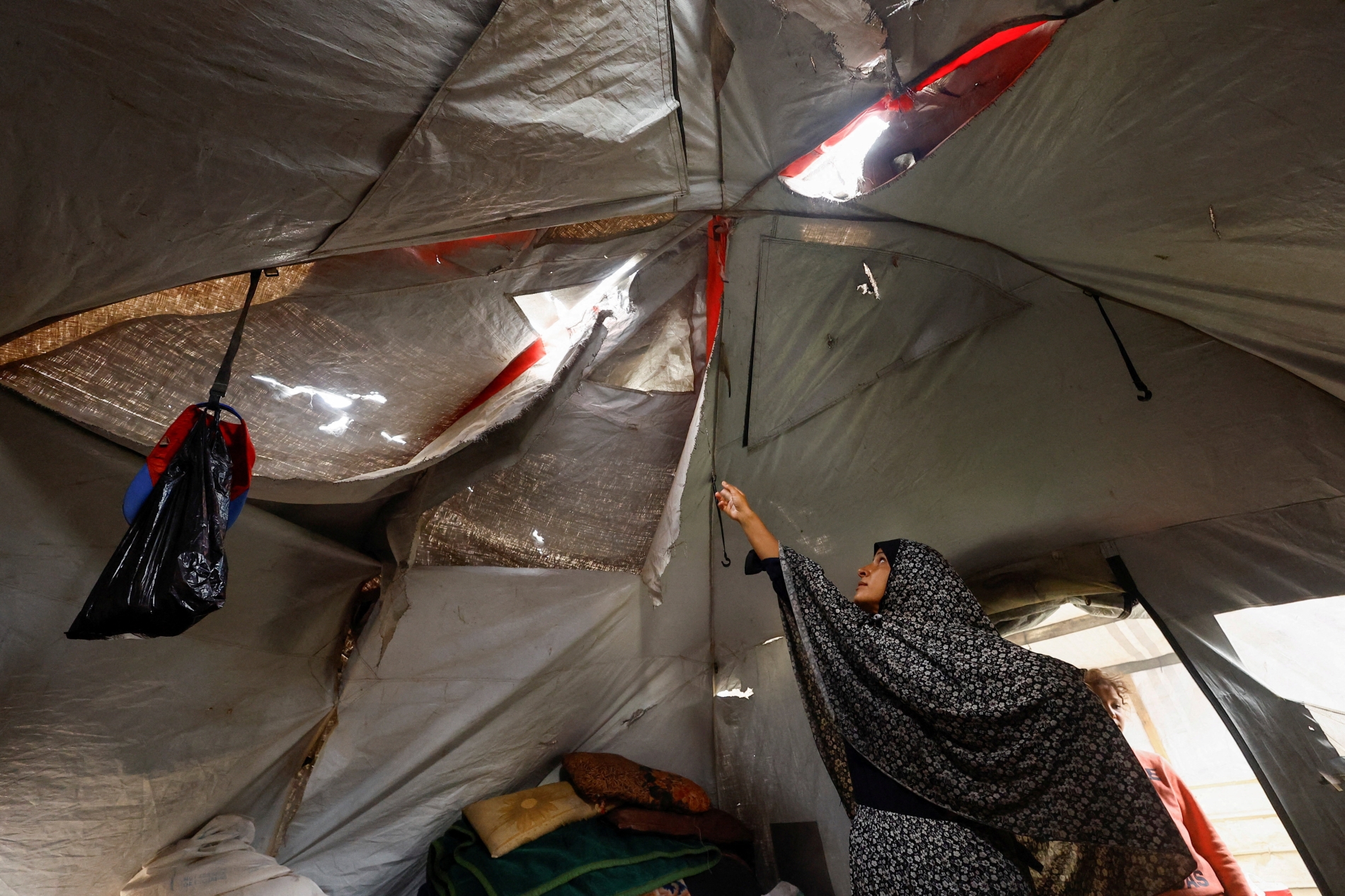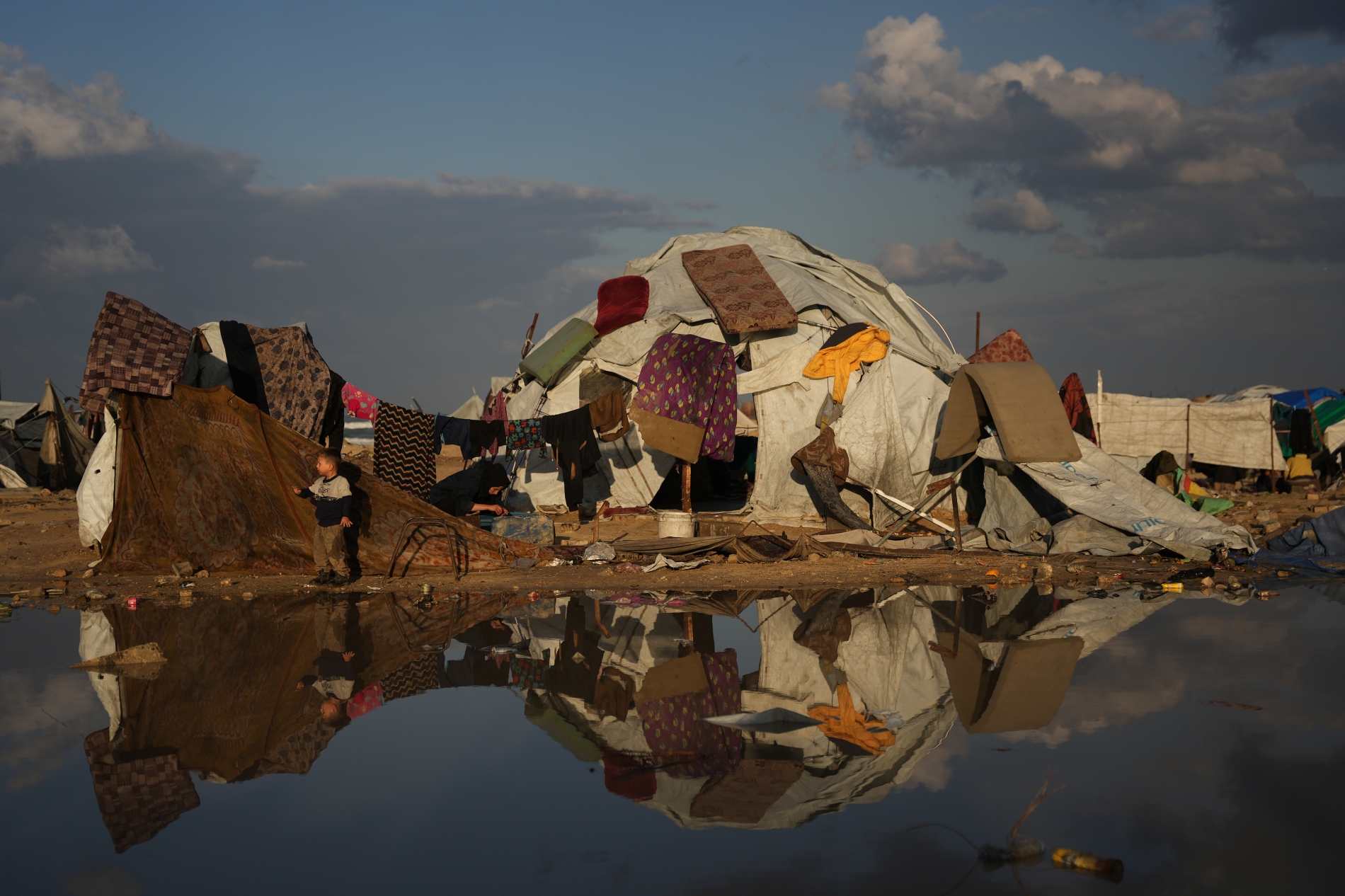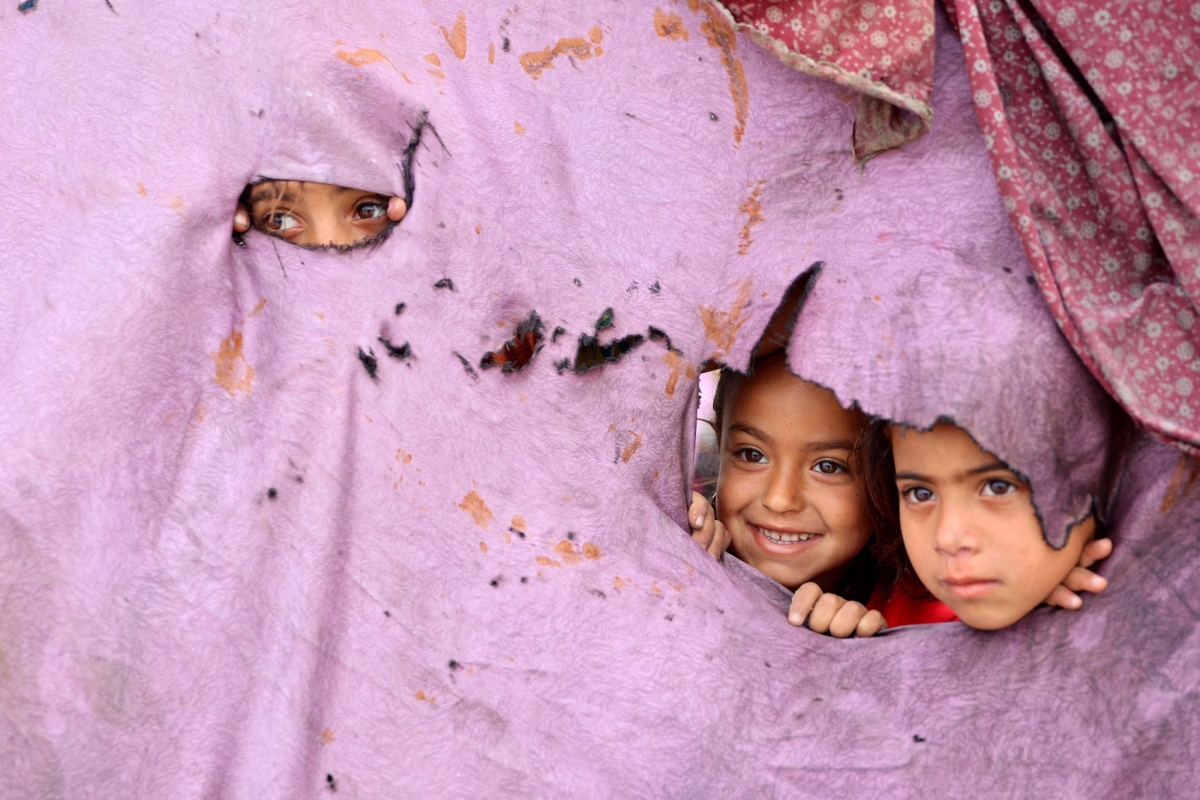

In Gaza's cruel winter season, the tent loses all symbolic meaning. It is no longer a temporary place to live, nor a framework for adaptation, but a fragile structure pushed to its limits. Rain—and the storms that follow—are not natural events but become invading forces. Cold is not a chilly sensation, but a depleting strain on the body, affecting everything from sleeping to even breathing. Winter takes away the tent's last noble function: helping people survive another day amid genocide, displacement, hunger and illness.
Anyone who looks closely at the tent's particulars—its internal arrangement, the rhythm of its day, the weakness of its materials—understands that it cannot protect from the rain or the cold. But this understanding does little more than attest to what people are forced to endure when the basic conditions of life are withdrawn.
In a tent, light is the only reliable measure of time. As the light changes, the space's function changes. The floor used for sitting during the day becomes, at night, a shared sleeping area without insulation, with no clear boundaries or privacy guarantees.
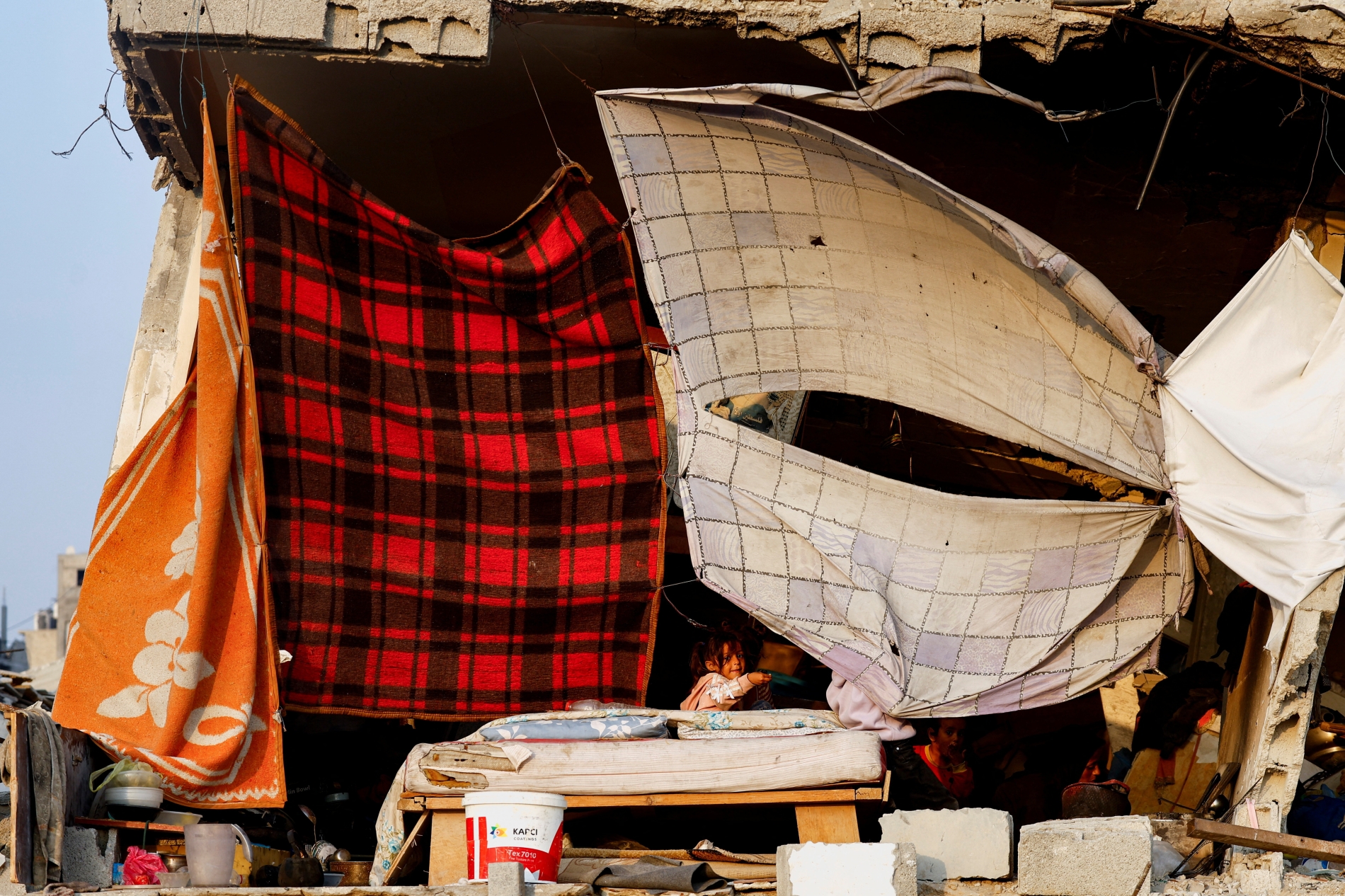
Life inside the tent does not organise itself by choice but by force. Space is tight, privacy obsolete, and belongings are vulnerable. In the tent, people sleep, cook, store, sit, and at times, experience illness, all in the same space.
Cooking is not separated from living and sleeping. The source of fire, whether a simple stove or an improvised device, is placed where space permits rather than where it is safe. Smells, smoke, and dampness spread in every direction, becoming part of the shared air.