The Rafah crossing is open, but so is the battle for Gaza
Israel wants Palestinians to leave the Strip as part of its ‘depopulation and resettlement’ strategy, but Egypt is fighting to give them the option to return to their homeland
AFP
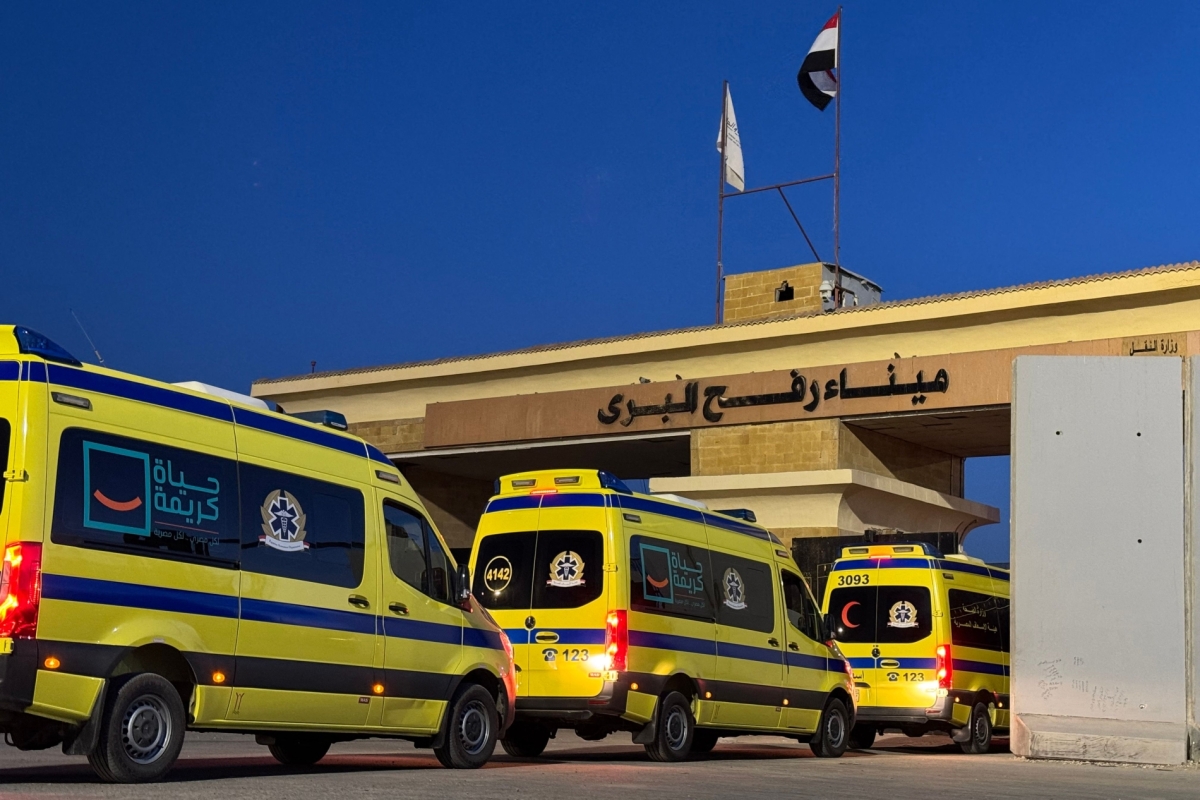
Ambulances wait in line at the Egyptian side of the Rafah border crossing with the Palestinian Gaza Strip, in northeastern Egypt on the first day of the evacuation of some 50 Palestinian, at the Rafah crossing on 2 February 2026.
The Rafah crossing is open, but so is the battle for Gaza
Israel’s reopening of the Rafah crossing between Gaza and Egypt this week was the culmination of diplomatic pressure to allow wounded Palestinians to leave and receive treatment.
For months, Israel wanted to reopen the crossing on a strictly one-way basis, allowing Palestinians to leave but preventing their return. This fits Israel’s broader strategy of gradually depopulating Gaza, where its bombing destroyed homes and infrastructure, causing widespread displacement since October 2023.
From the outset, Egypt refused to become a conduit for such displacement, making it clear that it would never help empty Gaza of its Palestinian population. It rejected Israeli proposals to introduce new inspection facilities near the crossing, impose strict limits on the number of people allowed to pass, or relocate the crossing point. Egypt regarded all these suggestions as disguised mechanisms for the forced transfer of Palestinians.
Tightening the pressure
Throughout negotiations, Egypt maintained that the crossing must remain under joint Palestinian-Egyptian administration, without unilateral Israeli changes. It repeatedly invoked the US-brokered ceasefire agreement, which explicitly requires bi-directional operations, as well as relevant UN Security Council Resolutions that prohibit the forced displacement of populations.
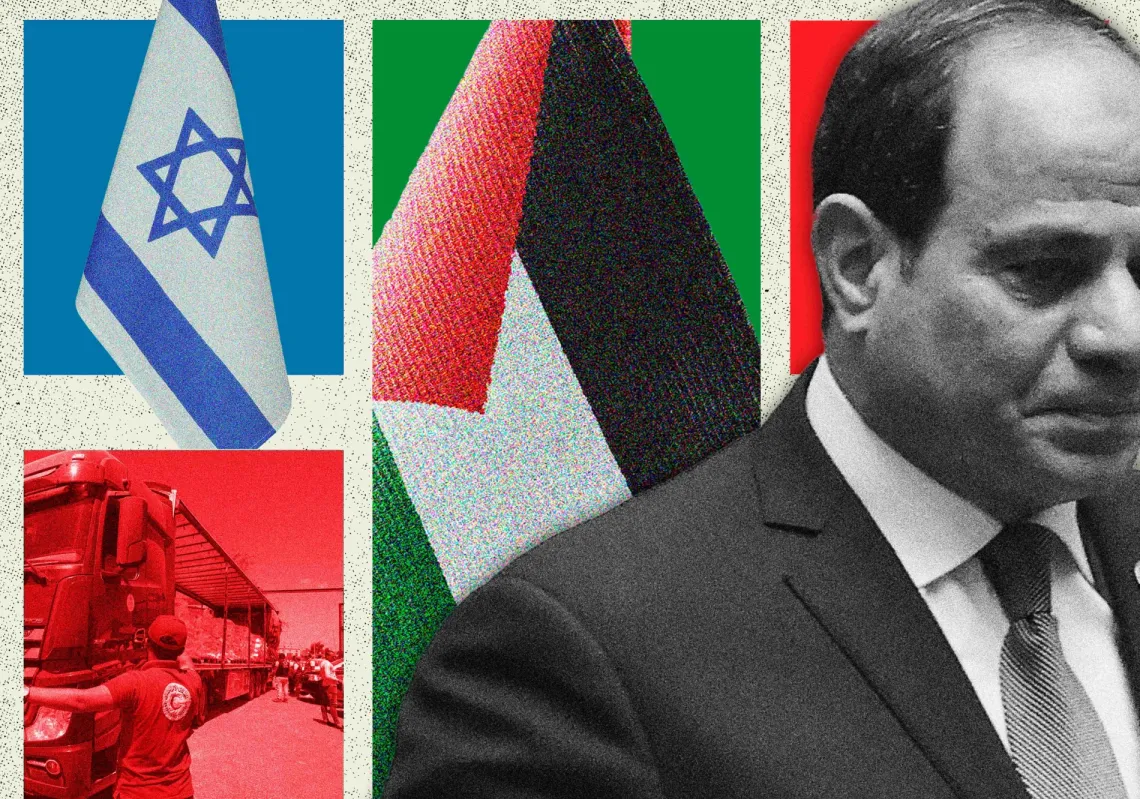
Egypt coordinated closely with regional partners such as Jordan, Qatar, and Saudi Arabia to issue joint statements condemning any attempt at displacement, building a unified Arab position. Egyptian President Abdel Fattah al-Sisi also warned Europe, notably on 24 January, stating that any forced displacement from Gaza would trigger large-scale migration flows towards the continent.
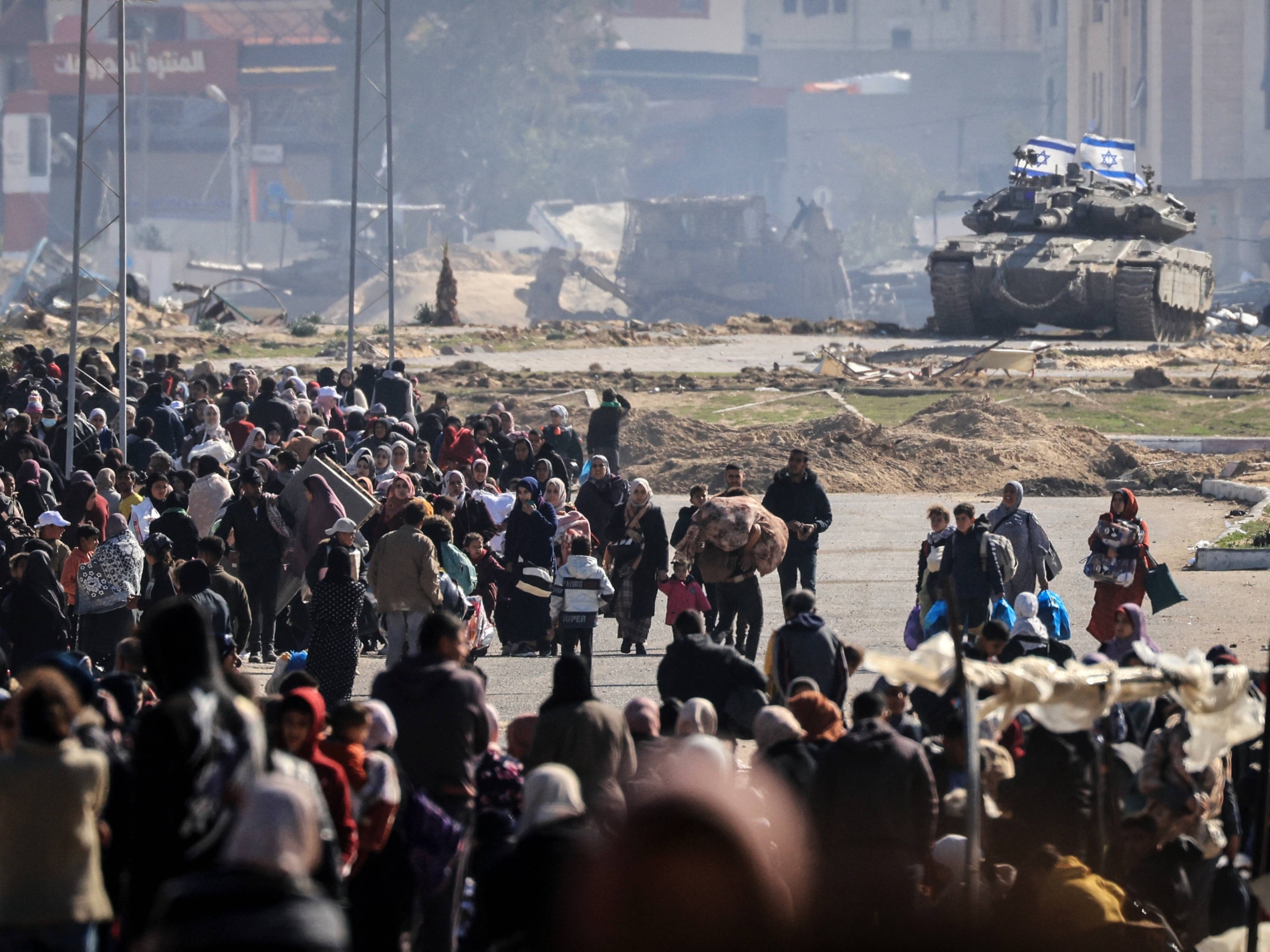
An Israeli tank in the southern Gaza Strip can be seen while thousands of Palestinians flee their homes towards the city of Rafah.
Taken together, this steadily tightened the pressure on Israel to retreat from its preferred one-way model. When the crossing reopened on 2 February, it was initially for limited pedestrian movement, with security coordination between Israel, Egypt and the European Union. It was the first time in nearly two years that a bidirectional flow had been permitted.
Yet while significant, the reopening does not solve all the problems. There is a fight brewing over the preservation of Gaza’s demographic composition and the right of Palestinians to live in their homeland. By contrast, Tel Aviv’s strategy is to depopulate the Palestinian enclave before providing homes and infrastructure for Jewish settlers to move in.
Egypt has refused to become a conduit for displacement and will never help empty Gaza of its Palestinian population
'Voluntary migration' scheme
In recent months, the Israeli government has promoted what it calls "voluntary migration" for Gaza's residents. After two years of bombing civilians in a densely populated coastal strip, killing roughly 70,000 people, the idea of 'voluntary migration' seems strange. Still, Israel has scouted potential destinations for relocating Palestinians. While to date this has come to nothing, that is not to say it will not happen in the future, especially as certain nations or autonomous regions seek to curry favour with Tel Aviv.
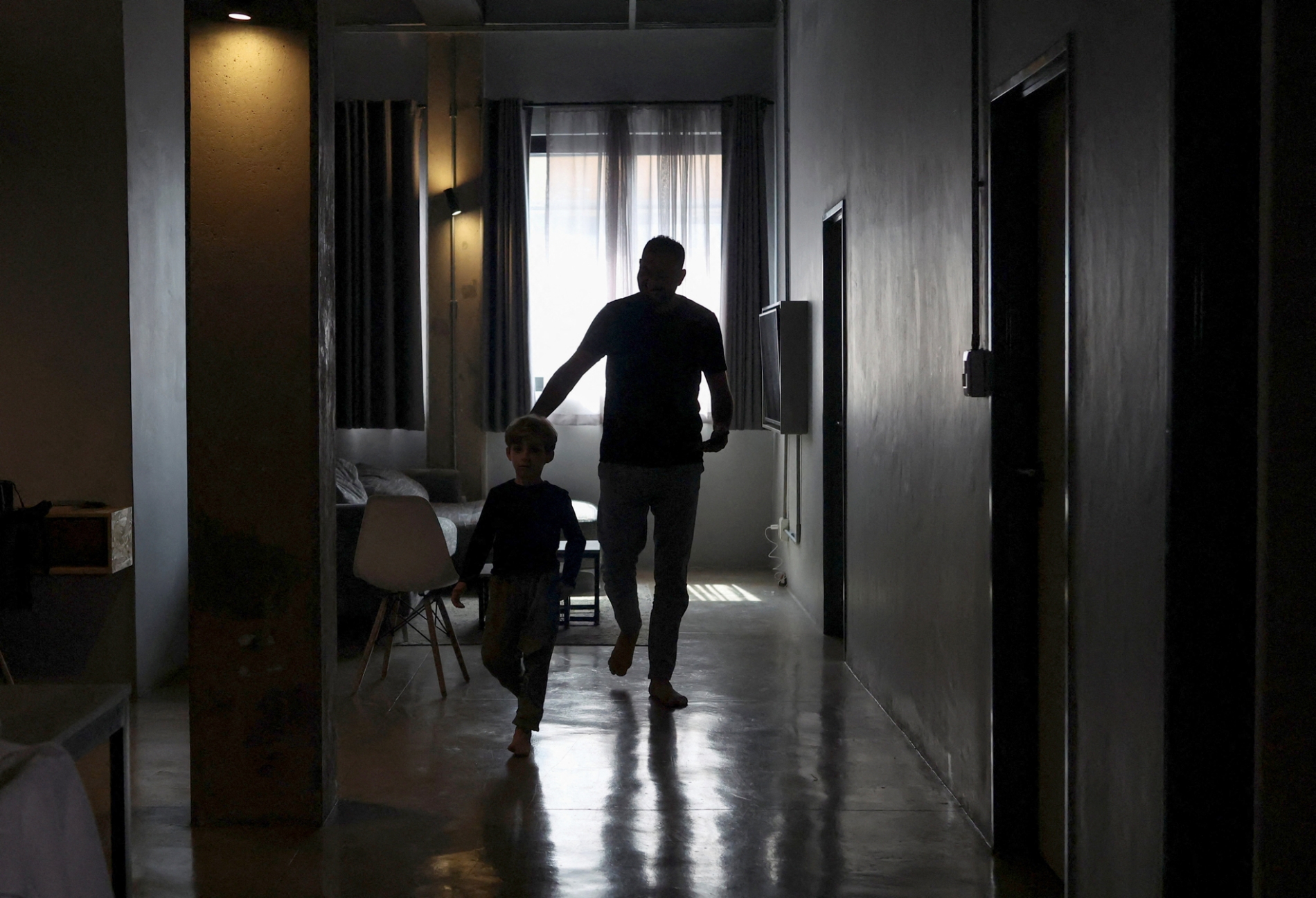
A Palestinian man walks with his child after speaking to Reuters at an undisclosed location in Johannesburg, South Africa after being transfered from Gaza via Israel on 14 November, 2025.
Beyond strategic calculations, the depopulation and resettlement of Gaza is deeply significant within Religious Zionism, a movement that regards territory as an inseparable component of the biblical Land of Israel, divinely bequeathed to the Jewish people. Religious Zionists, most visibly represented by the settler movement in the West Bank, comprise only about 14% of Israel's population but exert outsized influence over its politics.
They frame the occupation and reclamation of such lands as a sacred Jewish duty, rather than mere nationalism. This theological lens is hardly new, having surged to prominence following the 1967 Six-Day War, when Israel's capture of Gaza and other areas was hailed by Religious Zionists as a chance to enact scriptural prophecies. The same adherents decried Israel's 2005 unilateral withdrawal from Gaza as a grievous religious and historical betrayal.
Among the more prominent Religious Zionists are Israeli Finance Minister Bezalel Smotrich and National Security Minister Itamar Ben-Gvir. They contend that reoccupying and resettling Gaza after the 7 October 2023 attacks is a moral and spiritual imperative. Control over Gaza would also neutralise the persistent security threats faced by Israelis.
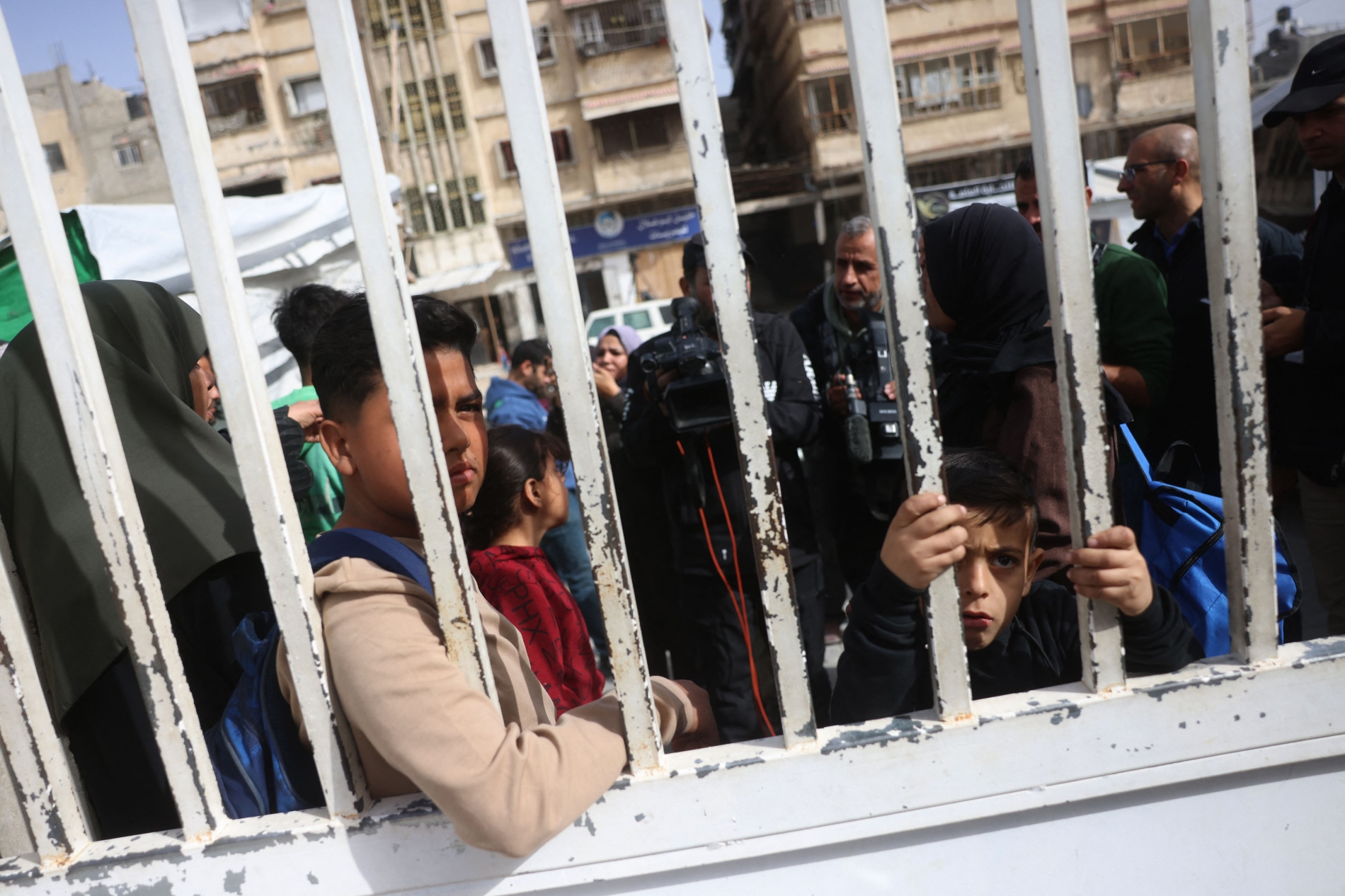
Palestinian youth and their guardians wait to be evacuated from the Gaza Strip via the Rafah border crossing with Egypt for treatment abroad, in Khan Yunis, in the southern Gaza Strip, on February 2, 2026.
Fight for identity
The Israeli push for one-way passage through Rafah into Egypt and beyond was the edge of a much larger, more enduring strategy that has not been killed but forced underground, where it continues to evolve. This is a contest not just over Gaza's demographic future but of Palestinian national identity and their long-term presence on the land.
Adapting, Israeli is now acting as the ultimate gatekeeper of who may return to Gaza. Between 100,000 and 110,000 Gazans crossed into Egypt during the war, fleeing bombardment and seeking medical care. While they can begin to return, this will be at the pace and conditions of Israel. Though these returnees represent just 5% of Gaza's pre-war population of over two million, their return carries a major symbolic weight.
Egypt understands this, which is why it fought to secure the principle of return. For Palestinians, the right to go back is proof that Gaza remains theirs. Yet when they do finally step back across the border, they may not recognise their homeland. Whole neighbourhoods are now rubble. Entire streets, schools, mosques, and hospitals have vanished. Relatives, neighbours, and friends may also be gone.
The shock of estrangement will be profound. Most Gazans who never left have already been living with this same crushing sense of alienation since the ceasefire began, wandering through landscapes where familiar landmarks once stood, surrounded by absence.
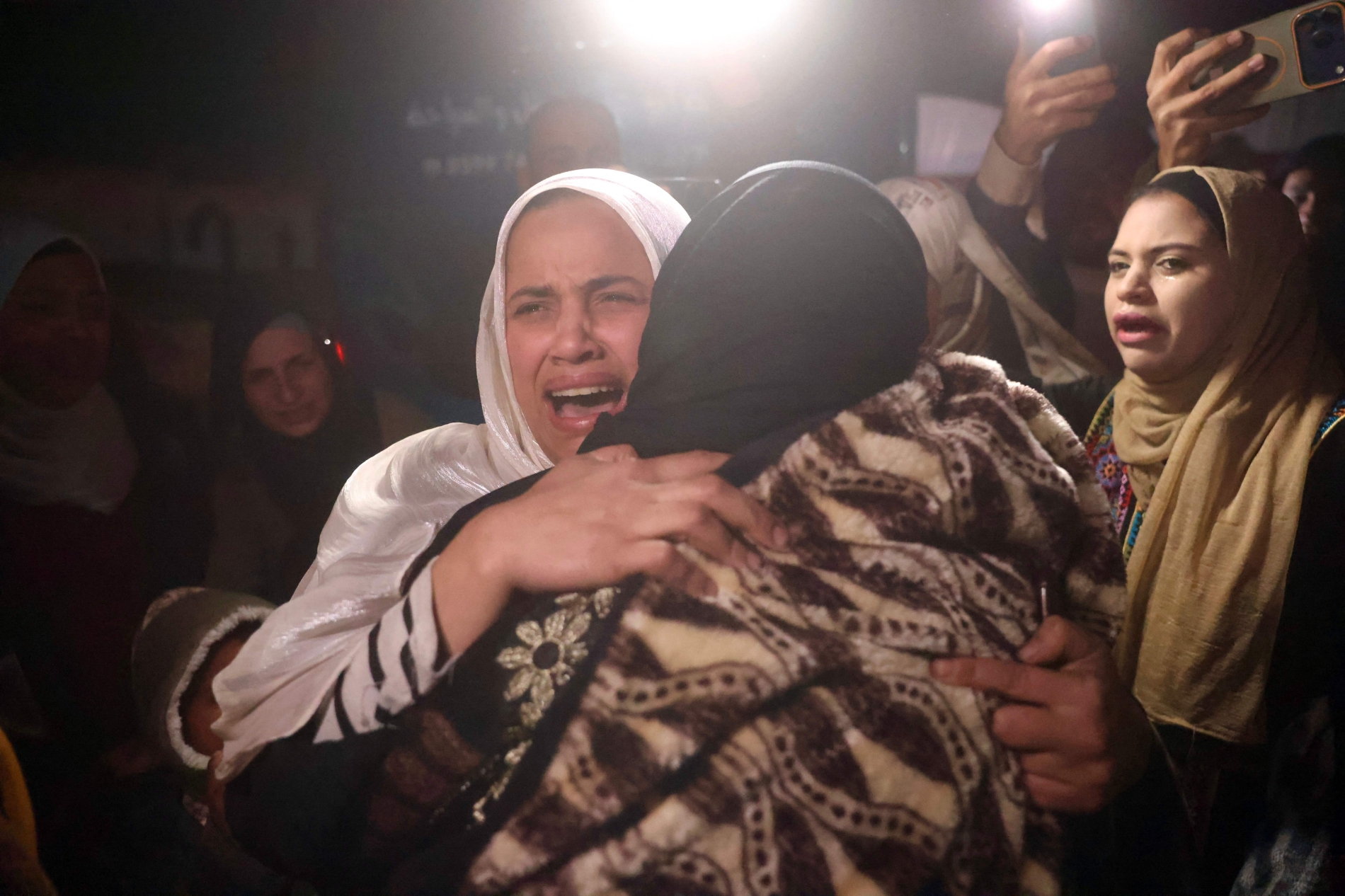
Palestinian women, coming from the Rafah crossing with Egypt, hug as they arrive at Nasser Hospital in Khan Yunis in the southern Gaza Strip on February 4, 2026.
Malicious intent
Israel appears intent on deepening that trauma deliberately. By making daily life unbearable and the emotional ties to the place unsustainable, it seeks to render staying intolerable. For those who do stay, Israel can be expected to obstruct reconstruction at every turn, keeping Gaza functionally uninhabitable.
Israeli Prime Minister, Benjamin Netanyahu made this explicit last month, saying that Phase II of the US-brokered ceasefire framework is not about rebuilding, but about disarming Hamas. With all hostages (both living and dead) now returned, he is widely expected to seize the first plausible pretext to declare Hamas in violation and begin bombing again. By refusing to disarm, Hamas hands him the justification he seeks.
Whether Egypt can once use its diplomatic leverage to corner Israel and preserve the ceasefire remains uncertain. Regardless, the scale of the challenge ahead is enormous. Cairo faces a multi-dimensional struggle that extends far beyond Rafah on the road to preserving Gaza's population, identity, and the right to rebuild despite Israel's determination to make staying impossible. Egypt cannot win this battle alone.