In Gaza, bombed-out homes become death traps

In rainy season, living in a wobbly structure is a step up from a tent that can flood. But while it offers some relief, it could also collapse over the heads of those seeking refuge behind its walls.

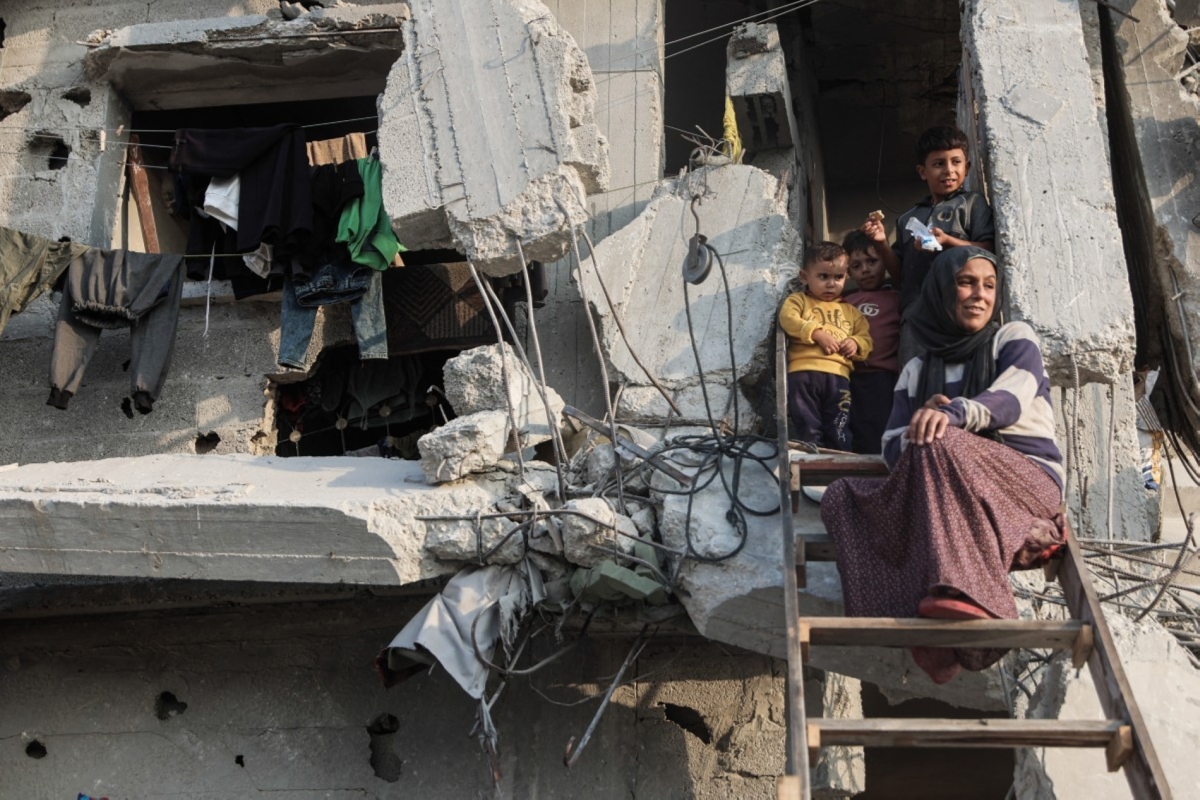
A Palestinian family looks down from their heavily damaged home in Jabalia, in the northern Gaza Strip, on 7 November 2025.
OMAR AL-QATTAA / AFP
A Palestinian family looks down from their heavily damaged home in Jabalia, in the northern Gaza Strip, on 7 November 2025.

In Gaza, bombed-out homes become death traps

When Israeli bombardment and ground incursions intensified in late June, the Badr family was forced to flee their three-storey home in Jabalia, northern Gaza, seeking refuge with relatives in the Al-Zarqa neighbourhood east of Gaza City. They left behind an undamaged house filled with belongings accumulated over many years, like hundreds of other families who fled under the roar of shelling, gunfire and the detonation of explosive-laden robots.

Malek Badr, 43, a father of six, told Al Majalla that he fled with his family, his brother’s family, and the family of a third brother who had been living abroad since before the war of extermination began. “We locked our doors and left when the threat of death came too close,” he said. “We hoped to return and find the house still standing. But everything was destroyed. All that remained was a crumbling fragment of the ground floor.”

In the early days of their displacement, the family moved from one area of Gaza City to another, eventually settling in the town of Al-Zawaida in central Gaza. They remained there for over a month, until the Israeli army announced its withdrawal following a ceasefire and prisoner exchange agreement between Hamas and Israel, brokered in the first half of October. With that, the family decided to return to Jabalia, only to find a landscape of near-total devastation. Homes, apartment blocks and even the infrastructure had been reduced to rubble.

“The moment we returned and entered the neighbourhood, all we could see was destruction,” Malek recalled. “Houses had collapsed into the streets, their debris tangled together. After hours of walking over the wreckage, we finally located what used to be our home.”

Malek, his brother, and their children searched for a nearby spot to pitch their tents, but the area was buried in debris. They began clearing the remnants of their home, salvaging what they could and sealing off the surviving portion with tarpaulins and scraps of fabric they had once used to build tents during their previous displacement.
Omar AL-QATTAA / AFP
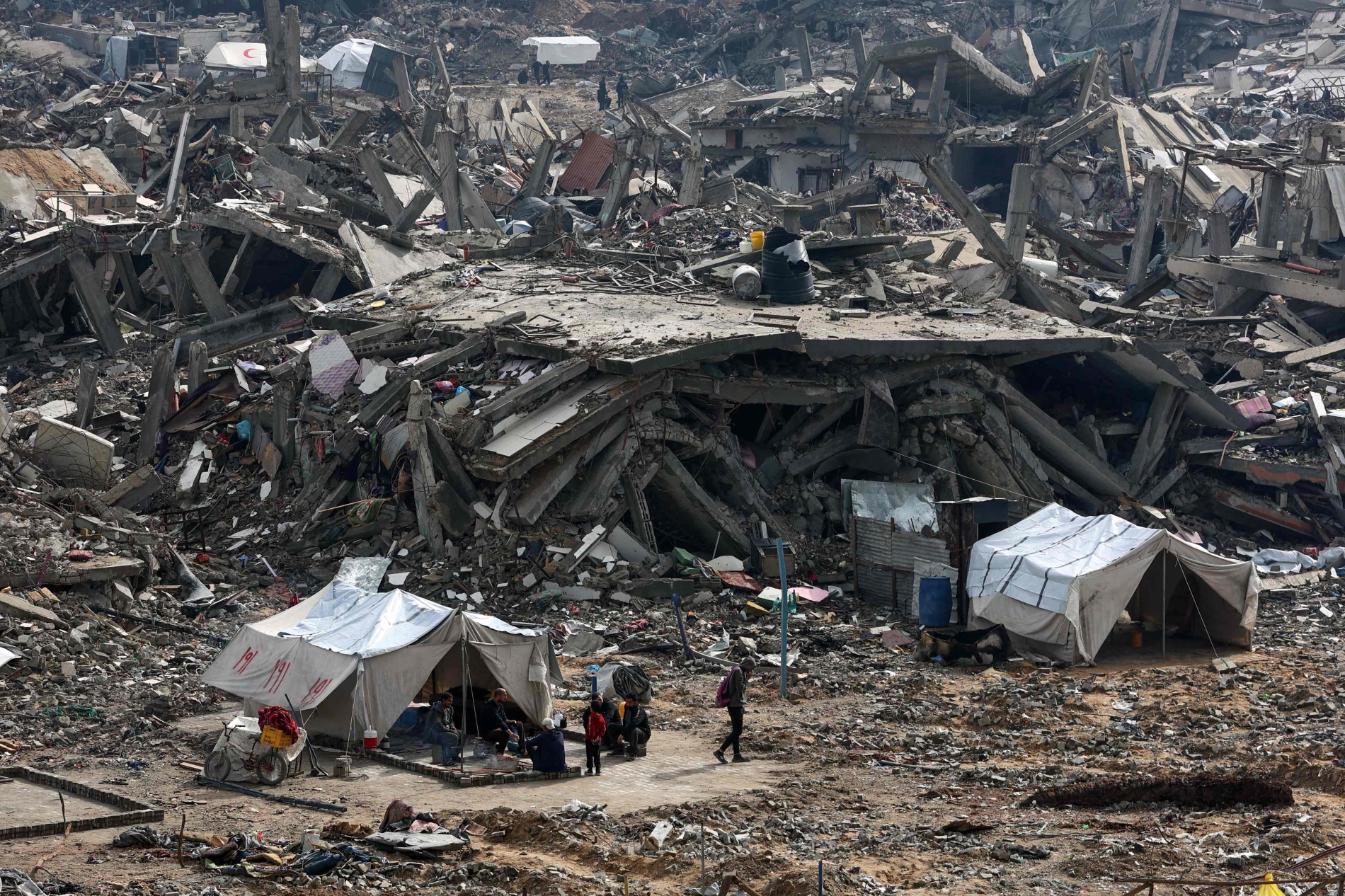
People erect tents amidst the rubble of destroyed buildings as displaced Palestinians return to the northern areas of the Gaza Strip in Jabalia in 2025.

Perilous gamble

The family took a perilous gamble, choosing to shelter beneath a fractured ceiling bearing the weight of two collapsed floors. The walls were eroded, and the surrounding buildings had been obliterated. But with no means to rent another home or secure a plot of land for a tent, they had no choice. The seasons were shifting, and the arrival of autumn and winter brought fierce winds and rain, threatening to seep through the rubble and trigger further collapses that could bury them alive.

“I spend all my time trying to seal the cracks and holes,” Malek explained. “We’re terrified that the rain will flood us or that the rest of the house will collapse. My wife and I talk constantly about our fears, but we have no alternative. Every time the wind picks up, stones and dust fall on us. I rush to reinforce the weak spots, but the danger is always there.” He added, “We’re like cats, moving our children from one corner to another.”

Umayma Badr, 36, the wife of Malek’s brother, lives with her children in a nearby room beneath the same ruins. She faces the same peril. With no alternative shelter and no access to tents or tarpaulins, she told Al Majalla, “We’re living on faith alone. There’s nothing we can do. People think the war is over and the danger has passed, but we’re still fighting a war every day—against ourselves and the reality forced upon us. At any moment, this place could collapse on our heads.”
People think the war is over, but we're still fighting a war every day. At any moment, this place could collapse on our heads.

Umayma Badr, a mother in Gaza

Life amid rubble

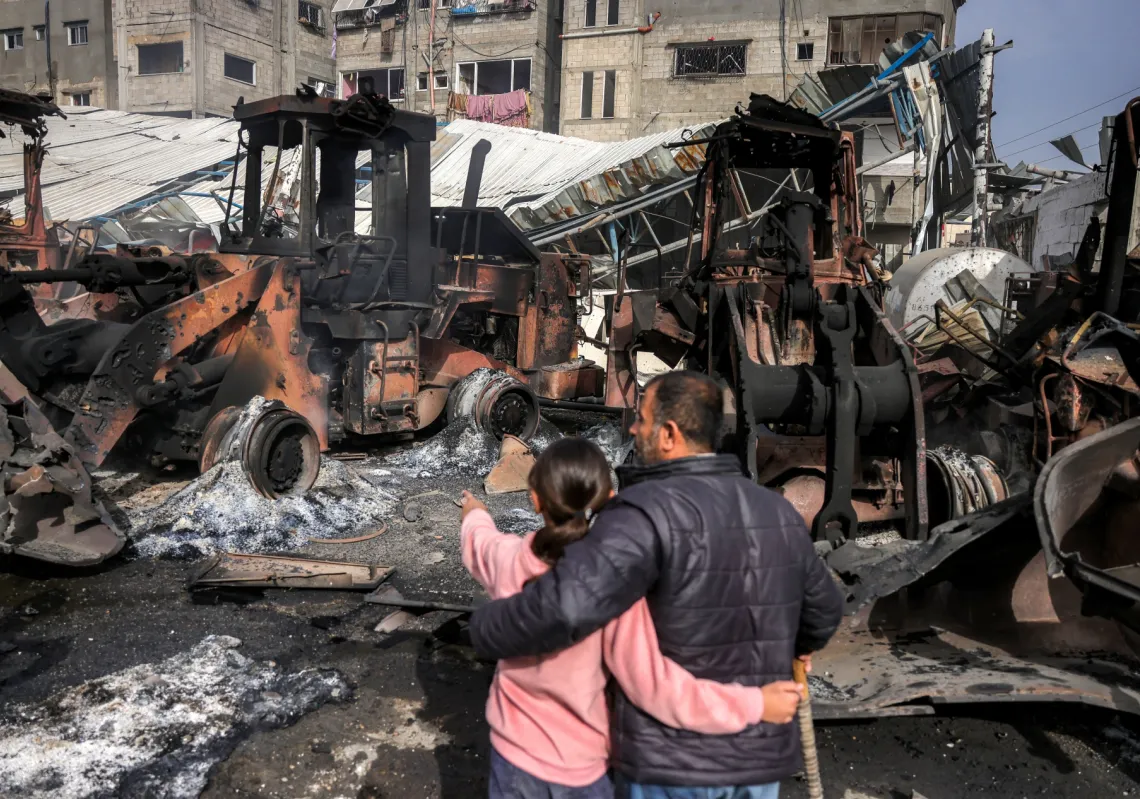
Life in Gaza has become a heap of rubble. According to recent figures from the Government Media Office in Gaza, the war of extermination has completely destroyed more than 300,000 housing units and partially damaged over 200,000 more. With a population exceeding two million, most people are now forced to live in tattered tents along the seashore, beside the ruins of their homes or beneath the remnants of buildings that pose a constant threat to their lives. The removal of rubble has yet to begin, hindered by the lack of heavy machinery capable of lifting the thousands of tonnes of debris left in the war's wake.

Umayma explains that the rubble surrounding them on all sides, blocking streets and access routes to their home, has made it nearly impossible for water trucks to reach them. The water they need for drinking, washing clothes and dishes, and bathing is now out of reach. The main water lines in their area were destroyed during earlier bombardments, and the devastation has left them exposed to disease and danger, with no guarantee of survival.

Shelters-turned-death traps

In late October, a house in Gaza City's Al-Sabra neighbourhood collapsed. It had sustained partial damage during the war, and the family had returned to rehabilitate part of it after the Israeli army withdrew. A statement from the Civil Defence at the time confirmed that nine members of the family were pulled from the rubble with varying injuries. One child, however, was killed when the building came down on top of them.

In another incident, two people were injured and a third killed when a wall collapsed onto a tent sheltering a displaced family in Al-Daraj, central Gaza. The wall had been weakened by wind and lacked structural integrity. Civil Defence teams rushed to remove hazards in several areas using basic tools and limited resources, trying to prevent further casualties. Yet the risks remain, due to the severe shortage of manpower and equipment, and the urgent need to begin clearing the tons of debris and neutralising buildings that continue to threaten Palestinian lives.

OMAR AL-QATTAA / AFP
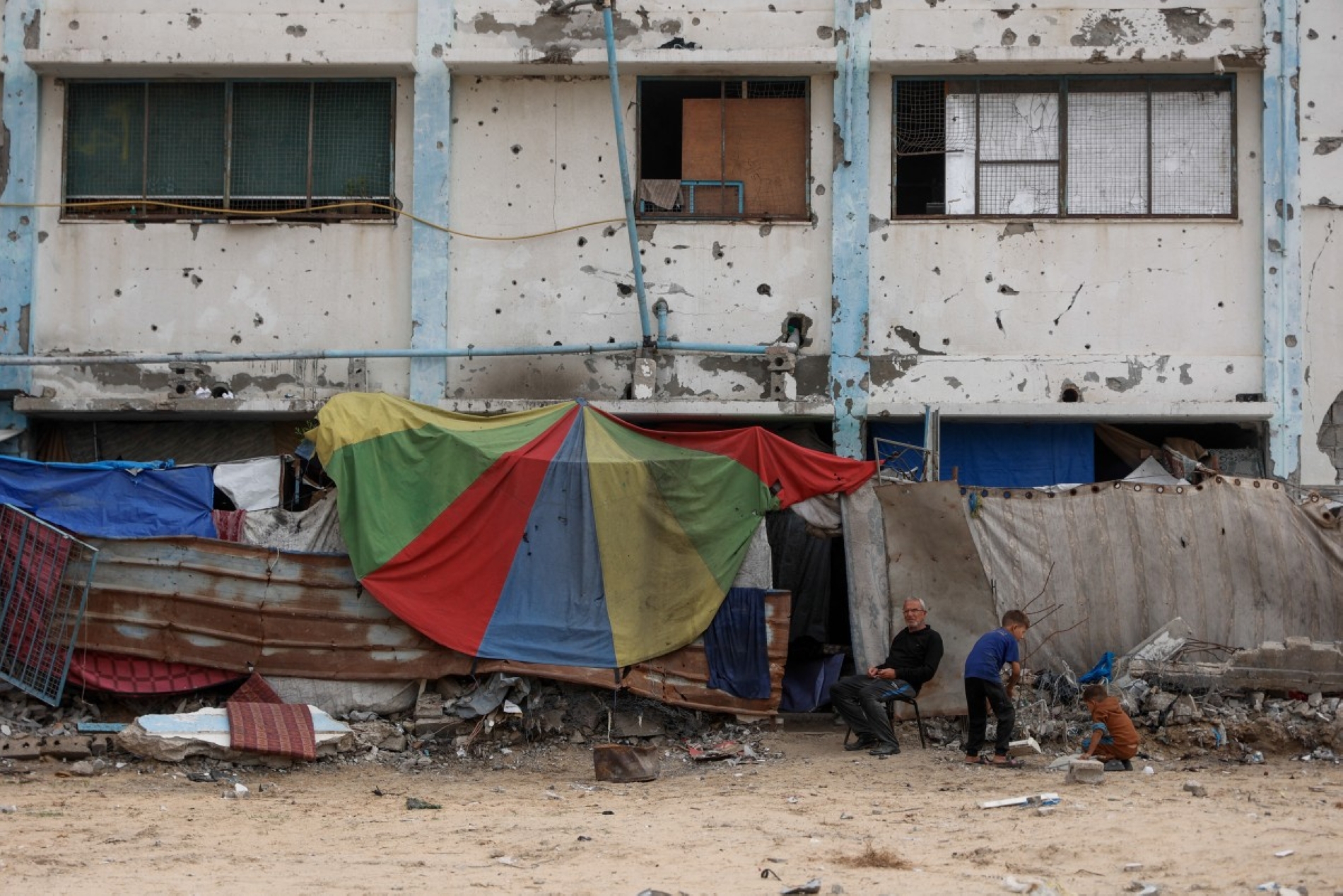
A displaced Palestinian man sits outside a makeshift shelter in the Tel al-Hawa neighbourhood, in the southern part of Gaza City, on 29 November 2025.

Elsewhere, Raafat Abu Warda, 38, pitched a tent for his family beneath a neighbour's house that had suffered partial damage to its upper floors. His own home had been completely destroyed. Speaking to Al Majalla, he said that after months of displacement, he returned with his wife, six children, parents, and three widowed sisters and their children to their home in Jabalia, only to find it reduced to a mound of rubble.

"We spent the whole displacement living in a tent on the beach—cold, sick, exhausted. We could hardly believe it when the ceasefire was announced, and the army withdrew. We rushed back, but there was no house left. Everything was destroyed. Still, we decided to set up a tent on the site," he said. With no access to basic services and no tents available, he had no other option.

Cut-scraped feet

He rented a small space beneath the neighbour's damaged home and borrowed a tent from a nearby neighbour. His parents, sisters and their children erected a second tent atop the ruins of their former house. To reach their shelters, they must walk across the rubble of neighbouring homes, as the street leading to them is buried in debris. "We face danger every moment," Raafat said. "Our feet are covered in cuts from walking over stones and wreckage. Young and old alike are injured. And when night falls, no one leaves the tent. Wild dogs roam the rubble."

The sound of the wind scares me, especially when I hear stones falling from the bombed-out house above us. I keep thinking—what if it collapses on us?

Layal, a 12-year-old girl in Gaza

His daughter Layal, 12, shares her fears, especially at night. "When it gets dark, I go into the tent and think a lot before I sleep. The sound of the wind scares me, especially when I hear stones falling from the bombed-out house above us. I keep thinking—what if it collapses on us?"

Layal, like thousands of children in Gaza, has been deprived of her education for two years during the war of extermination. Once a top student who dreamed of becoming a doctor, she now spends her days walking kilometres across rubble with her younger brother, searching for water for her family.

She lives beneath a shattered roof that threatens her life and the lives of her loved ones with every passing hour, with no glimmer of hope that they might rebuild their home or reclaim the life they once knew.

font change