The destruction of Gaza’s markets is the destruction of memory

Places that pulsed with daily life are now reduced to rubble, and the effects are much greater than simply a loss of trade. The power of the old markets went far beyond stalls and sales.

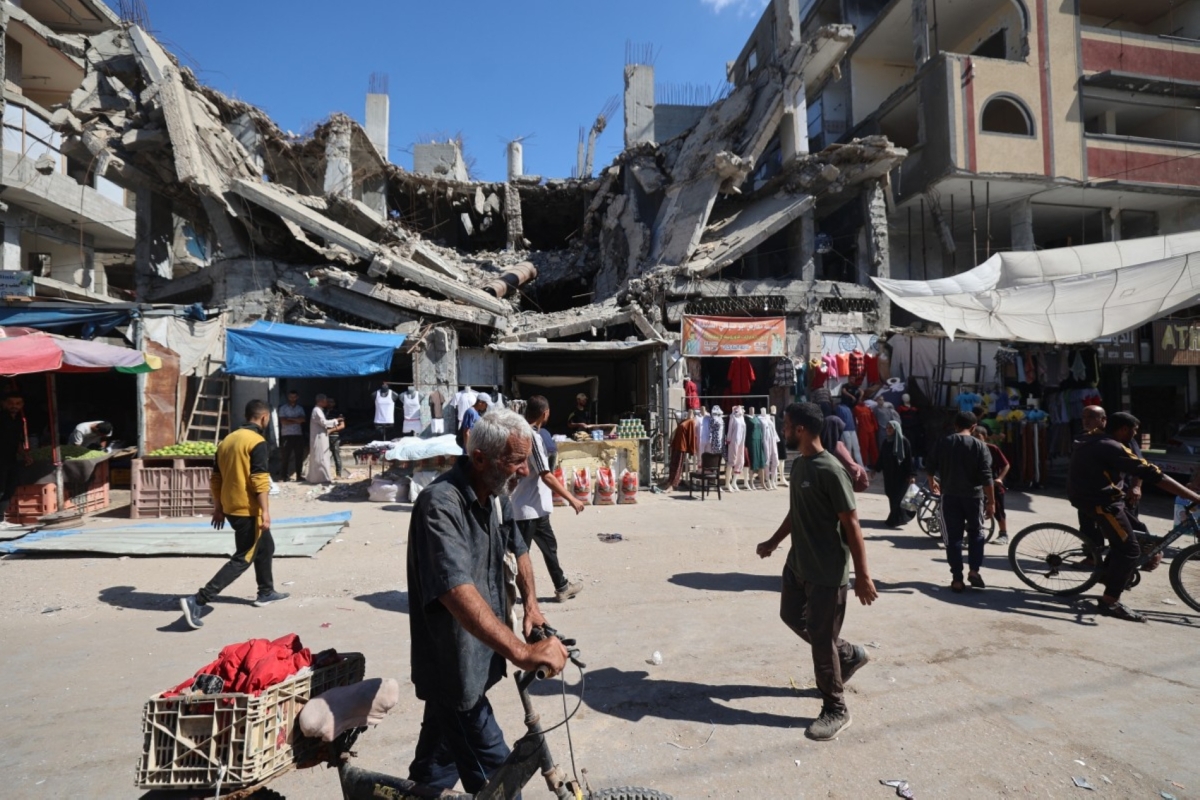
Palestinians walk past a destroyed building at a makeshift market in the Nuseirat refugee camp, located in the central Gaza Strip, on October 15, 2025, two days after a ceasefire came into effect.
EYAD BABA / AFP
Palestinians walk past a destroyed building at a makeshift market in the Nuseirat refugee camp, located in the central Gaza Strip, on October 15, 2025, two days after a ceasefire came into effect.

The destruction of Gaza’s markets is the destruction of memory

Before the war, Gaza’s traditional markets were much more than mere venues for trade; they were spaces where people crossed paths, where the collective memory of the city was recorded through the cries of vendors and the smell of spices and pickles. In Sheikh Radwan, Al-Zawiya, Khan Younis, Rafah, Nuseirat, Al-Maghazi and elsewhere, they embodied the spirit of daily life, as Palestinians embraced in greeting, joked, struck deals, and made requests, the smell of coffee often clinging to clothes. The markets were a well-ordered social system, part of the very fabric of the community itself.

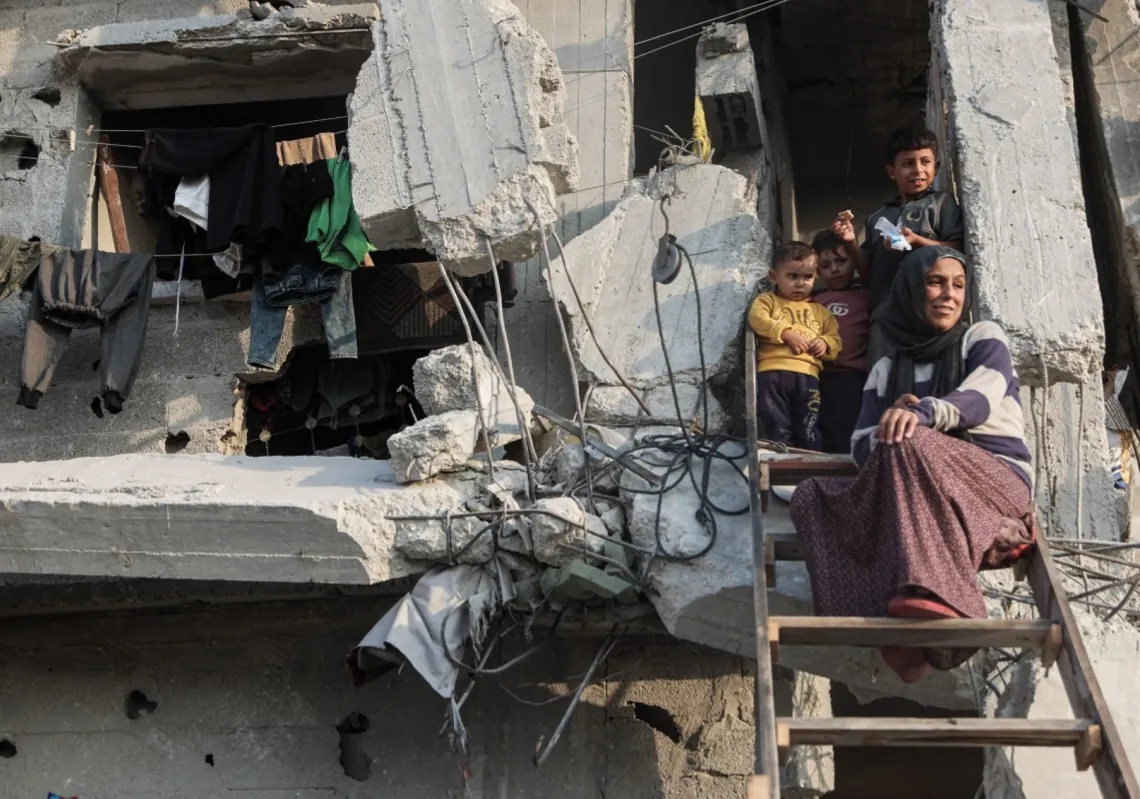
War has destroyed more than just the old markets’ stone structures, which were left flattened or disfigured. It has shattered the rhythm of life, silencing the beat that gave meaning and cadence to people’s days. Sheikh Radwan market has all but disappeared, Al-Shuja’iyya market has been levelled, and the historic Al-Zawiya market was severely damaged, its ancient fabric torn. The damage extended to the markets of Al-Yarmouk, Al-Dalalah (Flea Market), and the fish market in Gaza City, while the markets of Khan Younis, Rafah, and the southern camps lost their natural rhythm.

The loss is not just counted in terms of shops and stalls; it cuts through Gaza’s emotional map. The markets shaped days, brought people together, and gave the place a voice and a scent. Now just rubble and tents, Gaza has lost part of itself, along with the ability to imagine a life less bleak after the war. In cold economic terms, this represents a decline in commercial activity and the collapse of small businesses. On a human level, it signifies a deep rupture in the city’s memory. No other space brought people together so intensely, reshaping their view of the world through dialogue and the rituals of exchange.
BASHAR TALEB / AFP
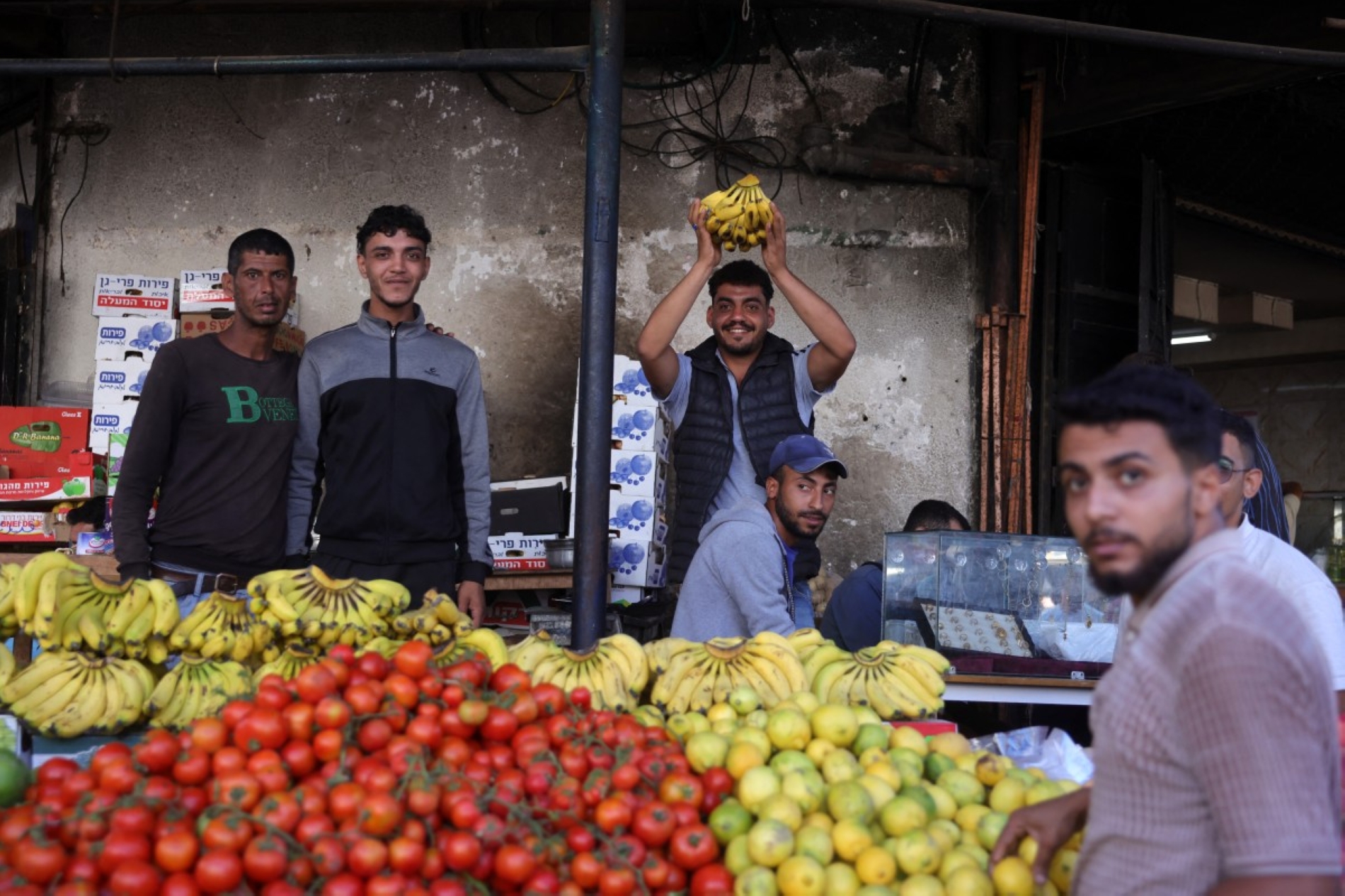
A vendor raises a hand of bananas at a market in Deir el-Balah in the central Gaza Strip, more than a week after a ceasefire agreement between Israel and Hamas took hold, on 18 October 2025.

A setting for life

Mohammed Al-Sousi, 62, used to sell spices, coffee, and provisions in Sheikh Radwan market. For him, it was not merely a place to earn a living; it was a setting for life. “The market isn’t just a space for people to gather and trade,” he tells Al Majalla. “It’s an expression of Gaza’s vibrancy. Vendors’ cries, the bustle of shoppers, every corner of the market spoke to who we are and how we lived. It gave me a sense of contentment. After my shop was demolished, I lost that small joy I used to carry home each day.”

For him, the market was once a daily source of happiness. Now he passes the ruined site and sees it silent, stripped of sellers, and filled with tents for the displaced. “The market belonged to everyone,” he says. “We recognised each other by face and by voice; we understood how people were doing through the rhythm of trade, not just their words. The voices, the shouting, the banter and debates created a constant motion, a familiar chaos we had grown used to, one that kept the market alive from morning until night.”
The market isn't just a space for people to gather and trade. It's an expression of Gaza's vibrancy

Mohammed Al-Sousi, 62, a former market seller

Even before the war, Gaza's economy was far from thriving, but the war brought its total collapse, and most lost their sources of income. "I was never rich," Al-Sousi says. "Gaza's markets were never booming, but I had enough. At the end of the day, I'd return home with food for my children. Now we've been stripped of that modest comfort. We've lost everything."

Joy and energy

Taysir Al-Shamaa, 46, a seller of traditional herbal remedies in Khan Younis market, saw the marketplace as a grand stage, a place where people from all walks of life would gather not only to buy medicine or spices but to heal, joke, and share light-hearted moments. "There was such joy and energy in the market," he says. "All of that was wiped away in an instant by the war. Something beautiful has broken in our lives. Replacing it will take a long time."

OMAR AL-QATTAA / AFP
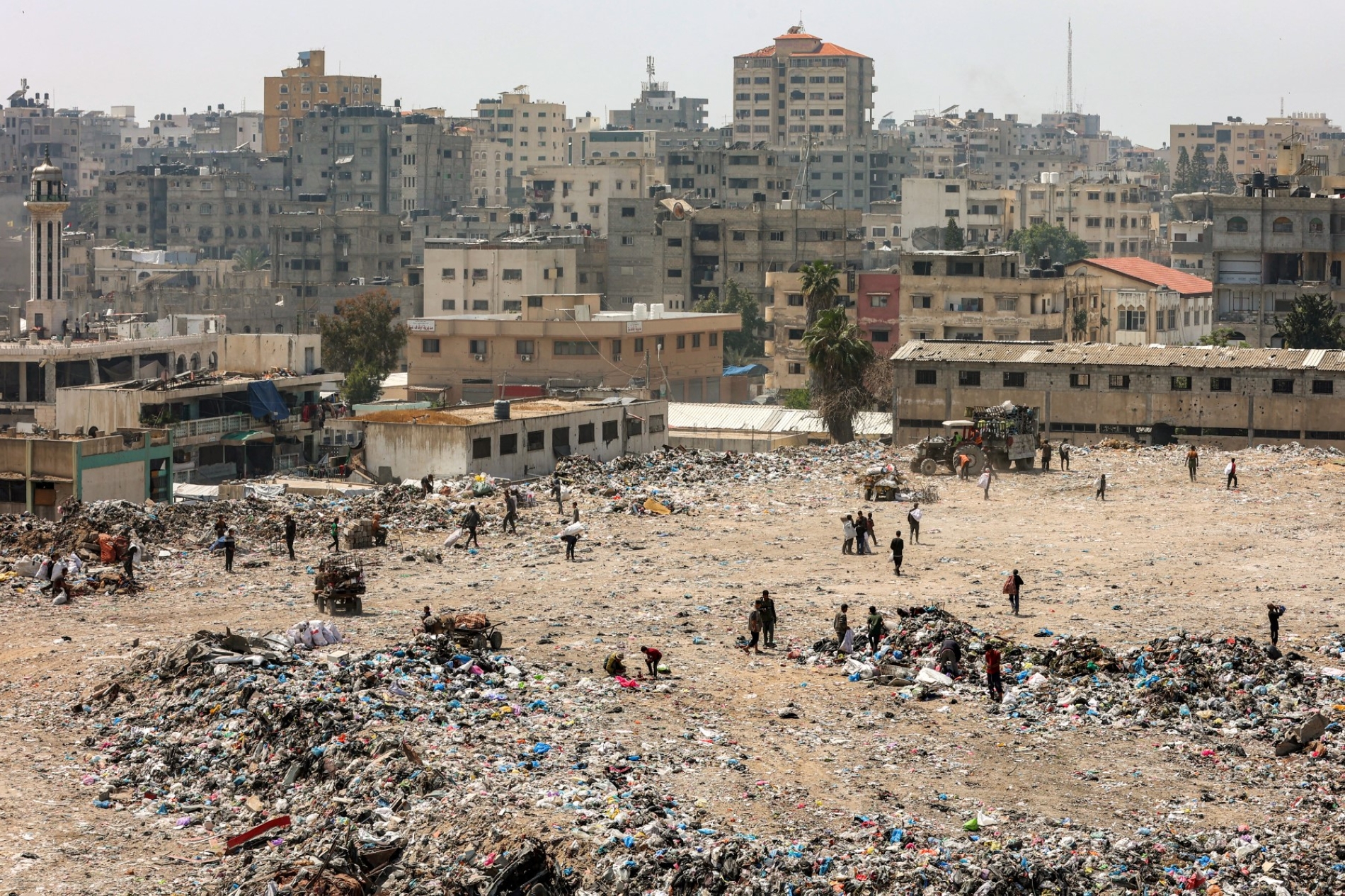
This picture shows a view of mounds of trash at the former site of the Firas Market, which has been transformed into a landfill during the war in Gaza City on 21 April 2025.

During holidays and festivals, markets pulsed with celebration. What remains is the memory. "I'm still caught in a constant comparison between the old image of Gaza's markets and the state of the city today," says Al-Shamaa. "It's driving me to the edge." The market in Gaza served as a barometer for the public mood, a way to measure the pulse of life and read people's economic and emotional state, he explains. "If the market was lively, you could feel the whole city was doing well. If it was sluggish, you knew people were worn out. The market was Gaza's daily mirror."

Khaled Al-Ghoulah, 55, a vendor of household goods in Al-Zawiya market in old Gaza, recalls how the marketplace was as much a human space as it was an economic one. "In the market, we shared stories, often laced with sorrow, sometimes with humour. We discussed our problems and occasionally celebrated our joys.

"I used to enjoy getting to know people and hearing their stories, sharing in their happiness and their grief. Each day, I'd recall my father's words: 'Knowing people is a treasure.' I learned a great deal from their differences. Everyone who entered the market brought their own culture. Everyone needed a space to talk and reflect. Those daily moments of connection and mingling collapsed under the weight of a brutal war that sought to scatter people and erase their gathering places."

EYAD BABA / AFP
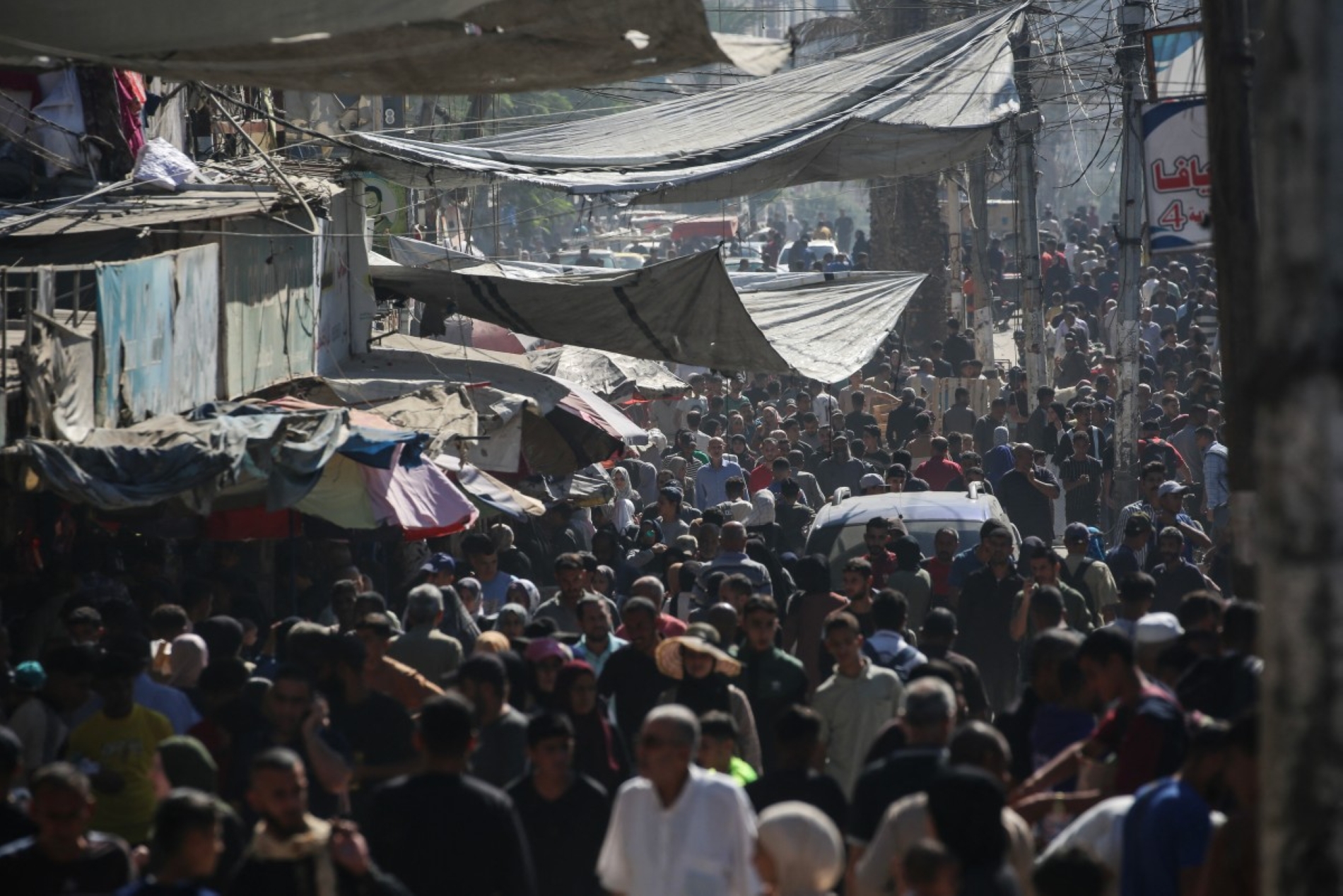
Palestinians shop at a makeshift market in the Nuseirat refugee camp in the central Gaza Strip on 15 October 2025, two days after a ceasefire came into effect.

Ebb and flow

Describing the market's unique rituals, Al-Ghoulah says: "Morning in the market had its own flavour: the start of the day, the greetings, the energetic voices and the vendors' cries. By midday, the market would swell, filled with residents and workers shopping for their homes, and sales would rise. Then, at the end of the day, a calm would settle, a gentle quiet as the hustle faded, as if the city had had its fill and was readying itself for evening and rest."

When this space vanished, so too did the vendors' voices at dawn, the laughter of customers, and the scenes of daily life that unfolded in the market. "The market's joyful rituals have disappeared," he says. "People are scattered in tents. Gaza has become a cold, sorrowful city without its traditional markets." Gaza's markets once helped renew life, structure the day, and gauge people's emotions. They came not just for goods but for an experience, a story, a connection. The markets' destruction did not just erase trade; it wiped out a vibrant cultural scene that embodied life in all its details.

Gaza's markets were reflections of a constantly renewing cultural identity, embodying daily social interaction and building collective memory, where people shaped their ways of living and their rituals of celebration. With their destruction, the symbolic order of life itself has collapsed, leaving the city searching for its face in the wreckage, a people trying against the odds to reclaim what was lost. Until the return of the markets—with the cries of vendors, the scent of spices and coffee, the shopfront decorations, and the warmth of human interaction—Gaza will continue to search for itself.

font change