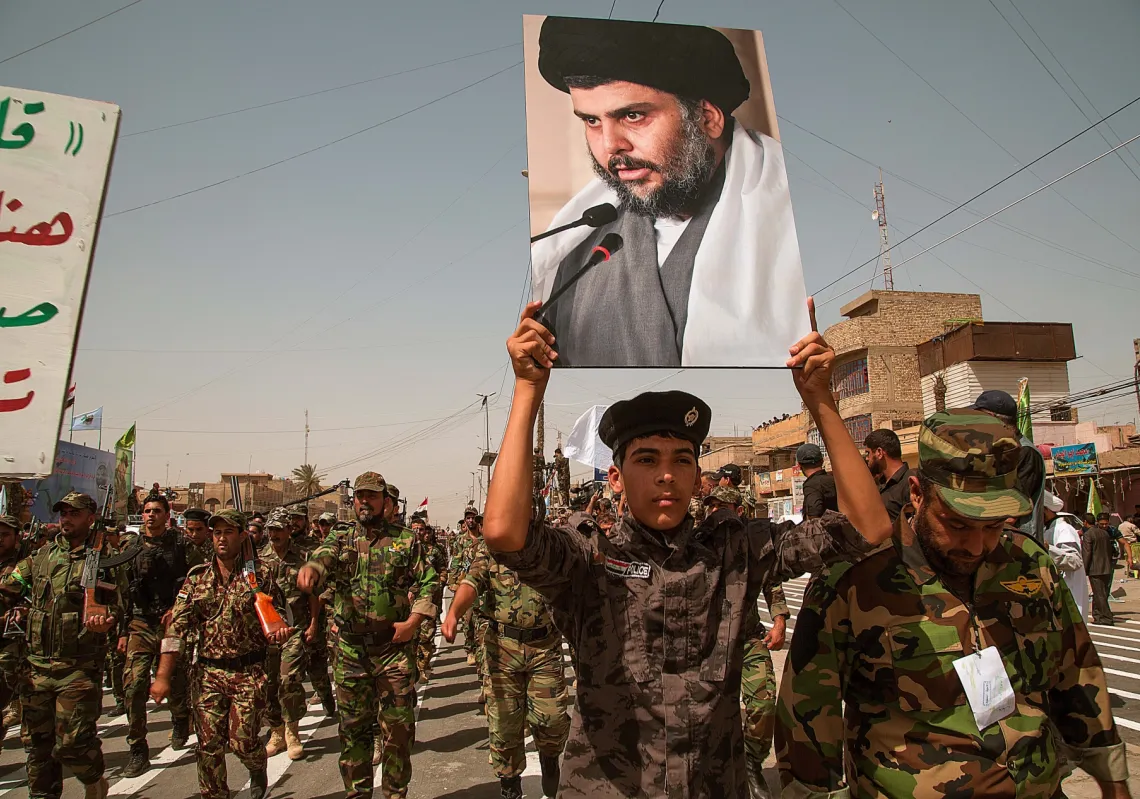
As the US-Iran war intensifies, it has drawn in non-state actors across the region. While Baghdad says it is not a party to the conflict, militias have stepped in on Tehran's side.
The US knows that Gulf states have more options in a multipolar world and it accepts their building economic relations with a dynamic China. But it also has a limit. Al Majalla explains.
Jihadists were able to portray the presence of US troops in the region as an 'occupation', which some extremists fell prey to, birthing the first wave of jihadist terrorism in the 1990s.
Secret documents obtained by Al Majalla reveal that Saddam tried to form a four-way coalition with Jordan, Yemen and Egypt while reaching out to Iran through Arafat.
The human cost and development disasters caused by the August invasion in 1990 remain after Kuwait became hooked on high public spending to recover. Financial and economic reform is needed.
Thirty-three years ago, Saddam Hussein invaded Kuwait. A lot has changed since then, but the profound impact of this historic sin continues to reverberate in Iraq, the region, and the world.
As Gulf states continue to draw inspiration from Kuwait's political system, adopting that which works and avoiding what doesn't, Kuwait can learn from its neighbours' assertiveness and development
In a wide-ranging interview with Al Majalla, Turkish statesman Ahmet Davutoğlu traces the evolution of his relationship with Erdoğan, when it soured, and his vision for a democratic Turkey
Ankara has balanced its membership of Nato with a need to maintain relations with Russia, since clearly calling out the war in the early days. It has worked so far, but will have to keep at it.
If the ceasefire collapses, China has an interest in getting the two sides back to the table, but it would be a difficult task given Tehran's deep mistrust of the US and Israel.
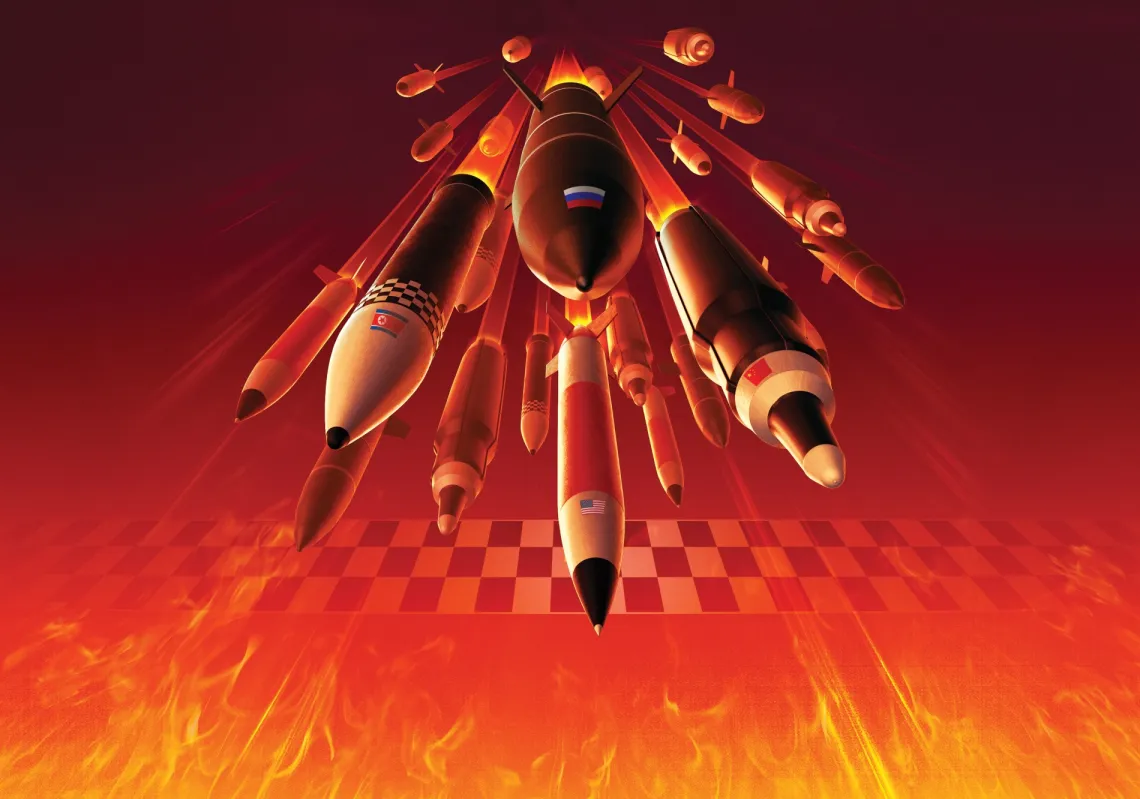
The US-Israeli war against Iran aims to draw in Gulf states, but history has shown that entering wars is far easier than exiting them. Prudence is needed now more than ever.
PA Foreign Minister Varsen Aghabekian Shahin tells Al Majalla that Israel is taking advantage of the fact that the world is distracted by the US-Iran war to create irreversible facts on the ground
Given the effective closure of the Hormuz Strait and Houthi threats to close off the Red Sea, Syria may emerge as a corridor and conduit to bypass these embattled maritime chokepoints
A former army forensics employee who later became known as Caesar tells Al Majalla how he risked his life to expose the torture and killing of countless Syrians in regime prisons