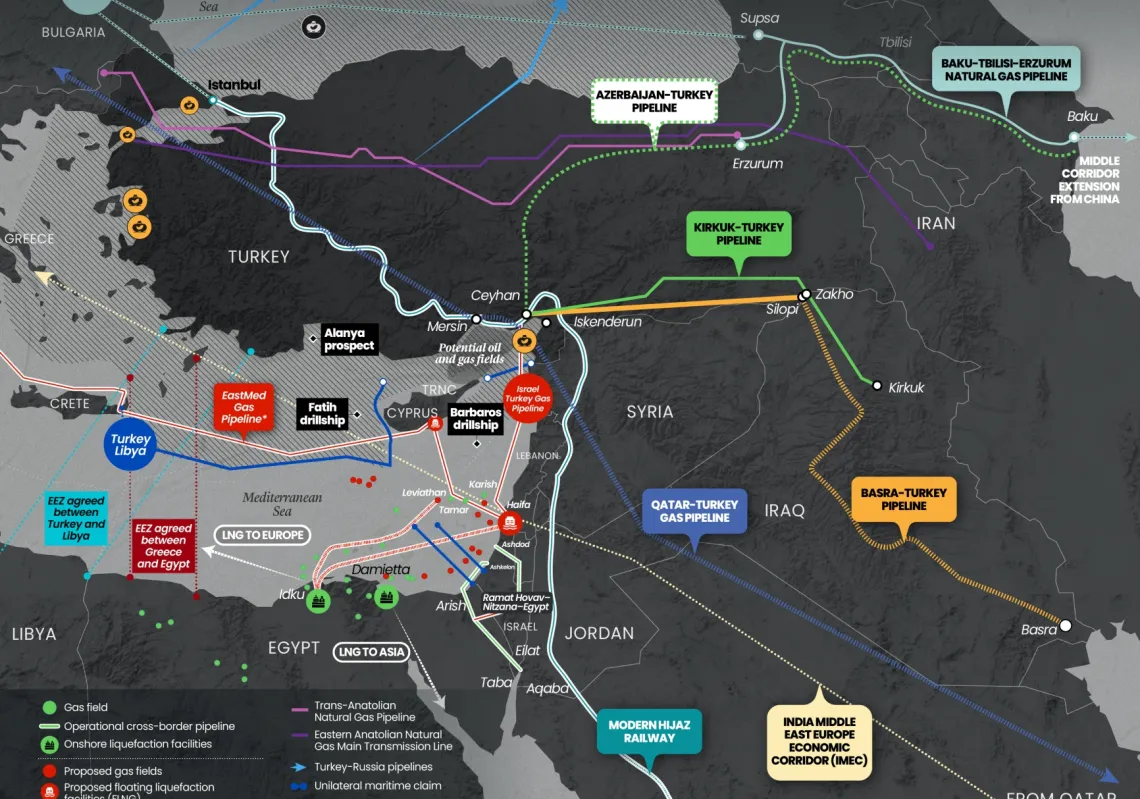

As regional tensions intensify and maritime traffic remains disrupted, the Strait of Hormuz challenge is compelling Gulf states to rethink the economic model on which they have relied for decades. The US-Iran war exposed the inherent vulnerability in relying on a single corridor through which a significant chunk of the world’s oil and gas trade passes. This has prompted these states to begin searching for more resilient alternatives that offer greater flexibility.
Against this backdrop, Saudi Arabia is emerging as the geographical and economic linchpin capable of redrawing the map of energy and trade flows. By virtue of its position between the Gulf and the Red Sea, it is gradually assuming a new role, positioning itself as an indispensable regional transit platform—one that could change the regional trade and transport map for years to come.
Unravelling the Hormuz bottleneck is the title of Al Majalla’s cover story this week. We examine the issue from every angle, while also exploring potential projects that extend beyond the Gulf into Syria, Iraq, and elsewhere.
 

Two years after October 7, Gaza unrecognisable

Two years after the October 7, 2023, Hamas attacks, Israel has killed more than 64,500 Palestinians and injured over 163,500, the majority of them women and children, in what the UN has termed a…

Al Majalla - London

Two years after October 7

Al Majalla examines the repercussions of Hamas's attack on Israel, which set into motion a series of significant changes and power shifts in the Middle East

Al Majalla - London