As the world moves away from oil, the region must move its national economies into a new era. But for most states, their starting position is far from ideal. Where and how should they change?
Churchill had created a social hierarchy for the Middle East, and at its helm were the Arab Bedouins, then came the urban merchants in cities like Damascus. The third tier was Palestinian farmers.
Unstable geopolitics traps money in defence spending and away from economic development to this day, in a pattern that goes back to 1948. Change is needed, with big challenges ahead.
Artificial intelligence has consequences for humanity on the scale of Columbus' discovery of America. But how will this powerful new technology impact the Arab world? Al Majalla explains.
In an exclusive interview with Al Majalla, the UN assistant secretary-general says the traditional approach of dealing with issues in silos no longer works and a 360 approach is needed.
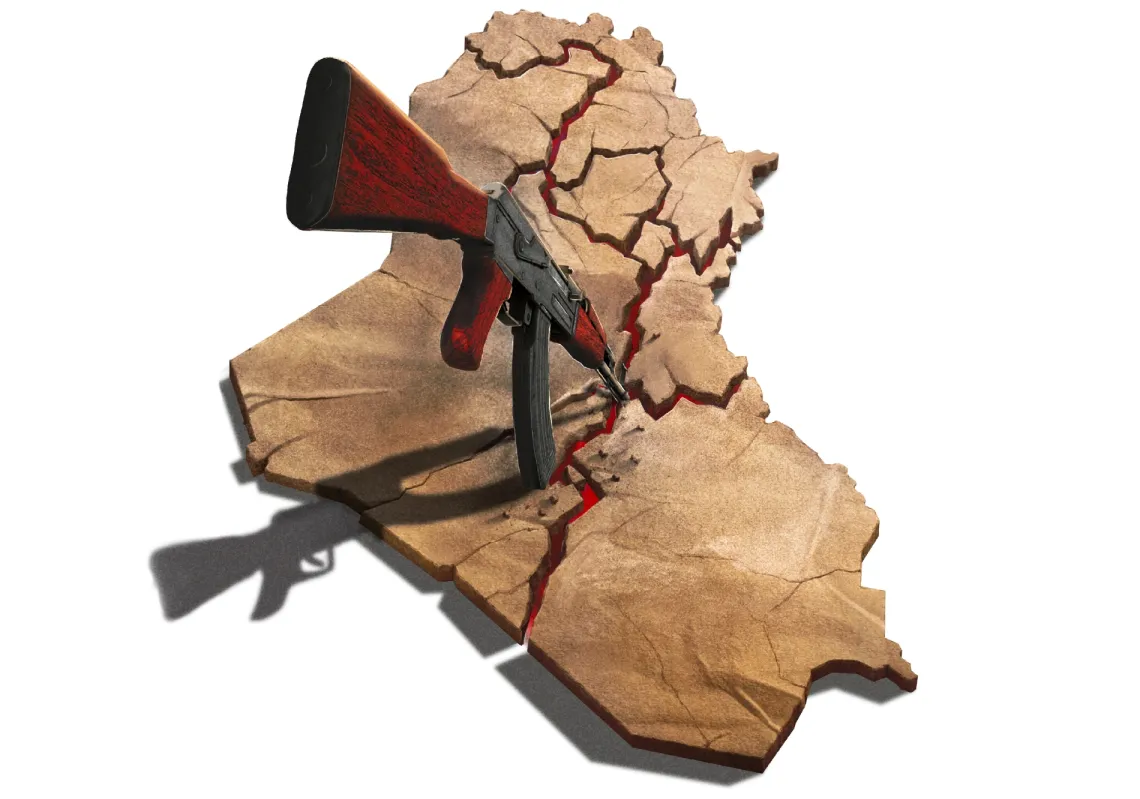
Riyadh significantly contributed to Iraq's move to openness via soft economic intervention. Hesham Alghannam's personal account of a trip to Baghdad shows what this means for Iraq and the region.
The Arabs predicted solar and lunar eclipses and proved the Earth's sphericity and rotation; today we can hardly find any astronomical tool without a deep Arab fingerprint
In the final instalment of the two-part series, Sami Moubayed gives a historical review of key Arab summits over the years as Arab leaders grappled with consecutive wars, conflicts and uprisings
In part one of a two-part series, Sami Moubayed gives a historical review of key Arab summits over the years as Arab leaders grappled with consecutive wars, conflicts and uprisings
In an interview with Al Majalla, the prominent French jurist discusses Israeli and Western duplicity, their violation of international law, and why Israel bears the cost of Gaza's reconstruction
Tehran's elite have few friends, but regional states fear the consequences of a disorderly transition. If Iran's 92 million people turn on one another, it could cause millions to flee abroad.
Going forward, the international community needs to reduce dependence on the US without upsetting the world's largest military and economic power. It will be a shaky tightrope to walk.
Scrapping foreign ownership caps and qualifying criteria will bring in more capital, with markets reacting positively to the latest reforms that build towards a more open country