SCO summit: a Eurasia that no longer seeks US permission

In Bishkek, a loose Eurasian gathering of illiberal nations inched closer to a functioning post-dollar regional economic bloc

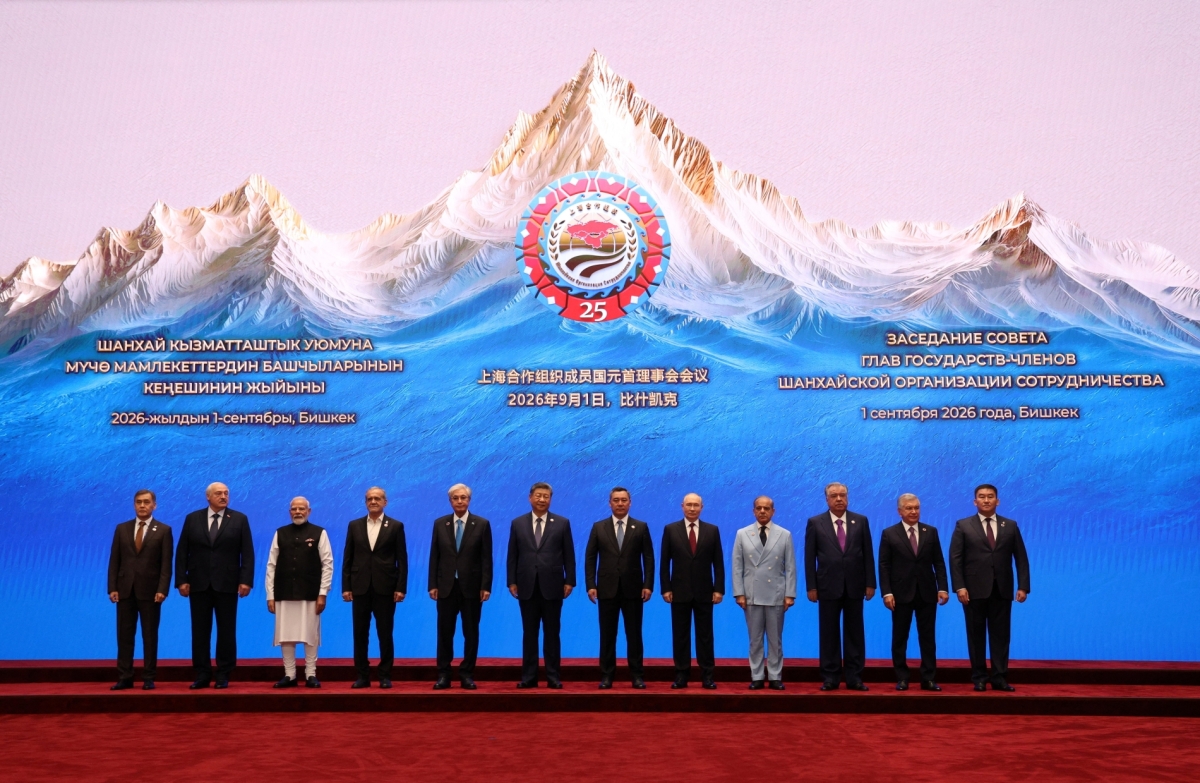
Leaders of SCO member states, including Chinese President Xi Jinping, Russian President Vladimir Putin, and Iranian President Masoud Pezeshkian—ahead of a summit session in Bishkek, Kyrgyzstan, on 1 September 2026.
Sputnik/Reuters
Leaders of SCO member states, including Chinese President Xi Jinping, Russian President Vladimir Putin, and Iranian President Masoud Pezeshkian—ahead of a summit session in Bishkek, Kyrgyzstan, on 1 September 2026.

SCO summit: a Eurasia that no longer seeks US permission

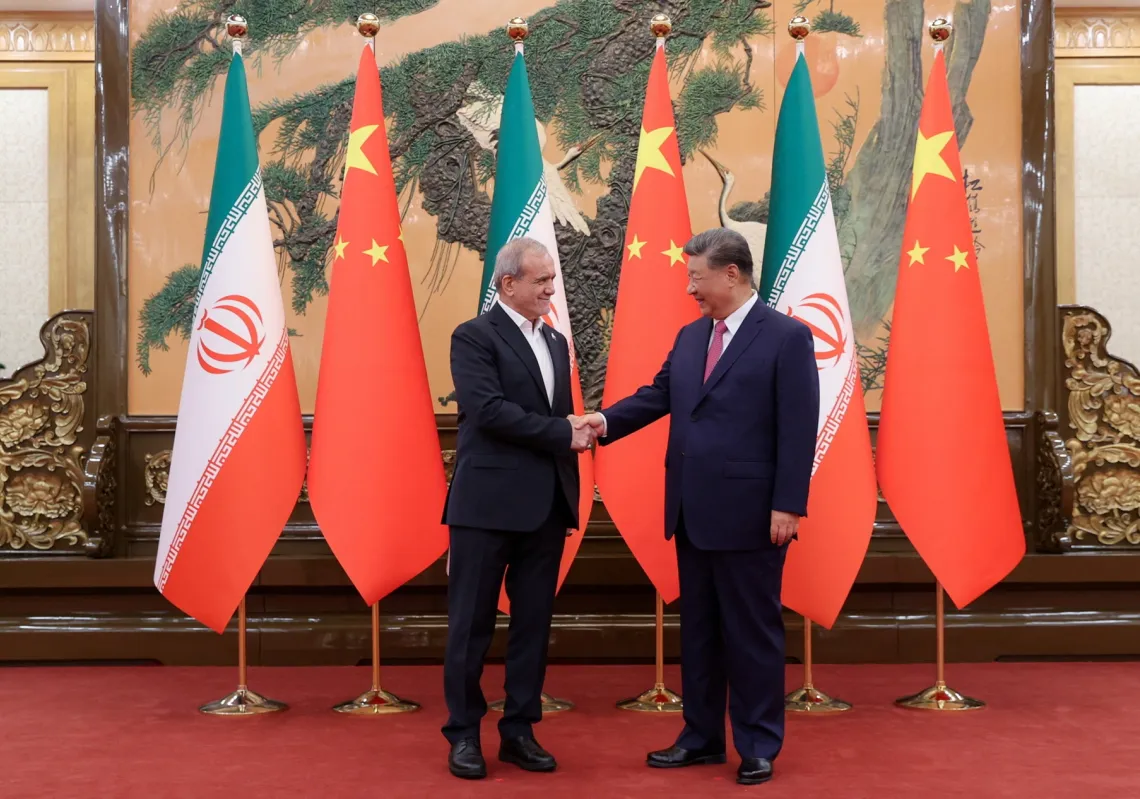
Chinese President Xi Jinping arrived in the Kyrgyzstan capital Bishkek this week, hailing a “golden period” in ties between the two Asian countries, at the 25th anniversary summit of the Shanghai Cooperation Organisation (SCO). Xi also shared the stage with Russian President Vladimir Putin and Iranian President Masoud Pezeshkian. Together, they lead the three most heavily sanctioned economies on earth.

Against the backdrop of war, the summit projected a continental Eurasia whose mission no longer seeks America’s permission. This year the SCO advanced two important objectives that echo Beijing’s long-term pursuits: a push for local-currency settlement to bypass Western financial systems (the Bishkek Declaration), and progress (at last) towards an SCO Development Bank.

Kyrgyzstan made launching an SCO Development Bank the goal of its 2026 chairmanship. China first proposed the concept back in 2010, and Xi revived it at the Tianjin summit in 2025. He called it a strategic measure to address big geopolitical shifts. Initially, Russia and India were wary of a bank China would dominate, but US actions have made them think again. Russia has been locked out of Western capital, Iran is under a US trade blackout, and those who trade with Iran are also now in the firing line.

An SCO bank offers obvious incentives. Central Asian states need infrastructure capital that no one else will provide on comparable terms. Escalating US pressure has been Beijing’s best recruiting tool. Unlike the China-based Asian Infrastructure Investment Bank and the New Development Bank, the SCO Development Bank will operate outside the dollar-denominated financial system. More than just a multilateral lender, it will also provide a settlement architecture that lets sanctioned or wary states move money outside the dollar-clearing system.

The summit comes a week after the US Treasury launched its so-called ‘economic D-Day’ against Iran and its trading partners. Chinese financial institutions now risk further US sanctions. However, if Washington were to sever a major Chinese bank from dollar clearing, it would be a grave economic act against Beijing and one that the US Treasury is most reluctant to use. Asked why, US Treasury Secretary Scott Bessent said: “Why would I want to blow up the global financial system?”
JIM WATSON / AFP
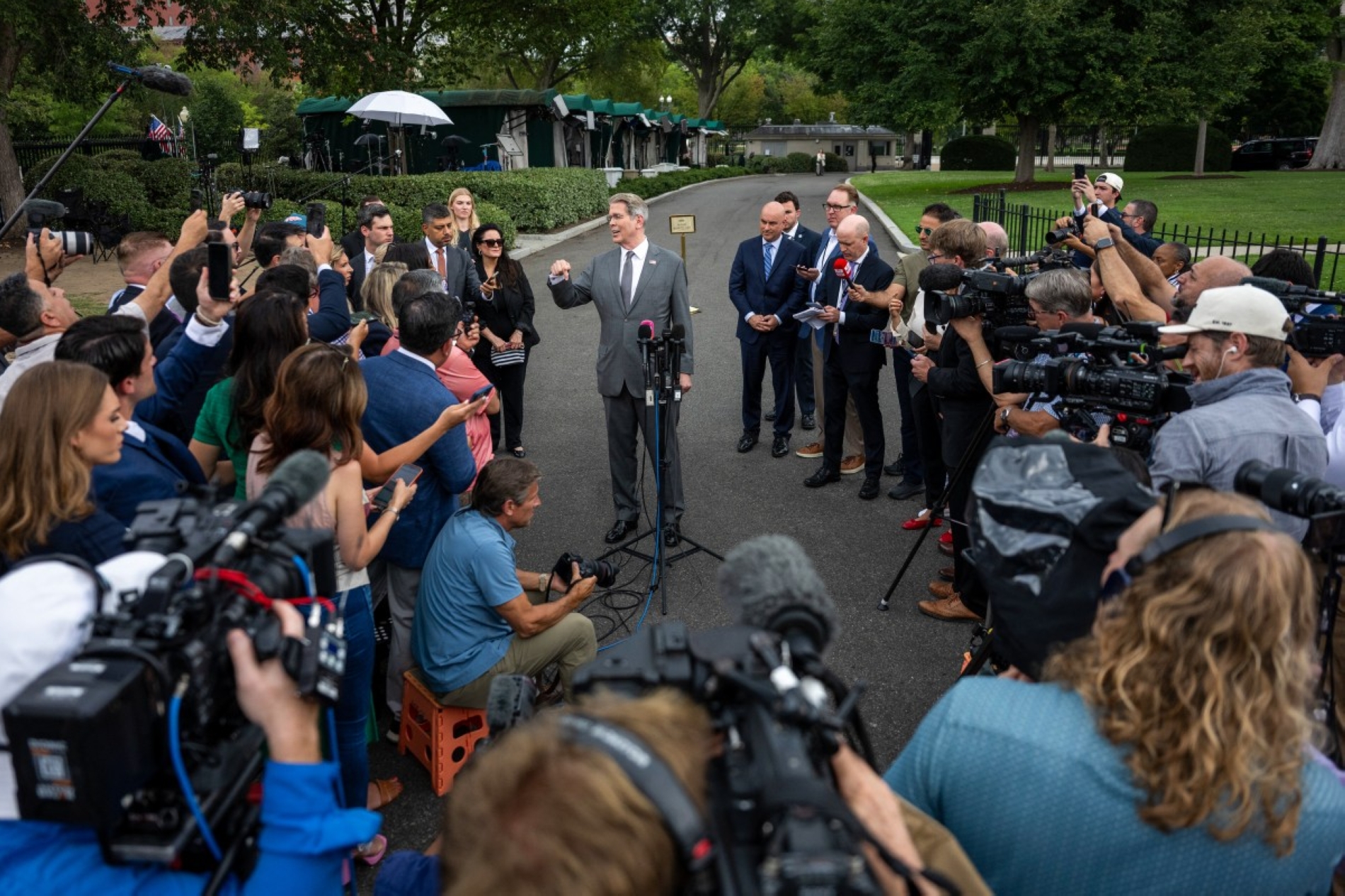
US Treasury Secretary Scott Bessent speaks to the press outside the West Wing of the White House in Washington, DC, on 20 August 2026.

It was a telling answer, because sanctioning a systemically important Chinese bank risks doing exactly that. China can hit back where America is genuinely exposed. For instance, Beijing controls the rare-earths that US defence and technology depend on, and has shown before that it will hold them to ransom. A Chinese bank sanction would almost certainly trigger that kind of retaliation.

Even the prospect of it forces China to de-dollarise. China's Cross-Border Interbank Payment System now links 1,800 institutions and has cleared the equivalent of $245tn in yuan annual transactions by March 2026. Iran's trade already clears outside the dollar through the yuan and barter. Every time the US Treasury threatens to weaponise the US-controlled SWIFT banking system, it boosts Beijing.
Every time the US Treasury threatens to weaponise the US-controlled SWIFT banking system, it boosts Beijing

Institutionalising an alternative

China's response to the US at the Bishkek Summit is to institutionalise an alternative. The SCO Development Bank and local-currency settlement turn a loose Eurasian gathering of illiberal nations into a functioning post-dollar regional economic bloc. This makes future American sanctions less effective.

Against this backdrop, and from China's standpoint, US sanctions have not isolated Iran. Rather, they have drawn it closer to the Eurasian bloc. The wider message from this is that states under US pressure have an alternative.

Photo by VYACHESLAV PROKOFYEV / POOL / AFP
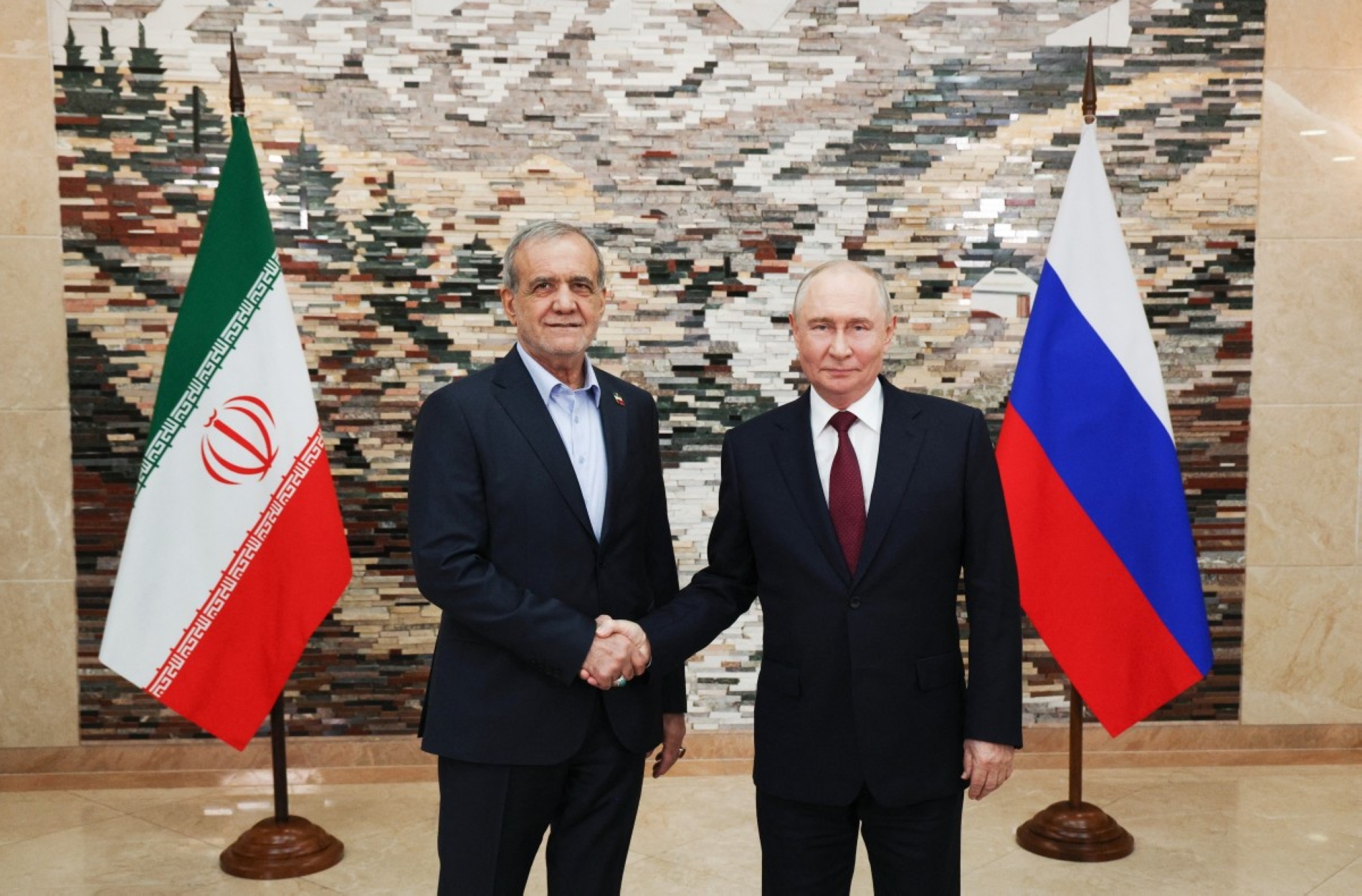
Russia's President Vladimir Putin and Iran's President Masoud Pezeshkian shake hands during a meeting on the sidelines of the SCO summit in Bishkek on 1 September 2026.

China also wants to 'lock in' the continental corridor end-to-end, with Xi's state visit to Kyrgyzstan likely to cement the spine of the rail corridor to Iran and Türkiye, with Egypt being the Mediterranean terminus. This physical infrastructure ensures China's trade and partial energy supply in the event of a maritime blockade. Xi hosted several bilateral meetings on the sidelines of the SCO Summit, aiming to cement the China-Kyrgyzstan-Uzbekistan railway, the southern spine of a continental corridor already carrying freight from Xi'an to Tehran in 15 days, compared with a month by sea.

Beyond that, Beijing wants to win the post-dollar world narrative. The leaders of the three most sanctioned nations standing side-by-side just days after Washington's 'D-Day' reframes American coercion as the gathering force for a Eurasian bloc of nations, one increasingly financed by (and settled in) yuan, gauged by rail and pipeline infrastructures, and built to route around every US-patrolled waterway.

US sanctions have not isolated Iran. Rather, they have drawn it closer to the Eurasian bloc. 

The project is far from complete. China still imports most of its oil by sea. The newly operational Arctic route (resulting from melting sea ice) and the rail corridor can still only carry modest volumes compared to seaborne trade. Meanwhile, an SCO Development Bank has been 'imminent' for 15 years, and India still has a veto.

Washington's selective access to US capital, the dollar, and trade has become China's best recruiter. For the first time in 80 years, two parallel global trade and financial architectures now exist: one maritime, dollar-denominated, and US-financed; the other continental, local-currency-denominated, and Chinese-financed. The politicisation of one led to the other. By denying China access to energy, Washington shows that there is an alternative to trading with America. China could not have designed it better.

font change