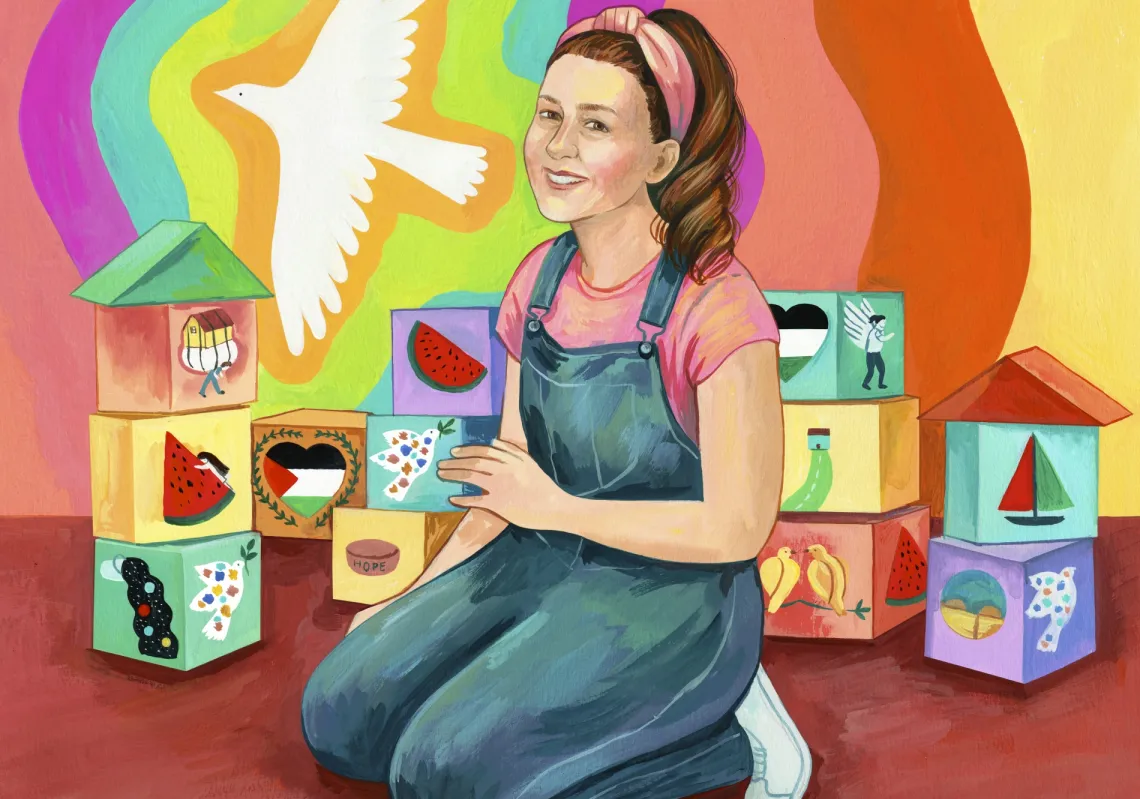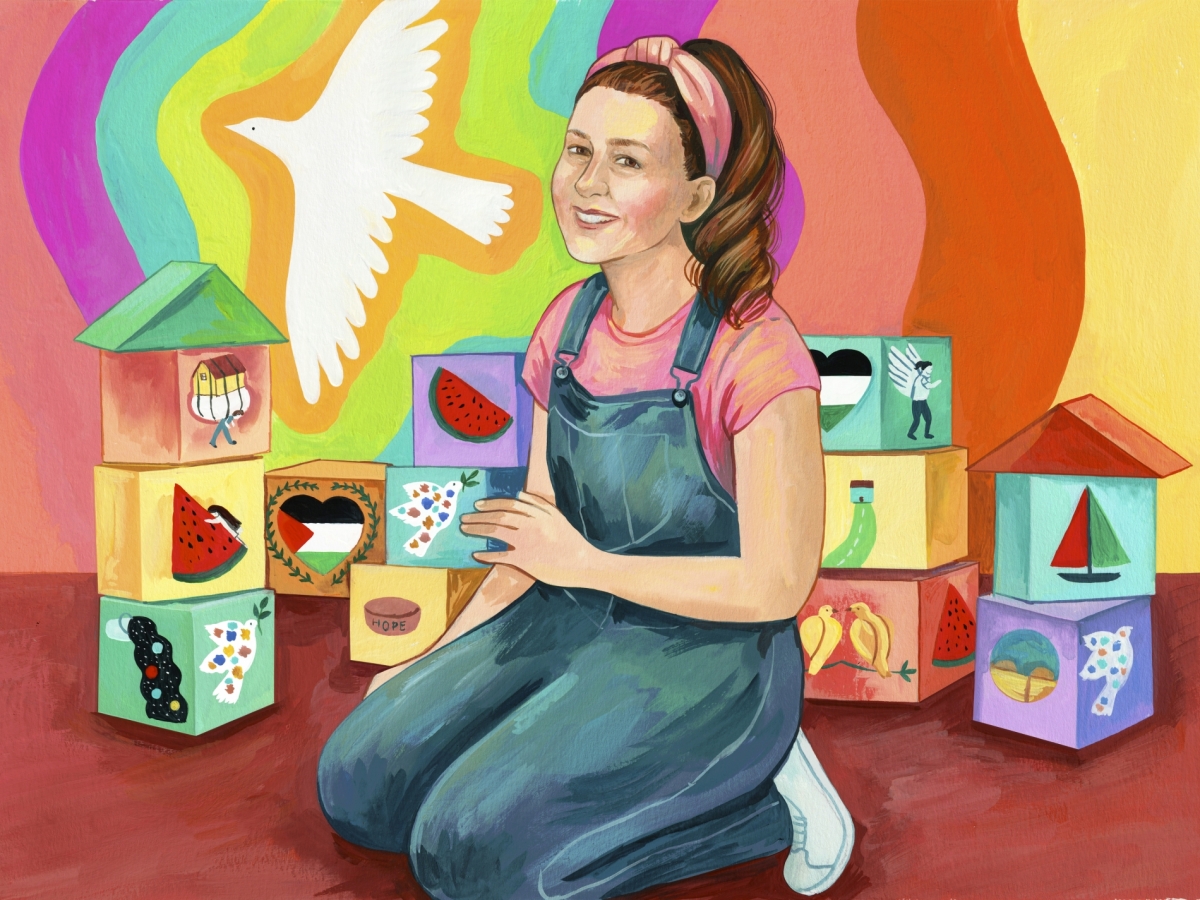

With her brightly coloured clothes, gentle voice, and slow, deliberate way of speaking to children, Ms. Rachel has become a prominent figure in early-childhood content. Her YouTube channel has more than 21 million subscribers, while her presence has expanded beyond the small screen to Netflix, books, toys, and music. In the process, she has gone from a children’s music teacher to a major media and cultural figure.
Behind the familiar name Ms. Rachel is Rachel Griffin Accurso, whose approach to teaching grew out of her studies in music and early childhood education, as well as her experience with her son’s speech delay. That experience prompted her to explore ways to help children develop language and communication through music, repetition, and direct interaction.
As her audience grew, her role gradually extended beyond songs and lessons for young children. She also became a public voice on issues affecting children and their rights, a role that would later draw her into one of the most divisive issues in the US: the plight of Gaza’s children.
Her professional relationship with children began as a teaching assistant at a preschool for children with disabilities. She later moved to New York, where she spent years working as a teaching artist, combining music and education. She subsequently earned a master’s degree in music education from New York University and worked as a music teacher at a public school. She also studied early childhood development and now holds two master’s degrees: one in music education and one in early childhood development.
She went on to create a successful project that drew widespread media attention, rooted in her experience with her son, Thomas. After his birth, she stayed at home with him during his first year and, by her own account, saw how music could soothe a child, strengthen bonds, encourage play, and support language development. When Thomas experienced a delay in speaking, she began looking for resources and methods that could help him communicate, drawing partly on early intervention and speech therapy techniques. That experience led her to create an in-person music class for babies and toddlers and eventually take the idea online to reach more families.
In 2019, she and her husband, musician and composer Aron Accurso, launched the YouTube channel Songs for Littles, which later became known as Ms. Rachel. Aron, who spent years working on Broadway, was a key partner in the project, composing and arranging the music, performing, and helping to run the programme.
At first, they filmed the episodes with basic equipment in their New York apartment. One of their earliest videos was recorded on a phone balanced on a stack of books. The channel’s audience was relatively small at first, but that changed during the pandemic. With schools closed and families spending more time at home in 2020, demand for Rachel’s content grew rapidly. She and her husband also devoted more time to the project, as she taught over Zoom and the theatres where Aron worked remained closed. Since then, the channel has grown into a global phenomenon.
Magnetic appeal
Ms. Rachel’s appeal to children goes beyond songs and bright colours. From the moment an episode begins, she addresses the child directly, as if speaking to them face to face. She looks into the camera, speaks slowly and clearly, repeats words, and uses expressive facial expressions and physical gestures to reinforce their meaning. She then asks a question and waits several seconds for a response. Songs, imitation games, movement, sign language, words, and sounds are woven together to make the child an active participant rather than a passive viewer.
Accurso says the slower pace is intentional. The programme draws on research into language development as well as techniques used by speech and early childhood specialists, setting it apart from much of the fast-paced digital content aimed at children.
In a 2026 interview with YouTube, she explained that speaking slowly, clearly, and with enthusiasm can help young children develop language, and said she and her husband had no plans to speed up the programme to follow the platform's trends. Researchers in children’s media have similarly pointed to repetition, movement, sounds, and close-ups of faces as factors in the programme’s success. Julie Dobrow, a scholar of children and media, says such techniques can hold children’s attention, aid comprehension, and help them remember what they have watched.
Accurso readily acknowledges Fred Rogers, host of the celebrated American children’s programme Mister Rogers’ Neighbourhood, as one of her most important influences. She grew up watching his programme and now describes him as one of her heroes. That influence is reflected in the measured pace of her own work, her direct address to the camera, and, above all, her belief that a child should be treated as a person who deserves to be spoken to with respect.
Ms. Rachel’s appeal now extends beyond children. For many parents, she has become a trusted figure on YouTube, where it can be difficult to distinguish genuinely educational material from content designed mainly to hold a child’s attention. Rachel herself is cautious about screen time. In an interview with Glamour, she said the key is “balance”: digital content can have value, but it should never replace the other experiences children need.
As her audience’s trust grew, so did Accurso’s sense of her own role. In 2023, she became an ambassador for Save the Children and advocated for universal access to early childhood education, affordable childcare, and paid family leave, arguing that concern for children cannot be separated from the conditions in which their families live.
@msrachelforlittles It will break you.
original sound - Ms Rachel
Gaza as a turning point
Accurso’s concern for Gaza did not begin with an explicitly political stance. It began with images of children on her social media feeds. In an interview with UK newspaper The Independent, she recalled several scenes that had stayed with her, including the story of five-year-old Hind Rajab, who was murdered by the Israeli army after a desperate three-hour phone call to the Palestinian Red Crescent, and footage of a boy no older than five who appeared to be in severe shock after a bombing. He was trembling, his eyes wide with fear, until a doctor embraced him and reassured him that the bombing was over.
Hind’s voice and the look in the boy’s eyes remained with her, and she could not turn away from the injuries, malnutrition, and fear she was seeing. As an early childhood specialist, she was particularly conscious of the long-term effects that trauma and malnutrition can have on a child’s development.
A Truthdig report published in September, citing UNICEF data, said that around 58,000 children in Gaza had lost one or both parents and that more than one million needed protection and psychosocial support because of the war. The International Rescue Committee estimated that between 15,000 and 19,000 children had lost both parents, while around 17,000 were unaccompanied or separated from their families. The consequences for children therefore go far beyond death and physical injury.
In May 2024, she launched a fundraiser for Save the Children’s Emergency Fund to support children affected by conflicts in Gaza, Sudan, Ukraine, and the Democratic Republic of the Congo. She recorded about 500 video messages herself and raised $50,000.