

On 2 September, the Dutch central bank announced that it had quietly moved around 86 tonnes of its gold from New York and Ottawa to London between March and August of this year. It said the aim was not to repatriate the gold to the Netherlands, but to improve its liquidity and tradability, strengthen crisis preparedness, and achieve a more balanced distribution of risk across its storage locations.
It was not a case of shipping dozens of tonnes of bullion across the Atlantic, however. According to the World Gold Council, New York sold around 59 tonnes and replaced it with internationally tradable gold in London. More than 27 tonnes were physically transferred from North America to De Nederlandsche Bank’s facility in Zeist, while a similar amount was moved from Zeist to London. The operation was therefore a strategic redistribution of gold reserves, rather than a physical transfer by air or sea.
Following the operation, London’s share of Dutch gold reserves rose to around 32.1%, with 30.8% held domestically. Meanwhile, the amount held in New York and Ottawa fell to around 18.5% each. Whilst the gold was moved out of the United States and Canada, it was not moved out of the Western financial system, and London is one of the world’s leading centres for physical gold trading.
Many were quick to jump to conclusions, but it is difficult to interpret the operation as evidence of lost confidence in the US financial system. It is more likely aimed at striking a better balance between security, liquidity, and tradability. World Gold Council data suggests that this was part of a trend.

Diversifying storage
In its 2026 survey, 10% of participating central banks said they had diversified the overseas locations of their gold stores over the last 12 months, while 9% said they planned to do so imminently. The Bank of England is the preferred overseas storage location, chosen by 57% of respondents, while 49% held at least some of their gold domestically. These figures are important because they point to a broader shift in reserve management.
France is in a different position. The Banque de France ceased holding its remaining 129 tonnes of gold in New York but did not physically transfer the bullion to Paris. Instead, it sold the gold and bought replacement bullion in Europe that met London Bullion Market Association (LBMA) standards. The operation involved 26 transactions between July 2025 and January 2026, generating an exceptional capital gain of €12.8bn while leaving France’s gold reserves unchanged at 2,437 tonnes.
France now stores all its gold reserves domestically. Since 2005, its policy has been to standardise its gold bars and improve their quality and tradability, and the bullion held in New York did not meet the required purity, with a fineness below the 99.99% threshold applied in the London bullion market. The €12.8bn capital gain strengthened the bank’s balance sheet, meaning it was more able to absorb interest rate pressures and economic volatility without expanding the monetary base.
Interpreting the French operation as a response to political concerns or declining confidence in the US would not align with the Banque de France's stated rationale, but the strategic outcome is nevertheless significant: France now holds its gold reserves entirely within France, giving it direct control over its entire stock.
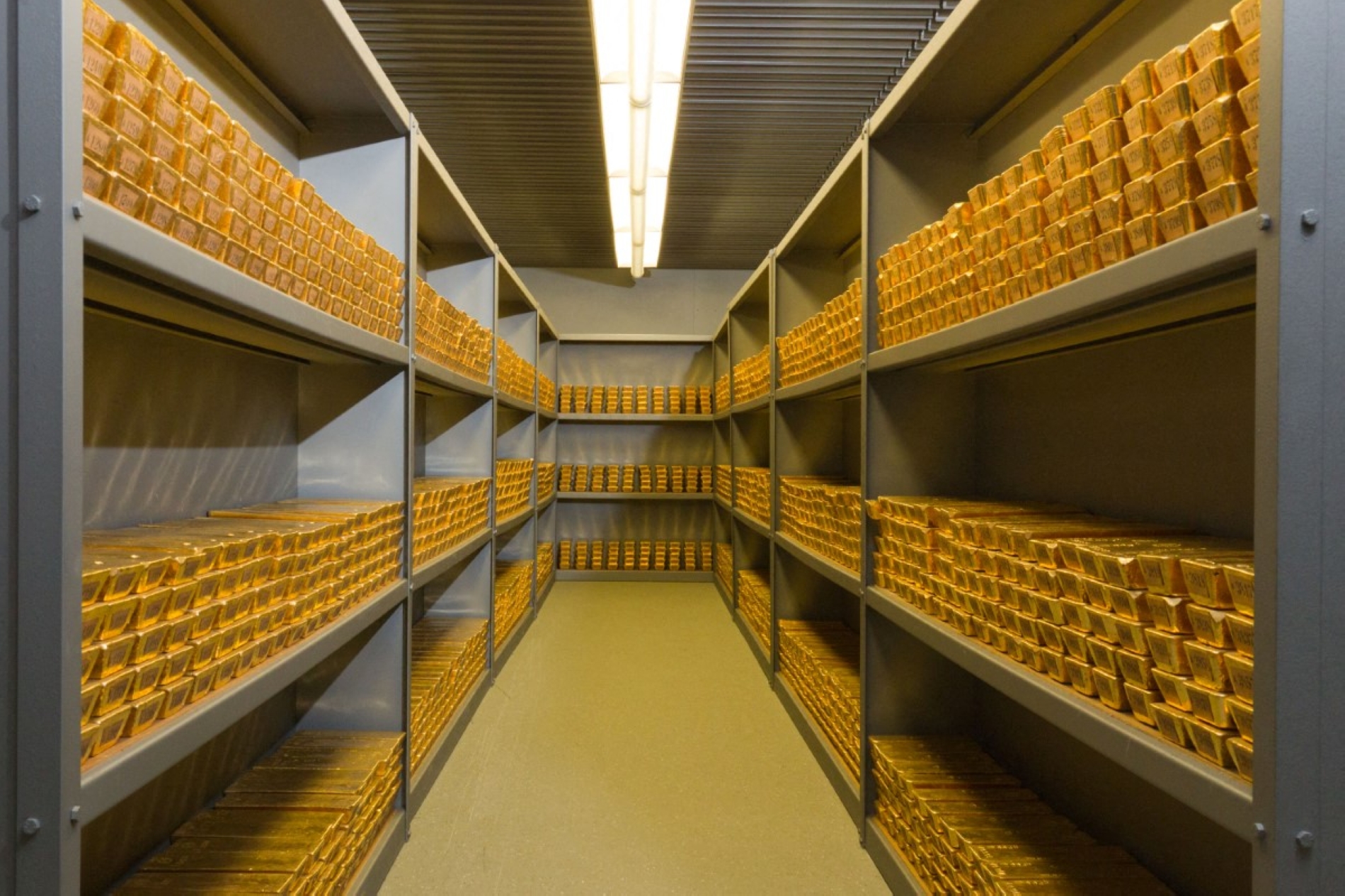
Distribution choices
Germany is different again. Between 2013-17, Deutsche Bundesbank repatriated 674 tonnes of gold to Frankfurt, which attracted considerable attention. At the end of 2025, Germany held around 3,350 tonnes of gold, with 1,710 tonnes stored in Frankfurt, 1,236 tonnes in New York, and 404 tonnes in London, meaning that while 37% of Germany’s gold reserves are still held in New York, Frankfurt is now its largest store.
Deutsche Bundesbank says the distribution choices relate to security considerations, tradability, and access to global markets, but Germany has made no significant repositioning of its gold reserves in the last two years, suggesting that broader conclusions cannot easily be drawn from the Dutch and French moves. Indeed, Europe has no common policy for repatriating gold held in the US. Instead, each country makes its own decisions based on the size of its reserves, the specifications of its bullion, its logistical arrangements, and its assessment of security and liquidity considerations.
It is probably more accurate to speak of a ‘redrawing of the gold storage map’ than a ‘return of European gold to the continent.’ A central bank that holds part of its gold reserves in New York benefits from proximity to the US market and the financial infrastructure associated with the dollar. Equally, holding gold in London provides ready access to the world’s largest centre for gold trading, while domestic storage gives central banks direct control over their holdings.
Risk management
Distributing gold across several locations (as opposed to just one) can be a risk management tool, invoking the age-old warning about ‘putting all your eggs in one basket’. Holding an entire reserve in a single city creates geographical concentration risk, while spreading it across several centres can reduce exposure to logistical disruptions, political crises, or restrictions on the movement of assets.
The high costs associated with physically transporting gold (both logistical and insurance-related) encourage central banks to use more flexible arrangements, including clearing mechanisms and bullion swaps through major trading centres. This reduces the risks and premiums associated with moving large quantities of gold across borders, especially during periods of crisis. The position was made more acute since the sweeping Western sanctions imposed on Russia in 2022, with many Russian overseas assets frozen.

The repositioning of European gold has not necessarily been a direct response to those sanctions; the reasons vary from one central bank to another. Nevertheless, Europe’s reassessment of where it stores its gold is difficult to separate from the economic and political climate that has emerged across the Atlantic in recent years. US-EU trade tensions, tariffs, and countermeasures have prompted European companies and governments to reassess the risks associated with economic interdependence.
In the first quarter of 2026, EU exports to the US fell by 30.4% compared with the same period in 2025, despite the transatlantic trade and investment relationship still being the largest in the world, according to the Directorate-General for Trade and Economic Security of the European Commission. Some suggested that the transfer of Dutch gold from North America to London was a retaliatory measure or a response to US tariffs, but there is no evidence that it was.
No new demand
Central banks have shown growing interest in gold as a reserve asset that is not a liability of any sovereign state or issuing financial institution. According to the World Gold Council, central banks bought 863 tonnes of gold in 2025, and 289 tonnes in the second quarter of 2026. Almost nine in ten reserve managers expected central banks’ gold holdings to increase over the following 12 months.
It is important to distinguish between purchasing gold and relocating existing holdings. Moving gold from New York to London, as the Dutch did, does not create new demand because it does not increase the amount of gold held. Similarly, the French did not increase the Banque de France’s total gold holdings.
What supports gold prices is the global trend toward increased gold holdings by central banks, not simply changes in the vaults where the bullion is stored. Similarly, an increase in the value of gold within official reserves does not necessarily reflect a corresponding increase in physical holdings. In the euro area, the accounting value of gold can rise substantially as its market price increases, even if the quantity of gold held remains broadly unchanged.

Not a dollar substitute
Gold's growing importance does not mean that European or other central banks are preparing to replace the dollar with gold. The dollar remains the largest currency component of global foreign exchange reserves. According to IMF data, it accounted for 57.13% of global foreign exchange reserves in the first quarter of 2026. Gold differs from reserve currencies in one fundamental respect: it is not a liability of any issuer. It can therefore be used to diversify risk alongside the dollar, the euro, sterling, and other currencies, rather than as a complete substitute for them.
The World Gold Council said 74% of reserve managers expected the dollar's share of global reserves to decline over the next five years, while anticipating an increase in gold's share. The more significant trend, therefore, is not a 'flight from the dollar,' but a partial rebalancing of reserve portfolios in response to risks. For the euro, these operations have a limited direct impact, since gold does not provide fixed backing for the euro, nor does the location of bullion determine the exchange rate or money supply.