Eight tests for the Trump-Xi 2026 détente

The achievements of September’s US-China summit are underwhelming: a short trade truce extension, a reciprocal tariff reduction, a coal purchase, talks on AI, and two pandas. The rest is what matters

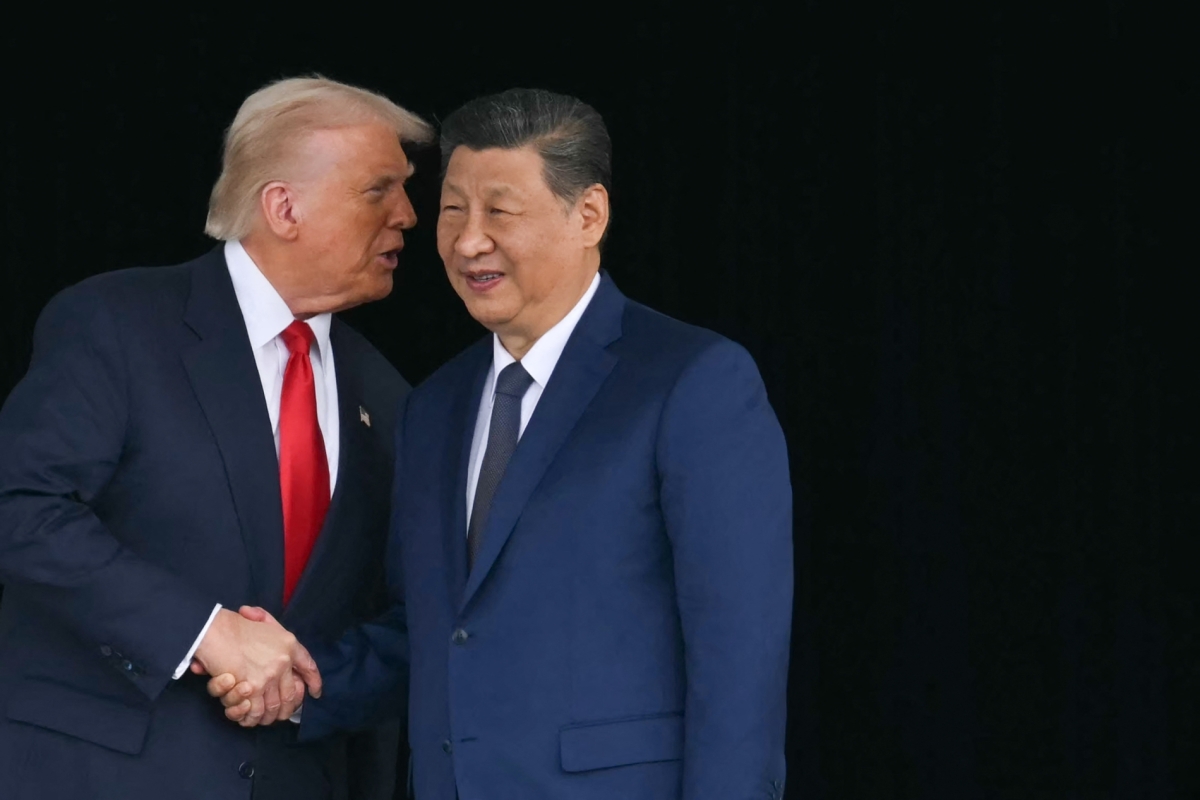
US President Donald Trump (L) and China's President Xi Jinping shake hands as they leave after their talks at the Gimhae Air Base, located next to the Gimhae International Airport in Busan on 30 October 2025.
ANDREW CABALLERO-REYNOLDS / AFP
US President Donald Trump (L) and China's President Xi Jinping shake hands as they leave after their talks at the Gimhae Air Base, located next to the Gimhae International Airport in Busan on 30 October 2025.

Eight tests for the Trump-Xi 2026 détente

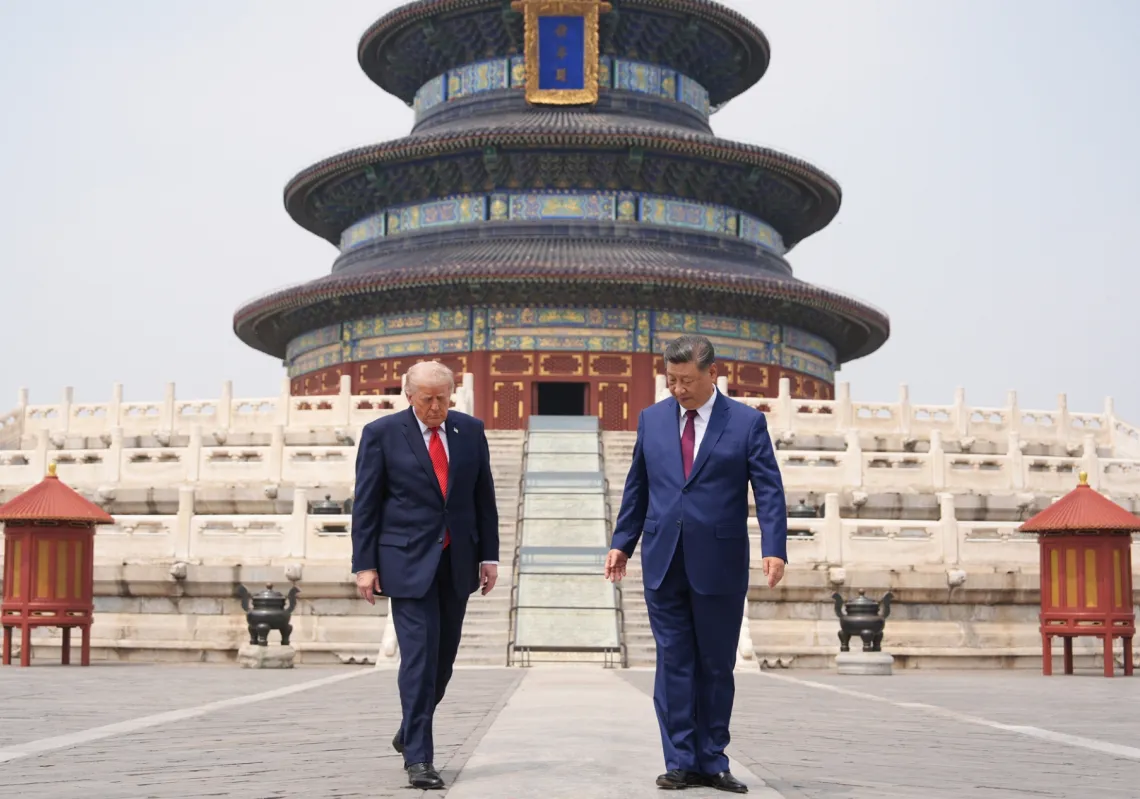
When it came, the visit of Chinese leader Xi Jinping to the United States last month was more pomp and pageantry than substance. That did not make it irrelevant. Across Asia, symbolism matters, whether to the Chinese audience at home or to political figures in India, Japan, Taiwan, and the Middle East. Based on symbolism, China came away from Washington having assured its status as an equal.

First, it began with protocol: President Trump greeting President Xi on the tarmac at Joint Base Andrews. In more than six decades, only the Pope has had such an honour. US First Lady Melania Trump, who shuns the limelight, co-hosted the three-day public spectacle, which also included a tour of the National Archives tailored for the First Couples. Trump had received a warm welcome to Beijing in May and was reciprocating.

The diplomatic language was also telling. Washington officially adopted Beijing’s articulation of a “constructive relationship of strategic stability”. Xi proposed building the relationship on mutual respect, fairness, and reciprocity, and the White House echoed it. The two leaders pledged to attend each other’s summits as hosts of APEC and the G20 later this year. This is the nearest thing to a G2 invitation.

Two reciprocal rounds of presidential visits between the US and China within a year are unprecedented in 21st-century major power relations. In Washington, both sides focused on projecting equal power. However, they made little progress in defining such a new balance of power in critical areas such as Taiwan, rare earths, nuclear arms, AI, advanced technology, Ukraine, and Iran. The issues that remain outstanding will shape the fate of the emerging US-China détente.

Different interpretations

The official readouts (post-summit briefing notes) from Beijing and Washington show how they diverge even on the very little they achieved. Both agreed on the Chinese articulation that commits them to building “a constructive relationship of strategic stability on the basis of respect, fairness, and reciprocity”. Xi reminded his host that the two had agreed to the “new vision” in May and further spelt out its substance: cooperation as the mainstay, competition within proper limits, and differences managed.

Other areas are less sure. The US factsheet says China will buy at least ten million metric tonnes of US coal in both 2027 and 2028 and that the two sides have established a new Board of Investment. The Chinese readout mentions neither. The White House also affirmed that the US military had preserved a free and open Indo-Pacific and advocated trilateral arms control talks with Russia. Neither appears on China’s list. Beijing’s list included an agreement to conclude a military crisis-communication memorandum as soon as possible, something the US did not mention.

On AI, Trump is now calling it ‘Super Intelligence’, and the White House said he and Xi had established a US-China Super Intelligence Dialogue, yet the Chinese readout still referred to the technology talks as an ‘AI Dialogue’. There was also confusion over whether the US asked China to buy American weaponry (Trump later denied it). The main question for the rest of 2026 is whether Washington is pursuing a ‘China strategy’ or a ‘China relationship’.
Reuters
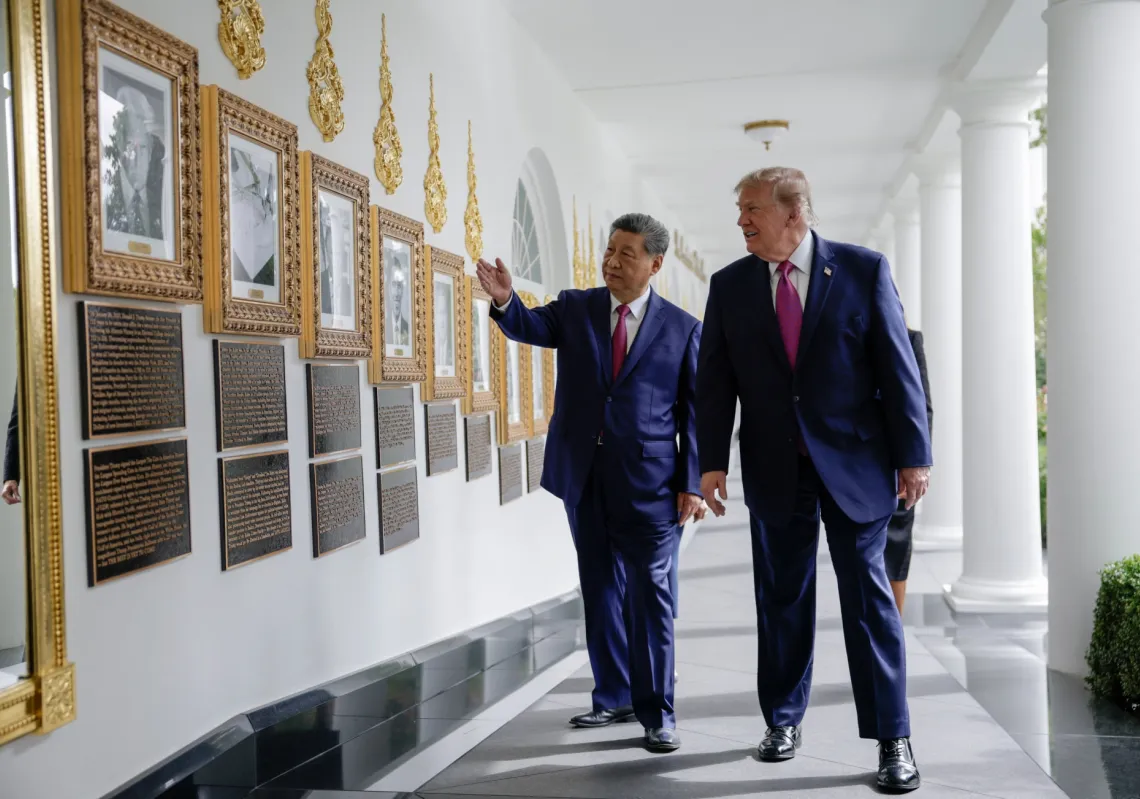
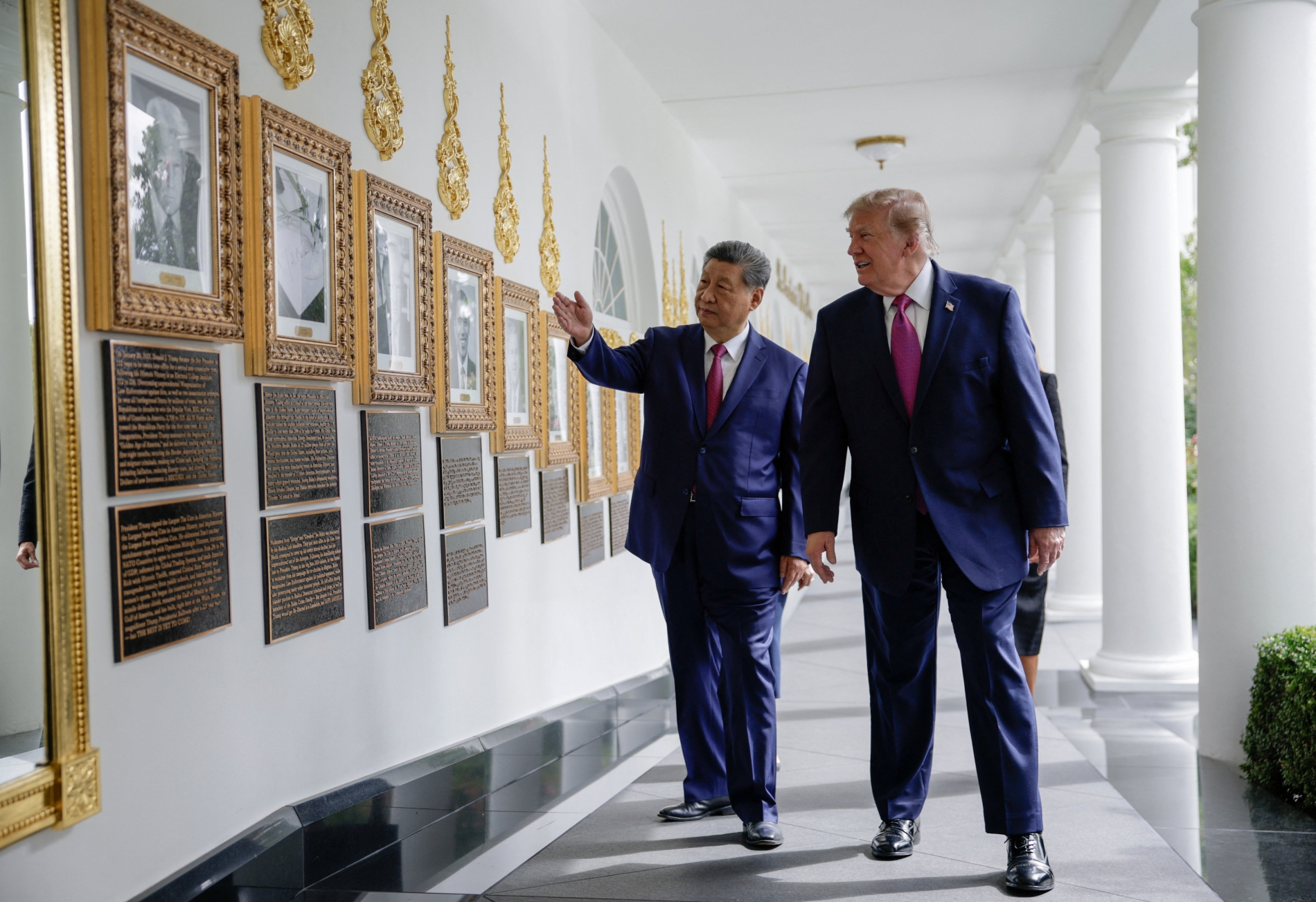
US President Donald Trump and Chinese President Xi Jinping view portraits of former US presidents at the White House, Washington, DC, on 24 September 2026.

A US-China vision

Beijing articulated a new vision of a constructive relationship of strategic stability, based on mutual respect, fairness, and reciprocity. In 2013, Xi proposed to former US President Obama a “new model of major-country relations founded on mutual respect”. However, Washington stopped using the phrase after it became clear that Chinese officials treated the word ‘respect’ as a US commitment to honour China’s core interests, including over Taiwan, the East China Sea, and the South China Sea.

In Beijing in May, Trump and Xi adopted ‘strategic stability’ as an umbrella statement, and in Washington in September, they attached the three qualifiers (mutual respect, fairness, and reciprocity). The phrase ‘strategic stability’ is borrowed from the US-Soviet détente during the Cold War. It describes a dynamic between equals whose core interests are in conflict and whose objective is to avoid direct collision.
Washington and Beijing remain fundamentally divided over what this new vision of US-China relations means

The White House factsheet is titled A Fair and Reciprocal Relationship. To the US, this is the language of market access. Chinese Foreign Minister Wang Yi thought differently. To China, 'respect' implies respecting its sovereignty, its chosen social system and development path, and its core interests. 'Fairness' means avoiding unilateral or absolute dominance, including removing US frontier tech control over China. 'Reciprocity' means sovereign equality, with neither country ranked above the other. To China, it means: stop contesting our political system, endorse our territorial claims and technological ascent, and treat us as a political equal.

The two countries therefore remain fundamentally divided over what this new vision of US-China relations means. Following the summit, eight fundamental issues remain unresolved. Outlined here, each will test the fate of the emerging US-China détente.

REUTERS/Olivia Le Poidevin
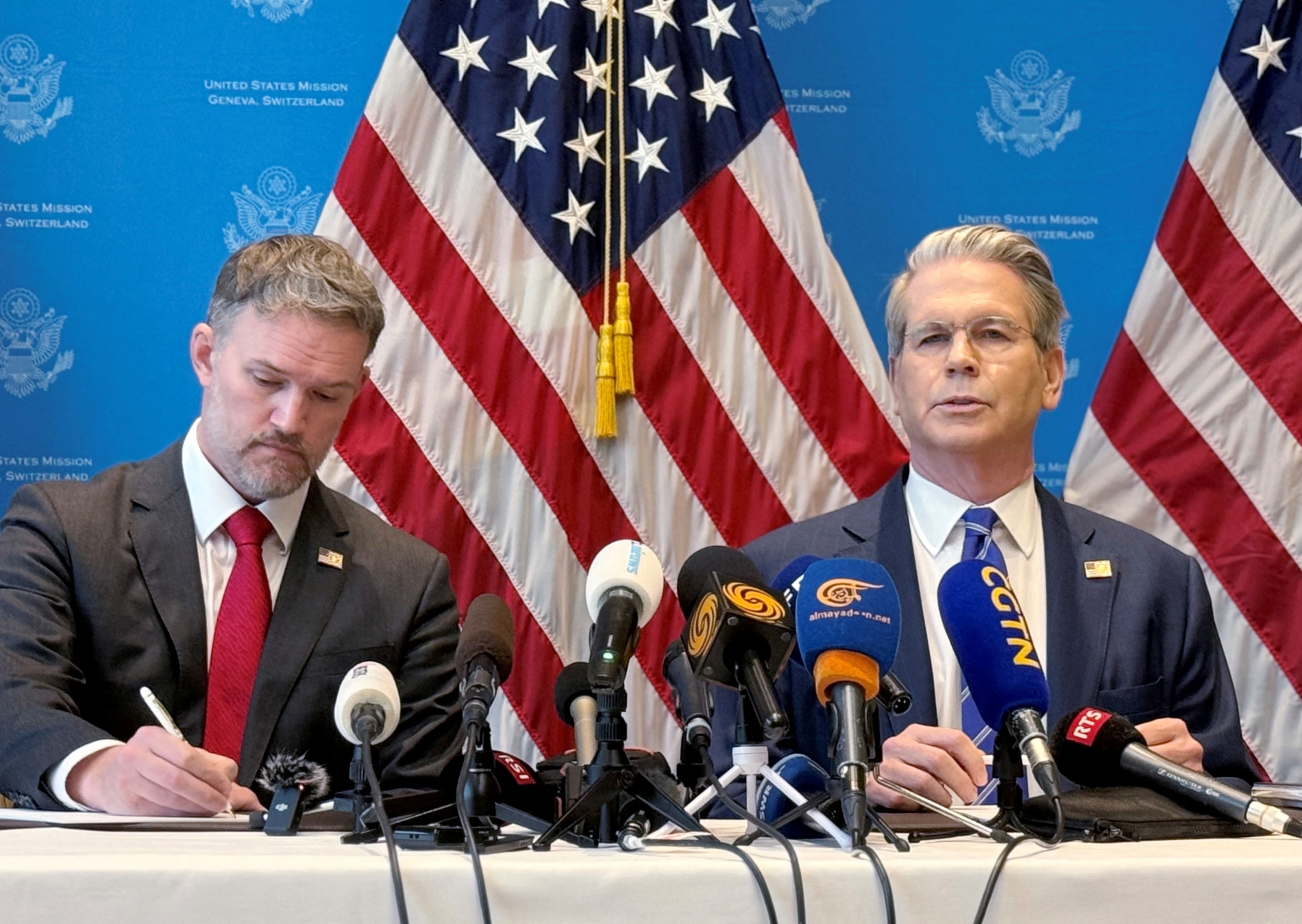
US Secretary of the Treasury Scott Bessent and US Trade Representative Jamieson Greer attend a news conference after trade talks with China in Geneva, Switzerland, 12 May 2025.

1. Trade and Tariffs

The trade truce struck in Busan last year was due to expire on 10 November, but US Treasury Secretary Scott Bessent announced a two-month extension until 10 January before Xi arrived, adding that he did not know whether a larger trade deal would follow, or whether the truce would be extended again in 2027.

The new US-China Board of Trade agreed to recommend lower tariffs on $30bn of non-sensitive goods in each direction, including American corn and dairy, seafood, and medical devices for Chinese toys, small appliances, fireworks, and holiday decorations. However, no timeline for the tariff reduction was set, and US soybeans are not on China's list, leaving Trump's farming voter base on edge.

The White House adds that both continue to work on rare-earth shortages with the goal of ensuring shipments return to appropriate levels, but they have not reached an agreement. Meanwhile, the Trump administration, after the Supreme Court ruled its tariffs unlawful in February, is rebuilding its trade-war armoury under Section 301, and a 7.5% 'overcapacity duty' is reportedly being prepared.

If the Board of Trade's recommendations are adopted, most of the $30bn in Chinese goods on the US list would fall to the most-favoured-nation rates. On those products, Chinese goods would pay lower tariffs than those from Japan, South Korea, India, and most of Southeast Asia, which may shock the US's Indo-Pacific trade partners.

2. Artificial Intelligence

Technology leaders have warned about the possible harm of runaway AI capabilities, and Xi has said that AI must remain under human control. China's state security tsar has said that AI safety equates to political stability. Trump, however, is in no mood to interfere, saying he wants to "leave it exactly where it is". Neither readout mentions China's distillation of US models, competitive out-acceleration of frontier models, risks of bioweaponry, or a common understanding on AI safety. 'Pacing the frontier' is not an option since neither country will voluntarily slow its industry's AI progress.

Jim Watson / AFP
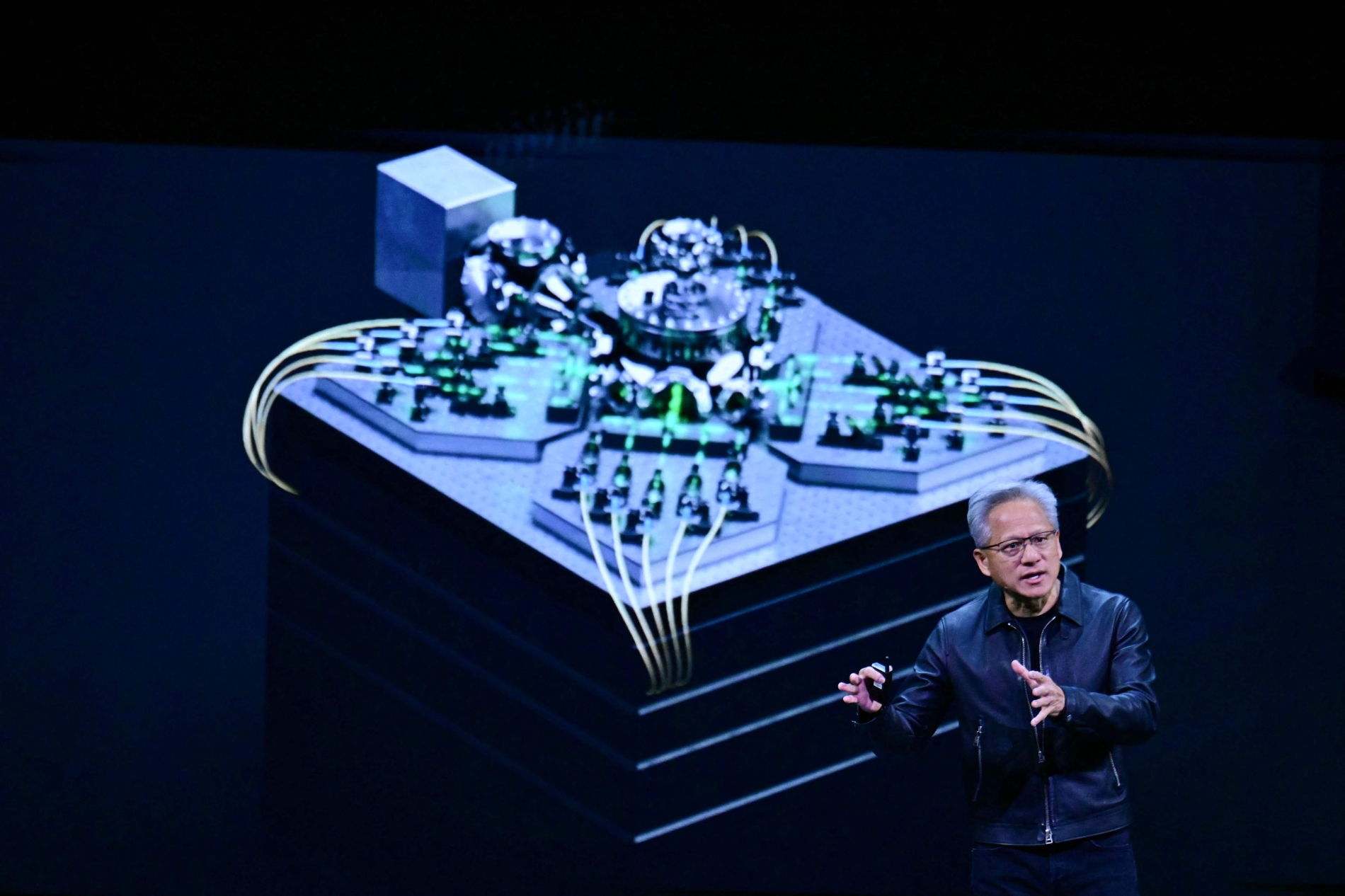
NVIDIA chief executive Jensen Huang speaks during a technology conference in Washington, DC, on 29 October 2025. NVIDIA processors are sought by Saudi Arabia.

3. Rare Earths and Chips

The real symmetrical leverage between the US and China is between rare earths and microchips. China dominates rare-earth exports, while the US dominates the advanced chip industry. Three weeks before the summit, some Chinese suppliers had stopped shipping to US customers, some American companies had waited more than six months for licenses, and shipments of yttrium (used in electronics, ceramics, alloys, and medical treatments) were running at about half their 2024 level. A US official complained that Beijing was not complying with the Busan truce, but the US authorised sales of US firm Nvidia's H200 chips to China last December, and by July, very few shipments had taken place. If Huawei can replace Nvidia's chips, China will have less to worry about.

4. Taiwan

China's summit readout says Xi hopes the US will oppose Taiwan's independence, while the White House does not mention Taiwan. A $14bn US arms deal to Taiwan has been on hold since May, when Trump called it a "negotiating chip". The sales delay may be extended until after the Shenzhen and Miami summits. In 1982, the Reagan administration assured Taipei that it had not agreed to consult Beijing on US arms sales to Taiwan, and little suggests a change in US Taiwan policy.

China sees Taiwan as a breakaway province that needs to be brought back under Beijing's control, whereas Taiwan sees itself as a sovereign state like any other. The aim is to avoid a US-China confrontation over the island, and both sides recalled that they fought side by side as allies during World War II in the post-summit readouts (even though the US ally was not the Chinese Communist Party but the predecessor of Taiwan's current leadership).

5. Nuclear arms control

On nuclear weapons, the White House says Trump advocated three-way arms-control talks with Russia and China. Trump first proposed this in 2020, but there was little enthusiasm. US diplomats have pressed their Chinese counterparts over an alleged 2020 nuclear test, asking for more notice of such things. China has more than 600 warheads, whereas the US and Russia each hold more than 5,000. The two leaders made no forward movement on nuclear data exchange, launch notifications, or inspections, leaving a nuclear arms race to gain momentum.

إدواردو رامون

6. Russia

The White House factsheet lists Russia among the leaders' discussion topics, while China's readout says the leaders discussed Ukraine. Russian President Vladimir Putin is due to attend the meeting in Shenzhen, and he and Trump have discussed a three-way meeting with Xi. China will remain a leading buyer of Russian oil and a supplier of dual-use goods, and Trump recently agreed to let Russia sell its diesel, when this had previously been sanctioned. A Trump-Xi-Putin meeting in China would leave Ukraine and the European Union excluded.

7. Iran

Both official statements say no country may impose tolls on international waterways. This is aimed at Iran and its stated intention to levy tolls on ships sailing through the Strait of Hormuz, through which Iran's Revolutionary Guard has attacked several vessels in recent months. In Islamabad in June, it seemed the parties agreed to halt military operations and open the Strait to allow 60 days of talks. Xi advocated returning to this position. Beijing's readout states that Iran should honour its commitment not to develop nuclear weapons but does not say what it would do if Iran did not.

China remains Iran's major oil buyer, and Washington has sanctioned small Chinese refiners while sparing its major banks from secondary financial sanctions. The day after Xi left Washington, Trump rejected Tehran's offer to reopen the strait within seven days in exchange for ending the US blockade of its ports, releasing frozen funds, and easing sanctions on its oil. With the war draining America's military arsenal and pushing Iran closer to China, Beijing sees no reason to hurry.

With the US war on Iran draining America's military arsenal and pushing Tehran closer to Beijing, China sees no reason to hurry

8. North Korea

The White House says North Korea was discussed between Trump and Xi (China says it was the Korean Peninsula). In August, Trump said that he would meet Kim Jong Un this year, two days after scaling back US military drills with South Korea. Trump further specified North Korea as having 57 nuclear warheads. The China-hosted APEC summit is likely to be when Trump and Kim will meet. The prospect is therefore of a US president who says one adversary (Iran) must never be allowed to develop nuclear weapons sitting down with another (North Korea) that has developed dozens.

Sovereign equal

The next time the two men meet, it will be in Shenzhen in China, two weeks after the mid-term elections. If the votes go against him, Trump could lose control of the Senate or the House of Representatives, or both. Xi, meanwhile, is safely ensconced, busy building a global order centred around China. Over the coming weeks, tests will come in trade and arms sales, with 25 states suing over the Section 301 tariffs and lawmakers from both parties criticising the delay in weapons to Taiwan.

Constitutionally, this is Trump's final presidential term, and he may be hamstrung for the second half, so Xi will need to assess whether a concession to the current US president can withstand the next Congress or administration. Beijing must assume both answers are no, so it is avoiding any big, genuine concessions; instead, the symbolism of Xi's visit has positioned China as a sovereign equal to the United States. For now, that will do nicely.

font change