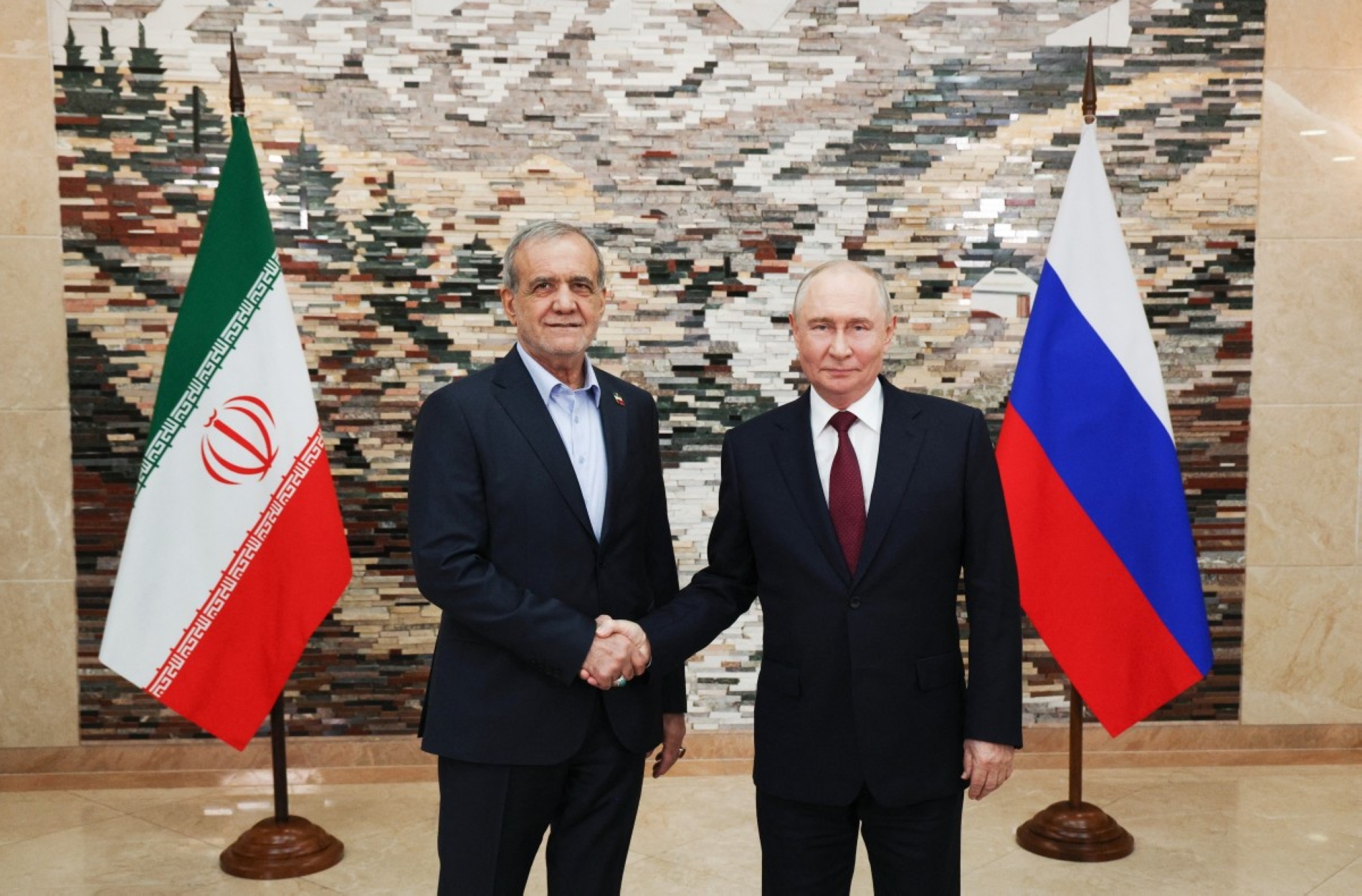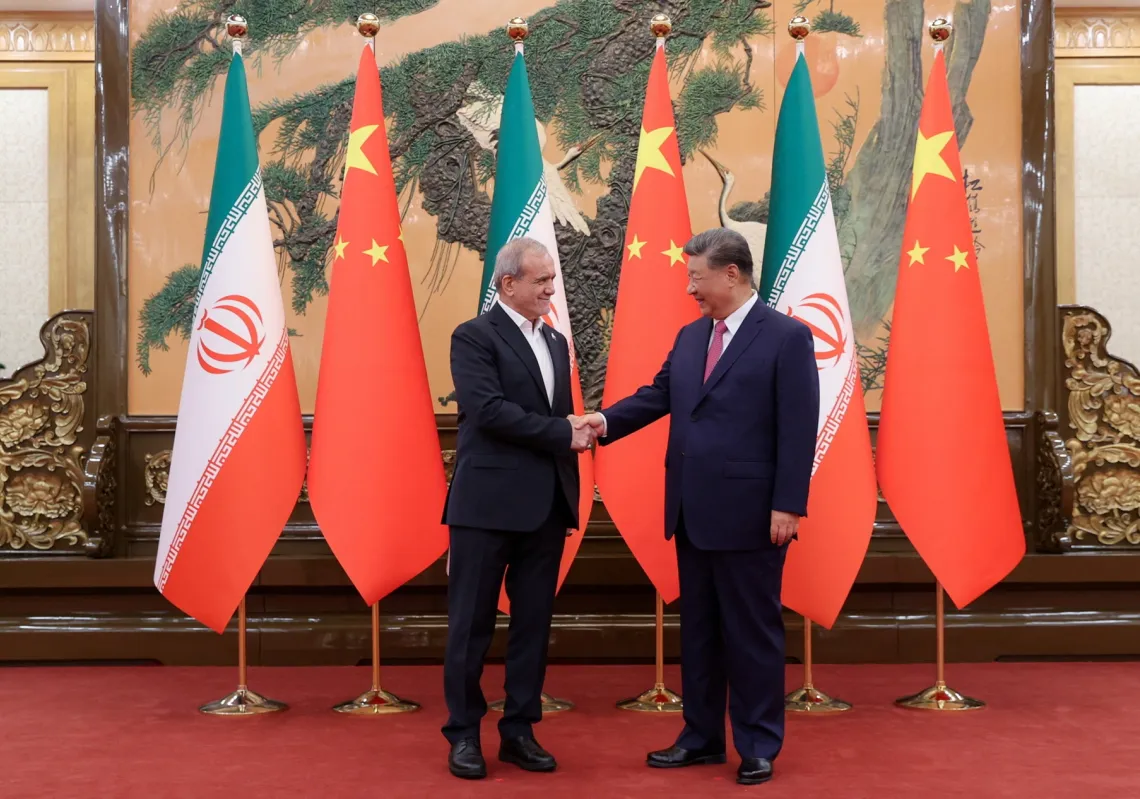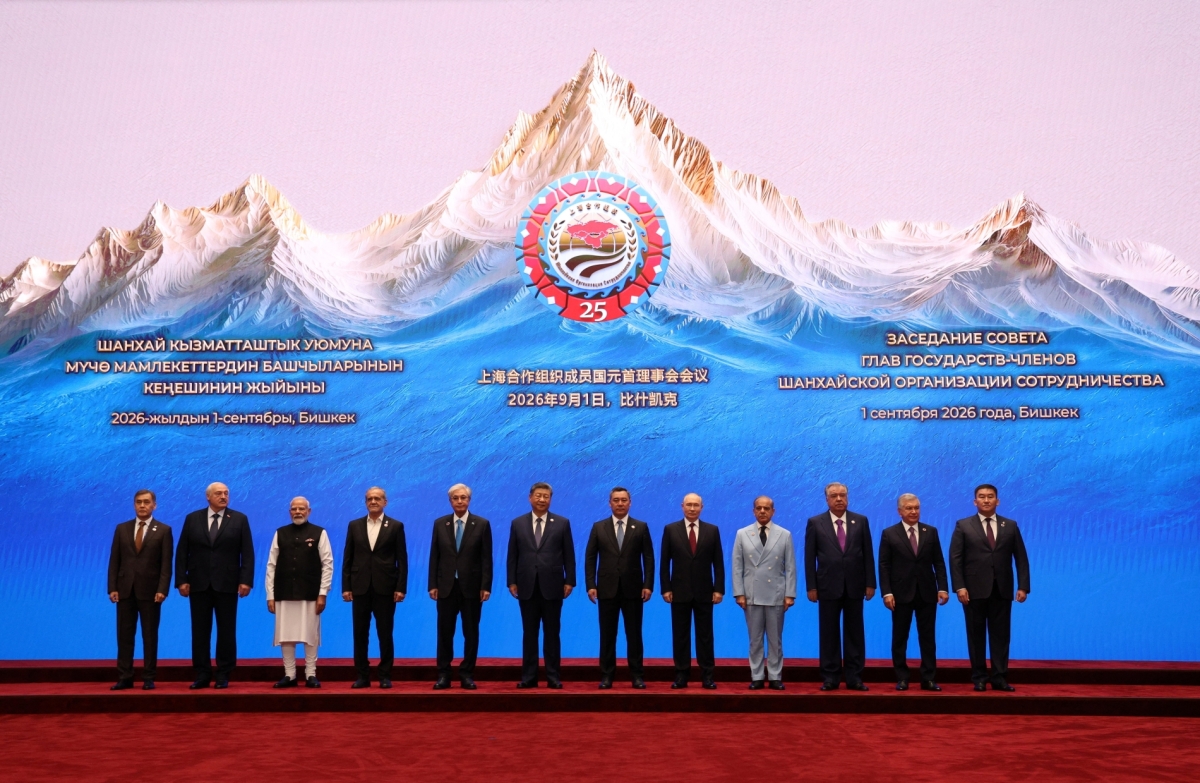

Chinese President Xi Jinping arrived in the Kyrgyzstan capital Bishkek this week, hailing a “golden period” in ties between the two Asian countries, at the 25th anniversary summit of the Shanghai Cooperation Organisation (SCO). Xi also shared the stage with Russian President Vladimir Putin and Iranian President Masoud Pezeshkian. Together, they lead the three most heavily sanctioned economies on earth.
Against the backdrop of war, the summit projected a continental Eurasia whose mission no longer seeks America’s permission. This year the SCO advanced two important objectives that echo Beijing’s long-term pursuits: a push for local-currency settlement to bypass Western financial systems (the Bishkek Declaration), and progress (at last) towards an SCO Development Bank.
Kyrgyzstan made launching an SCO Development Bank the goal of its 2026 chairmanship. China first proposed the concept back in 2010, and Xi revived it at the Tianjin summit in 2025. He called it a strategic measure to address big geopolitical shifts. Initially, Russia and India were wary of a bank China would dominate, but US actions have made them think again. Russia has been locked out of Western capital, Iran is under a US trade blackout, and those who trade with Iran are also now in the firing line.
An SCO bank offers obvious incentives. Central Asian states need infrastructure capital that no one else will provide on comparable terms. Escalating US pressure has been Beijing’s best recruiting tool. Unlike the China-based Asian Infrastructure Investment Bank and the New Development Bank, the SCO Development Bank will operate outside the dollar-denominated financial system. More than just a multilateral lender, it will also provide a settlement architecture that lets sanctioned or wary states move money outside the dollar-clearing system.
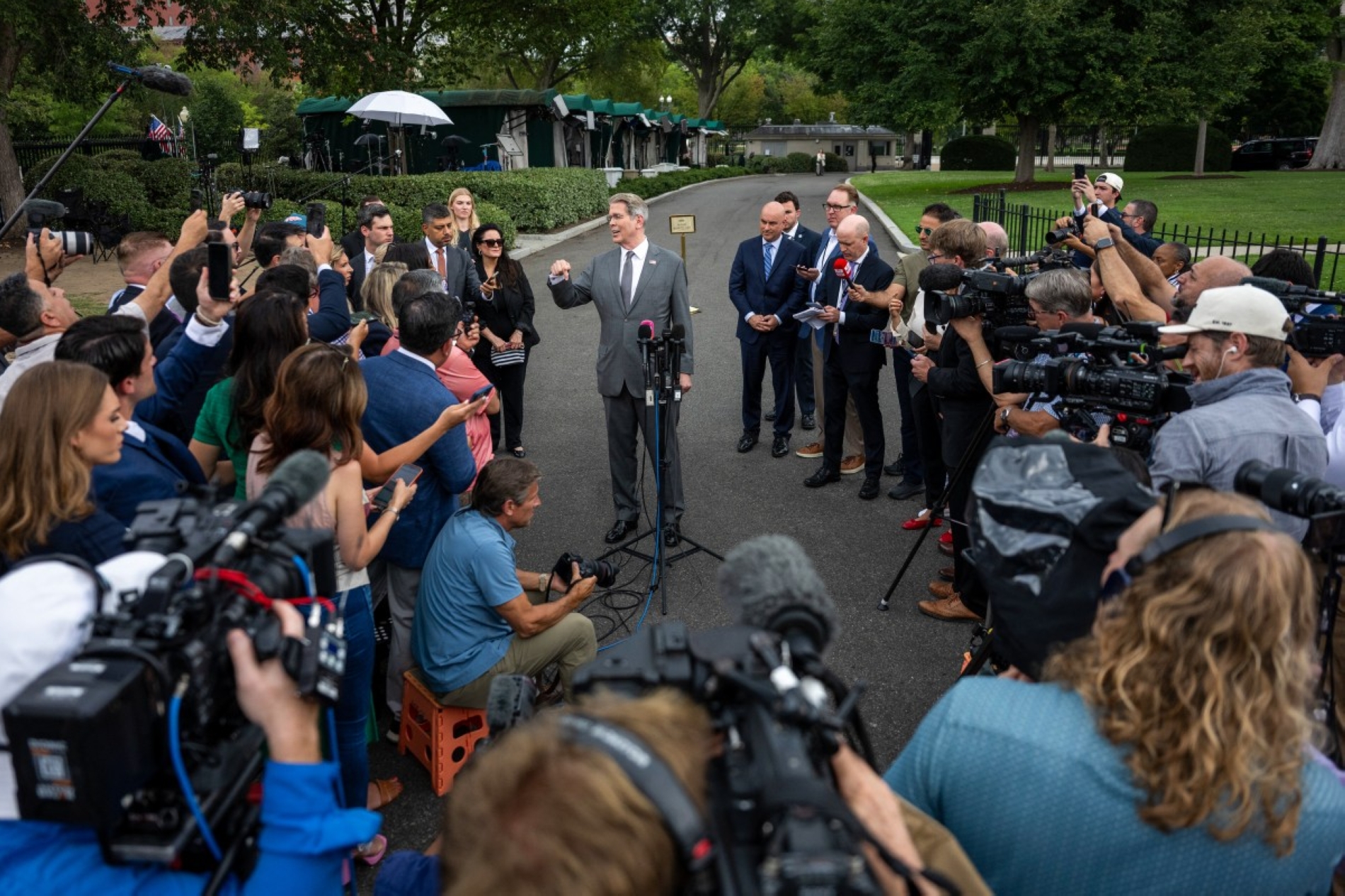
The summit comes a week after the US Treasury launched its so-called ‘economic D-Day’ against Iran and its trading partners. Chinese financial institutions now risk further US sanctions. However, if Washington were to sever a major Chinese bank from dollar clearing, it would be a grave economic act against Beijing and one that the US Treasury is most reluctant to use. Asked why, US Treasury Secretary Scott Bessent said: “Why would I want to blow up the global financial system?”
It was a telling answer, because sanctioning a systemically important Chinese bank risks doing exactly that. China can hit back where America is genuinely exposed. For instance, Beijing controls the rare-earths that US defence and technology depend on, and has shown before that it will hold them to ransom. A Chinese bank sanction would almost certainly trigger that kind of retaliation.
Even the prospect of it forces China to de-dollarise. China's Cross-Border Interbank Payment System now links 1,800 institutions and has cleared the equivalent of $245tn in yuan annual transactions by March 2026. Iran's trade already clears outside the dollar through the yuan and barter. Every time the US Treasury threatens to weaponise the US-controlled SWIFT banking system, it boosts Beijing.