How Sudan’s war reshaped Egypt’s battle for gold

Egypt is cracking down on informal gold prospectors as it seeks to maximise the economic potential of its mining sector and attract new investment

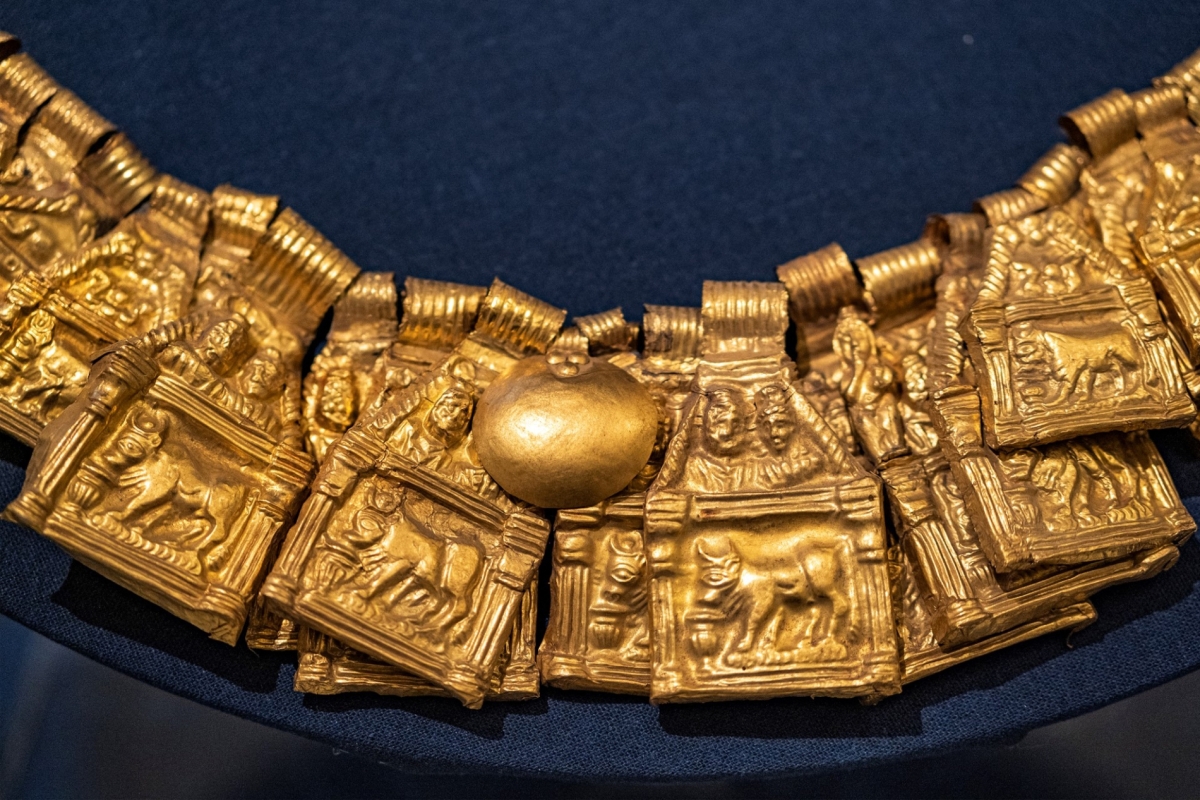
One of two gold necklaces made from more than 100 separate gold plates, decorated with images of goddesses such as Serapis, dating back to the second century AD.
AFP
One of two gold necklaces made from more than 100 separate gold plates, decorated with images of goddesses such as Serapis, dating back to the second century AD.

How Sudan’s war reshaped Egypt’s battle for gold

Gold has become a currency of war. As conflict in Sudan drags on and cross-border smuggling networks expand, the precious metal is increasingly being used to finance armed groups and move illicit wealth beyond the reach of formal financial systems.

For Egypt, this has transformed the campaign against illegal prospectors—known as the ‘dahhaba’—in the Eastern Desert and along the southern border from a routine security operation into a strategic effort to protect both national security and one of the country’s most valuable economic assets.

Cairo views this phenomenon as a multi-layered threat. Illegal mining deprives the state of royalties, licensing fees, and tax revenues, creating a parallel economy at a time when the government is seeking to turn mining into a driver of economic growth.

Egypt has been restructuring its mining sector since amending the Mineral Resources Law in 2019 and issuing its executive regulations the following year. The reforms replaced the production-sharing model with a system of royalties, rents, and taxes aligned with international standards. They attracted fresh investment, led to dozens of exploration agreements, and increased interest from international mining companies, while supporting expansion at the Sukari mine and new exploration projects designed to increase gold production in the coming years.

In May, the Mineral Resources and Mining Industries Authority signed a contract with Spain’s Xcalibur to conduct a comprehensive aerial geological survey of Egyptian territory. The survey will cover most of the country’s main geological zones, producing data to build a high‑resolution geophysical database of metallic and industrial mineral potential, including gold and rare elements.

In this context, tighter control over Egypt’s desert and border regions has become essential to protect exploration activity and curb illegal mining.

A parallel economy beyond oversight

At the centre of this activity lie the dahhaba—informal prospectors scattered across the Red Sea mountains, the Eastern Desert, and the areas of Halayeb, Shalateen, and Aswan. According to economist Mohamed Reda, these prospectors rely on metal detectors and rudimentary digging to extract ore from rugged terrain. They sell it to local middlemen, who transport it to primitive workshops for extraction, then smuggle the gold along desert routes that exploit the region’s harsh terrain and vast borders.

Through this process, Reda says, gold is transformed from a national resource into an unregulated commodity, depriving the state of tax revenues, royalties, and the added value that official refining and export would generate.
Reuters
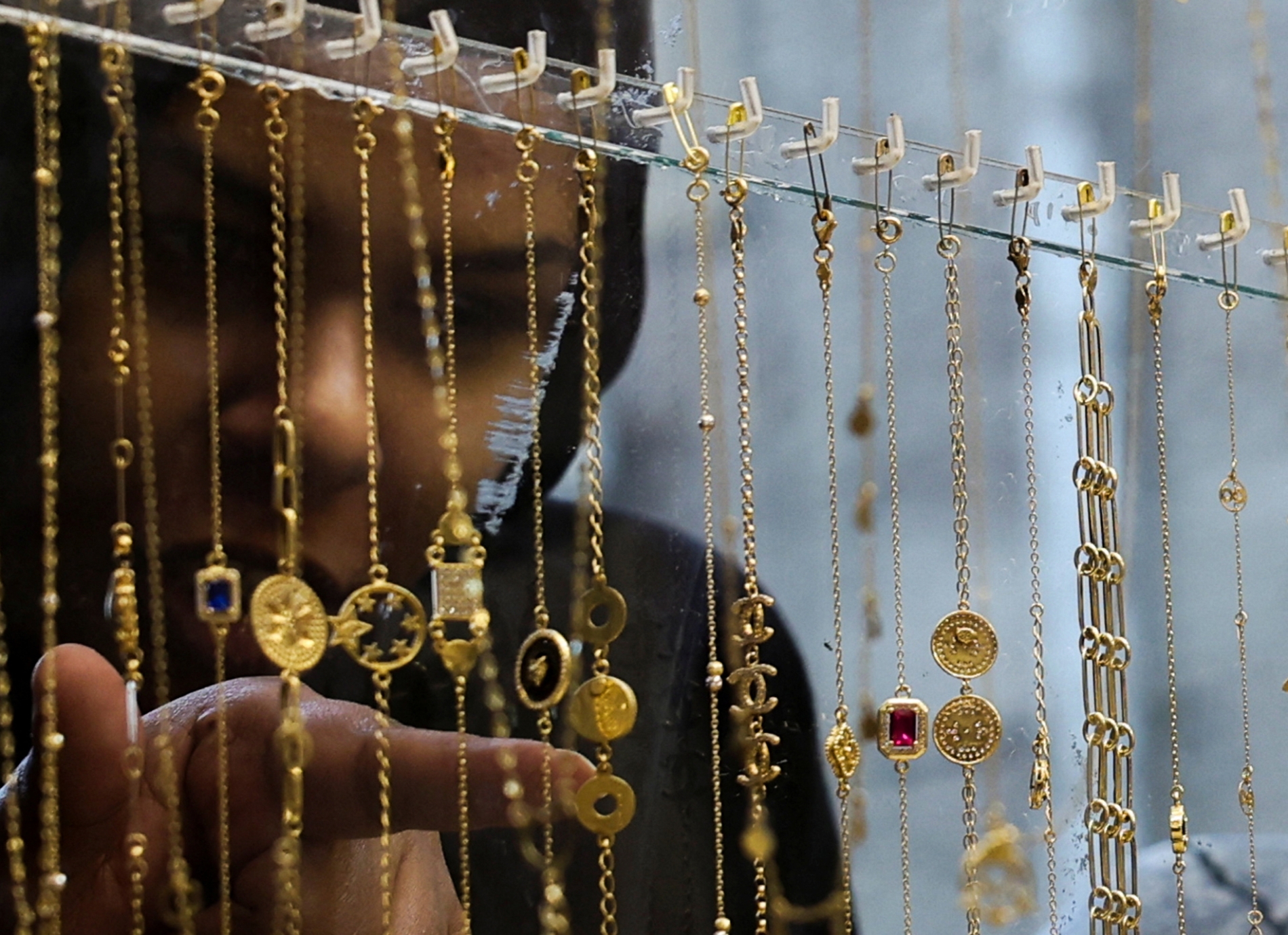
An Egyptian woman inspects gold in downtown Cairo on 5 February 2026.

According to Egyptian MP Samira El Gazzar, there are an estimated 2,500 unlicensed mills in the mountainous areas of southern Egypt. They employ thousands of prospectors from Egypt, Sudan, and other African countries, many of whom cross into mining areas through the region’s rugged border terrain. Together, these informal operations produce hundreds of kilograms of gold each year.

These networks, El Gazzar explains, operate through complex structures that rely on unlicensed four-wheel-drive vehicles, modern metal detectors, and chemicals such as mercury and cyanide. These practices cause serious environmental and health damage, while the desert landscape makes it difficult to pursue those responsible.

How gold enters the economy of war

Experts warn that the danger extends beyond illegal mining. Gold has become a financial lifeline for armed conflict. Reda notes that the border triangle between Egypt and Sudan has become part of a regional network for the movement of illicit gold. Gold from conflict zones in Sudan and Central Africa passes through this corridor to conceal its origin before being re-exported to global markets.

International estimates indicate that the value of gold linked to conflict zones in East and Central Africa ranges between $3bn and $4bn dollars annually. These flows provide armed groups and militias with a steady source of funding to purchase weapons and sustain their operations.
The war in Sudan has created new pressures along Egypt's southern border, and the informal gold economy has become part of the war economy

The war in Sudan has created new pressures along Egypt's southern border, and the informal gold economy has become part of the war economy. Its proceeds finance armed groups, including the Rapid Support Forces (RSF) in Sudan and other cross-border actors. In many cases, gold is bartered directly for weapons, ammunition, vehicles, and food supplies, giving these groups a degree of financial autonomy beyond the reach of international banking oversight.

According to petroleum expert Ramadan Abou El Ela, illegal gold mining has also fuelled tribal disputes, killings, and struggles for influence in southern and eastern Egypt, making the restoration of state authority a national priority. Political affairs expert Ashraf El Ashry agrees, arguing that the activity of the RSF has heightened the risk of infiltration by armed groups, as well as the smuggling of weapons and people. 

Egypt is seeking to prevent the Sudanese conflict from spilling across its border, notes El Ashry, particularly following threats targeting the Egyptian-Libyan frontier. Recent military operations have focused on securing the border, preventing gold from financing armed groups, and dismantling smuggling networks before they become a permanent source of instability.  

Ambassador Maged Refaat, a member of the Egyptian Council for Foreign Affairs, says the current wave of illegal mining differs markedly from earlier episodes. Organised groups equipped with heavy machinery and light weapons have emerged, prompting military operations to expel infiltrators, arrest suspects, and seize equipment.

What's more, Refaat believes that an organised entity stands behind these movements and expects it to be linked to the RSF. He also points to a Sudanese desire to cooperate with Egypt in gold extraction, while Egypt seeks to develop the sector through partnerships with global mining companies. 

From security confrontation to economic strategy  

These campaigns are integral to Cairo's efforts to reorganise the mining sector and strengthen its contribution to the national economy. Egypt's armed forces and border guards continue intensive operations in Jabal Iqat and concession areas in the Eastern Desert, says El Gazzar. The operations are intended to secure concession areas and protect licensed mining companies, foremost among them Shalateen Mineral Resources Company.

She notes that the government is also offering incentives to legitimate investors, including reducing rents on exploration areas by up to 60%. New exploration tenders in the Eastern Desert and the Halayeb and Shalateen triangle are intended to attract foreign investment and modern mining technologies. 

Reuters
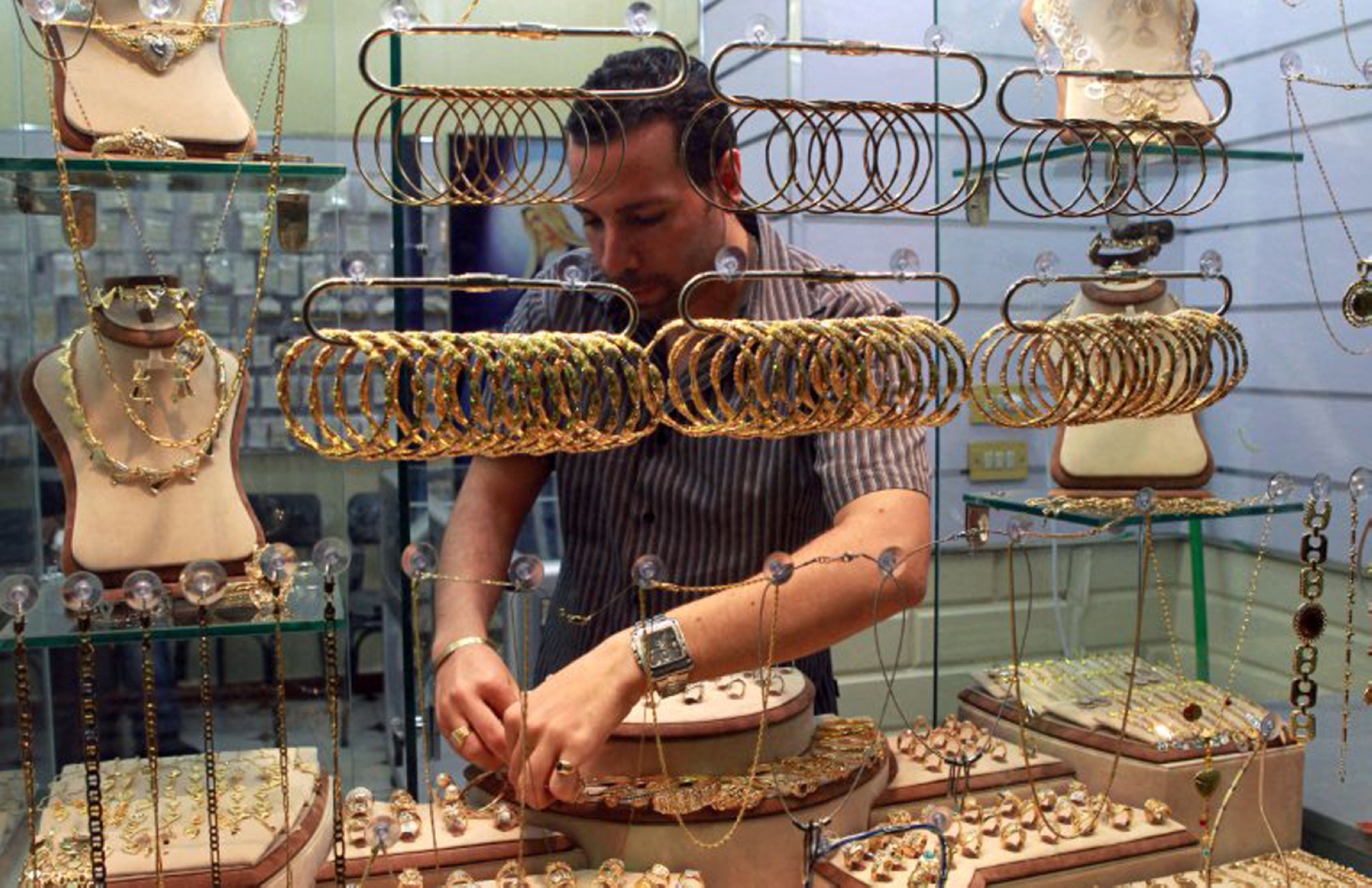
An Egyptian jeweller arranges jewellery in Old Cairo in July 2010.

In El Gazzar's view, the real economic value lies not in exporting raw gold but in refining it locally into internationally accredited bars and other high-value products, increasing export revenues and hard-currency earnings.

Egypt's proposed national gold refinery would allow more of the value generated by mines such as Sukari to remain in the country. At present, most Sukari gold is sent to Canada for refining before being returned to international markets.

The success of Egypt's strategy will not be measured solely by the number of smugglers arrested or the quantities of gold seized. Its true test lies in the state's ability to turn gold from a resource that slips into the shadow economy into an integrated industry built on organised exploration, local refining, manufacturing, and high-value export. 

As more gold enters official channels, public revenues will rise, foreign currency reserves will strengthen, and mining's contribution to GDP will increase. These gains support Cairo's ambition to consolidate its position as a regional hub for the production, refining, and trading of gold and precious metals.

font change