Why cotton fibres could be key in the global arms racehttps://en.majalla.com/node/332534/business-economy/why-cotton-fibres-could-be-key-global-arms-race
Why cotton fibres could be key in the global arms race
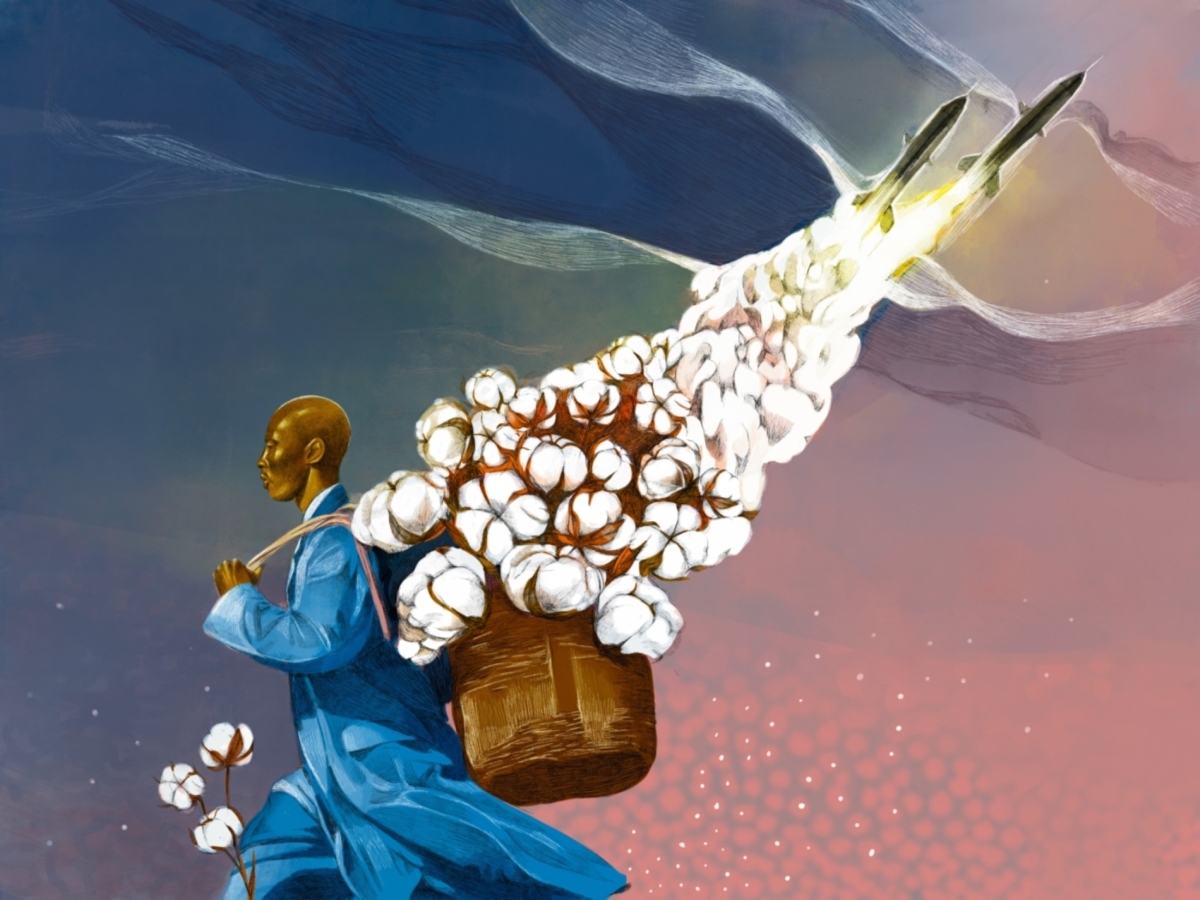
War is driving demand for munitions, and the fibres from cotton seeds are used to produce artillery shells. With only a few producers, demand is soaring.
Sara Padovan
Why cotton fibres could be key in the global arms race
Long a mainstay of the textile industry, cotton is associated more with towels and bedsheets than with war and armaments, but as the 21st century grows ever tenser, the humble yet thirsty cotton plant is increasingly important to the world of warfare. The reason is its short fibres (known as cotton linters), which provide a vital source of high-purity cellulose used to manufacture nitrocellulose, a key ingredient in many smokeless propellants used in ammunition, including artillery shells.
Cotton linters are the minute fibres left clinging to cotton seeds after the longer fibres used in textiles have been removed. Their value lies in their exceptionally high cellulose content which, once refined, can reach a purity of 98% or more, with only minimal quantities of lignin and other impurities. These properties make linters an especially suitable raw material for cellulose derivatives, including the nitrocellulose used in modern defence production.
Converting linters into nitrocellulose requires a specialised industrial nitration process involving highly concentrated acids (principally nitric and sulphuric) followed by further stages of treatment, purification, and waste management. Nitrocellulose production therefore needs dedicated infrastructure, specialist equipment, and exacting safety standards. The finished product is used in propellants for artillery shells, small-calibre ammunition, solid rocket motors, and certain types of military explosives.
Capacity constraints
Before Russia’s invasion of Ukraine, nitrocellulose was not considered a bottleneck in Western ammunition supply chains, but the ravenous consumption of munitions since 2022 exposed the limits of global capacity. In particular, there is a strain on supplies of artillery ammunition, especially the 155mm rounds (employed by the West) and 152mm shells (used by Russia).
Reports by The Wall Street Journal and others indicate that NATO members, particularly those in Europe, have struggled to secure the cotton linters needed for nitrocellulose production. This has constrained Europe’s ability to expand artillery shell manufacturing just as governments need to replenish depleted stockpiles.
Ukrainian President Volodymyr Zelensky and the army commander inspect the first batch of Ukrainian "Peklo" drone missiles in Kyiv on 6 December 2024.
Both the US and the European Union want to increase ammunition production, so the raw materials needed for propellant powders, foremost among them nitrocellulose and nitroglycerin, have now emerged as major bottlenecks.
A major reason is that Europe depends heavily on Chinese cotton linters. According to earlier statements by Rheinmetall chief executive Armin Papperger, China meets about 70% of Europe’s linter requirements. Such reliance adds vulnerability to the nitrocellulose supply chain. In the event of trade restrictions or worsening geopolitical tensions with China, Europe may struggle.
A 2025 report by the European Policy Centre found that Europe’s nitrocellulose is made by just a small number of companies: Rheinmetall in Germany, Eurenco in France, and smaller producers in the Czech Republic and Poland. Their combined annual output is between 4,500 and 10,000 tonnes, well below the level required to meet rising demand. Ukraine alone could need 6,000 tonnes per year.
Expanding nitrocellulose production is a key challenge facing Europe's plans to expand its defence-industrial capacity.
Key challenge
Europe's objective of producing more than 13,000 tonnes of ammunition would push total nitrocellulose requirements to nearly 20,000 tonnes annually, meaning a supply deficit of at least 10,000 tonnes in the best-case scenario. Expanding nitrocellulose production is therefore a key challenge facing Europe's plans to expand its defence-industrial capacity.
Eurenco has restarted the nitrocellulose production line at its Bergerac facility in France, while Rheinmetall is converting a civilian plant in Lingen, Germany, to produce military-grade nitrocellulose. Germany's Walsrode nitrocellulose plant has been acquired by Czechoslovak Group, while Poland is establishing a new production centre in cooperation with Grupa Azoty.
Several of these projects remain at an early stage and are expected to enter operation in 2026 or later. Italy continues to import most of its military-grade nitrocellulose from the United States, Germany, and Asia. Even major ammunition manufacturers such as Norway's Nammo remain dependent on foreign suppliers, underscoring the need for greater European coordination in stockpiling and production planning. Switzerland contributes to continental supply through the Nitrochemie facility at Wimmis, which supports Rheinmetall's expansion of propellant manufacturing.
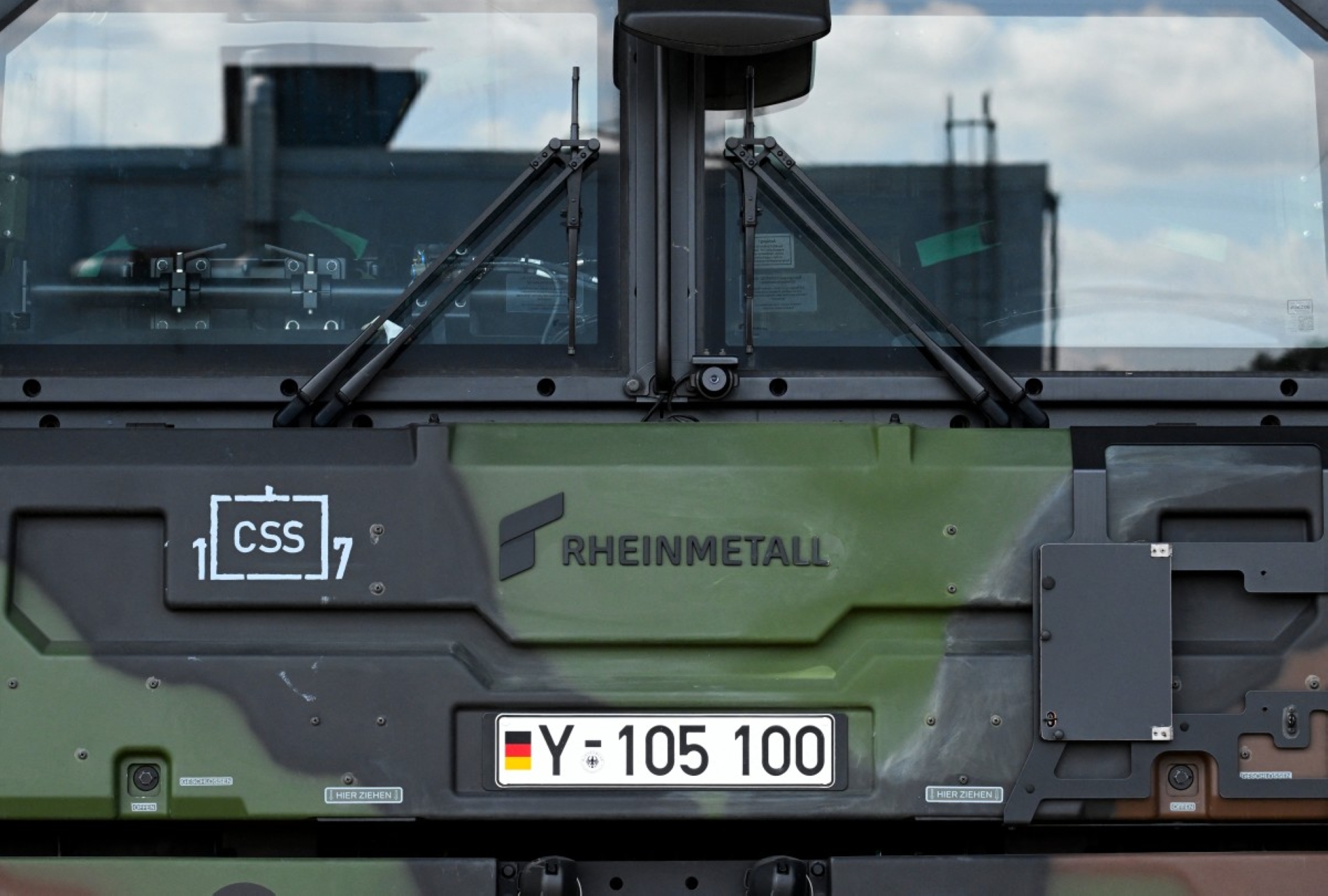
A German army truck bearing the Rheinmetall logo in the city of Unna, western Germany, on 21 July 2026.
The UK currently has no domestic nitrocellulose production capacity and depends on imports to sustain ammunition manufacturing, but British defence firm BAE Systems is developing a new production technology that could remove the need for nitrocellulose and nitroglycerin in certain propellant processes. The technology remains experimental, however.
In July 2026, Papperger announced that Rheinmetall had secured its own supplies of nitrocellulose and accumulated reserves sufficient for four years. It is also working to qualify wood-derived cellulose as an alternative to cotton linters. Yet this does not resolve Europe's broader supply problem.
Asian supply
Big defence firms are moving away from dependence on spot markets and building strategic reserves through long-term procurement agreements designed to make supply chains more resilient. China's importance in this chain extends beyond cotton linters. The country's industrial base can produce military-grade nitrocellulose, making China an important force in the market. It gives Beijing indirect leverage over a supply chains underpinning Western defence production.
The European Union's Act in Support of Ammunition Production seeks to expand manufacturing capacity and remove industrial bottlenecks, while the European Defence Agency has pursued parallel initiatives in joint procurement to strengthen Europe's defence-industrial base.
Reports from the Organised Crime and Corruption Reporting Project and PBS indicate that Russia has widened its supply of cotton pulp and nitrocellulose since 2022. This supply has come from Central Asia, particularly Uzbekistan and Kazakhstan, as well as companies and intermediaries that redirect shipments to Russian plants manufacturing gunpowder, propellants, and ammunition.
Countries in the Middle East and Central Asia can move beyond exporting raw cotton and develop segments of the value chain, from cotton linters and high-purity cellulose to downstream chemical industries. Countries such as Uzbekistan, Türkiye, Egypt, and Kazakhstan produce cotton and have existing industrial bases.
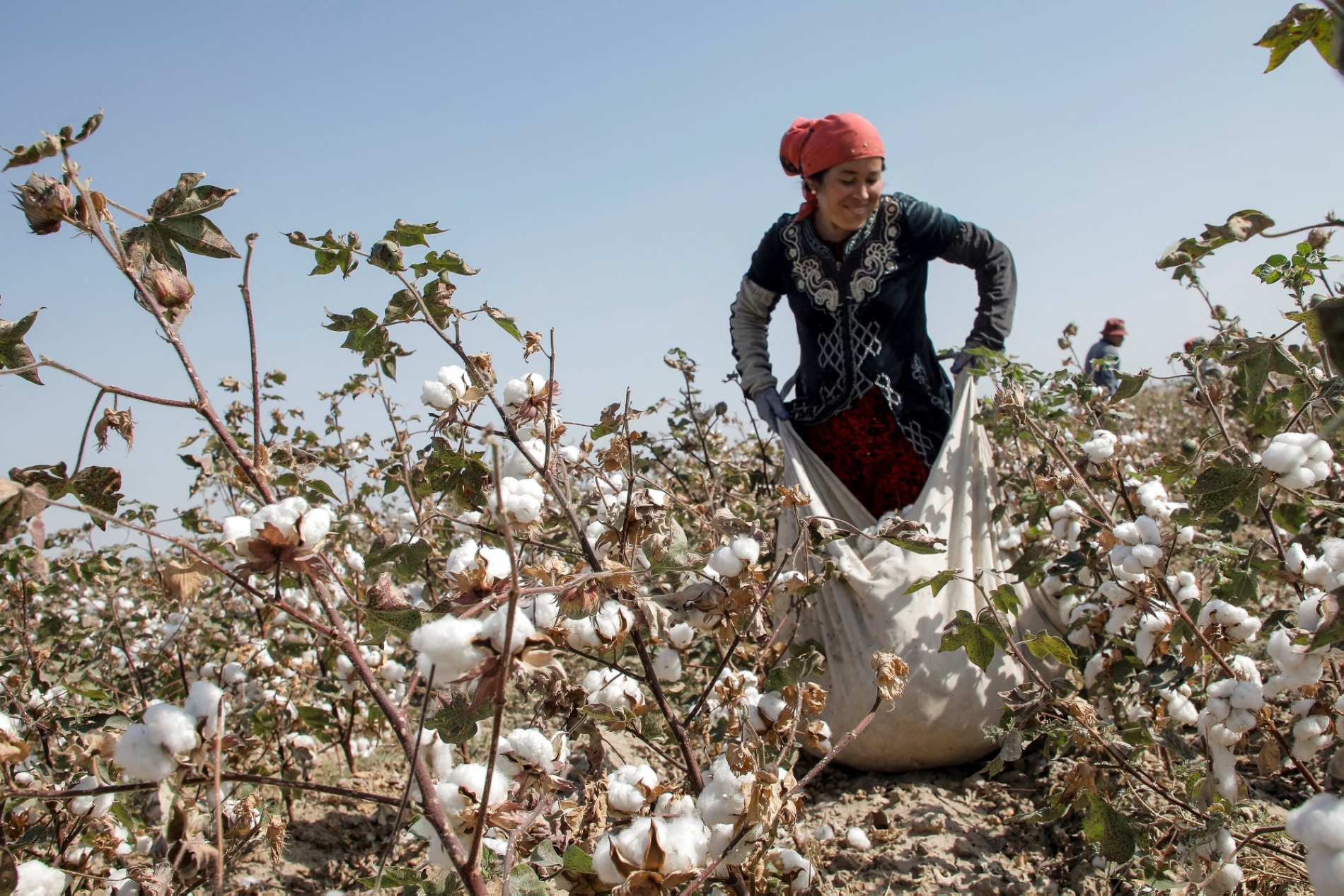
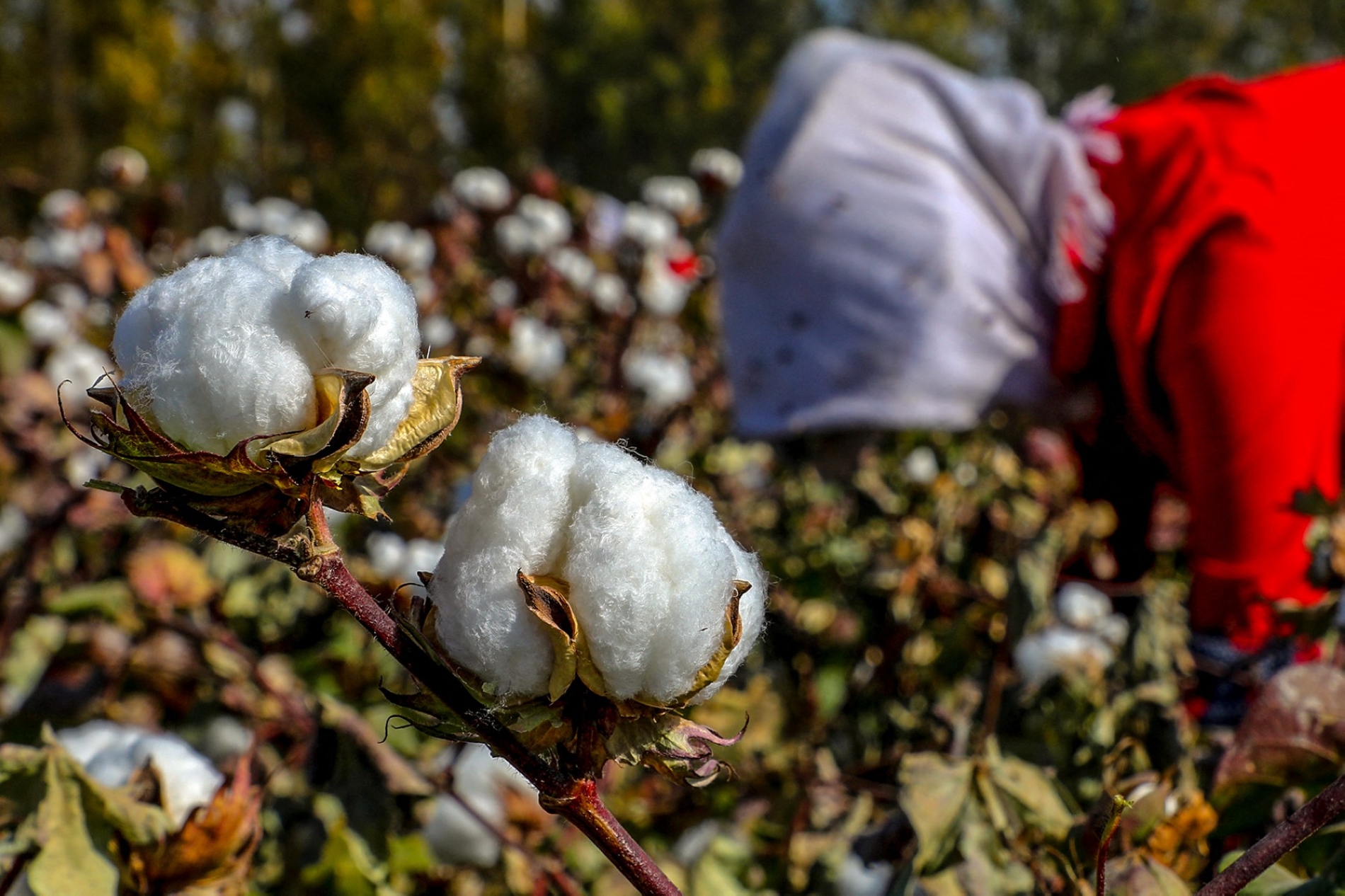
A woman picks cotton flowers in a field on the outskirts of Tashkent, Uzbekistan, on 18 September 2023.
Uzbekistan and Kazakhstan
Uzbekistan is a leading producer. The US Department of Agriculture expects the country to produce around 750,000 tonnes of ginned cotton in 2025-26, increasing to 780,000 tonnes in 2026-27, as Uzbekistan gradually shifts from yarn exports towards higher-value fabrics and finished garments.
With local processing capacity expanding, consumption of ginned cotton has risen to around 670,000 tonnes in 2025-26 (domestic production was only 620,000 tonnes, so it had to import the rest). This shift is strengthening Uzbekistan's industrial base in cotton and cellulose processing. Trade data show a sharp rise in Uzbek exports of cotton pulp to Russia.
Kazakhstan also has a substantial export base in both cotton and cotton pulp, although it only trades in certain markets, including China, Türkiye, and Russia. In the cotton-pulp market specifically, exports to Russia rose by around 60% in 2022 (the year Russia invaded Ukraine), according to UN data analysed by the Organised Crime and Corruption Reporting Project.
Türkiye and Egypt
Türkiye has an integrated cotton and industrial sector, and is a leading producer of yarn, textiles, and clothing. Most domestically-produced and imported cotton is used by local manufacturers. US government data show that Türkiye exported 203,100 tonnes of cotton yarn in 2025, up 53% year-on-year. Textiles and clothing together account for about 15% of exports, which shows how its manufacturing base can convert cotton into higher-value products.
In Egypt, cotton is known as 'white gold'. Its history there dates back to the reign of Muhammad Ali Pasha (1805-48), who established cotton, particularly long-staple varieties, as a major commercial crop by expanding cultivation and developing export production.
Egyptian cotton is still used in high-quality textiles, yet the seeds and the linters obtained from them are valuable due to their high cellulose content. According to the US Department of Agriculture, Egypt should produce around 70,800 metric tonnes in 2026-27.
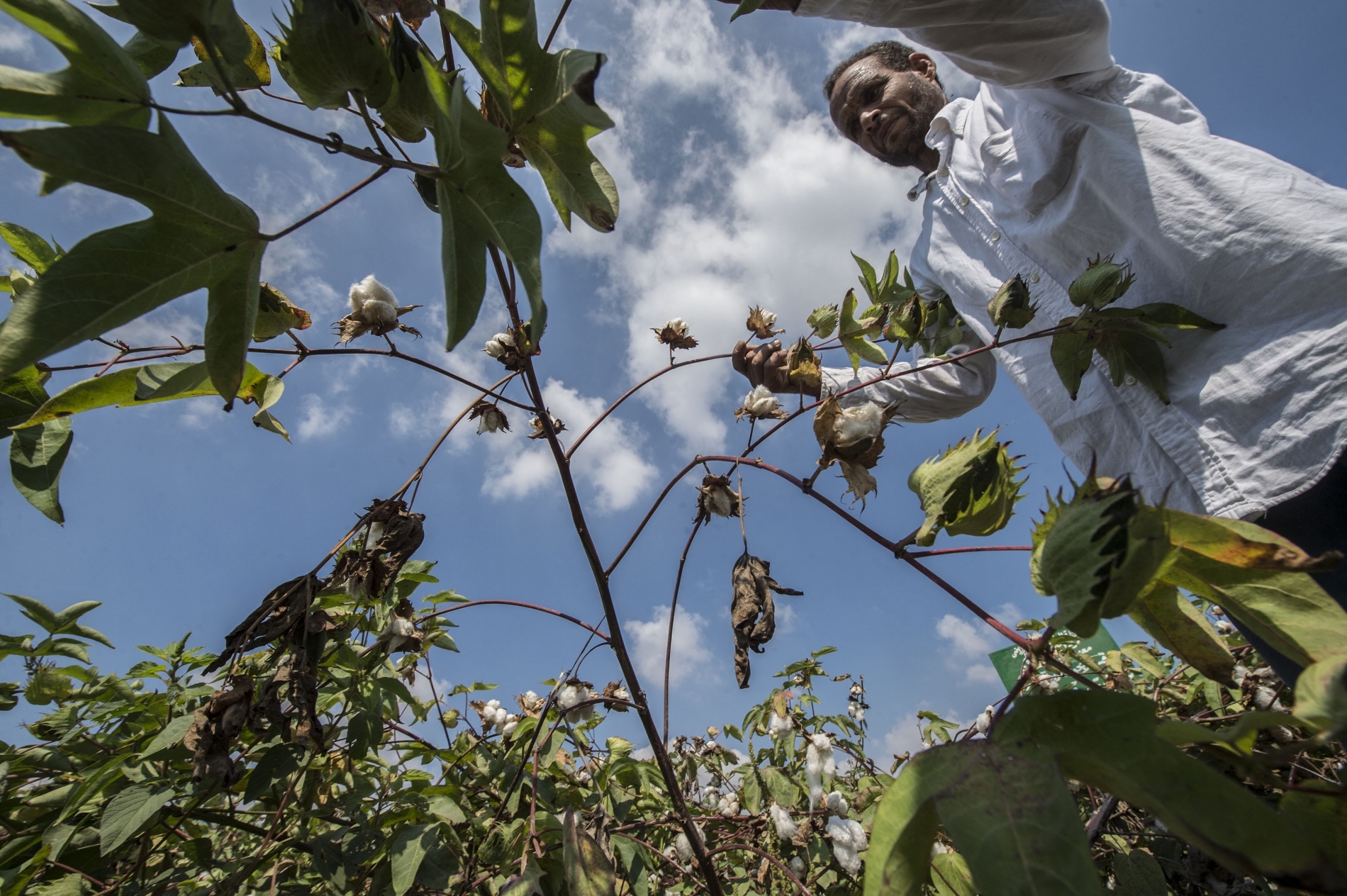
An Egyptian farmer harvests cotton plants in the city of Kafr El-Sheikh, on 13 September 2018.
A mixed picture
FAOSTAT databases and data from the International Cotton Advisory Committee provide useful benchmarks for comparing production, cultivated area, and trade across countries. In Uzbekistan, for example, there is a clear drive towards deeper industrialisation, as the ex-Soviet state aims to raise textile exports from $3bn to $7bn by 2028. These countries combine established production bases, fertile agricultural land, and accumulated farming expertise.
European states seeking a more secure supply chain may invest, provided the investment extends to downstream industries rather than remaining confined to increased agricultural output.
At the same time, the US and EU are curbing the circumvention of sanctions on Russia through third countries (such as those in Central Asia), looking at the re-export of dual-use goods and technologies. Some entities in Uzbekistan and Kazakhstan have faced sanctions or other restrictions over allegations that they supply sensitive goods to Russia or facilitate the evasion of trade controls.
The United States combines a vast agricultural base with advanced chemical and defence industries. American cotton production was 3.16 million tonnes in 2025-26, of which exports were 2.72 million tonnes. However, it is not known to what extent US companies depend on imported cotton linters, or how diversified their sources are.
India has an enormous cotton production and manufacturing base, but domestic consumption for its spinning and textile industries limits the volumes available for export. Domestic consumption is expected to reach 5.6 million tonnes in 2026-27, with exports of just 327,000 tonnes. Meanwhile, Brazil is a rising force in the global cotton market. Its exports are projected to rise in 2026-27, making it one of the world's leading cotton exporters.
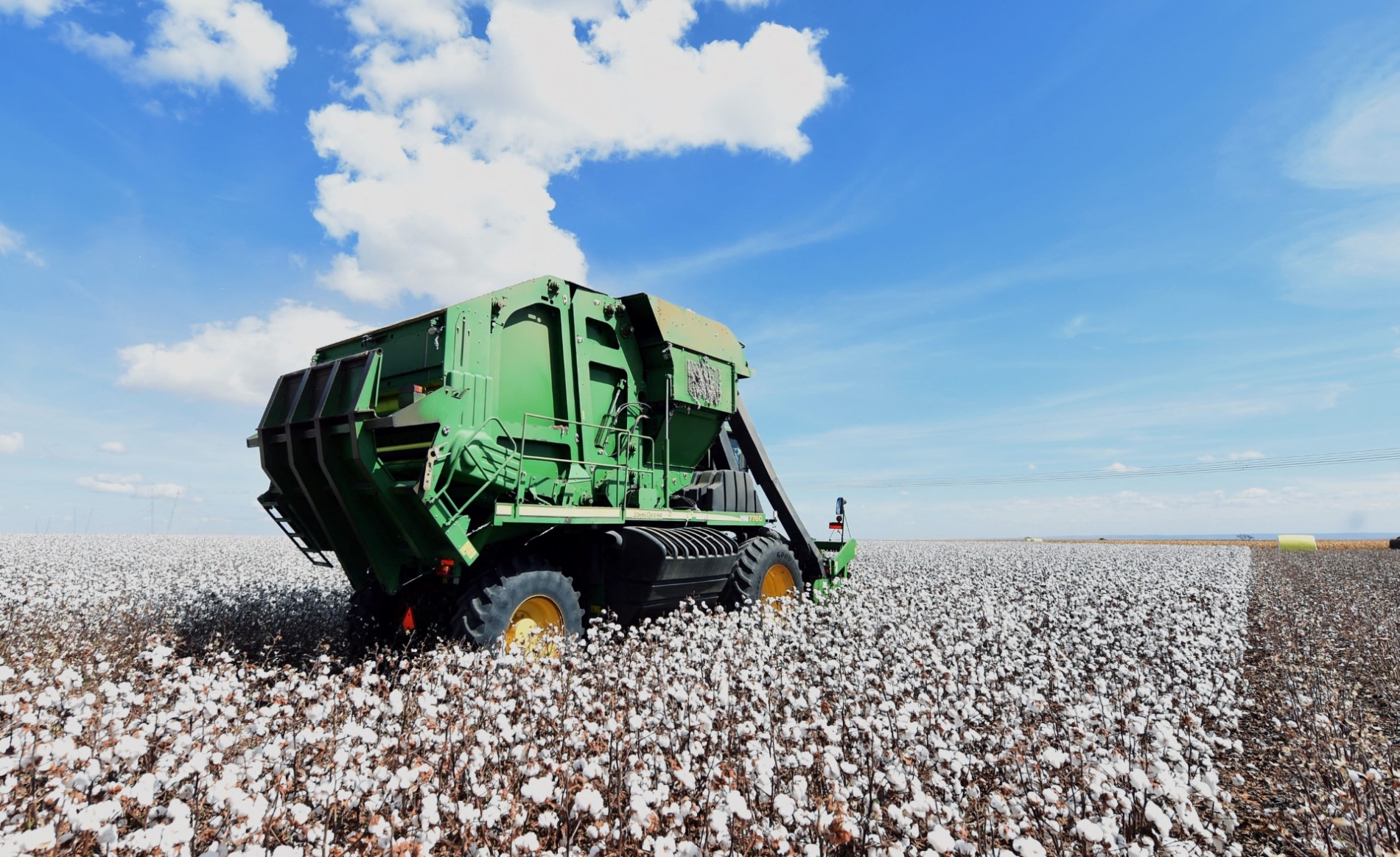
A machine harvests cotton bolls in agricultural fields in Cristalina, Brazil, on 14 July 2022.
A host of problems
The cotton plant is notoriously thirsty, which adds to environmental pressures and water scarcity. In Uzbekistan, agriculture depends heavily on the Amu Darya and Syr Darya rivers and accounts for nearly 90% of the country's water consumption.
The Qarshi region, one of Uzbekistan's principal cotton-producing areas, consumes up to 5 billion cubic metres of irrigation water annually, with around 75% of it drawn from the Amu Darya. In Egypt, the Nile supplies approximately 97% of the country's water needs, while the annual water deficit is estimated at about 54 billion cubic metres. Expanding water-intensive cultivation is therefore not viable.
Beyond water, there are concerns over forced labour. The United States' Uyghur Forced Labour Prevention Act, for instance, bars imports of goods linked to Xinjiang in China, with a legal presumption that forced labour was involved in the production of cotton. The EU will begin enforcing its own prohibitions in December 2027, making traceability ever more important for exporters seeking access to Western markets.
No easy feat
Financing presents a further challenge, particularly as environmental, social, and governance standards acquire greater weight in investment decisions. Banks and investors may impose stringent conditions on projects involving chemical manufacturing, especially in defence-related production.
Europe's sustainable-finance framework does not, however, prevent investment in the defence sector (indeed, Europe wants to expand defence financing, including through the SAFE programme, which provides up to $173bn in loans). The principal constraints arise from disclosure and sustainability requirements, as well as the internal policies of private financial institutions.
The second major obstacle is the shortage of advanced industrial infrastructure for chemical manufacturing. Producing military-grade nitrocellulose requires specialised facilities, technical expertise, and exacting quality and safety standards. Capacity remains concentrated among a small number of producers, while Europe continues to depend heavily on Chinese cotton linters, so diversifying supply and expanding domestic production are now strategic priorities.
Building new plants and increasing production capacity is costly and slow, while securing access to high-purity cellulose requires specialised expertise in handling a highly flammable material. As a result, alternative sources of cellulose are sought.
Replacing cotton
Wood-derived cellulose could be an abundant and sustainable option. It has already been used in certain military applications. Substituting wood cellulose for cotton linters is not easy and involves a recalibration to account for their differing properties, but nitrocellulose can be produced from wood pulp with characteristics close to those of material derived from cotton linters.
Studies show that wood pulp can yield nitrocellulose with thermal properties similar to those of cotton linters, but large-scale military use still requires qualification of the raw material, close control of the finished product's properties, and rigorous stability and performance testing.
Bacterial cellulose offers another possibility. Its high purity, high degree of crystallinity, and distinctive physical properties make it a promising material for advanced industrial applications. Its relatively high production costs, however, together with the difficulties of scaling up production and improving productivity, continue to limit its ability to compete effectively with plant-derived cellulose. For the time being, then, cotton linters retain an established industrial advantage as a source of high-purity cellulose, as alternatives require further development before they can compete on a comparable scale.
A question of timing
Just as the transition to clean energy unleashed a global contest for the likes of lithium and copper, and rare minerals, the expansion of munitions production could kick-start a parallel race for cotton and cellulose. Data from the Stockholm International Peace Research Institute and estimates contained in the International Institute for Strategic Studies' Military Balance report point to a continuing rise in military expenditure and rearmament across Europe and Asia.
Military spending in Europe rose by 14% to $864bn last year, while expenditure in Asia and Oceania rose by 8.1% to $681bn. The IISS expects European defence expenditure to continue rising in 2026, with Asian spending rising by around 3.4%. A tail-off is not imminent, with demand for weapons, ammunition, and the industrial inputs required to manufacture them likely to be high for years.
Just as the transition to clean energy sparked a global contest for rare earths, rising munitions production could kick-start a parallel race for cotton and cellulose.
No easy feat
Financing presents a further challenge, particularly as environmental, social, and governance standards acquire greater weight in investment decisions. Banks and investors may impose stringent conditions on projects involving chemical manufacturing, especially in defence-related production.
Europe's sustainable-finance framework does not, however, prevent investment in the defence sector (indeed, Europe wants to expand defence financing, including through the SAFE programme, which provides up to $173bn in loans). The principal constraints arise from disclosure and sustainability requirements, as well as the internal policies of private financial institutions.
The second major obstacle is the shortage of advanced industrial infrastructure for chemical manufacturing. Producing military-grade nitrocellulose requires specialised facilities, technical expertise, and exacting quality and safety standards. Capacity remains concentrated among a small number of producers, while Europe continues to depend heavily on Chinese cotton linters, so diversifying supply and expanding domestic production are now strategic priorities.
Building new plants and increasing production capacity is costly and slow, while securing access to high-purity cellulose requires specialised expertise in handling a highly flammable material. As a result, alternative sources of cellulose are sought.
This photo, taken on 14 October 2018, shows a farmer picking cotton in a field in Hami in China's northwestern Xinjiang region.
Replacing cotton
Wood-derived cellulose could be an abundant and sustainable option. It has already been used in certain military applications. Substituting wood cellulose for cotton linters is not easy and involves a recalibration to account for their differing properties, but nitrocellulose can be produced from wood pulp with characteristics close to those of material derived from cotton linters.
Studies show that wood pulp can yield nitrocellulose with thermal properties similar to those of cotton linters, but large-scale military use still requires qualification of the raw material, close control of the finished product's properties, and rigorous stability and performance testing.
Bacterial cellulose offers another possibility. Its high purity, high degree of crystallinity, and distinctive physical properties make it a promising material for advanced industrial applications. Its relatively high production costs, however, together with the difficulties of scaling up production and improving productivity, continue to limit its ability to compete effectively with plant-derived cellulose. For the time being, then, cotton linters retain an established industrial advantage as a source of high-purity cellulose, as alternatives require further development before they can compete on a comparable scale.
A question of timing
Just as the transition to clean energy unleashed a global contest for the likes of lithium, copper, and other rare minerals, the expansion of munitions production could kick-start a parallel race for cotton and cellulose. Data from the Stockholm International Peace Research Institute and estimates contained in the International Institute for Strategic Studies' Military Balance report point to a continuing rise in military expenditure and rearmament across Europe and Asia.
Military spending in Europe rose by 14% to $864bn last year, while expenditure in Asia and Oceania rose by 8.1% to $681bn. The IISS expects European defence expenditure to continue rising in 2026, with Asian spending rising by around 3.4%. A tail-off is not imminent, with demand for weapons, ammunition, and the industrial inputs required to manufacture them likely to be high for years.