An Egypt-Türkiye reset could anchor a new regional order

Six years ago, they were issuing threats. Today, it is all smiles and handshakes. Ankara and Cairo disagree on some things, but they are increasingly finding common ground on others.

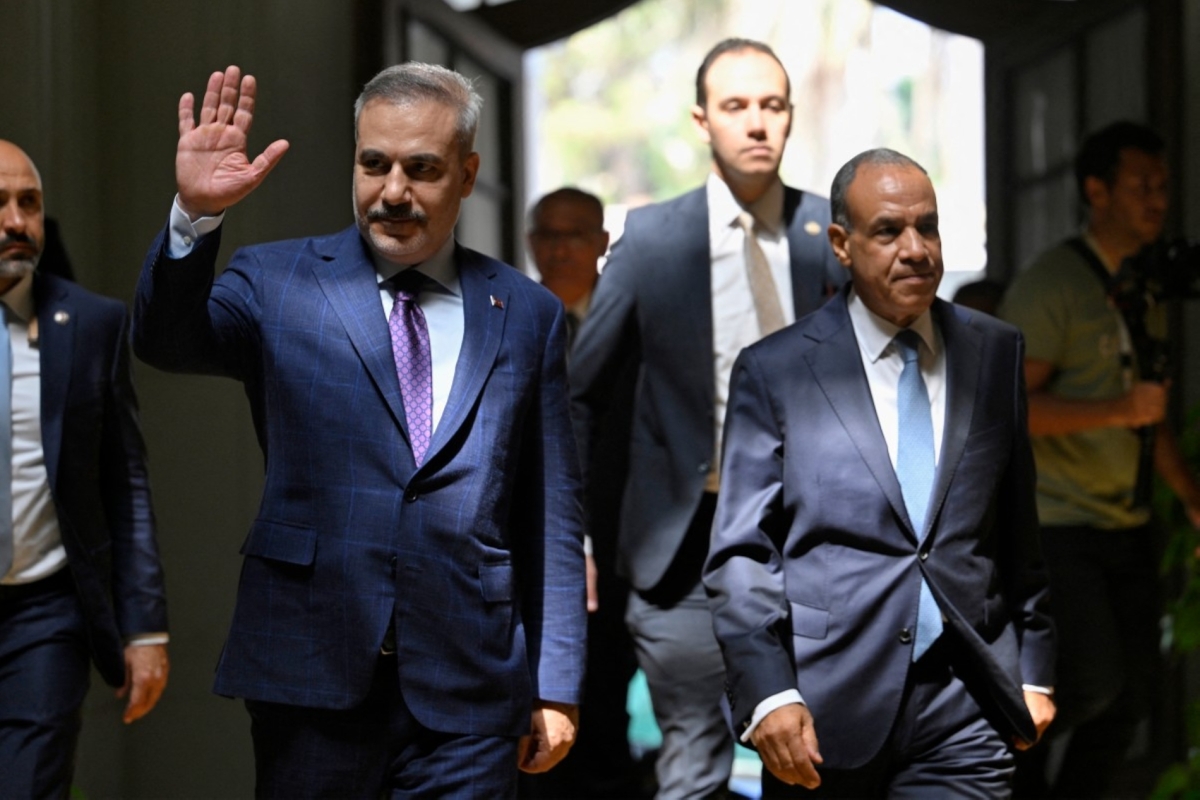
Egypt's Foreign Minister Badr Abdel Ati (R) walks with his Turkish counterpart Hakan Fidan (L) ahead of their meeting in Cairo on 21 June 2026.
KHALED DESOUKI / AFP
Egypt's Foreign Minister Badr Abdel Ati (R) walks with his Turkish counterpart Hakan Fidan (L) ahead of their meeting in Cairo on 21 June 2026.

An Egypt-Türkiye reset could anchor a new regional order

On 20 June 2020, Egyptian President Abdel Fattah al-Sisi drew a red line around the Libyan cities of Sirte and al-Jufra, threatening to intervene militarily if Türkiye-backed forces crossed it. In so doing, he set Cairo on a collision course with Ankara. A year earlier, after the former Egyptian President Mohammed Morsi died from a heart attack while in court, Turkish President Recep Tayyip Erdoğan publicly mourned his former ally’s death, blaming Egypt’s “tyrants” for his death, which he said stemmed from a lack of medical care in prison.

Today, that all seems like a distant memory, as Egyptian and Turkish fighter aircraft flew over the Egyptian capital last week at the end of a joint military exercise, their first in nearly two decades. It speaks volumes about the change in bilateral relations and their perceptions of one another in just a few years. After a period of tension, Egypt and Türkiye are charting a new course, one that has built momentum since February 2024, when Turkish President Recep Tayyip Erdoğan visited Cairo for the first time in 12 years.

Back in 2013, Erdoğan criticised the Sisi-led coup that ousted Morsi’s Muslim Brotherhood from power just a year after the party won a general election following the removal of Hosni Mubarak in 2011. The two countries still hold divergent regional views and ideological affiliations and have differing economic interests in the Eastern Mediterranean.

However, Sisi reciprocated Erdoğan’s overture a few months later by visiting Ankara and confirming his administration’s desire for a new beginning. When the Turkish president returned to Cairo in February 2026, it heralded a realignment that could prove significant at a time when regional alliances are shifting.
@trpresidency via X
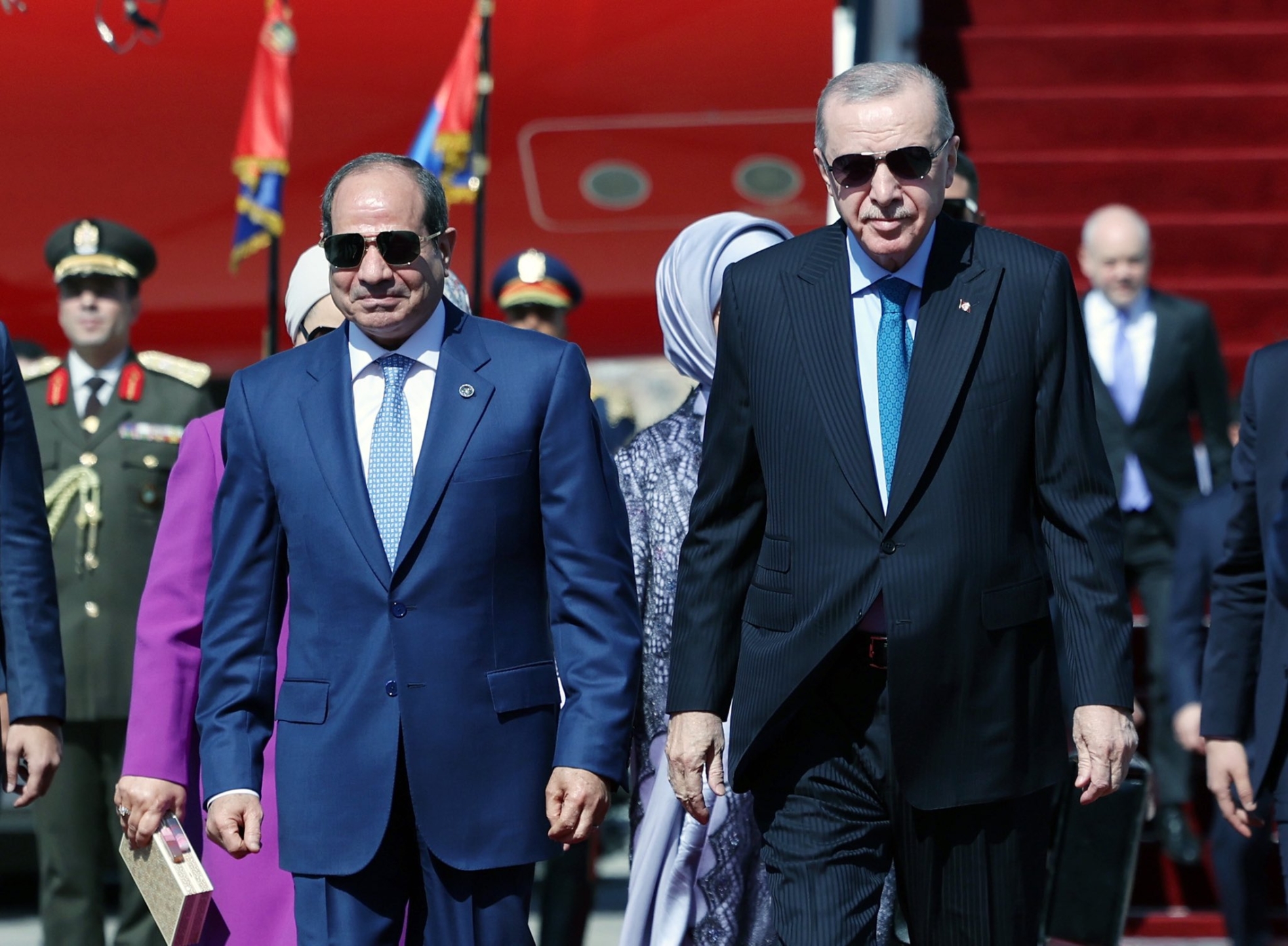
Turkish President Recep Tayyip Erdogan is welcomed by Egyptian President Abdel-Fattah al-Sisi at Cairo International Airport on 4 February, 2026.

From friction to friends

Over recent years, Türkiye has courted Islamist movements across the Arab world, seeking to empower political Islam after the fall of several autocratic regimes in Arab states, including Egypt, Tunisia, Yemen, Libya, and Syria. Ankara may have felt that Islamist regimes taking over in Arab states would reposition Türkiye at the top of the regional order and help its claim to contested Eastern Mediterranean hydrocarbon resources.

At one point, friction between Egypt and Türkiye was so intense that it threatened to morph into an actual confrontation in Libya, where Cairo and Ankara backed two opposing sides, hence Sisi’s red line around Sirte and al-Jufra to protect the eastern Libyan government. Although Libya was not the only contentious point between Türkiye and Egypt, it was emblematic of the broader tensions.

Today, Libya is a symbol of the positive change in relations. In April this year, special combat troops from Egypt and Türkiye participated in joint drills in none other than Sirte. Part of the Flintlock 2026 exercises, the drills were the latest involving Egypt, Türkiye, and other states, but the recalibration also has an economic angle. The two countries want to raise bilateral trade from $9bn to $15bn by 2028, enhance their investment cooperation, and work together in the defence sector. Egypt would also like Türkiye to invest in its economy and craves Turkish technology, especially its military know-how.
Both Ankara and Cairo realise that the advantages of working together far outweigh any benefits from maintaining a state of animosity.

Risk and reward

The reset in relations has come about in part because both capitals realise that the advantages of working together far outweigh any benefits from maintaining a state of animosity. Iranian attacks against Gulf states since March 2026 have served to remind the region of the cost of conflict. Like Egypt, Türkiye is also keen to prevent state fragmentation and anarchy from taking root in countries such as Libya, Sudan, Somalia, and elsewhere in the Horn of Africa. Together with Saudi Arabia, they have acted to contain threats to state sovereignty, whether domestic or foreign.

The joint Egypt-Türkiye air drills, which wrapped up on 21 June, began ten days earlier at several Egyptian airbases. Multi-role fighter aircraft from the two countries carried out practical live-flight operations, joint training sorties, and simulated combat missions to improve interoperability, tactical coordination, and combat readiness.

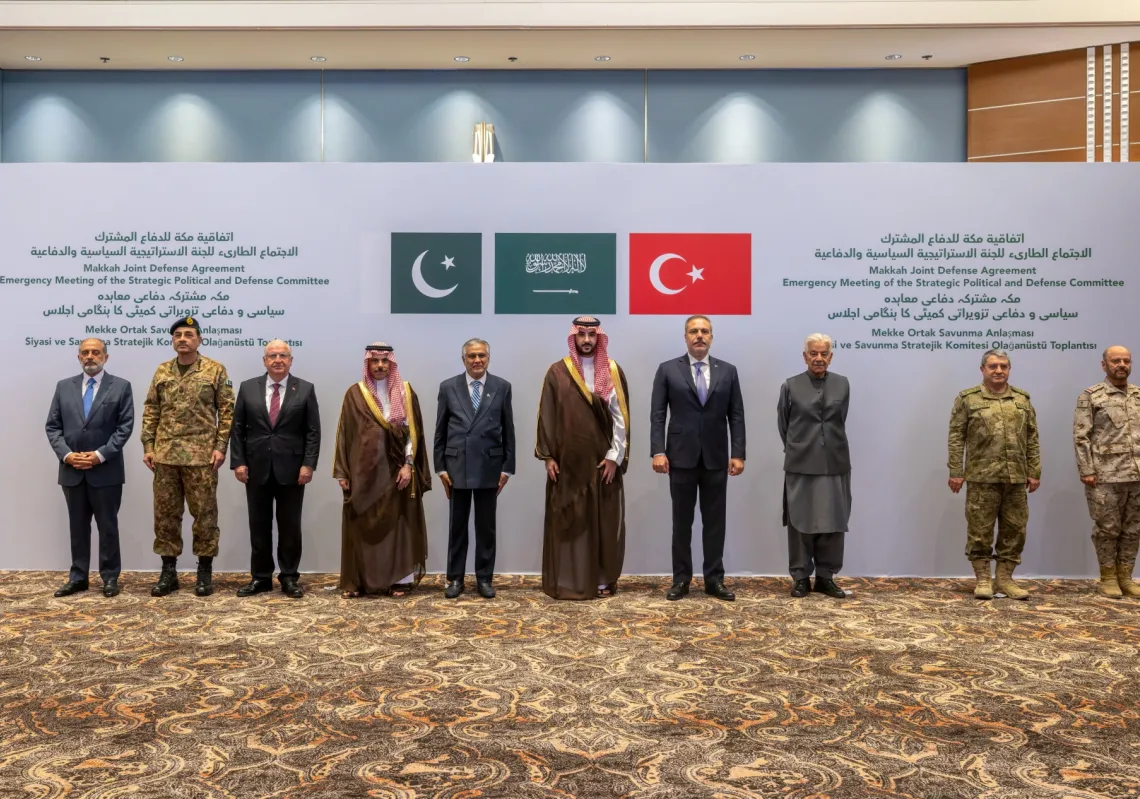
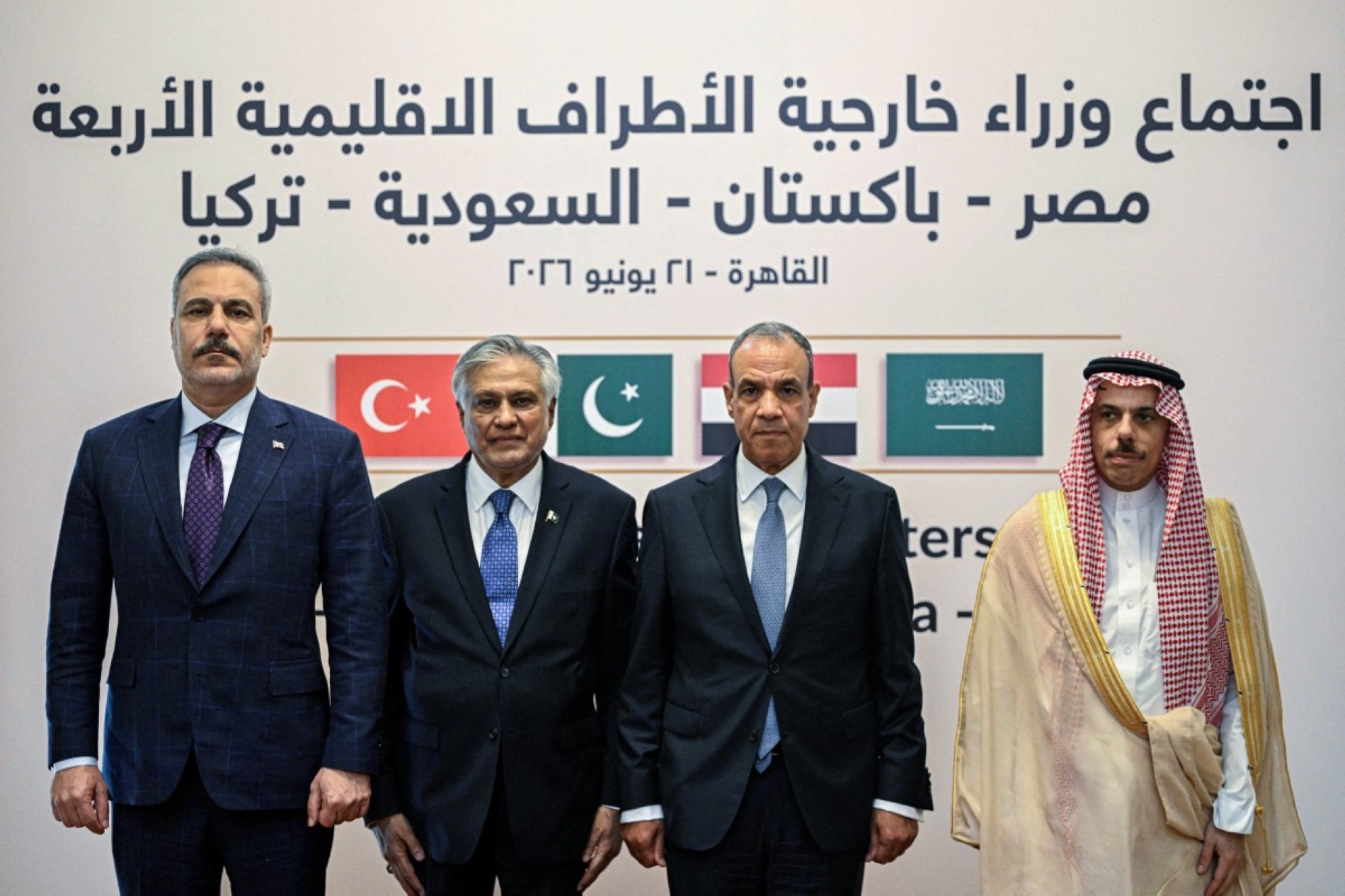
In parallel, the foreign ministers of Egypt, Türkiye, Saudi Arabia, and Pakistan met in Cairo. These four regional powers, referred to as the R-4, came together in part to discuss the US-Israeli war on Iran, Israel's regional actions and ambitions, and Iran's destabilising policies. Together, the R-4 wield sizeable military and economic capabilities.

KHALED DESOUKI / AFP
Türkiye's Foreign Minister Hakan Fidan, Pakistan's Foreign Minister Ishaq Dar, Egypt's Foreign Minister Badr Abdel Ati, and Saudi Foreign Minister Faisal bin Farhan pose for a picture ahead of a meeting in Cairo on 21 June 2026.

Aligning for the future

Some think their communion could carry the embryo of a new regional order. Others dismiss it as a short-lived crisis-driven détente. Still, this new grouping looks likely to fill a political vacuum, one that had temporarily been filled by Israel and Iran, pursuing their interests to the detriment of others.

The R-4 exists because Egypt and Türkiye agreed to bury the past and break bread once again, so it is fair to assume that their reset in relations is a centre of gravity for the new regional realignment. Economic deliverables, such as meeting the $15bn trade target by 2028, will help to cement it. Turkish investment and technology transfers will act as a litmus test.

If Cairo and Ankara can manage any residual ideological friction over political Islam, avoid a spat in the Eastern Mediterranean, and deliver results in hotspots such as Libya, Sudan, and the Horn of Africa, their rapprochement could become the cornerstone of a more stable order in the Middle East.

font change