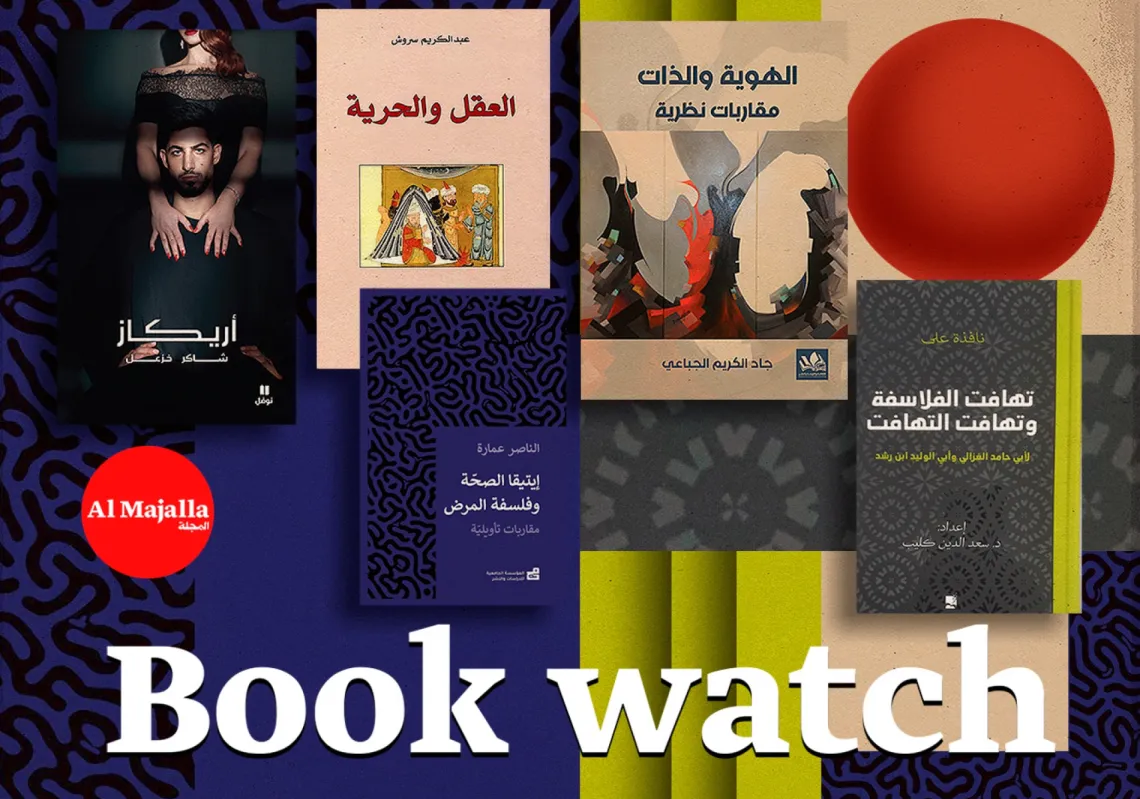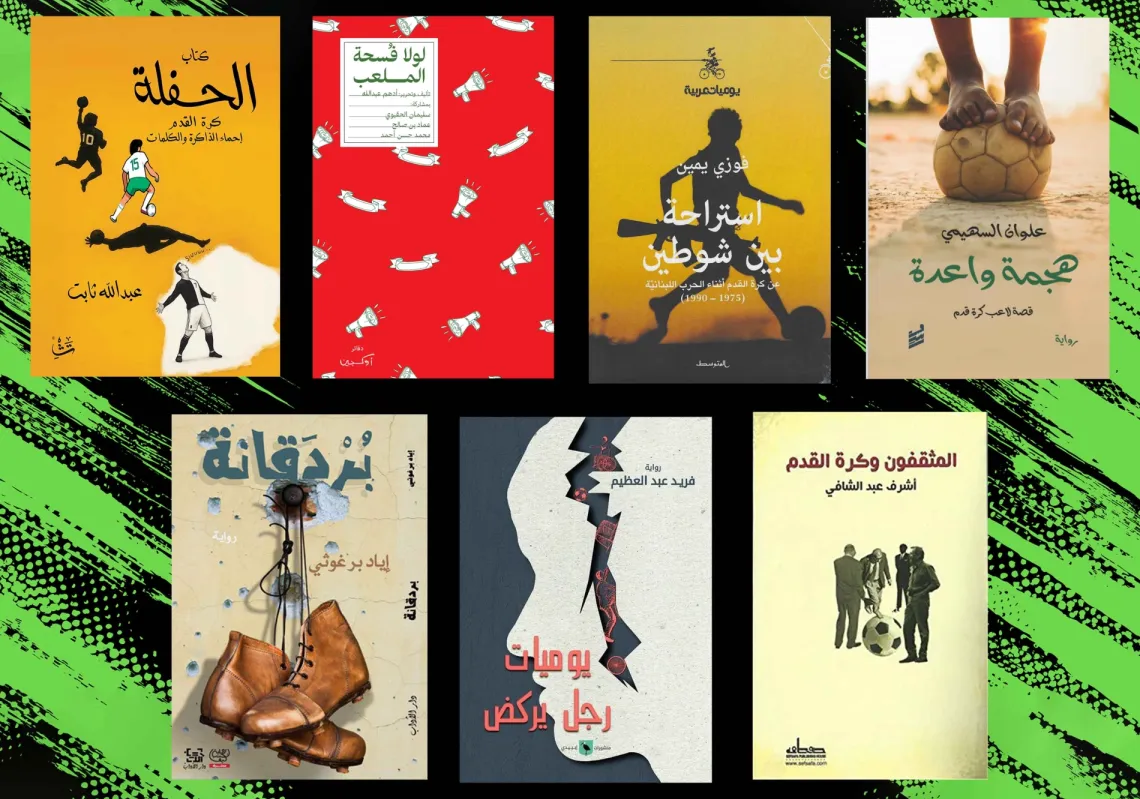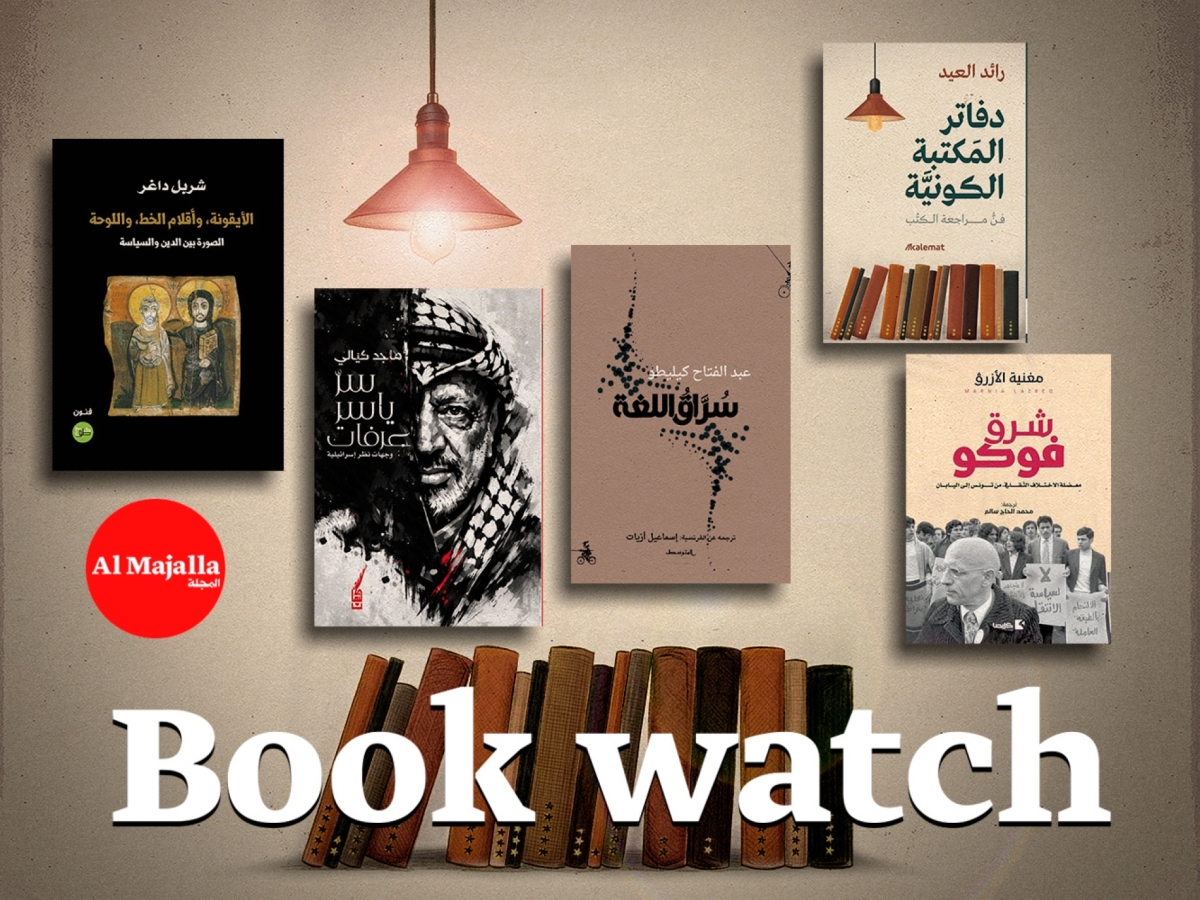

The Arab world has a vibrant and rich literary scene. Al Majalla picks out some choice titles in our fortnightly round-up of the latest Arabic books.
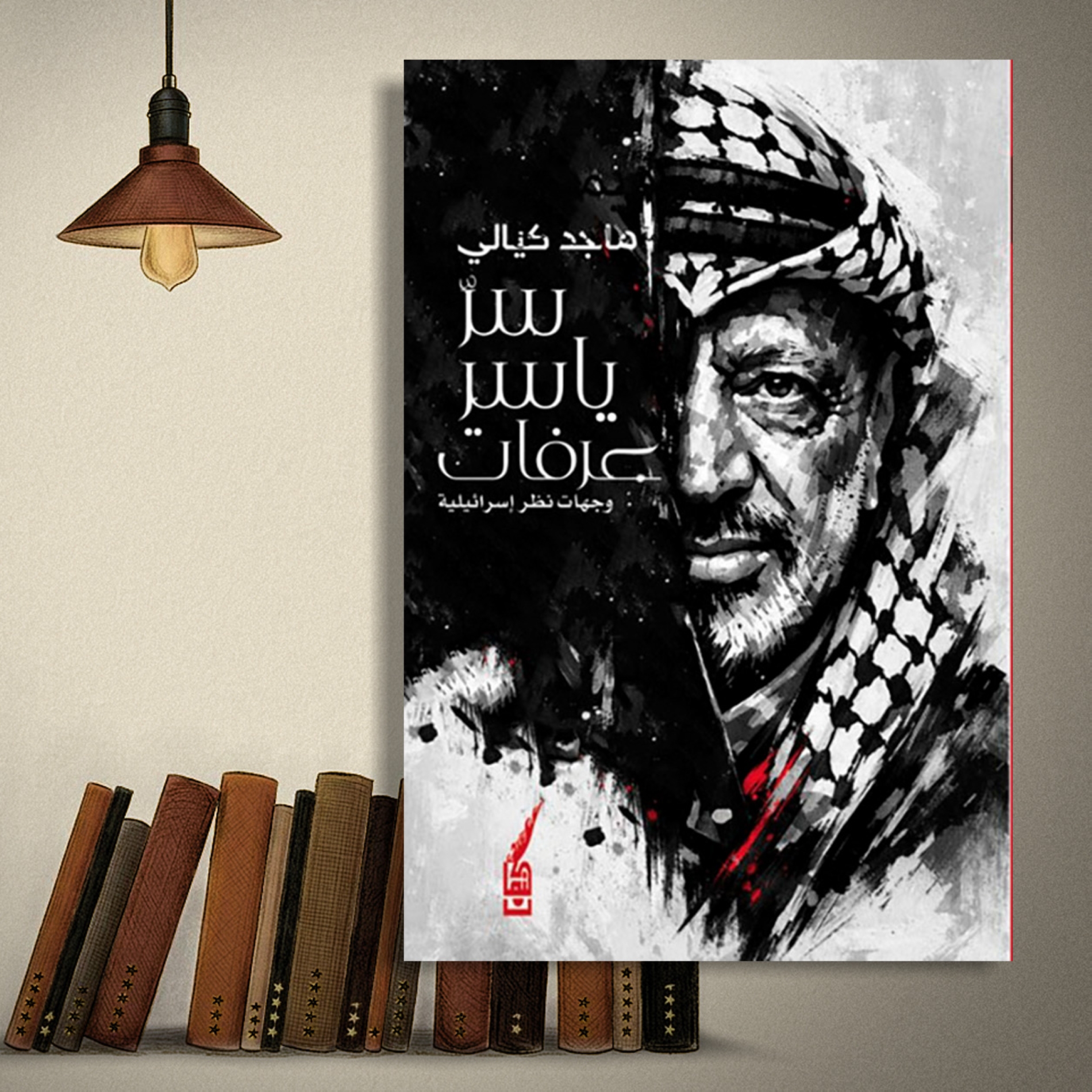
The Secret of Yasser Arafat: Israeli Perspectives
By: Majed Kayali
Publisher: Dar Kanaan for Studies, Publishing and Media Services, Syria
Writing about Yasser Arafat simply as a political leader is not be enough. Over more than four decades, he became the embodiment of a cause, a people, and a national liberation movement. At once a resistance leader, a political pragmatist, and a powerful national symbol, he nevertheless remained a deeply controversial figure.
This is where the significance of Majed Kayali’s book, The Secret of Yasser Arafat: Israeli Perspectives, lies. By approaching Arafat’s experience through an Israeli lens, with all its tensions, contradictions, and complex political calculations, the book offers a fresh perspective on one of the most consequential figures in modern history.
The book begins from a central premise: that Arafat cannot be fully understood through the Palestinian narrative alone, nor through the Israeli narrative alone, but only by reading the complex interactions that shaped his standing. He succeeded in transforming the Palestinian cause from one of refuge and diaspora into a political question that remained firmly on the international agenda.
Kayali traces the development of Arafat’s political career from the emergence of the Fatah movement in the 1960s, through the transformation of the Palestine Liberation Organisation into the recognised political representative of the Palestinian people, and on to the period of negotiations, the Oslo Accords, and the Second Intifada.
What is striking about the book is its reliance on Israeli testimonies and analyses, which reveal the extent of Arafat’s presence in Israeli political consciousness. While some Israelis saw him as a dangerous adversary, an enemy, and a symbol of confrontation, others viewed him as a figure who could not be bypassed, and whose absence could create a political and security vacuum.
The author devotes considerable space to the Second Intifada, treating it as a decisive moment in the relationship between Arafat and Israel. During those years, the conflict entered a new phase as Arafat was besieged in the Muqata’a headquarters in Ramallah, and his leadership became the subject of intense debate within Israeli political and security circles.
The value of the book lies in its attempt to deconstruct Arafat’s image. For Palestinians, he became a symbol of national identity and political representation. For Israelis, he remained a problematic presence, viewed either as a necessary partner or as an obstacle to settlement.
Arafat understood that the struggle was not only about confrontation but the Palestinian people’s ability to establish their political and symbolic presence in a world that had long tended to ignore them. He sought to navigate the enormous contradictions between his people’s aspirations and the pressures of regional and international realities. It was a journey that rendered him vulnerable to criticism even as it made him a symbol, producing multiple images of him that are difficult to reconcile in a single definition.
The questions that accompanied Arafat during his lifetime—resistance, negotiation, and authority—remain as relevant today as ever.
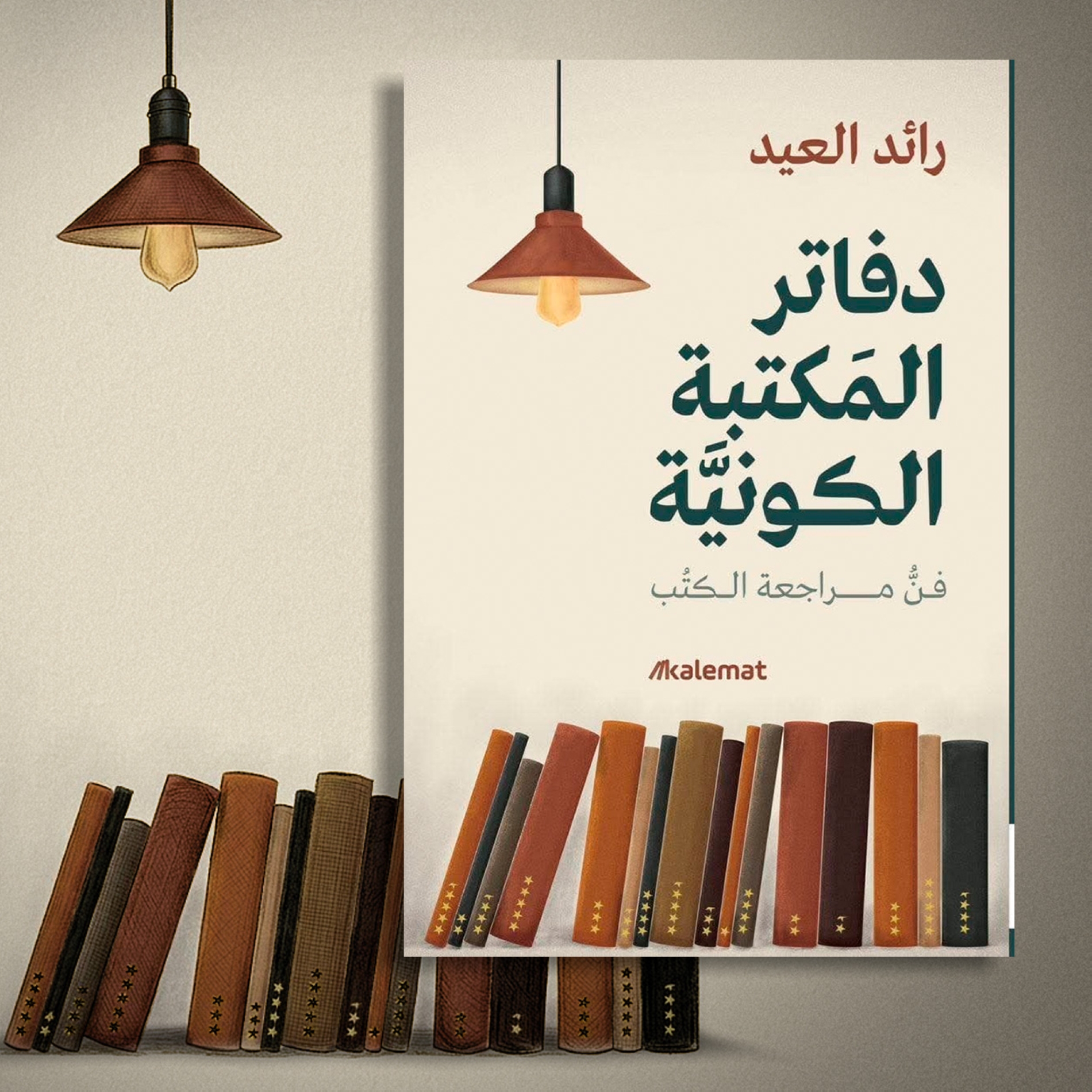
Notebooks of the Cosmic Library: The Art of Book Reviewing
By: Raed Al Eid
Publisher: Kalemat Publishing and Distribution, Saudi Arabia
In a world where books are multiplying at an accelerating pace and where thousands of new titles flow onto library shelves and digital platforms each year, the problem no longer lies in finding a book to read. It lies in choosing the book that deserves our time.
This is the premise from which Saudi writer Raed Al Eid sets out in Notebooks of the Cosmic Library: The Art of Book Reviewing, a rare Arabic attempt to explore the foundations of this cultural art while examining its history, functions, and transformations.
The book does not offer a collection of reviews, as its title might at first suggest. Instead, it takes book reviewing itself as its subject. From this standpoint, Al Eid seeks to answer fundamental questions about the nature of book reviews, their historical origins, the motives behind writing them, their essential components, and their role in shaping cultural awareness and influencing the worlds of reading and publishing.
The book combines history, analysis, and cultural reflection. It takes the reader on an extended journey through the history of book reviewing, from its earliest beginnings, tracing its roots in ancient civilisations and in both the Arab and Western traditions, before moving to its development with the rise of modern journalism and cultural magazines, and finally to its flourishing in the digital age.
It is also concerned with the cultural significance of book reviews. The author argues that many books lost over the course of history remained present in human memory thanks to those who wrote about them and introduced them to others.
Al Eid devotes particular attention to the concepts and terms associated with this field. He discusses the differences between reviewing, criticism, and book presentation, traces the varied uses of these terms in Arab and Western culture, and points to the notable lack of Arabic theoretical foundation for this art, despite its broad presence in daily cultural and academic practice.
The language of the book combines depth with clarity. It draws on a wide range of Arab and foreign sources, while also giving ample space to the author’s own experience as a reader, writer, and author who has encountered book reviews both as their subject and as their author.
Notebooks of the Cosmic Library: The Art of Book Reviewing may be considered a significant addition to the Arabic library. Through it, Al Eid invites readers to reflect on the value of the book review and its role in the making of knowledge.
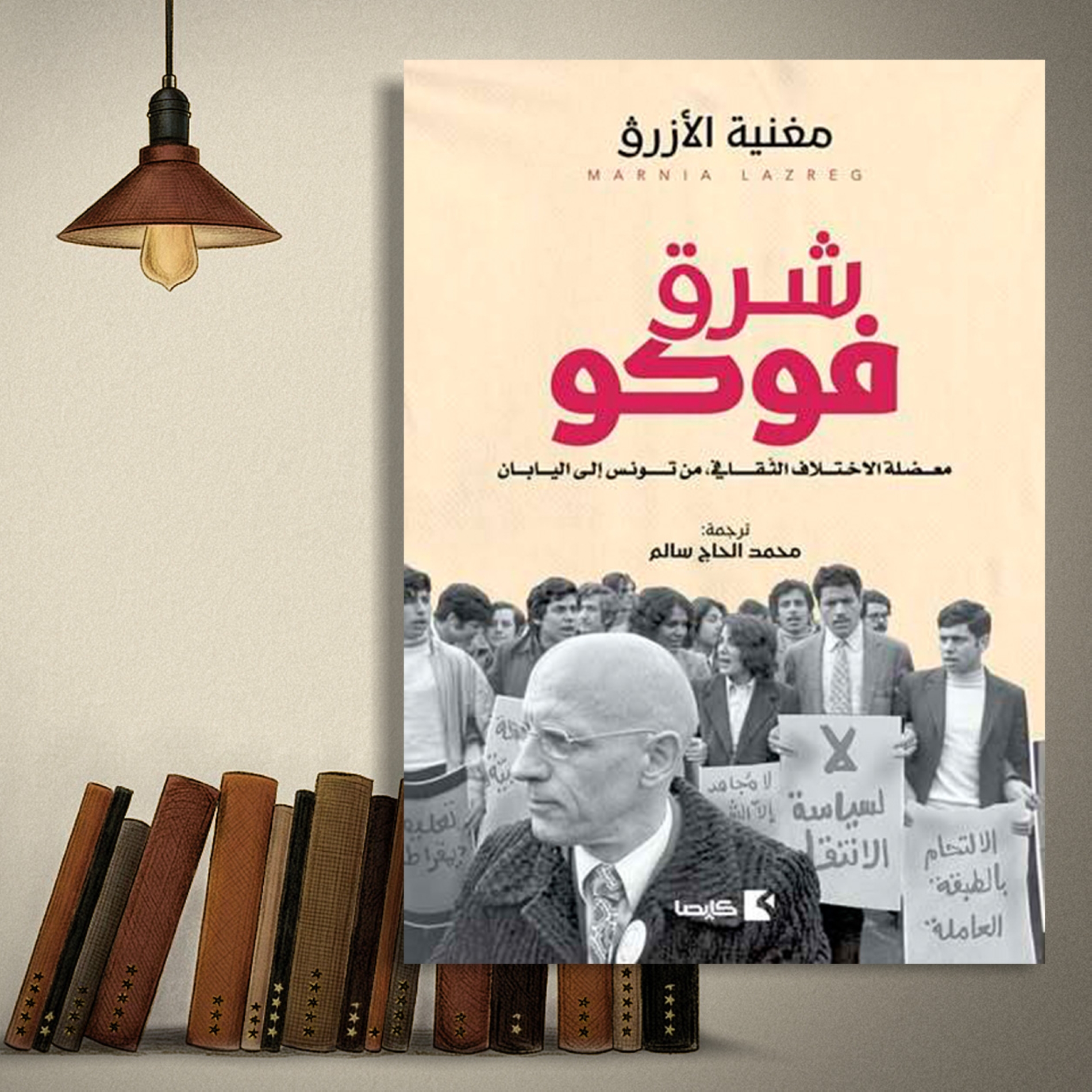
Foucault’s Orient: The Conundrum of Cultural Difference, From Tunisia to Japan
By: Marnia Lazreg
Translated by: Mohammed Al Hajj Salem
Publisher: Capsa Publishing and Distribution, Tunisia
Algerian writer Marnia Lazreg’s Foucault’s Orient: The Conundrum of Cultural Difference, From Tunisia to Japan, translated by Mohammed Al Hajj Salem, sheds light on one of the less explored dimensions of the French philosopher Michel Foucault’s intellectual project. It offers a critical reading of the relationship between Foucault’s thought and the East.
The book begins with a central question: how did Foucault construct his understanding of the East, and of his own presence in places such as Tunisia, Iran, and Japan? Did this represent an extension of his philosophical approach to cultural difference, or did it reproduce some of the very assumptions he criticised in Western thought?
The book examines Foucault’s experience in Tunisia, the first non-Western country in which he lived, where he spent two years in Sidi Bou Said during a period of sharp political and intellectual change. His time there coincided with the Tunisian student movement of 1967 to 1968, when the relationship between the university, society, and authority became a pressing question of everyday life.
The book links the experience to Foucault’s wider philosophical path. It traces the early formation of his thinking on cultural difference, beginning with his discussion of the ‘Chinese encyclopaedia’ in The Order of Things, before turning to his engagement with the concepts of otherness, madness, and Western rationality, and to his critique of the human sciences.
The book also discusses Foucault’s position on the Iranian Revolution, treating it as a moment that raises questions about his critical approach to humanism and the possibility of applying it to cultural and political contexts outside the West.
It is clear that the book does not seek merely to identify instances of Orientalism in order to condemn them. Rather, it explores a more complex question: how Foucault’s philosophy fares when it encounters cultures and experiences beyond the European sphere. In doing so, the book presents the Arab reader with a different Foucault.
The Icon, Calligraphy Pens and the Painting: The Image between Religion and Politics
By: Charbel Dagher
Publisher: Khoutout wa Dhilal Publishing House, Lebanon
In The Icon, Calligraphy Pens and the Painting: The Image between Religion and Politics, the Lebanese researcher Charbel Dagher offers a critical reading of the history of the image in Arab culture, placing it at the heart of the ambiguous relationship between religion, authority, and politics.
Dagher begins from a central idea: the image cannot be granted innocence or neutrality, but must instead be viewed as the product of historical contexts and intertwined symbolic struggles linked to legitimacy and interpretation. From this point, he addresses three major structures in the history of visual representation: the icon in the Eastern Christian tradition, Arabic calligraphy as a visual and spiritual practice, and modern painting as a moment of transformation in the concept and function of the image.
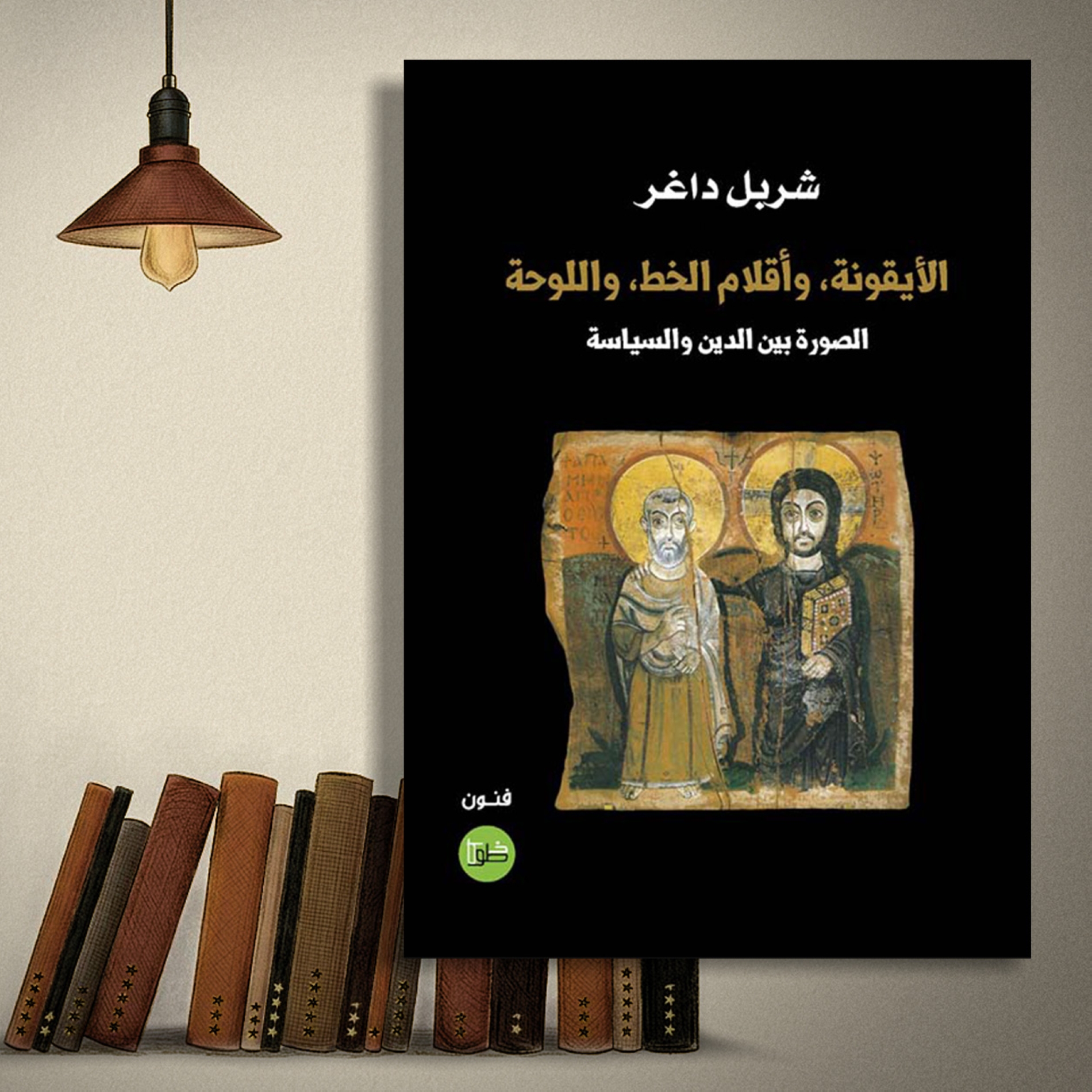
On this basis, the book reads the icon as a sacred medium that does not so much represent reality or reflect it as reproduce it spiritually. It presents Arabic calligraphy as a unique model in which writing becomes an independent visual form, where linguistic meaning overlaps with aesthetic structure. Modern painting, meanwhile, appears as a transformation in the function of the image. It is no longer tied to predefined meanings or to religious and traditional roles, but has become a space for the individual expression of the artist’s vision and personal experience.
The book presents the history of the image as a field of conflict between religion and politics, where the image is understood as a power structure as much as an aesthetic form. Here, the binary of prohibition and permission, which governed many classical studies of Islamic and Christian art, is reconsidered.
Dagher affirms that traditional concepts such as sacredness and representation are subject to continuous cultural and social transformations. In this sense, the history of the image becomes a history of meaning itself, not merely a history of the development of artistic forms.
Thieves of Language
By: Abdelfattah Kilito
Translated by: Ismail Aziyat
Publisher: Almutawassit Publications, Italy
In Thieves of Language, Abdelfattah Kilito discusses the act of writing and its primary substance: language. The book presents language as a vast and complex space in which memory, reading, and experience overlap. It raises a question that appears simple on the surface but is deep in its implications: where do the words with which we write come from, and can a writer regard language as their private property?
The book begins from the idea that the writer never starts from nothing. Every act of writing carries traces of earlier readings, texts, and experiences. The relationship between texts thus becomes one of presence and absence, between what appears in writing and what remains behind it in the form of voices and memories. It is in this context that the title Thieves of Language acquires its full significance.
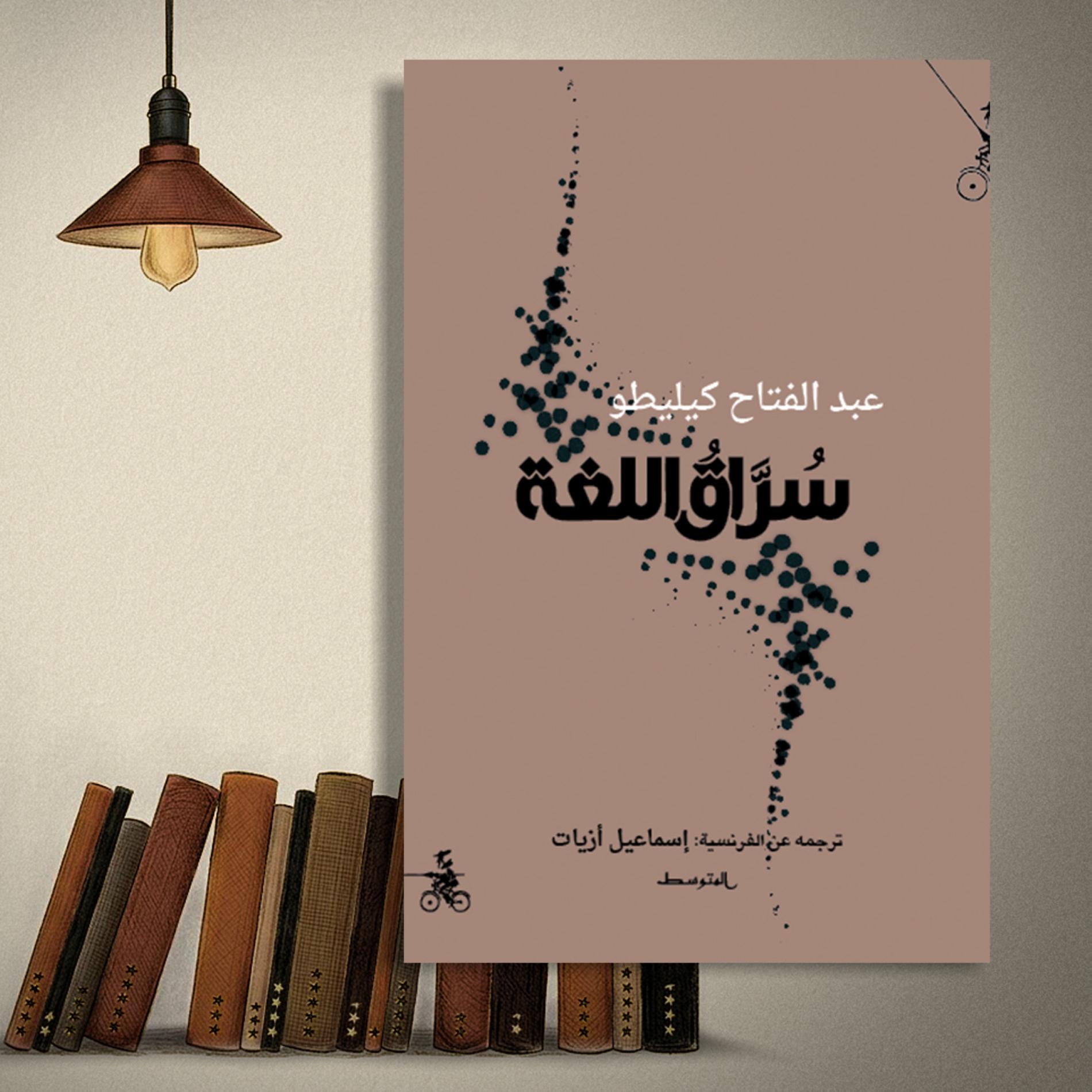
Kilito examines the boundaries between quotation and creation, and between what belongs to the writer and what belongs to the history of language itself. The words a writer uses were not born with them, yet within the text they are transformed into a personal experience through the way they are arranged, connected, and invested with new meaning.
Just as the book evokes writing, it also evokes the experience of reading, treating it as part of the formation of the text. The writer is a reader before being a producer of texts, and what they write is shaped by a long relationship with books, languages, and phrases that have accumulated in memory.
On this basis, Thieves of Language is a meditation on the secret of writing itself, on how a shared language becomes an individual voice, and how the inherited becomes material for new creation. In this way, it explores and reveals the hidden relationship between the writer and the language they believe they possess.
The book explores the paradox at the heart of the writer’s relationship with language. The writer searches for a distinct and individual voice, yet does so within a language that has already been used by others, and which carries a long history of meanings and associations.
Kilito sets literature against a common idea of creativity as purely individual invention. The book proposes that the literary work should be seen as the result of interaction between memory, reading and experience, where originality is not separate from influence, and the new does not conflict with the presence of old traces inhabiting it.