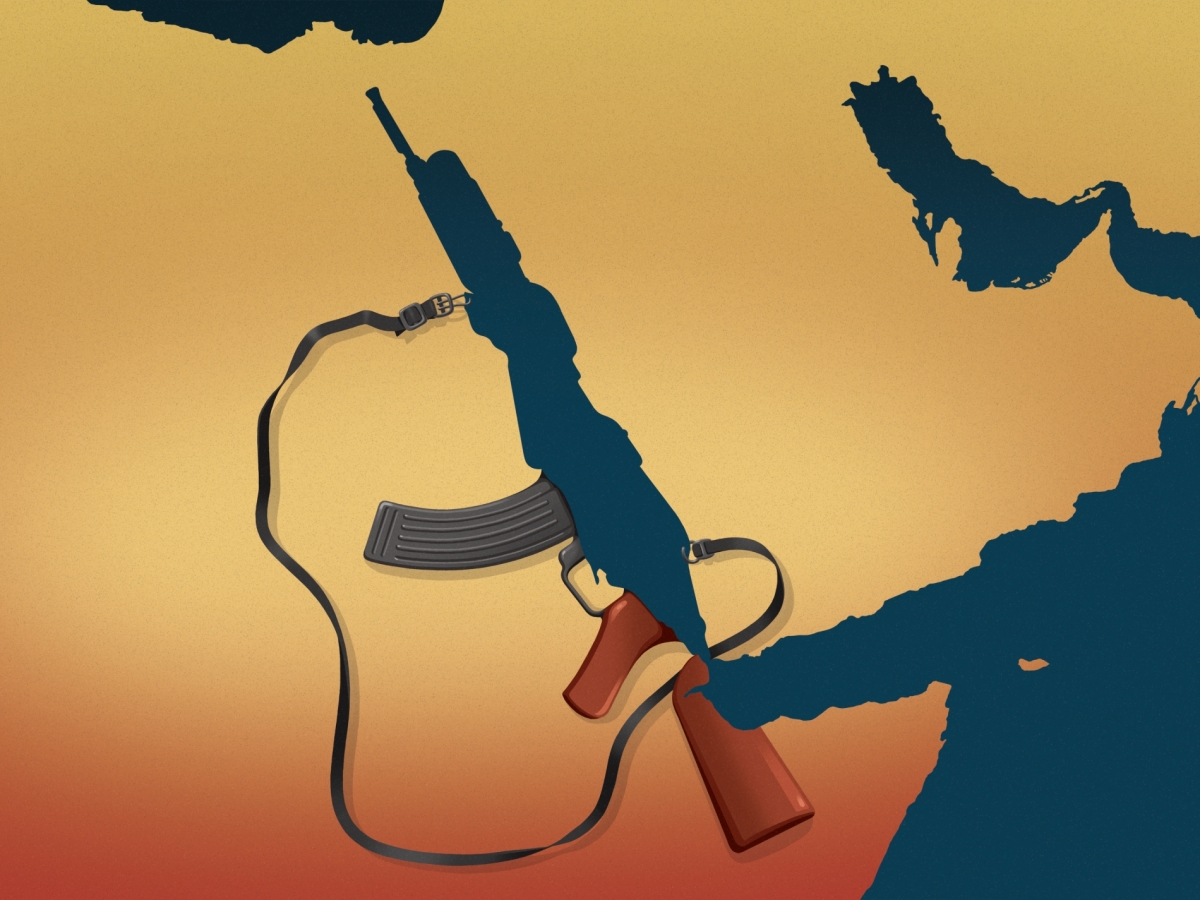

Across the Red Sea and the Horn of Africa, crises do exist in vacuums. They intertwine, feed off one another, and reveal a single, multi-layered rupture stretching from Yemen to Somalia and Sudan. It is a geography that grants no margin for error and leaves little space for institutional voids. There, global trade moves through narrow maritime arteries, and military installations intersect with the ambitions of major powers.
Against this backdrop, the erosion of state authority becomes a threat that extends far beyond domestic borders. Its effects travel from ports to sea lanes, from unsettled terrain to uneasy waters, reinforcing a principle long rooted in strategic thinking: the stability of the sea is contingent upon stability on land. It also underscores the need for regional cohesion to prevent crises from boiling over.
Rivalry in the Horn of Africa is the cover story of Al Majalla’s February issue, which marks the magazine’s third year since its relaunch and its 46th anniversary since its founding. We explore this intricate landscape from every angle, posing the pressing question: is the Red Sea moving toward an ordered space governed by capable states or toward a grey zone edging toward disorder?
With no middle ground in sight, the region seems poised for two possible trajectories—national unity or fragmentation. Every delay in addressing the question of state authority, and every casual acceptance of fragmentation, is a quiet tilt toward a deferred rupture that responsible regional powers seek to avert.
Read more:
Security at sea is impossible without security on land by Ibrahim Hamidi
In the Horn of Africa, the state itself is on the line by Abdullah F. Alrebh
The Horn of Africa is being targeted for fragmentation by London, Al Majalla