Overcoming Yemen’s fragmentation requires more support for the Riyadh-led path—one that rejects secession, all militias and institutionalises the state
AFP
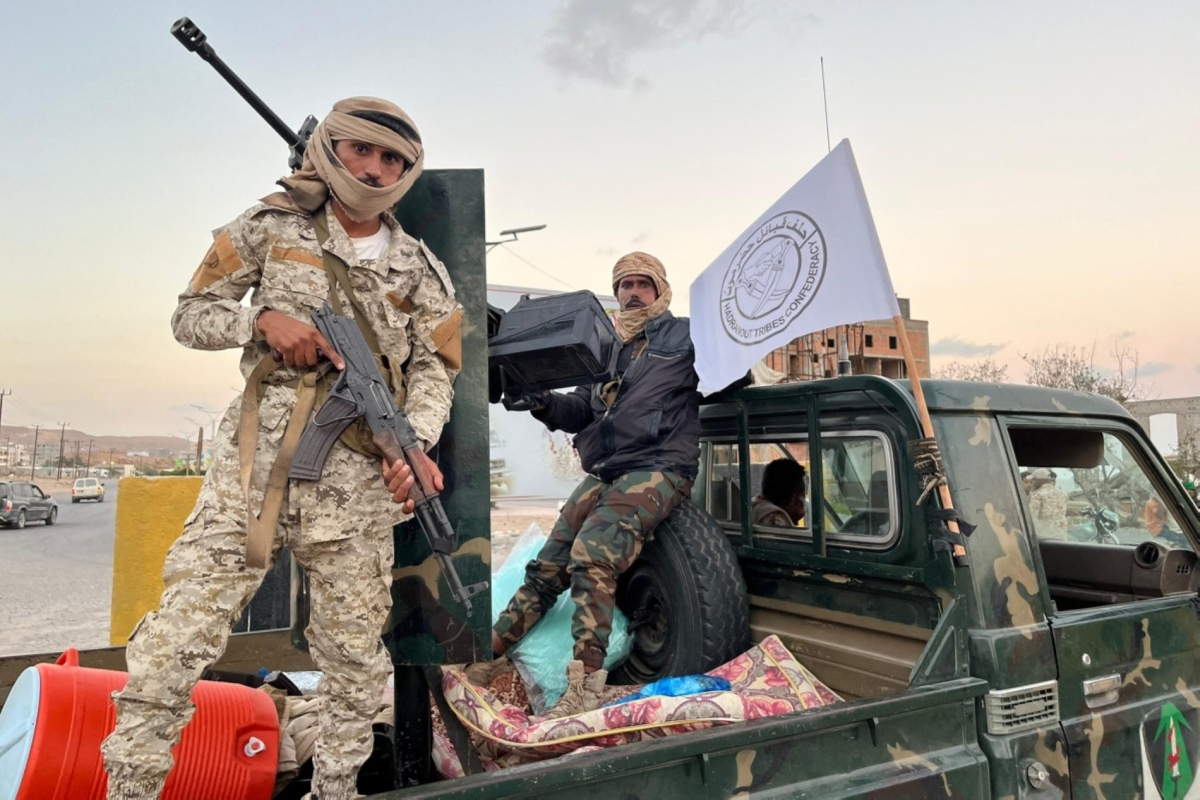
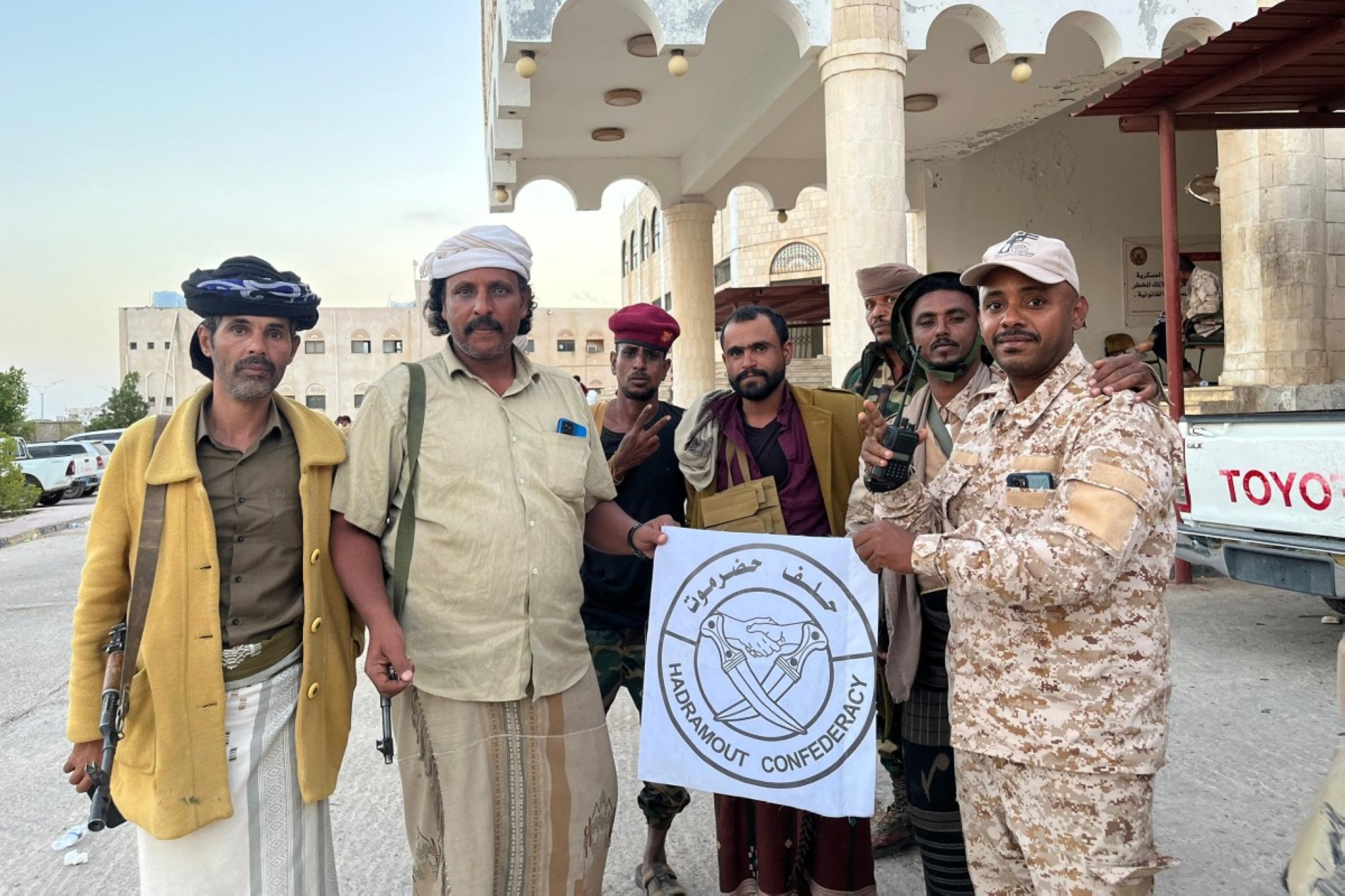
Forces that seized control of the Second Military Region Command on the outskirts of Al Mukalla, the capital of Hadramout, on 3 January 2026.
The complexity facing Yemen and the surrounding region in 2026 cannot be understood without recognising Saudi Arabia’s role in pursuing stability in the Middle East. The issue is now urgent given that, in the final days of December 2025, strategically important interventions were carried out in Yemen’s central and southern governorates of Hadramout and Al Mahrah that went far beyond a passing security incident.
The attempted seizure of power by the secessionist Southern Transitional Council (STC) was a tipping point that has shifted the Saudi approach to Yemen. Following the management of fragile balances, there is now a decisive push for comprehensive sovereign stability, achieved by supporting the institutions of the legitimate Yemeni state and reorganising forces on the ground.
Historical role
Saudi Arabia’s interest in Yemen has historical, geographical, and cultural roots, but Yemen’s stability is also a top national security priority for Riyadh, whose regional responsibilities give it a central role in events. Unlike more peripheral actors in the vicinity, Saudi Arabia is a core state to Yemen’s future. In contrast to the actions of others, its aim is not to chase fleeting influence or short-term tactical gains.
By virtue of its religious, political, and economic weight, Saudi Arabia’s actions in Yemen are not borne of defensive reflex or passing rivalry. Rather, it stems from a historical role and a shared destiny that bind Riyadh and Sanaa, and from recognition of the interdependence between Gulf security and Yemen’s stability. Saudi Arabia is the safety valve for international navigation in the Red Sea and the Arabian Sea, and the sole guarantor against Yemen becoming a permanent hub for exporting chaos, extremism, and threats.
The Saudi role in Yemen goes beyond logistical support or limited military backing; it extends to a comprehensive and durable blueprint for a modern Yemeni state through support for its sovereign institutions. While other regional actors may back local components for narrow regional or ideological aims, Riyadh remains the core political and legal reference on which internationally recognised legitimacy relies, as does Yemen’s Presidential Leadership Council (PLC) in its efforts to restore sovereignty.
Even on the question of unity—which is not a fixed constant but contingent on justice, as the Minister of Defence indicated when he affirmed the legitimacy of the southern cause—Saudi Arabia confines itself to guaranteeing its security and stability without imposing rigid formulas. This renders any other role complementary and disciplined within its overarching umbrella, rather than a rival to it or a spoiler of efforts to restore sovereignty.
Saudi-backed forces in control of the Second Military Region Command on the outskirts of Mukalla, the capital of Hadramout province, on 3 January, 2026.
Drawing a line
Recent developments at Al Mukalla Port, the coastal capital of Hadramout, marked a fundamental turning point in the Saudi approach. In bombing newly arrived Emirati military vehicles and weapons consignments, Riyadh signalled a strategic shift away from its previous posture of patience, having spent years making space for political solutions and intra-Yemeni dialogue.
Reports of Emirati support for the STC revealed an organised attempt to unilaterally alter the balance of power through the shipment of heavy weapons, armoured vehicles, and advanced combat equipment. These consignments were intended to bolster forces operating outside any coordination with the internationally recognised government, creating a new reality on the ground that would undermine stability.
The Saudi response was decisive, designed to regulate the tempo on the ground and return matters to a sovereign track
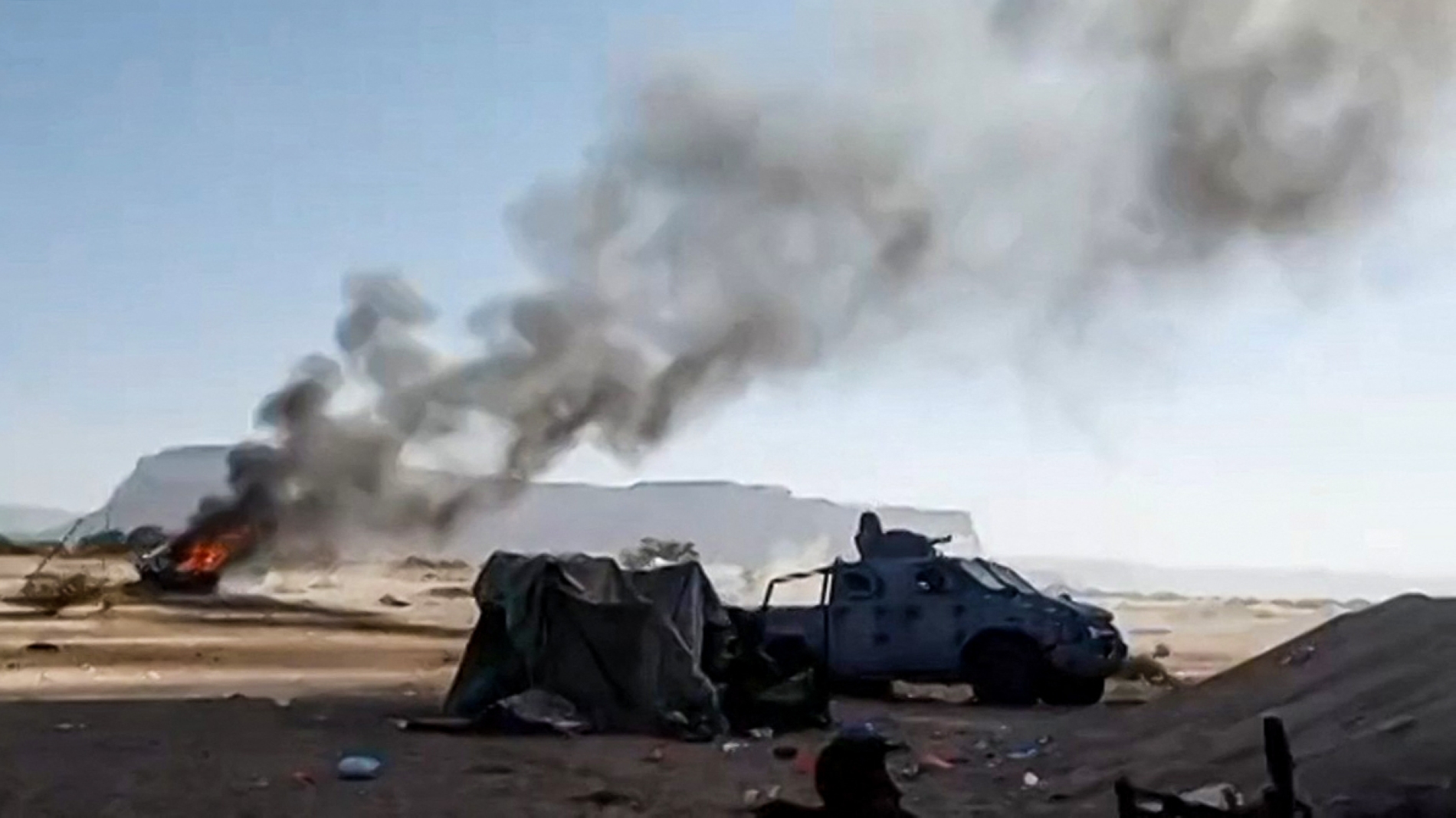
On 2 January, images and video were posted on social media appearing to show the aftermath of Saudi airstrikes against STC positions, including in Seiyun, a city in Hadramout governorate, and against military bases at Al Khasha and Barshid. Several media outlets, including AFP and France 24, cited officials from the STC that the Saudi-led strikes had left at least 80 STC fighters dead, 152 injured, and around 130 captured.
On 3 January, the PLC said its forces had retaken control of Al Mukalla, the key eastern port and capital of Hadramout. PLC head Rashad al-Alimi noted that the Saudi-backed National Shield Forces achieved "record success" in "retaking all military and security positions in the province". It also said that authorities in neighbouring Al Mahrah province had switched their allegiance back to the PLC, without any resistance.
The Saudi response was decisive, designed to regulate the tempo on the ground and return matters to a sovereign track. It also highlighted that a Saudi red line had been crossed, one that related directly to Saudi national security and its vital sphere, including its southern borders and critical navigation corridors. None of this is open to negotiation, and all threats will be met in a similar manner, seemed to be Riyadh's message.
A video released by Aden Independent Channel (AIC TV) on 2 January 2026, shows the moment a strike hits the Southern Transitional Council (STC) forces in Seiyun, in the Hadramout province.
Institutional response
Military intervention at Al Mukalla Port was a sovereign, institutional response based on adherence to the international legal framework. Furthermore, it came at the request of Yemen's legitimate Presidential Leadership Council (PLC), which represents the recognised government, thus conferring full legality on Saudi actions taken to safeguard Yemeni sovereignty against attempts at subversion in the south.
Other measures included declaring a 90-day state of national emergency, imposing a 72-hour temporary air, sea, and land blockade to curb the flow of illicit weapons, and cancelling a joint defence agreement with the Emirates. It all underscored that the Saudi priority lies not in arming militias or fomenting reckless adventurism but in the security and peace of the region.
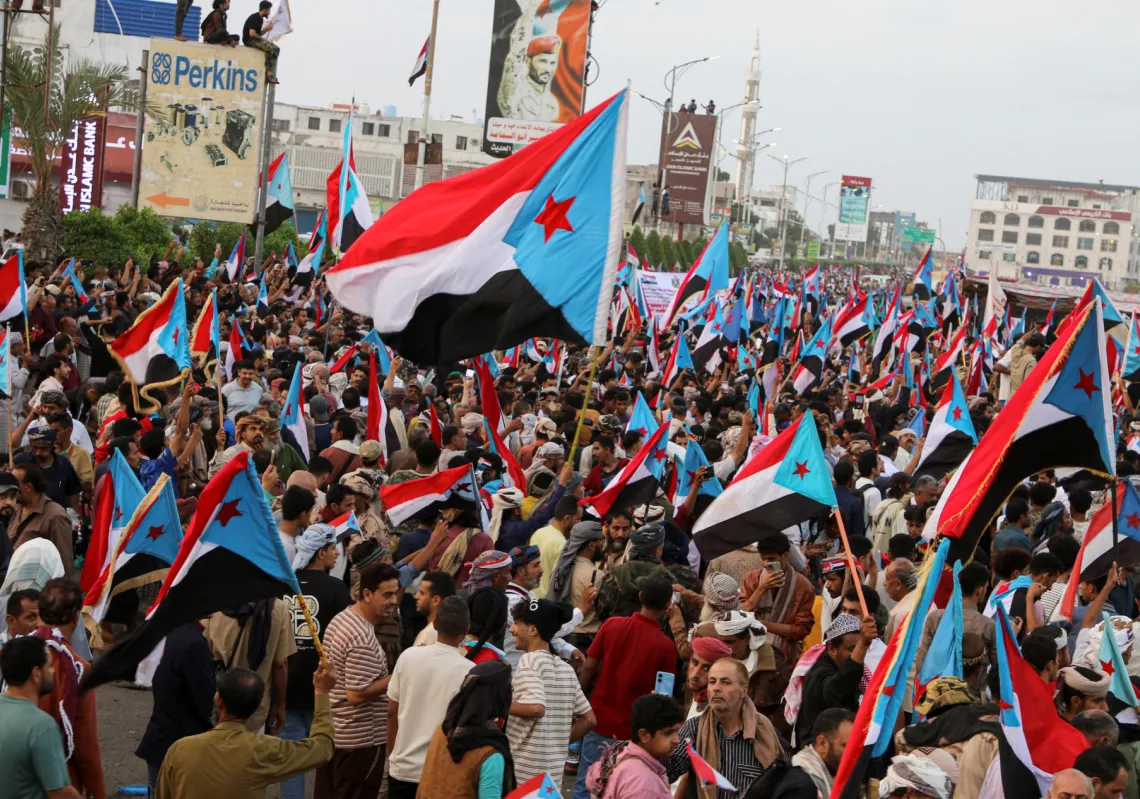
Riyadh has consistently affirmed that the southern cause is a legitimate political issue that cannot be ignored in any comprehensive solution to Yemen's crisis and should be a foundational pillar in restoring a unified and strong Yemeni state. However, moves by local forces to convert grievances into armed ventures threaten the unity of the anti-Houthi front, weakening the collective efforts towards Yemeni sovereignty by inviting chaos and fragmentation.
In this sensitive context, Saudi Defence Minister Prince Khalid bin Salman urged reason, wisdom, and prioritising Yemeni and regional interests over short-term factional gains. He stressed that any unilateral decision taken outside the framework of legitimacy and the PLC serves external agendas aimed at weakening and dividing Yemen. He also implicitly underscored the importance of adhering to the Riyadh Agreement and the outcomes of the transfer of power as a unifying framework that safeguards southern rights within a strong and unified state.
All relevant parties are currently in Riyadh for talks, and face a test of historical responsibility. The difference between the Saudi and secessionist visions lies in institutionalisation, rather than fluidity. Saudi Arabia is investing in partnership as guaranteed by the Riyadh Agreement and the outcomes of the transfer of power, which granted southerners an effective presence in sovereign institutions.
By contrast, unilateral decision-making—or the imposition of a new status quo by force in vital areas, such as Hadramout and Al Mahrah—serves only outside agendas. This has led to the necessary empowerment of National Shield forces as a legitimate national formation loyal to the central state, to fill the security vacuum and prevent internal conflicts draining yet more Yemeni resources.
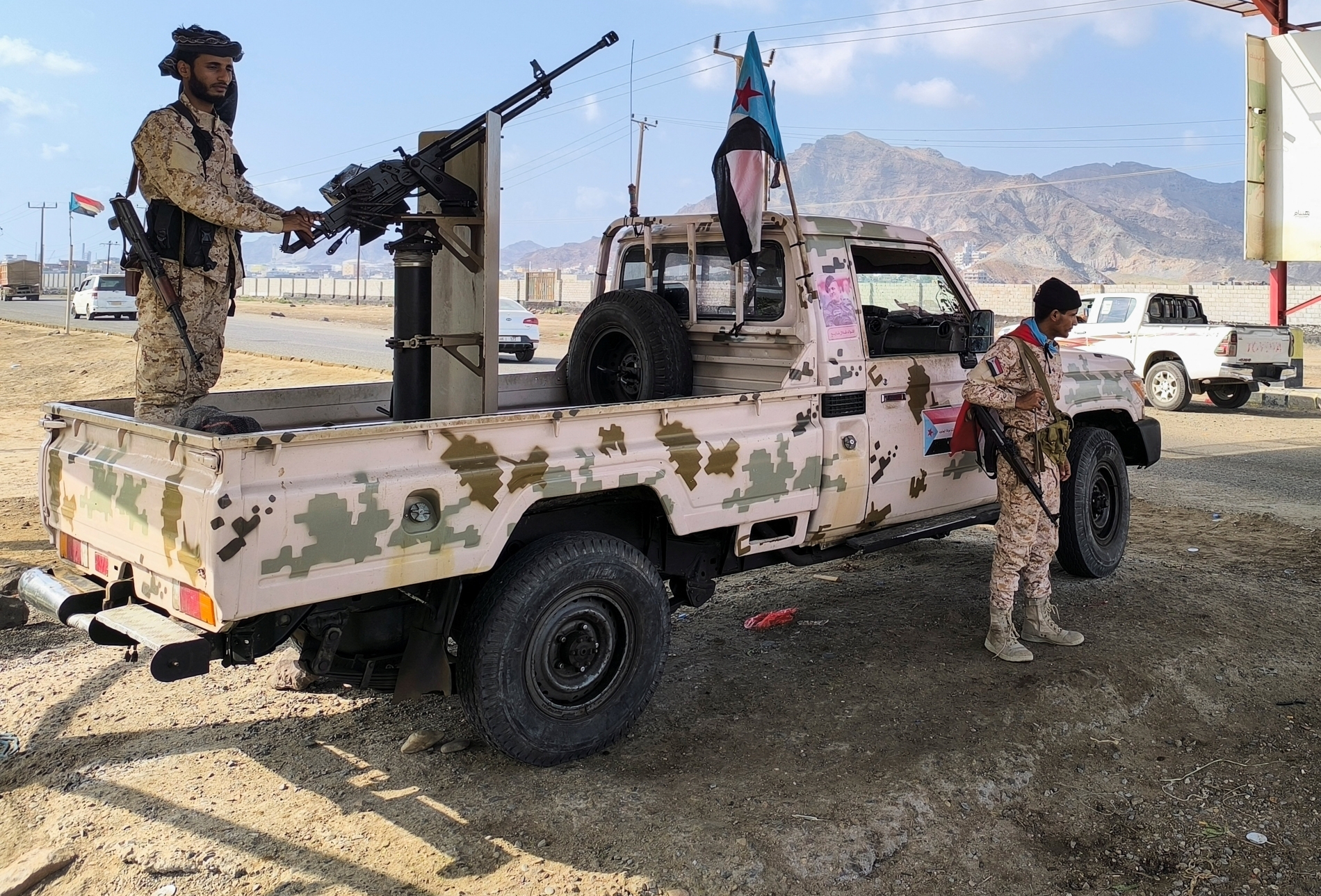
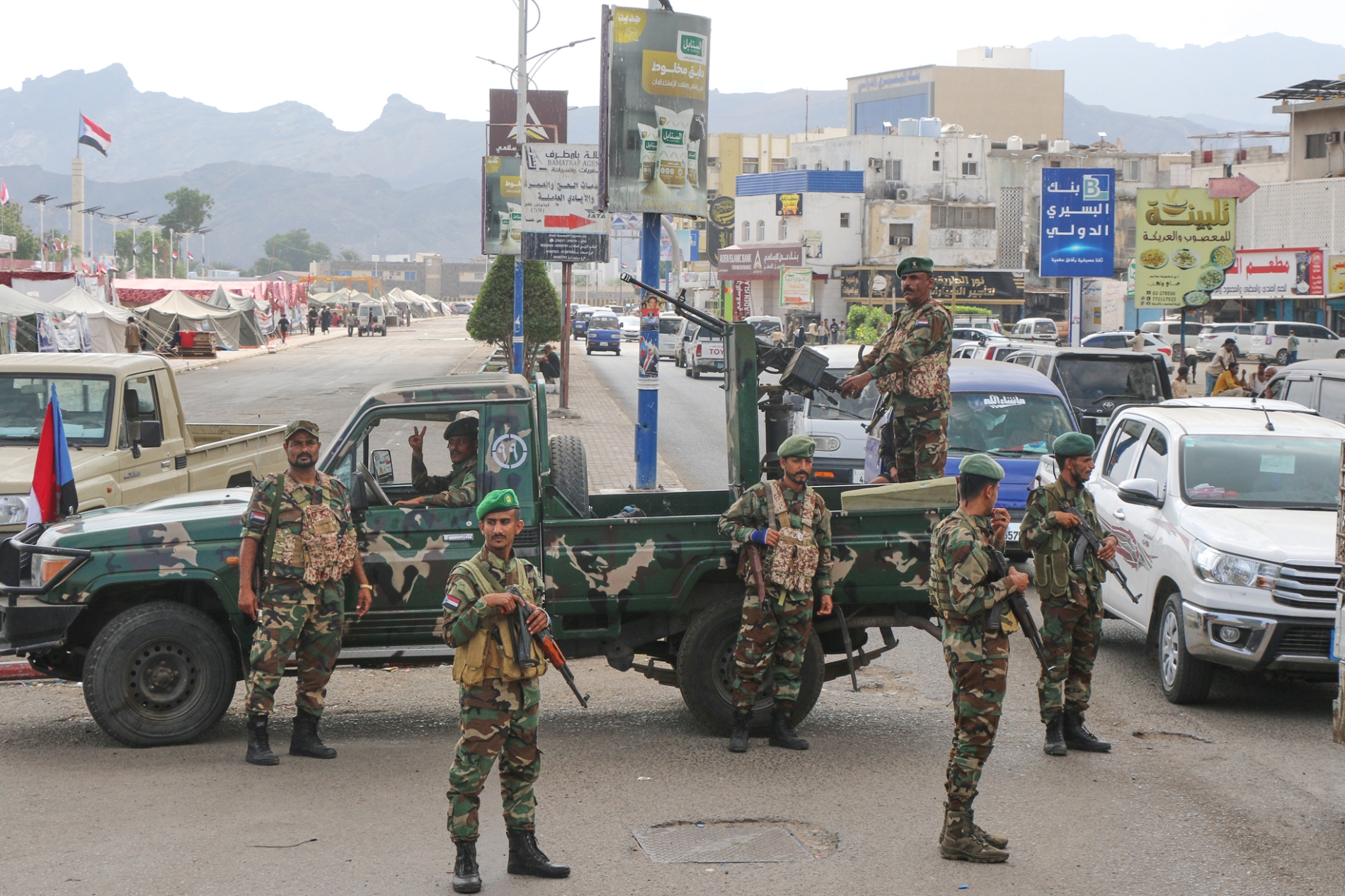
Members of forces loyal to the Southern Transitional Council man a checkpoint in the al-Buraiqah district of Aden, Yemen, on 8 January 2026.
Security priorities
For Saudi Arabia, Hadramout and Al Mahrah are not simply geographic regions of Yemen (together, they comprise roughly half of all Yemeni territory). Instead, it sees them as vital for security, protecting its southern border and the global navigation corridors of the Arabian Sea. Given Saudi interests in the security of international supply chains, these regions effectively serve as the first line of defence against threats.
The military operation on 2 January, launched by Hadramout Governor Salem Ahmed Al Khanbashi, came after a decision by PLC chairman Rashad al-Alimi, who tasked the National Shield forces with restoring Saudi Arabia's sovereignty and direct protection over its vital sphere. Arming entities outside the state framework in these areas, which overlook the Arabian Sea and control energy corridors, threatens Saudi plans to diversify export outlets and undermines its Vision 2030 priorities for regional security and economic prosperity.
Any security vacuum here also provides fertile ground for the return of terrorist organisations such as al-Qaeda and Islamic State (IS). This has prompted Riyadh to back the National Shield forces to prevent eastern Yemen from descending into chaos.
Despite the importance of longstanding regional alliances in confronting the Houthi threat, experience in Yemen has shown that solidarity cannot be built at the expense of Saudi Arabia's security and its vital neighbourhood in Hadramout and Al Mahrah.
The strategic divergence between Riyadh's calculations, rooted in immediate national security and responsibility for Yemen's stability, and those of actors seeking limited influence through local proxies has made it necessary to recalibrate the coalition's strategic posture and redefine its relationship with partners in Yemen, with Saudi Arabia setting clear red lines by rejecting any unilateral escalation that threatens its borders or undermines legitimacy.
Members of the "Southern Transitional Council" at a checkpoint in Aden, Yemen, on 31 December 2025.
Roadmap for Yemen
The next phase requires a high-level dialogue of the kind Riyadh called for in response to the PLC, one that safeguards Saudi interests and Yemen's sovereignty. Yemen is not a space for competing influences but a theatre for rebuilding a unified and strong state under effective Saudi stewardship. A roadmap for Yemen would begin with National Shield units being equipped and deployed at strategic locations to ensure that air bases and vital ports remain under the authority of the legitimate state and under the direct supervision of the Saudi-led coalition command.
A second element would be political support for the PLC, enabling it to discharge its sovereign duties and to block any fragmentation projects that seek to impose a separatist reality by force of arms or through the exploitation of historical grievances.
The Saudi view of Yemen as an integral part of its security depth strengthens the prospects for a strong and unified state
Third would be safeguarding energy routes and international navigation corridors in the Arabian Sea and the Gulf of Aden by intensifying Saudi naval and air patrols. Finally, a roadmap would include the management of relations with regional partners, ensuring that any involvement in Yemeni affairs must pass through the Saudi gateway in service of the interests of a unified Yemeni state.
Saudi Arabia's backing of the National Shield forces and the PLC in restoring sovereignty over critical areas amounts to a precise surgical intervention to excise pockets of disorder and restore the standing of a coherent and unified Yemeni state over militias and divisions that have exhausted the Yemeni people. Yemen's stability is a non-negotiable pillar of Vision 2030, linking Saudi prosperity to the security of its neighbour and to global energy corridors.
Overcoming Yemen's fragmentation requires explicit international support for the Riyadh-led path, one founded on institutionalising the state and rejecting militias in both the north and the south. The Saudi view of Yemen as an integral part of its security depth strengthens the prospects for a strong and unified state. This offers the surest guarantee for the stability of energy routes and global supply chains in an era of rapidly intensifying geopolitical challenges.