Israel scores strategic win with Somaliland deal, but it comes with riskhttps://en.majalla.com/node/328883/politics/israel-scores-strategic-win-somaliland-deal-it-comes-risk
Israel scores strategic win with Somaliland deal, but it comes with risk
An axis comprising Israel, Ethiopia, and Somaliland appears to be emerging, which has the potential to polarise the Horn of Africa and rapidly accelerate its militarisation
Farhan Aleli / AFP
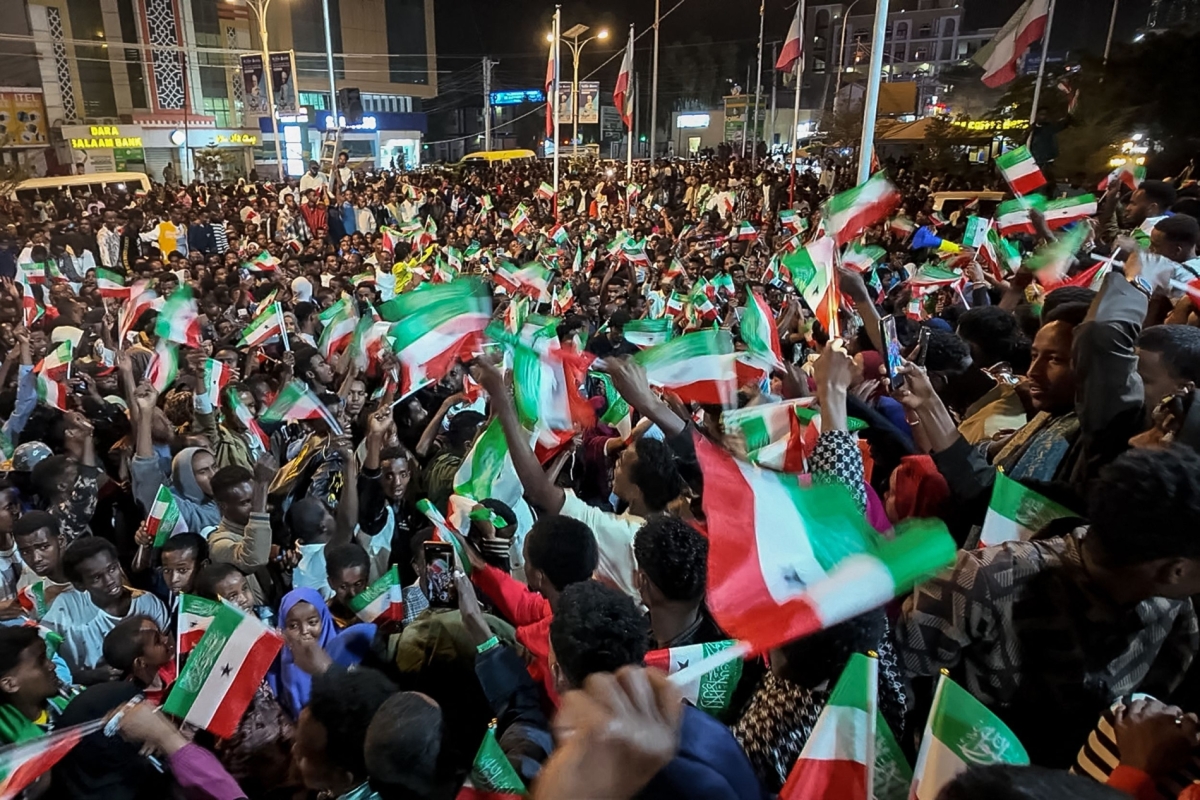
This aerial view shows residents waving Somaliland flags as they gather to celebrate Israel's announcement recognising Somaliland's statehood in downtown Hargeisa, on 26 December 2025.
Israel scores strategic win with Somaliland deal, but it comes with risk
In a move that breaks more than three decades of diplomatic impasse, Israel has officially recognised Somaliland as an independent and sovereign state, with Hargeisa as its capital. This marks the first time a United Nations member state has granted such recognition.
The 26 December announcement was made via a joint “Jerusalem Declaration” signed by Israeli Prime Minister Benjamin Netanyahu and Somaliland President Abdirahman Mohamed Abdullahi “Irro.”
Abdullahi said in a statement that Somaliland would join the Abraham Accords, calling it "a step toward regional and global peace." The agreement establishes full diplomatic relations between the two entities, including the exchange of ambassadors.
This strategic development would not have been possible without significant internal political change in Somaliland. In November 2024, the region held presidential elections that ushered in a shift at the highest level of leadership, enabling a departure from previous foreign policy orientations. The election saw the victory of opposition figure Abdirahman Mohamed Abdullahi, widely known as “Irro,” leader of the Waddani Party. A seasoned diplomat, Irro formerly served in Somalia’s diplomatic corps prior to the state’s collapse.
Upon assuming office, Irro pursued an assertive strategy to aimed at ending Somaliland’s decades-long international isolation. His foreign policy pivot created the conditions for secret negotiations with Israel, ultimately culminating in formal recognition.
I was glad to speak just now with the President of Somaliland Abdirahman Mohamed Abdullahi, on this important day for both countries.
Over the past year, based on an extensive and ongoing dialogue, relations between Israel and Somaliland have taken shape. Following the decision... pic.twitter.com/jHnfIPpoyR
The breakthrough came after months of intense intelligence and diplomatic engagement. Israeli sources reported that President Irro made a secret visit to Israel in October 2025, two months before the official declaration, during which he met with senior officials from the Mossad and the Ministry of Foreign Affairs.
Discussions reportedly centred on a quid pro quo arrangement: diplomatic recognition in exchange for strategic access. In his public statement, Prime Minister Netanyahu extended special thanks to Mossad Director David Barnea, underlining that the initiative had been handled primarily through Israel’s security apparatus, framed as a matter of national security.
The agreement with Somaliland is a key diplomatic win in the Horn of Africa—one Netanyahu intends to leverage during his upcoming meeting with Trump
Israel's recognition of Somaliland represents a revival and a modernisation of the country's traditional periphery doctrine. This long-standing strategy aims to establish partnerships in the region to secure access to key maritime corridors, notably the southern arc via the Red Sea. For Netanyahu, the agreement is an important diplomatic win in the Horn of Africa—one he intends to leverage during his upcoming visit to Washington for talks with US President Donald Trump.
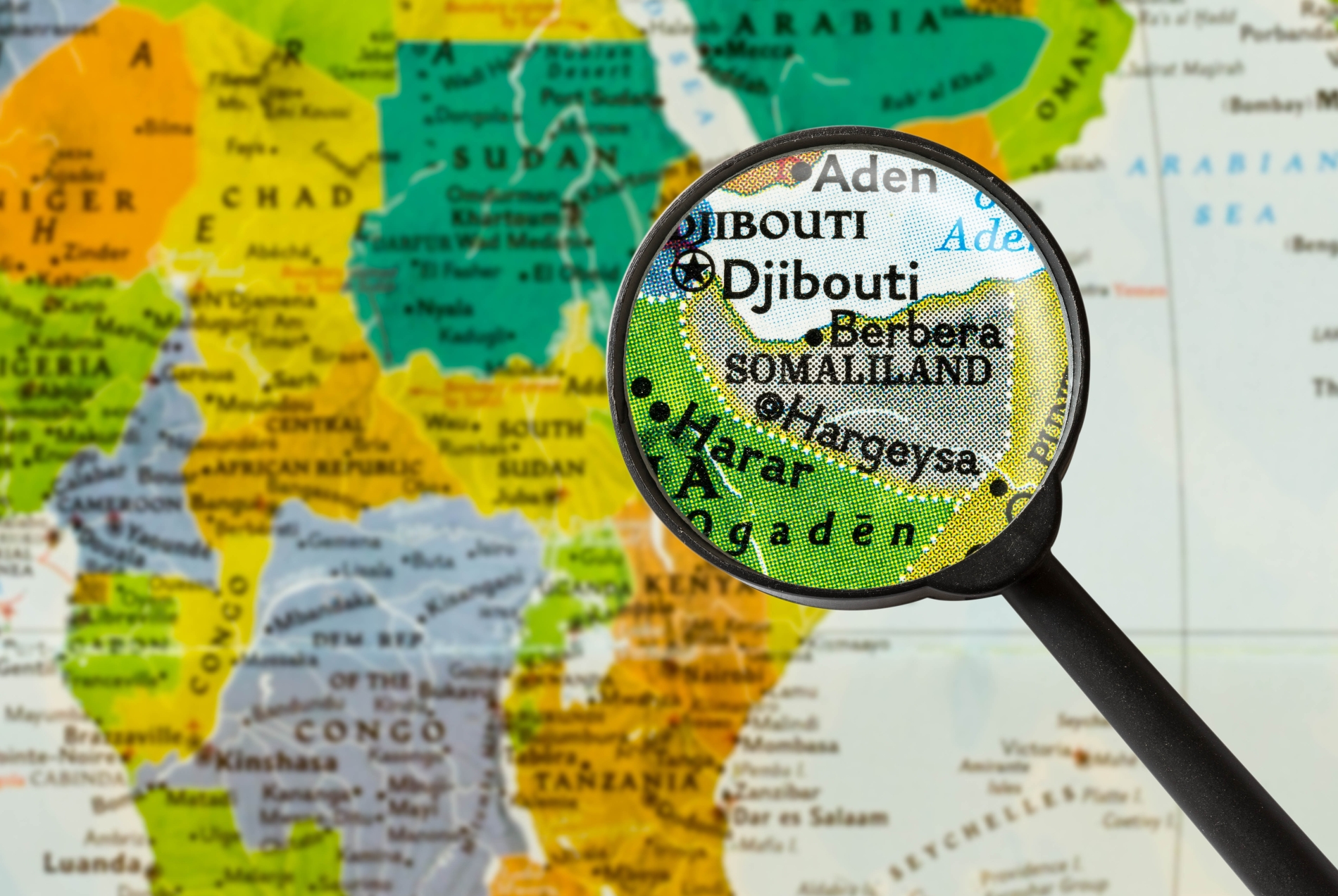
Somaliland's geographic position offers Israel several strategic advantages. The region controls an 850-kilometre stretch along the Gulf of Aden and commands access to the Bab al-Mandeb Strait.
According to the Institute for National Security Studies in Tel Aviv, the alliance with Hargeisa provides Israel with a critical platform to achieve three objectives. The first is establishing an early warning system through the deployment of radar and electronic surveillance equipment to monitor missile and drone activity originating from Yemen, particularly threats directed at Eilat. The second involves using Somaliland's territory or waters as a launch point for special operations against hostile actors, chiefly the Houthis. The third is a broader strategic goal: denying Iran dominance over the Red Sea by disrupting maritime supply routes that could bolster the Houthis.
Israel's diplomatic recognition of Somaliland appears to be the political façade for a more substantial security arrangement—one that reportedly includes plans to establish an Israeli military base, potentially the largest of its kind outside Israeli territory. Two primary locations in Somaliland are under consideration, each offering distinct strategic advantages and operational challenges.
The first candidate is the port city of Berbera, widely regarded as the most logical choice from a logistical standpoint. Significant investment, totalling hundreds of millions of dollars, has already been channelled into Berbera's development, raising its container capacity to approximately 500,000 units, with ambitions to reach two million. The port complex also hosts military infrastructure, including an extended airstrip capable of accommodating large aircraft, as well as robust support and logistical facilities. Its strategic utility is further enhanced by a modern road that connects it directly to Ethiopia.
The second option is the historic coastal city of Zeila, located near the border with Djibouti and the closest point in Somaliland to the Bab al-Mandab Strait. Once the capital of the Adal Sultanate and a major hub for Red Sea commerce, Zeila offers a different set of strategic benefits.
An Israeli presence in this location would allow for highly effective electronic surveillance across both the Yemeni and Eritrean theatres. Its relative remoteness from Berbera's commercial congestion enhances its appeal for discreet military operations and intelligence gathering.
Economic incentives
The agreement between Israel and Somaliland extends well beyond the security realm, incorporating a range of economic incentives crucial to the survival of the Somaliland government, which is grappling with financial hardship. Netanyahu explained that bilateral cooperation would encompass agriculture, health, technology, and broader economic development.
Agriculture is Somaliland's most pressing domestic challenge, given its predominantly semi-arid climate. Leading Israeli firms specialising in desert agriculture, most notably Netafim, have begun exploring initiatives in drip irrigation and groundwater desalination. This collaboration aims to replicate the successful development model Israel has applied in other arid regions. By enhancing food security and delivering tangible improvements in local livelihoods, the initiative could provide the Somaliland government with achievement-based legitimacy among its population, especially amid recurring droughts.
Israel is also positioning itself to strengthen trade ties with Africa through the Berbera Corridor—a key logistical route linking the port of Berbera to Ethiopia's capital, Addis Ababa. Enhancing this corridor would not only reduce regional dependence on Djibouti but also create a land-based trade route, giving Israeli technology firms access to Ethiopia's sizable market. Furthermore, it opens avenues for overland transit into sub-Saharan Africa, via Kenya and Uganda.
Sweeping condemnation
The Somali government in Mogadishu condemned Israel's recognition of Somaliland as a direct assault on Somali sovereignty and a violation of international law. Its response went beyond official statements, with authorities initiating steps to activate the joint defence agreement signed with Egypt in August 2024. Mogadishu views the recognition as a grave threat to what remains of Somalia's national unity, fearing it could embolden separatist sentiments in other regions, most notably Puntland, which also enjoys a degree of autonomy.
In response, Egypt's Ministry of Foreign Affairs initiated consultations with its counterparts in Türkiye, Djibouti, and Somalia to forge a coordinated stance. Cairo's concerns are multifaceted. Strategically, the development is perceived as a southern encirclement through an emerging axis comprising Israel, Ethiopia, and Somaliland. Such an alignment is seen as endangering the security of the Suez Canal by potentially militarising the Bab al-Mandab Strait and raising the risk of a regional flashpoint should tensions between Iran and Israel escalate.
Additionally, Israel's deepening ties with Ethiopia could bolster Addis Ababa's leverage in negotiations over the Grand Ethiopian Renaissance Dam, particularly if Israeli security assurances are extended to cover Ethiopian access to the sea via Berbera.
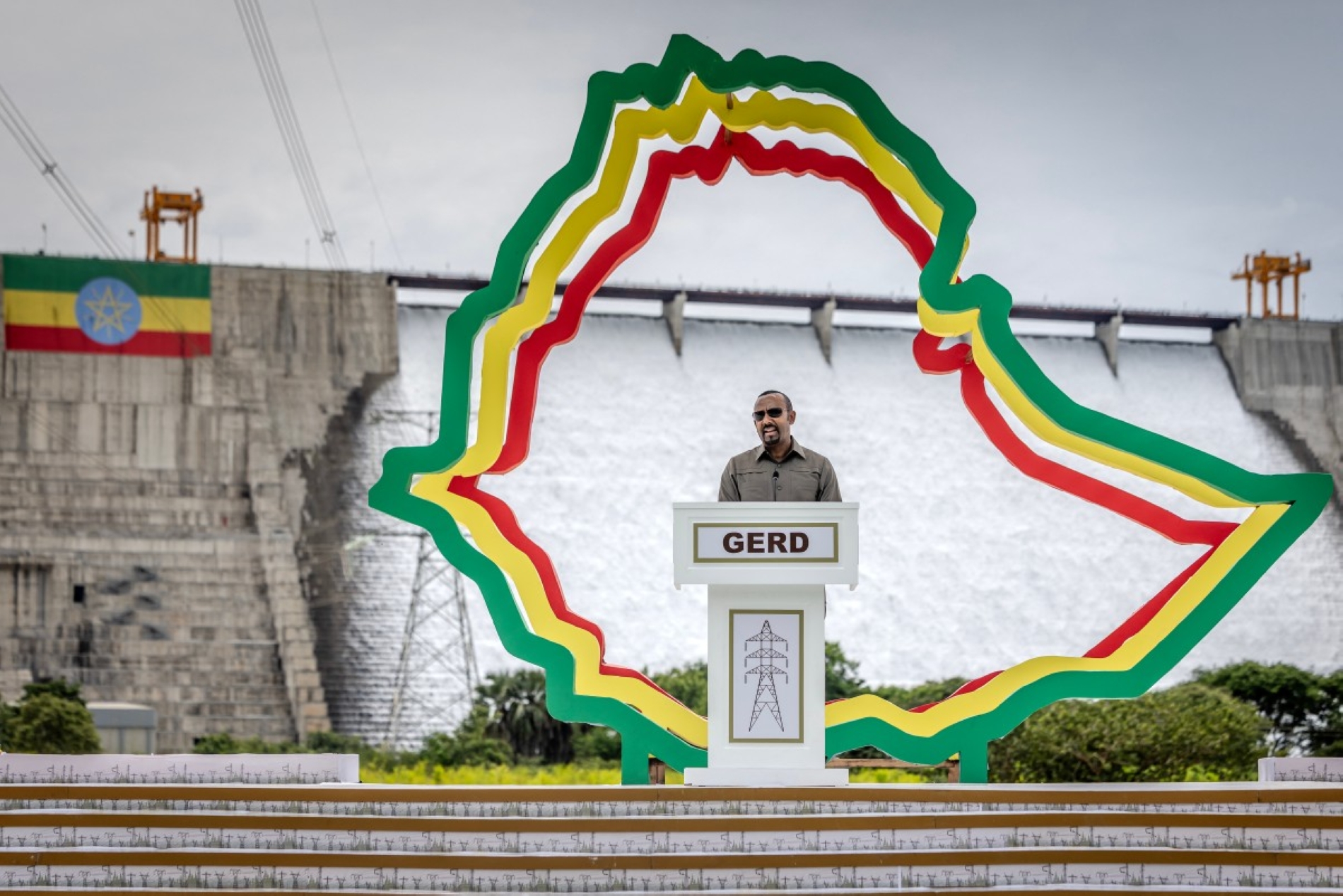
Prime Minister of Ethiopia Abiy Ahmed delivers his remarks during the official inauguration ceremony of the Grand Ethiopian Renaissance Dam (GERD) in Guba, on September 9, 2025.
The African Union also issued a firm rejection of the recognition, citing the 1964 Cairo Resolution, which enshrines respect for colonial-era borders as a cornerstone of African stability. The Union warned that accepting Somaliland's secession could trigger a domino effect, fuelling dozens of separatist movements across the continent, in countries such as Nigeria, Cameroon, and even within Ethiopia itself, where several regions remain mired in armed conflict.
Saudi Arabia likewise expressed principled opposition, reaffirming its commitment to Somalia's territorial integrity and its rejection of unilateral actions. Riyadh's stance is rooted in its strategic interest in preserving the cohesion of Red Sea states, which it regards as part of its broader regional and security architecture.
In contrast, US President Donald Trump offered an ambiguous response. In comments to the New York Post, he quipped, "Does anyone really know what Somaliland is?" – adding that he would not rush to recognise it. However, he described Somaliland's offer to host an American military base as "a big deal" and confirmed that the matter was under review.
The US State Department has long held that recognition of Somaliland could destabilise Somalia, undermine efforts to combat the Al-Shabaab insurgency, and push Mogadishu further into the orbit of China or Türkiye.
Turkish President Tayyip Erdogan with Somali President Hassan Sheikh Mohamud and Ethiopian Prime Minister Abiy Ahmed, following a press conference in Ankara, Türkiye, on 11 December 2024.
By recognising Somaliland and effectively bringing it into the Abraham Accords, Israel has successfully pierced a segment of the Arab geopolitical barrier surrounding the Red Sea, securing a forward operating platform to confront Iran and its regional proxies. For Somaliland, the recognition offers a long-sought political and economic lifeline.
Serious risks
Yet the risks are considerable. This new alliance has the potential to sharply polarise the Horn of Africa and accelerate its militarisation, as two rival axes begin to crystallise. One axis aligns Israel, Somaliland, and Ethiopia; the other includes Egypt, Somalia, Türkiye, and Djibouti, which remains firmly opposed to the shift.
Far from being a mere symbolic gesture, Israel's recognition of Somaliland reflects a calculated strategic repositioning at the entrance to the Red Sea. With Berbera port, the corridor to Ethiopia, and a prospective military installation near the Bab al-Mandab Strait, the Somaliland dossier has moved from the periphery to the forefront of the global contest for regional influence. It now stands as a litmus test for shifting power balances and for the international community's capacity to manage the far-reaching consequences of this transformation.